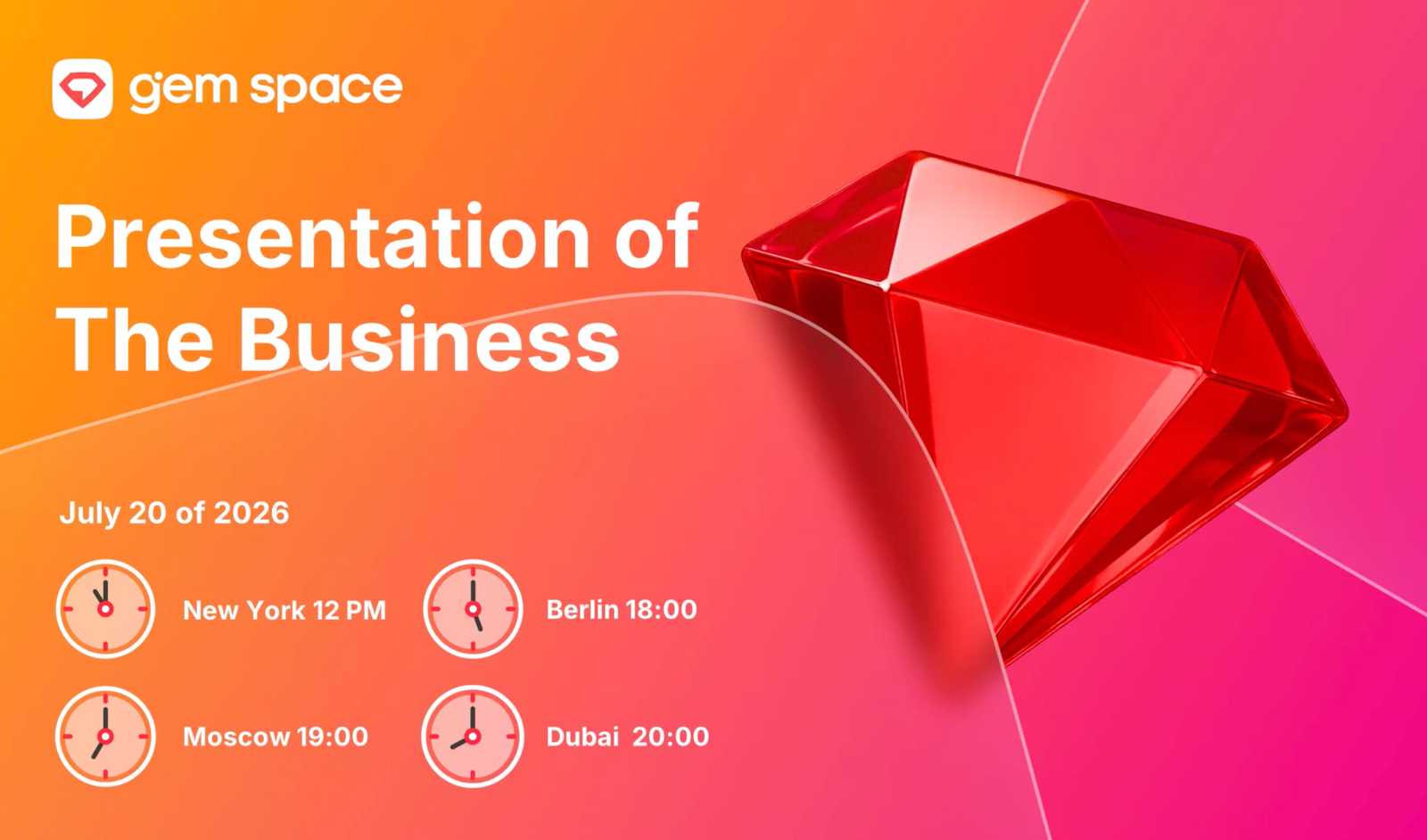
The July 20th conference opened with a question that sits at the center of everything the company is doing right now: why is 2026 special?
Why does this year fundamentally change the business?
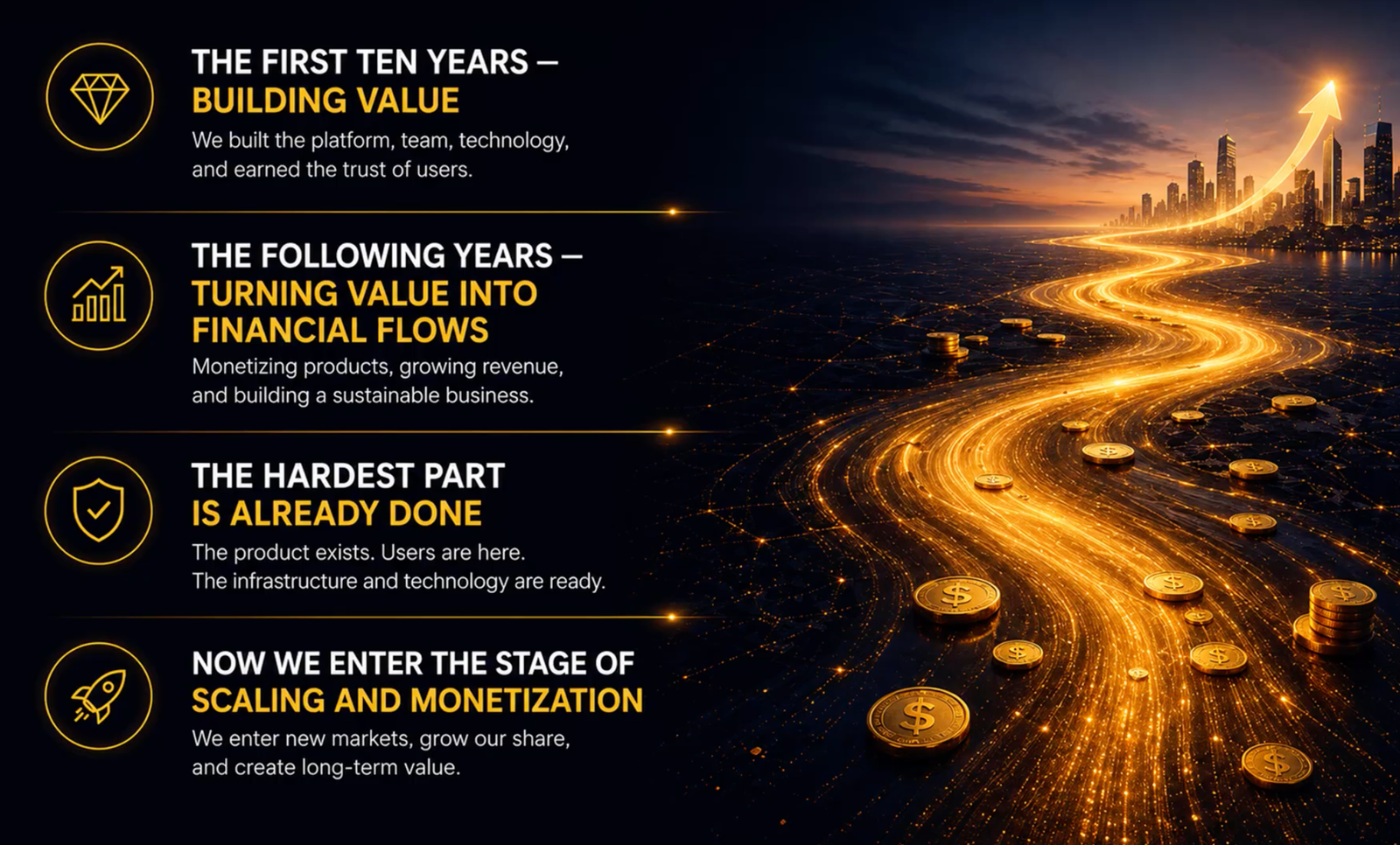
The answer is both simple and profound. The first ten years of Gem Space were spent building infrastructure. Not features, not monetization — infrastructure. The analogy used at the conference was precise: it is like building a massive bridge. The construction takes a long time and the purpose is not always obvious to those watching from the outside. But once the bridge is complete and a continuous flow of traffic moves across it in both directions, the reason for the investment of time and resources becomes immediately clear.
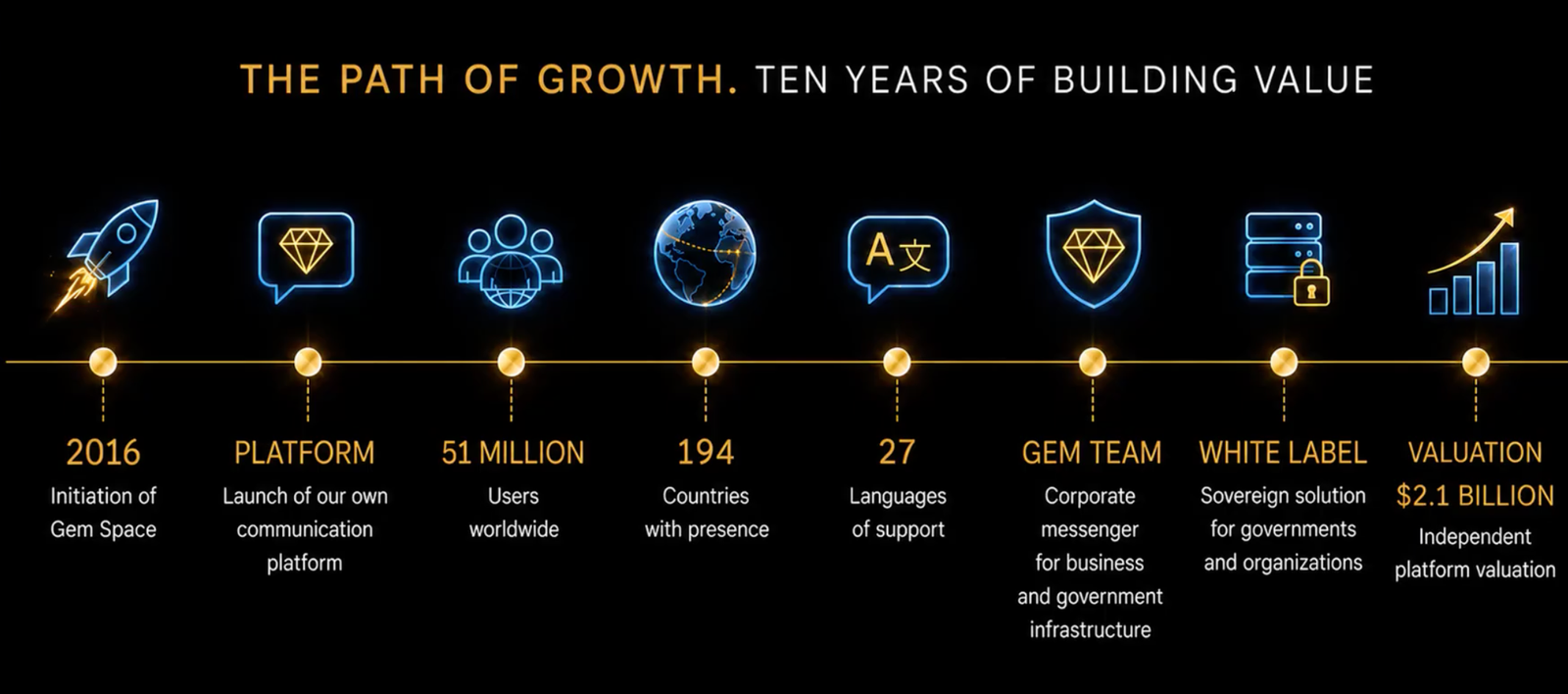
That bridge is now built. Over ten years, the team created a platform with more than 50 million users across 194 countries, supporting 27 languages, with an independent valuation reaching $2,121,000,000. Products built on the core infrastructure — Gem Team and the white label messenger solution — are already in active deployment. The user base is established. The technology is proven. The team is in place.
But the platform does not yet generate revenue. It is, as described at the conference, a beautiful luxurious car without an engine. The engine is now being installed. And once it is in, the vehicle becomes fully functional.
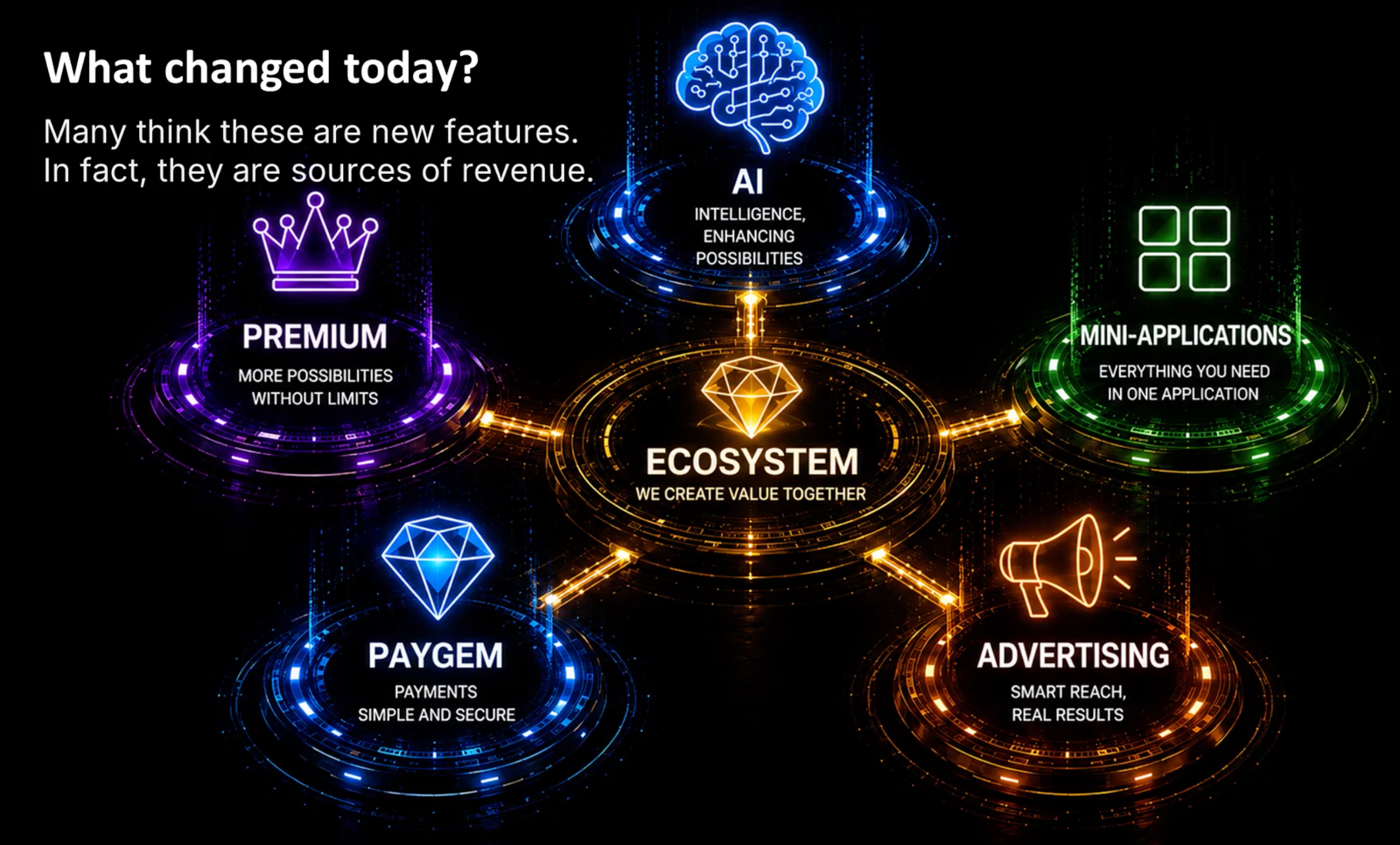
The engine consists of five components: the mini-app platform, the PayGem wallet and payment services, Gem Premium accounts, advertising streams, and artificial intelligence. What makes these different from every other feature released in the past ten years is straightforward — they are not just features. They are revenue streams.
Mini-Apps: Early Signals Are Strong
Just one week after the mini-app platform was announced, the results were already visible. Without any advertising campaign, two mini-apps from regular users are already live and functioning on the platform. Sixteen more are in the review queue, waiting to be published after the necessary checks and fine-tuning for the platform are completed.
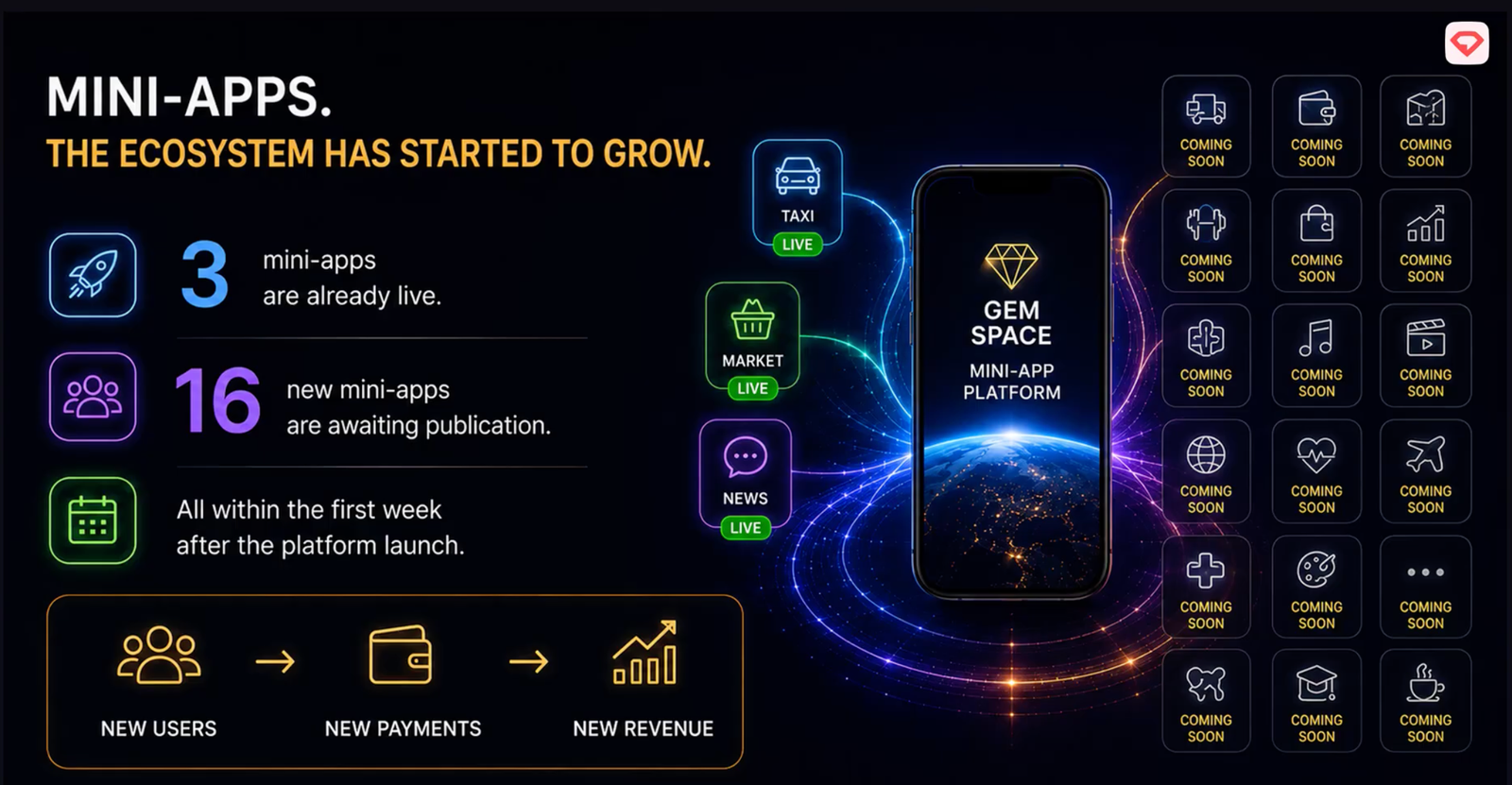
This is the signal the company was looking for. Third-party developers and companies are coming independently, saying they have a service and want to place it on the platform. Right now, access is free. Once the PayGem wallet launches and payment for goods and services becomes possible within the platform, the number of companies seeking to place their products and services on Gem Space is expected to grow dramatically.
The mini-app economy has the potential to become a separate ecosystem within Gem Space — one that grows independently, driven by external developers and businesses rather than by the internal team alone.
The Snapchat Benchmark
The benchmark cited at the conference for what monetization looks like in practice for a messenger is Snapchat — a platform known primarily for disappearing messages and strong youth engagement.
In 2023, Snapchat launched Snapchat Plus, a premium subscription built around AI-powered features. By 2026, Snapchat Plus has reached 25 million subscribers. Revenue this year has exceeded $1 billion. The cost to the user is equivalent to a few cups of coffee per month. Yet the degree of attachment to the service is exceptionally high — meaning the income it generates is stable and predictable.
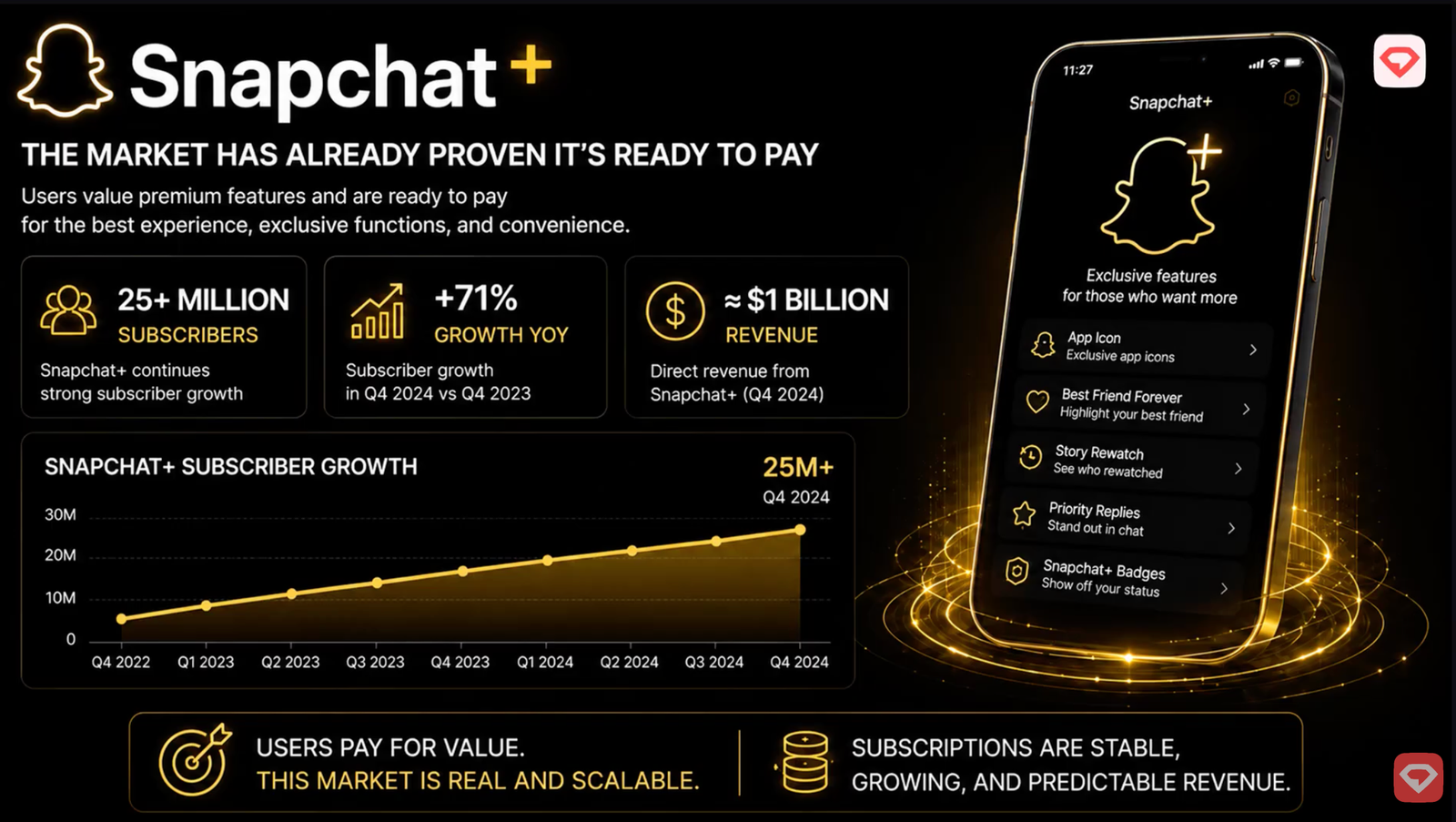
This is the model Gem Space is building toward. With 50 million users, a 3 to 5% conversion to paid services is the realistic target. That represents 1.5 to 2.5 million paying users. At an average annual subscription of $100, the revenue potential is significant. Additional streams include PayGem transaction commissions of 2 to 3%, mini-app commissions, advertising revenue, and AI tool subscriptions.
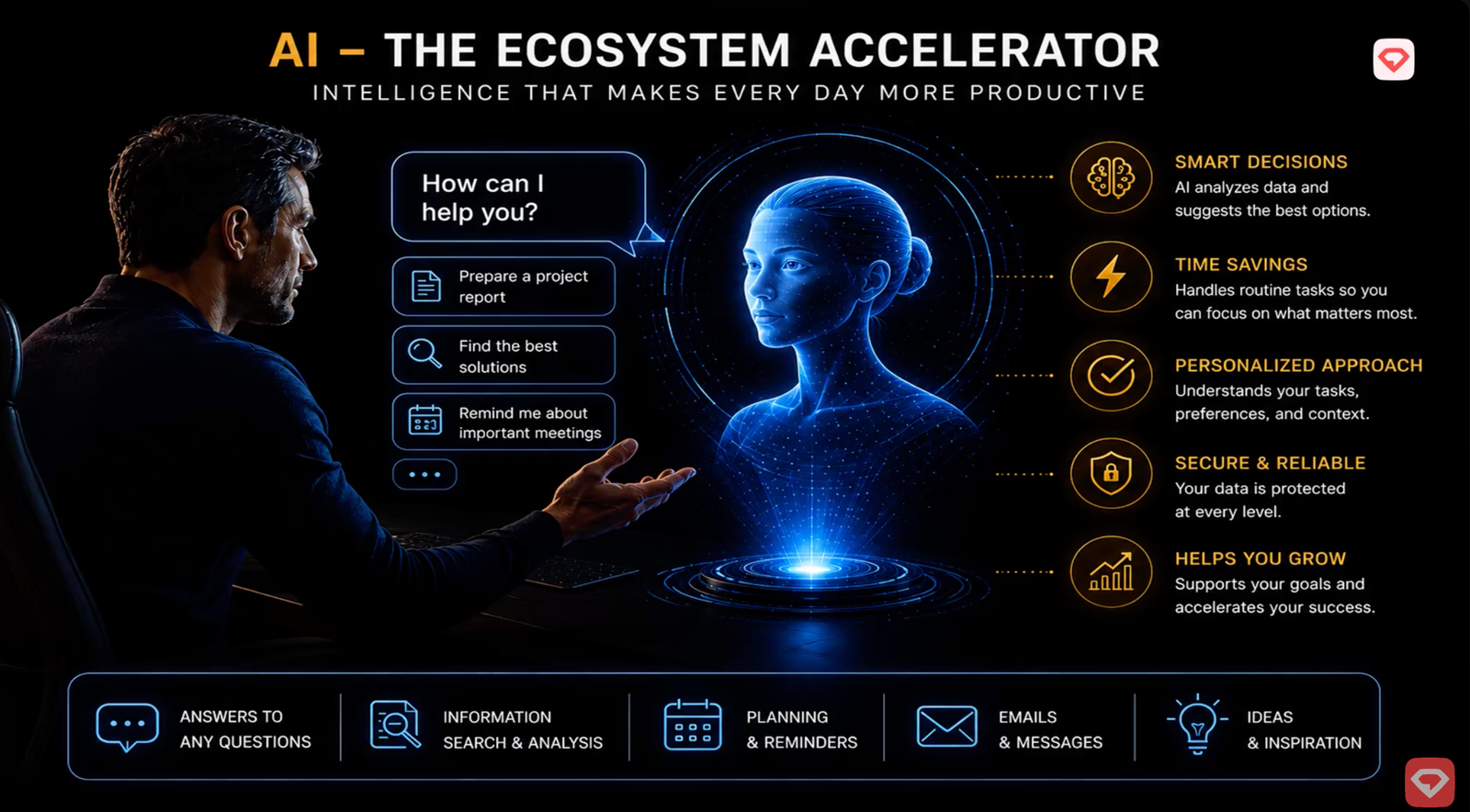
The 87% retention figure for users who start using AI tools was cited again — the overwhelming majority of people who begin using AI features do not stop. This is what creates the stable, recurring revenue base the platform is now being designed to capture.
The Transformation: From Cost Per User to Revenue Per User
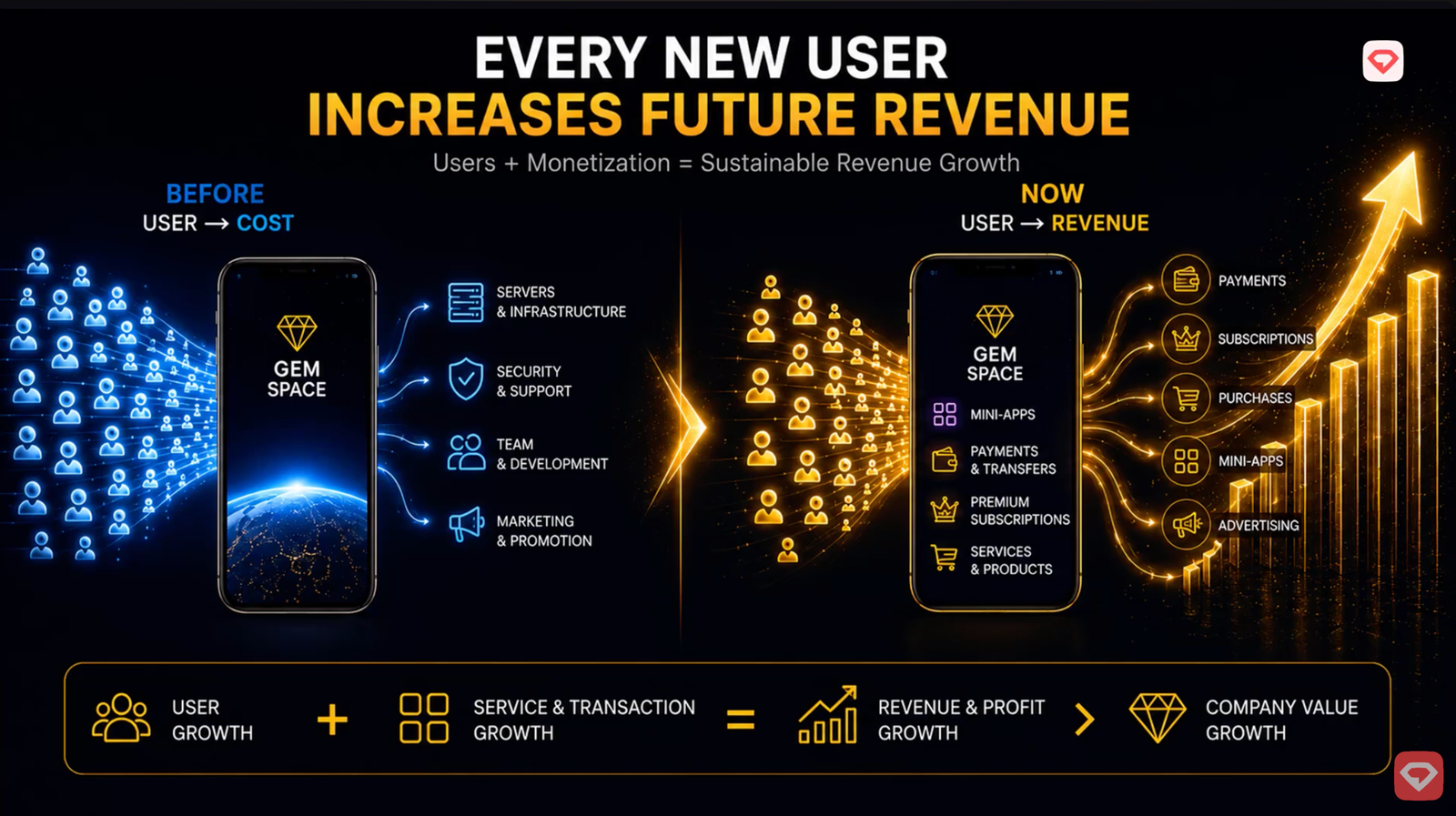
The July 20th conference made explicit something that had been implicit in previous presentations. Until now, every user on the platform represented a cost — paid acquisition expenses plus the ongoing operational cost of supporting a large global user base, which now approaches half a million dollars per month.
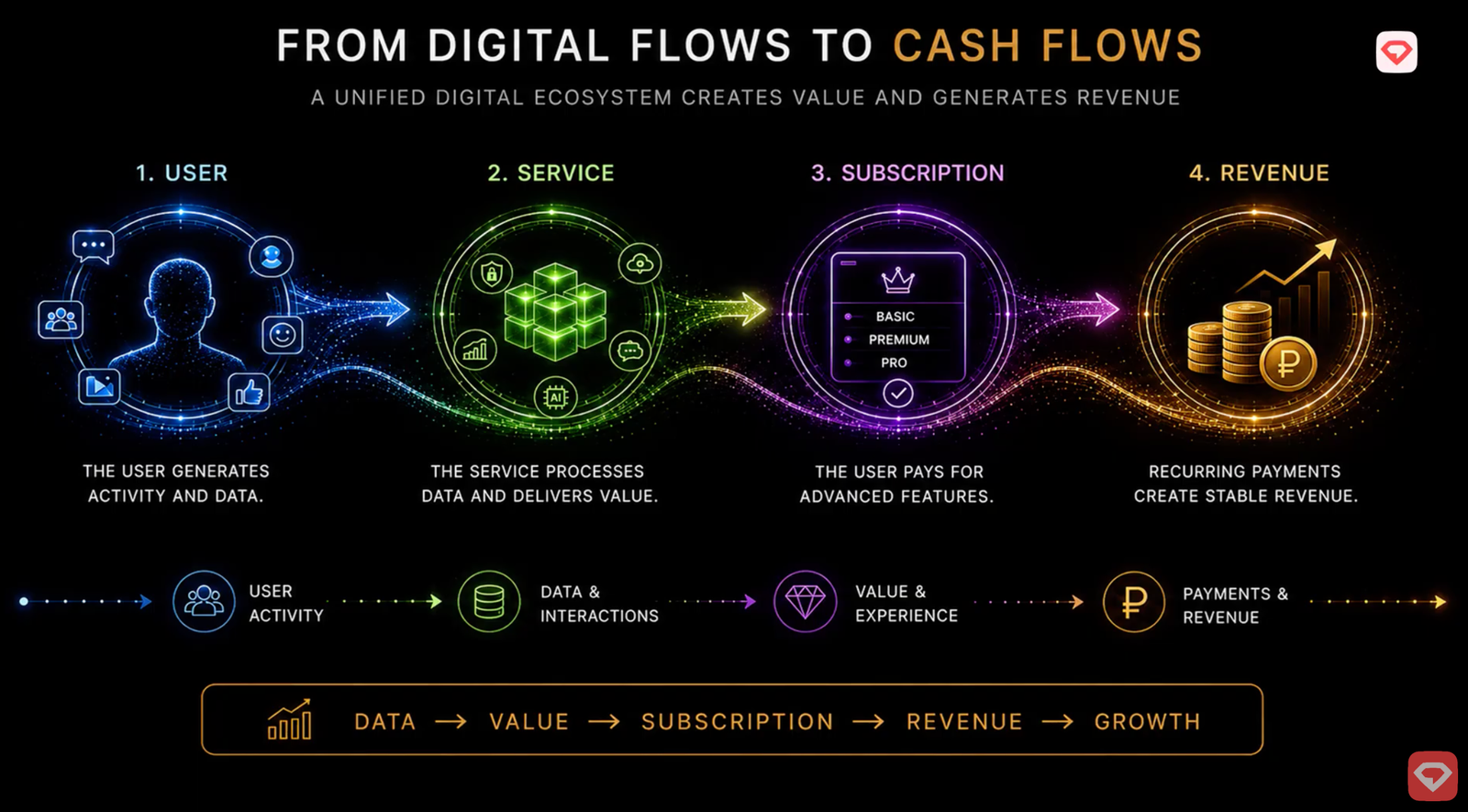
That equation is about to reverse. Beginning in autumn 2026, each user will represent potential income. Not every user will become a paying customer — but if 3 to 5% use paid services, the revenue generated will reach and eventually exceed the Snapchat benchmark. And with financial flows established, the platform’s value and attractiveness to any strategic buyer or regional partner changes entirely.
This is the paradoxical transformation described at the conference. The same user base that currently costs money will, with the addition of the revenue tools now being built, become the foundation of a profitable business. The infrastructure investment of ten years is about to be converted into cash flow.
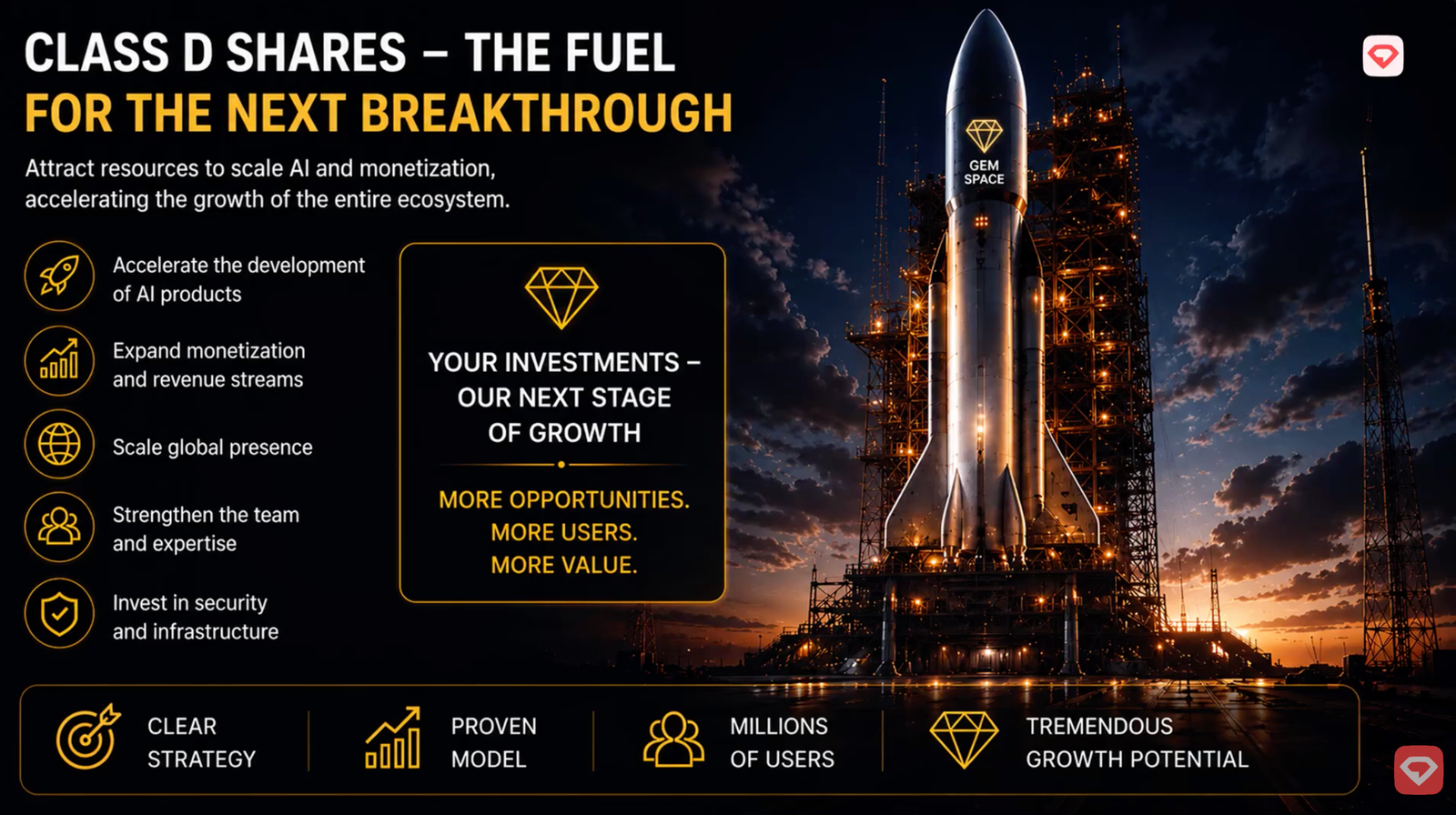
Class D Shares: 41% Already Taken
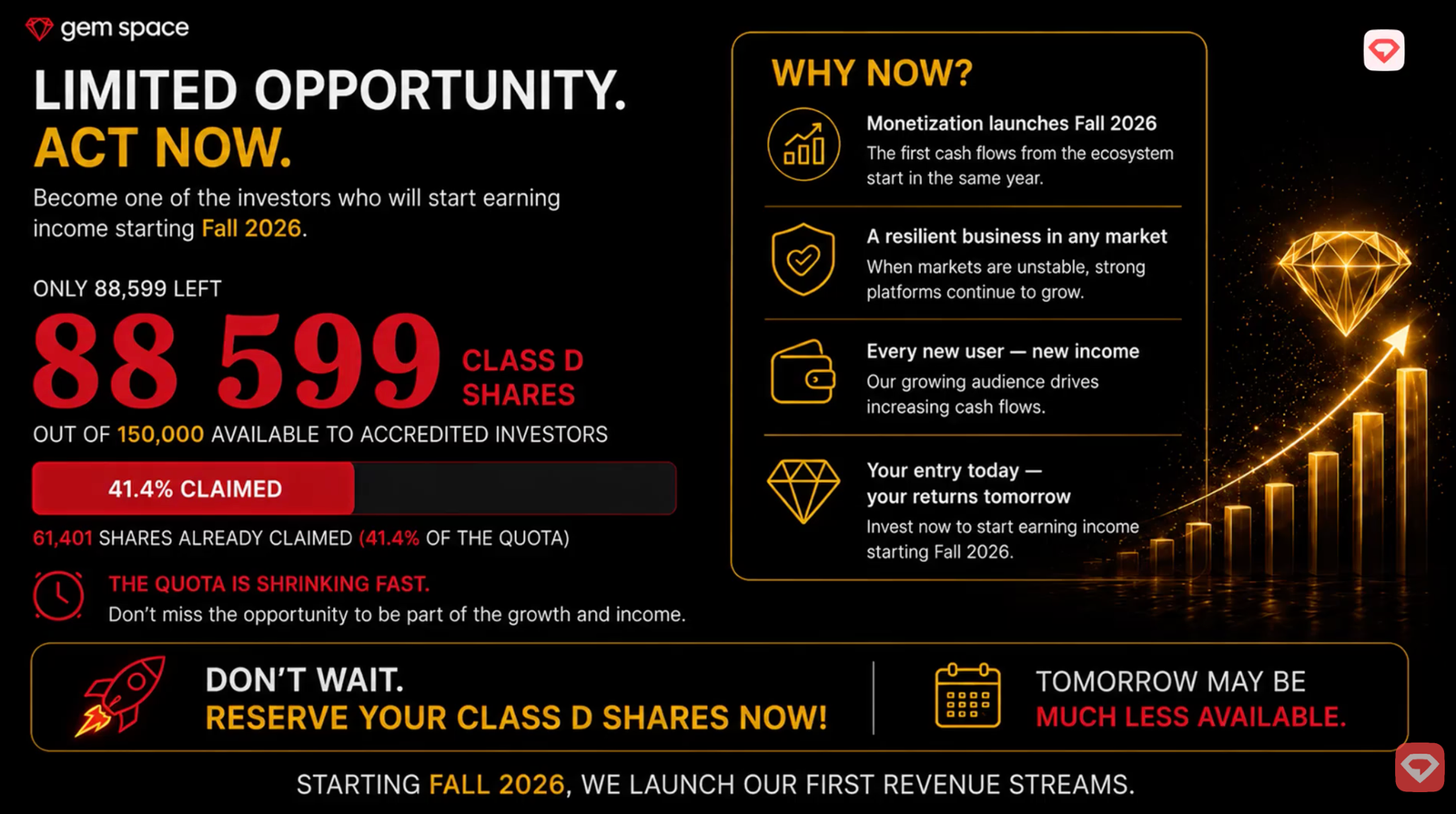
An important update was shared on Class D share availability. As of July 20th, more than 41% of the 150,000 Class D shares allocated to retail investors have been taken, with 88,599 shares remaining at the time of the conference. A separate allocation of 100,000 Class D shares has been reserved for major investors from the Middle East and is not part of the retail offering.
The GMAI share package — introduced last week — contains an equal number of Class A and Class D shares, with a corporate activity coefficient applied to Class D in the same way it already applies to Class A. The more shares held, the higher the coefficient, and accordingly the higher the dividend income from monetization and AI tool revenue.
A Double CCA promotion is running from July 14th through July 27th. During this period, each purchase of GMAI packages or sponsorship of such purchases earns double the value of that purchase toward both the CCA coefficient for Class A shares and the CCAD coefficient for Class D shares.
Learn more about Class D Shares on this video:
Competitive Advantage in an Era of Instability
The broader strategic context was addressed through what the conference described as Darwin’s law applied to the modern economy: it is not the strongest that survives, but the one that can best adapt to surrounding reality.
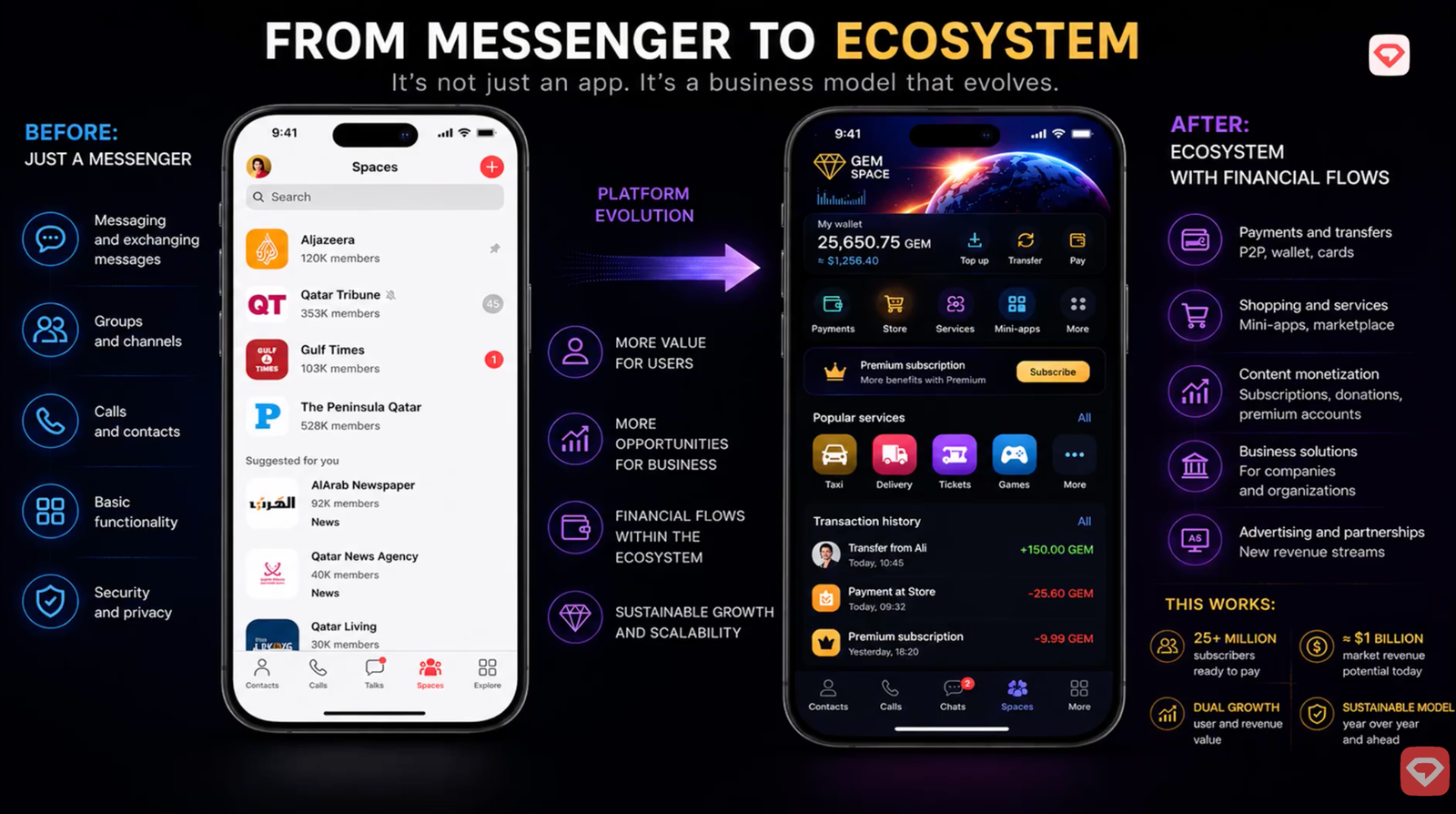
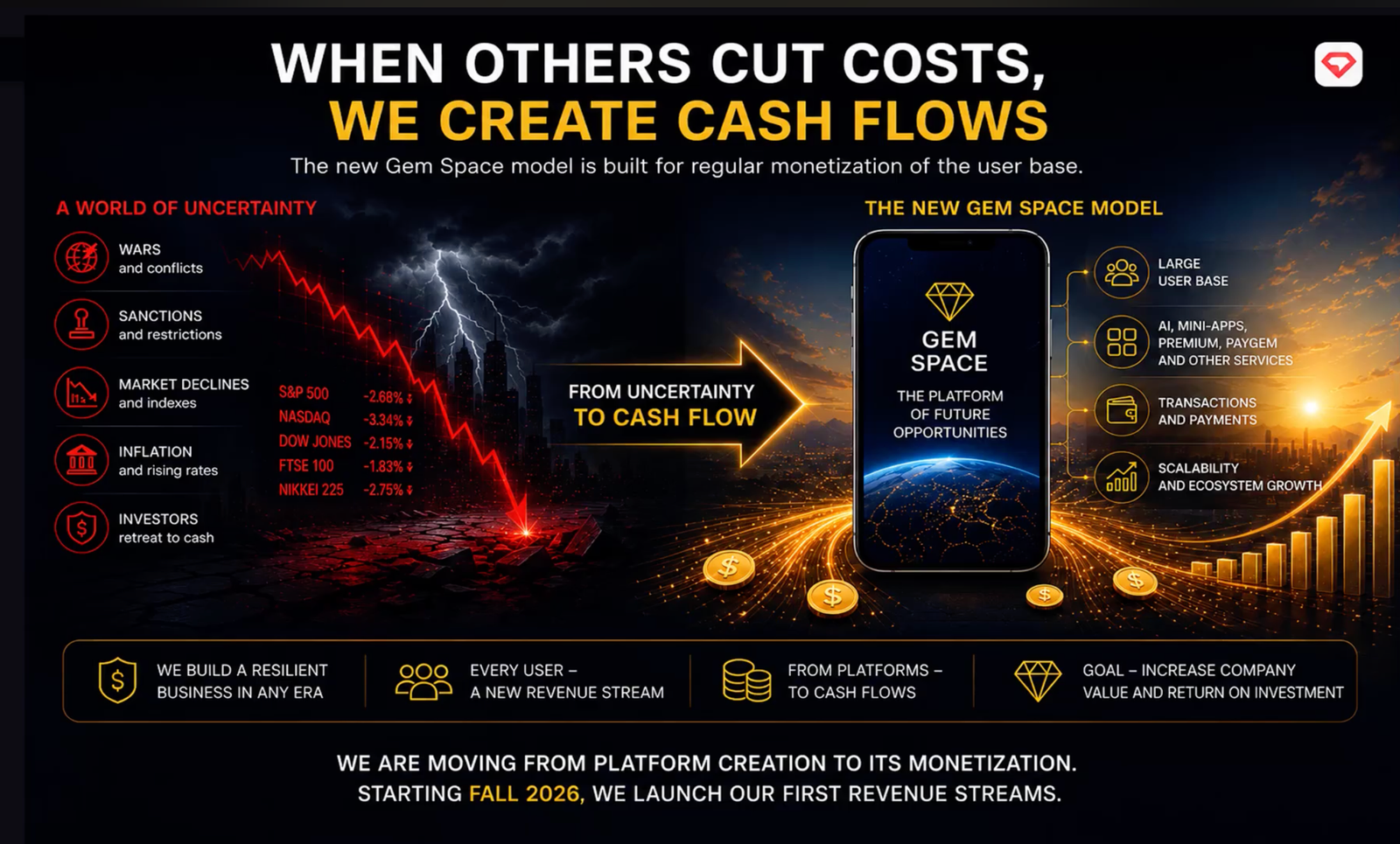
Gem Space’s competitive advantages in the current environment were laid out clearly. The platform is sovereign, politically and technologically neutral, and highly flexible in its development. It operates in regions with deep immersion rather than surface-level commercial presence. It offers a capital-intensive product built on a fully scalable business model. And critically — the monetization tools now being launched do not depend on political conditions, sanctions, conflicts, or market downturns. They depend on one thing: the number of users in the application.
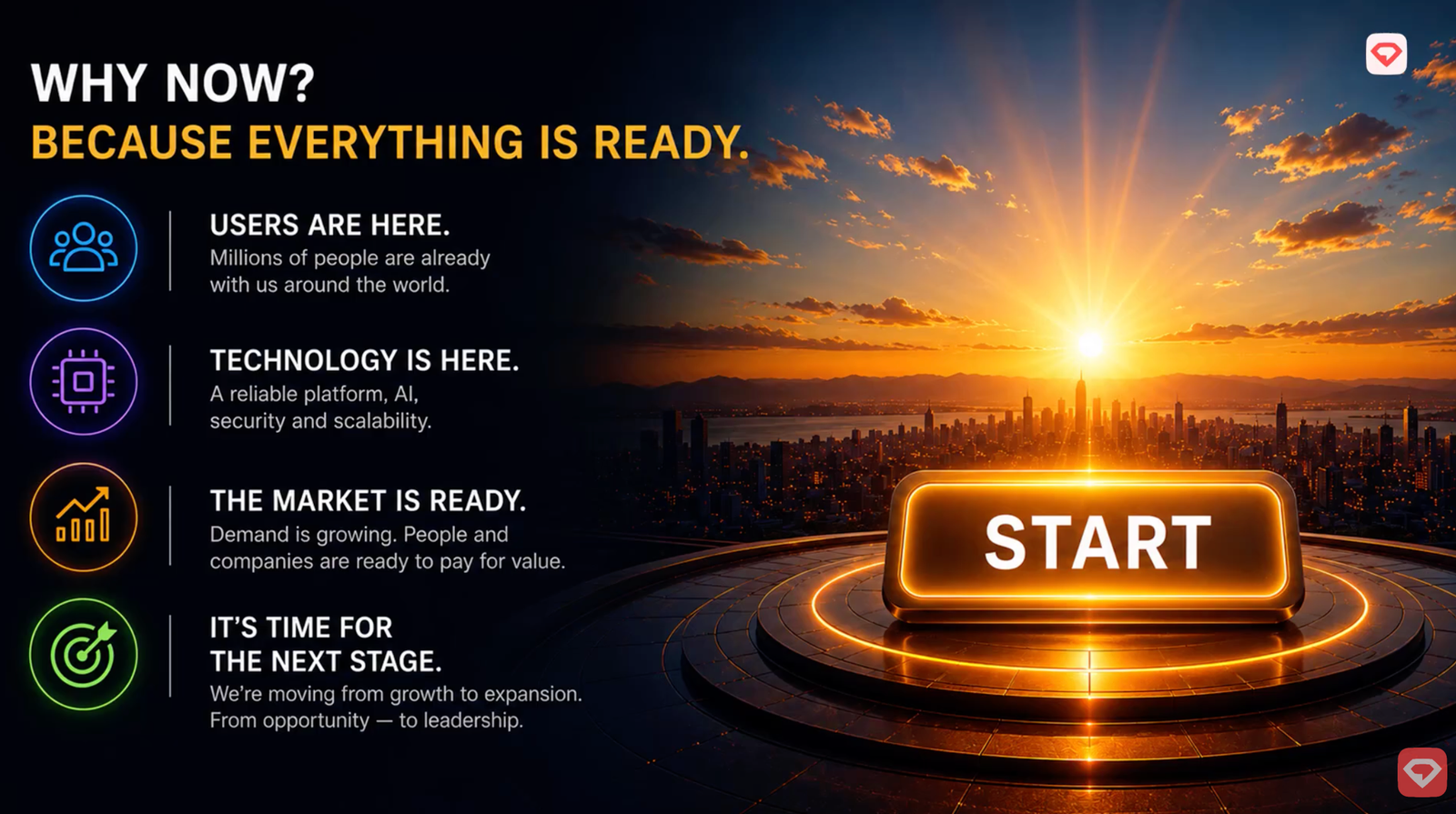
With more than 50 million users in 194 countries, that foundation is already there. This is precisely why now — in the middle of what the conference described as a period of global instability — is the right moment to launch monetization. The services being built can be used by any user in any country, in any language the platform supports. They are not affected by what is happening in financial markets or in geopolitical negotiations.
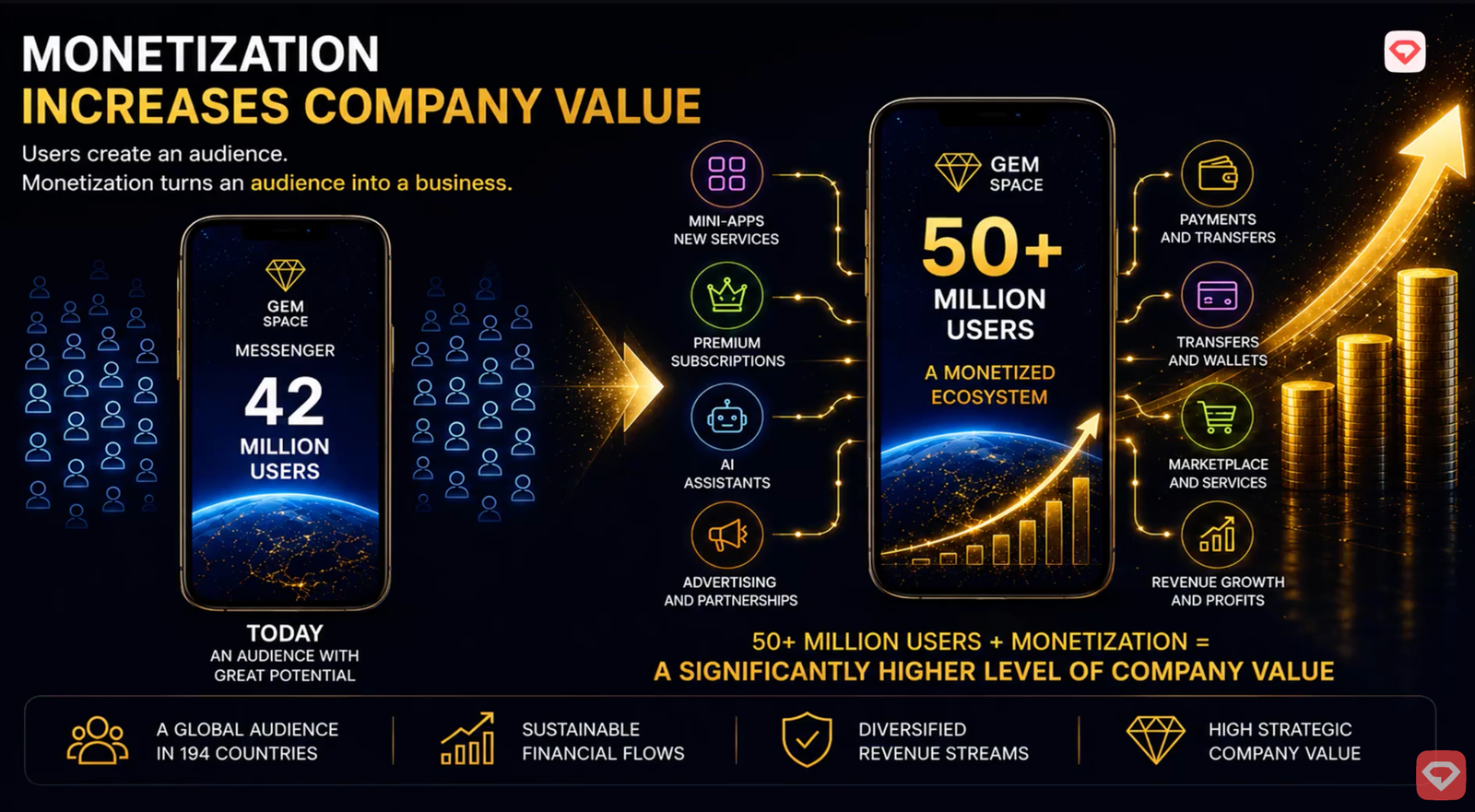
The company is also currently undergoing an independent audit of all intellectual property created over the past ten years. All of this IP belongs to the fund in which shareholders own stakes. The audit is being conducted as part of a broader effort to formally document and value the technological assets accumulated — reinforcing the company’s position ahead of regional and strategic sale discussions.
The Gem Team Direction Is Not Being Abandoned
A point made clearly at the conference: the Gem Team licensing direction is continuing in full. Work with Class C shareholders is ongoing in both Qatar and Saudi Arabia. The teams on the ground have not stopped. Once the regional situation stabilizes, this direction is expected to accelerate significantly. The deferred demand being built in the Gulf — across private, semi-governmental, and governmental counterparties — remains intact and will convert into results when conditions allow.
The VIP Club 5000 was also notified of an exclusive meeting scheduled for Thursday with the board of directors — an ongoing benefit of VIP Club membership that gives members direct access to discussions and information not covered in general briefings.
The Moment
The conference closed with a statement worth noting directly: instability may be around us, but not inside us. The plan is in place, the team is executing it, the releases are shipping on schedule, and the tools that will generate revenue are going live this autumn. Every challenge the platform has faced over ten years — a pandemic, global crises, market shifts, technology changes, competition from giants — has been navigated and survived. That survival is not incidental. It is the foundation on which what comes next will be built.
Stay informed — join our Angels Team channel in Gem Space.
Comments are closed