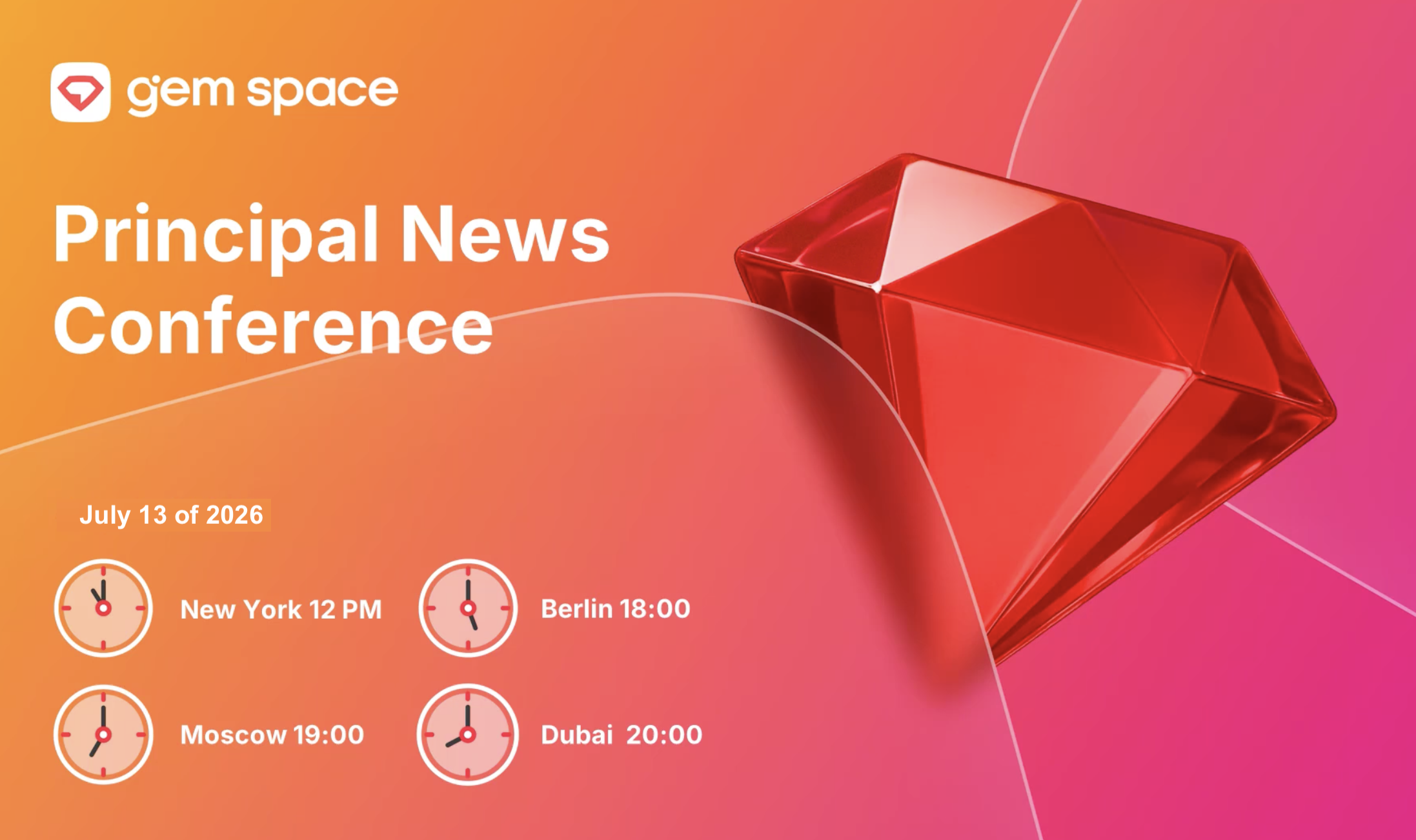
The July 13th conference opened with a clear-eyed assessment of the current global environment — and a confident reaffirmation of the strategic direction Gem Space has chosen.
The world is genuinely uncertain right now. Financial markets are unstable. The NASDAQ, which had been rising on the back of AI-related companies, is beginning to slow. Several large private asset management funds in Switzerland have filed for bankruptcy, with investors unable to withdraw their money. Debt is accumulating at a government level, and the burden is falling on the middle class and pension funds. These are real and consequential developments.
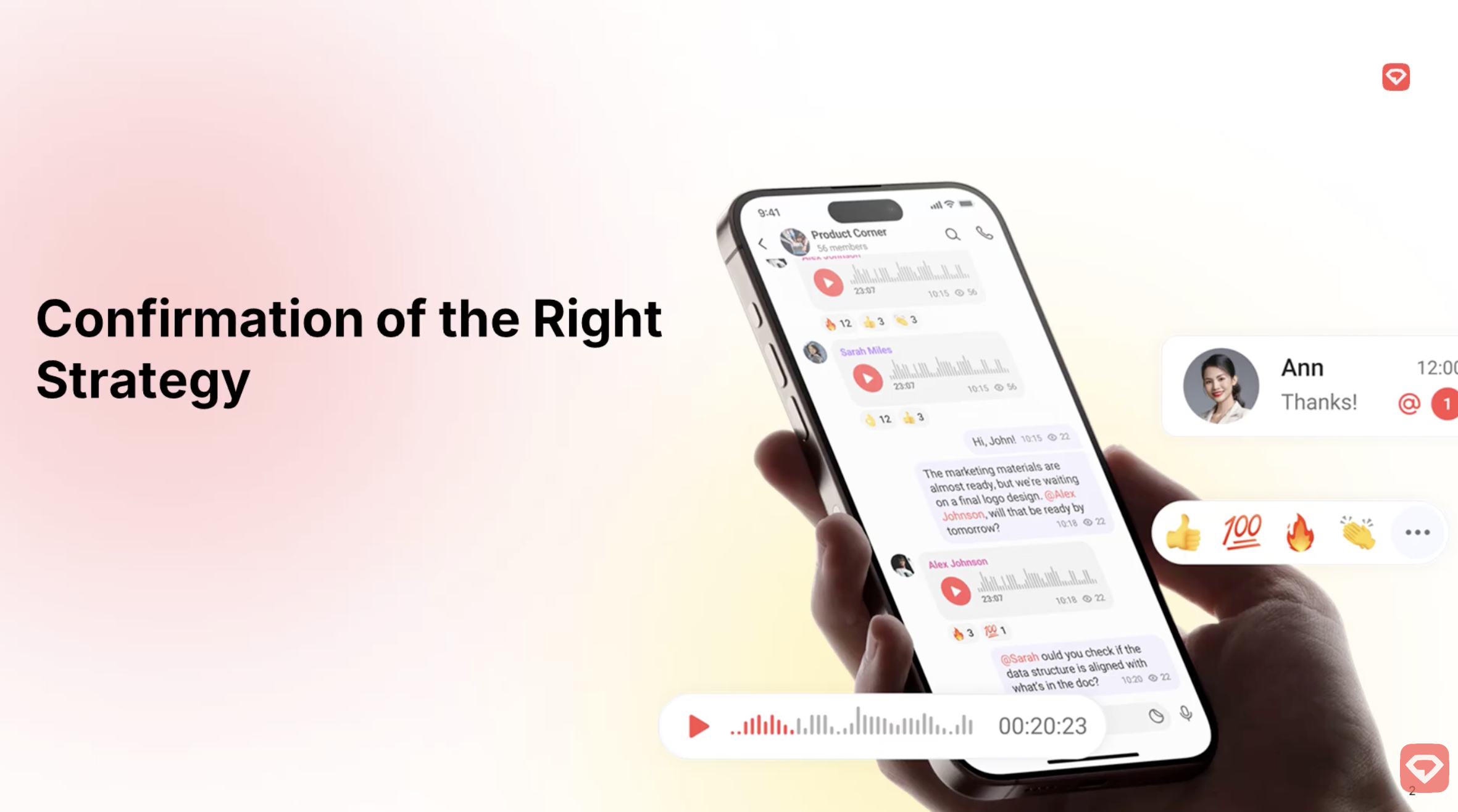
But within this instability, there are sectors that are growing — and Gem Space operates in one of them. The platform economy, AI integration, and digital communication infrastructure are all expanding, precisely because the world is in transition to a new technological and economic order. The two platforms built over the past decade — Gem Space and Gem Team — belong to this growth sector. Their value grows on its own, even amid crises, wars, and geopolitical disruptions.
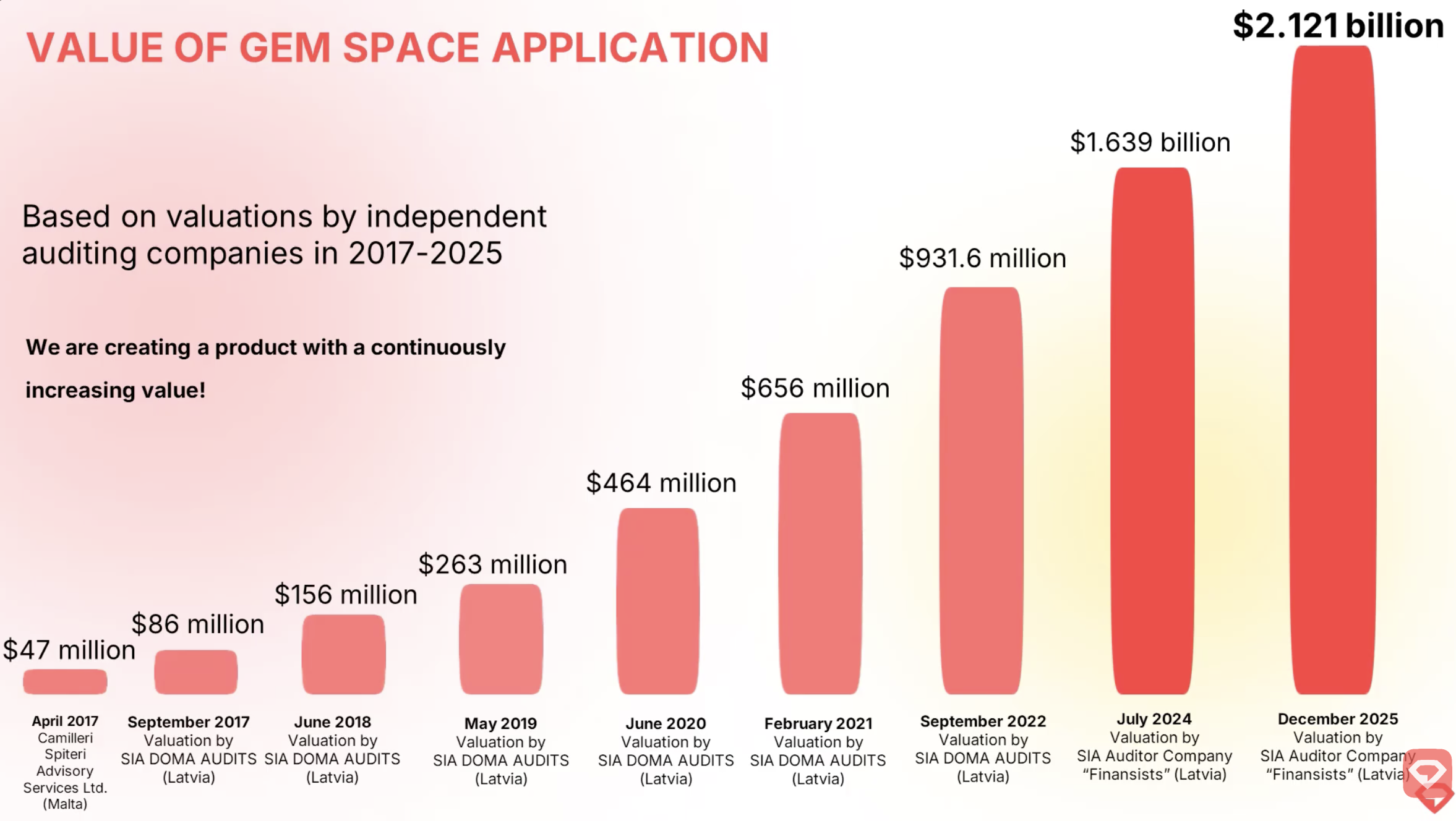
To understand where the project is going, it is worth looking at where it came from. Since 2017, starting from an independent valuation of $47 million, the platform has grown to $2,121,000,000 — a figure reached through continuous product development, team building, and expansion across more than 190 countries with over 50 million downloads. None of this happened by chance. It is the result of sustained effort built without Silicon Valley funding or an existing world-class team. Both were built from scratch along the way.
The next iteration of development is now underway. The goal is clear: significantly increase the value of the platform — several times over — through the launch of monetization within the ecosystem. Under current conditions, to achieve higher numbers of active users, improved retention, and increased daily, weekly, and monthly engagement, monetization must be launched. All marketing and business plans are now focused on doing this as fast as possible. The result will be synergistic — a more valuable platform attracting more acquisition offers simultaneously.
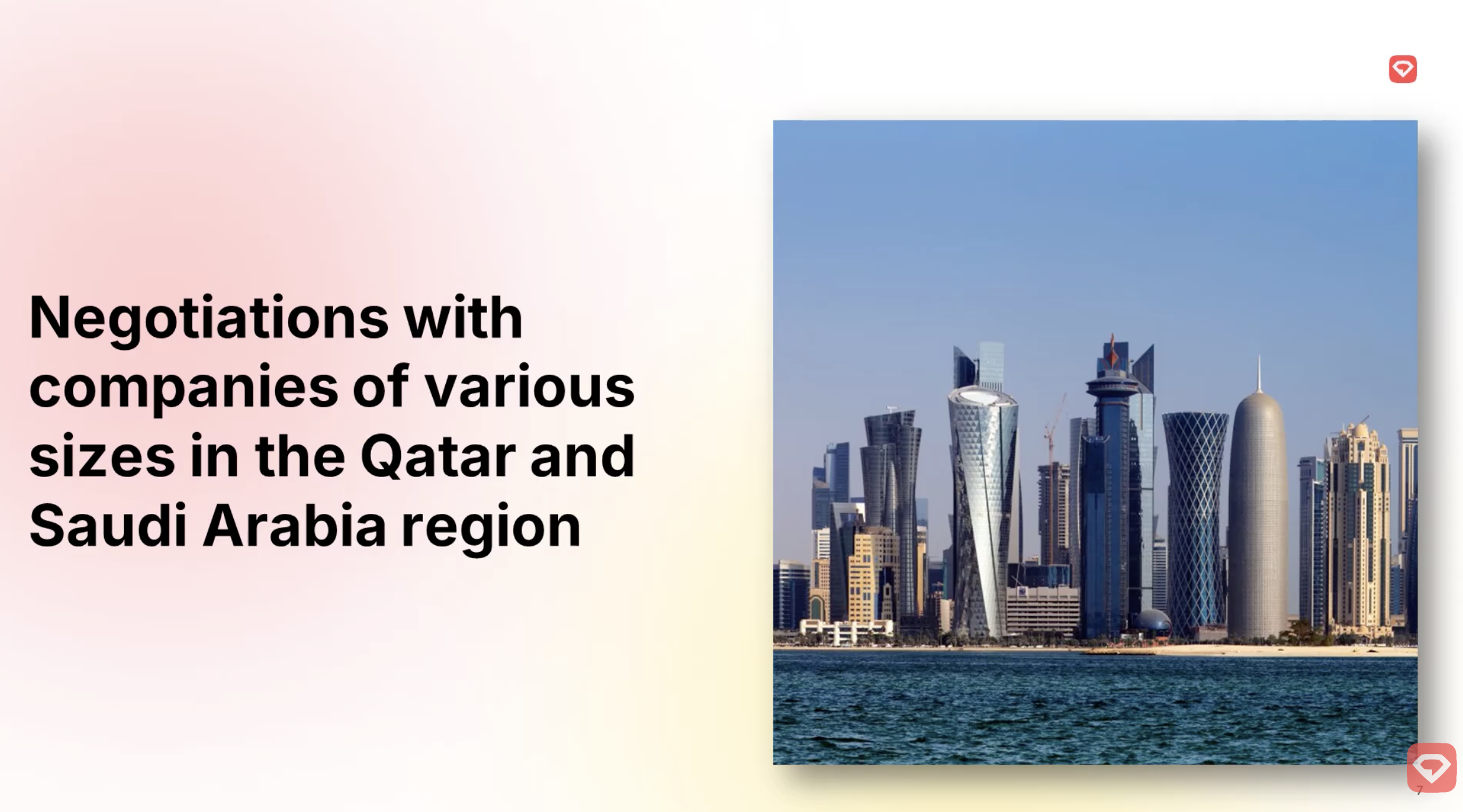
The Gulf Region: Crisis as Deferred Demand
The ongoing conflict in the Gulf region was addressed directly. The team has not left. Even when explosions and bombings occurred near Doha, the Gem Soft presence in Qatar and Saudi Arabia continued without interruption. The team on the ground is continuing meetings, negotiations, and technical preparation.
The regional strategy is not changing. What the crisis has created is deferred demand — a growing backlog of prepared deals, signed documents, and relationships with private, semi-governmental, and governmental companies that will convert into closed contracts once conditions stabilize. The more intense the crisis becomes, the greater the need for secure communication infrastructure, and the more relevant the Gem Space and Gem Team solutions become to the counterparties engaged in negotiations.
During a recent negotiation with a semi-governmental company in one of the Gulf countries, the counterparty shared a telling detail: they had purchased IT technologies from Europe and China, brought them to their country, and found that without ongoing specialist support, those technologies did not work. A group of engineers had failed to build a local national messenger over five years. What Gem Soft offers is not just a technology deployment — it is a long-term cooperation model that includes training local specialists and maintaining a permanent expert presence in the region.
The company has also been working on adapting Gem Space specifically for satellite communication, using satellites as a communication channel. This work continues, though not always discussed in full detail publicly.
One license renewal is approaching — license income from the first sale is expected to come through around mid-year. The confidence expressed was unambiguous: the investments made in the Gem Team direction will pay off. Class C shareholders — both from license renewals and from new licenses — will receive their returns as the regional work continues to progress.
Gem Soft Featured in Wall Street Journal Documentary
A significant announcement was shared at the conference regarding the Wall Street Journal documentary in which Gem Soft and Gem Team were featured.
The Wall Street Journal, founded in the 19th century in New York, is the largest business newspaper in America and one of the most respected globally. Its readership consists of high-income individuals, top managers, investors, politicians, lawyers, analysts, and economists. A printed subscription costs $150 per year. Being featured in the Wall Street Journal carries real weight — it functions as independent verification of a business’s reliability and prospects, and historically leads to increased investor interest, client attraction, and stock growth for the companies featured.
WSJ editors came to Qatar to produce a documentary about business development in the region. Of the large companies actively operating in Qatar, they selected only three to feature. Gem Soft was one of them. This is a direct reflection of the level the company has reached in Qatar and the trust built with Invest Qatar — the investment arm operating within the ecosystem of the sovereign wealth fund Qatar Investment Authority — which has been a key strategic partner and has actively promoted Gem Soft among local regulators and invited the company into key industry associations.
The significance of this selection is not merely reputational. It is verifiable, public, internationally recognized evidence of Gem Soft’s position in the Gulf market — available to any current or future investor, partner, or potential buyer who looks into the company.
July 2nd Release: What Shipped
The July 2nd release included several features that users immediately noticed and responded to positively.
Custom chat backgrounds are now live on both mobile and web. On mobile, go to Profile → Settings → Appearance to choose from a curated selection of backgrounds designed by the team, set your own custom background, or choose a light or dark system theme. Each individual chat can have its own background. On web, click the three buttons at the top right of any chat to access appearance settings directly. Custom call sounds are planned for August — the ability to set individual sounds for different calls and groups.
Birthday reminders have been added. Users can now add their own birthday to their profile, and thousands have already done so. When a contact has a birthday, a reminder appears — allowing users to send congratulations directly.
The application now runs up to 15% faster. Video playback speed in chats has been increased. The anniversary app icon has been retired and the standard icon restored. Bug fixes and improvements continue on a continuous basis.
Mini-Apps: The Platform Is Open
From July 1st, the mini-app engine is officially live. The first mini-app — QuizGem — is already available in the catalog. Users can find it by going to the catalog and selecting the mini-apps tab. QuizGem offers multiple game modes including classic timed and endless formats, with category selection. The response from users who have tried it has been strongly positive.
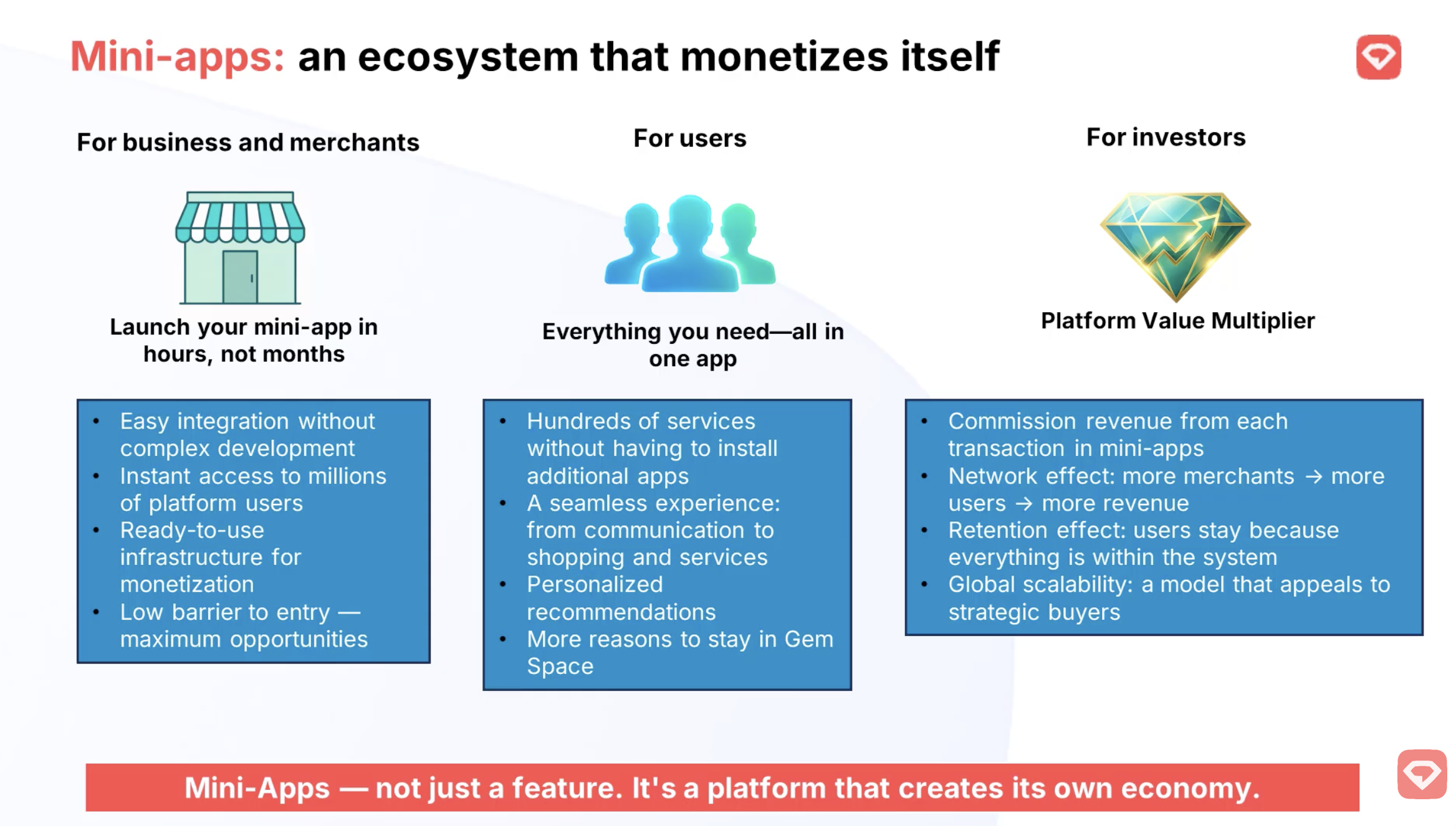
The mini-app platform has been opened to external developers and businesses. This week, companies have already begun publishing their own mini-apps on the platform. Any individual or business with an idea — a store, a service, a content product — can now create and publish a mini-app without being a programmer. A mini-app creation bot has been added to the bot section of the platform, with a built-in guide that walks users through the process step by step.
The potential of this platform is described as enormous. Previously, everything on the platform was built by the internal development team. Now, thousands of external developers who already have apps or mini-apps elsewhere can host them within the Gem Space ecosystem. Small and medium businesses can turn their operations into mini-apps and gain immediate access to the Gem Space user base. When the PayGem wallet launches in September, financial flows will begin passing through the platform — and commissions on those flows are the primary income mechanism for investors.
The mini-app platform is not simply a feature addition. It is a separate economy within Gem Space — one that can grow independently of the core messenger, potentially reaching tens of thousands and eventually hundreds of thousands of mini-apps.
The Monetization Roadmap: September and Beyond
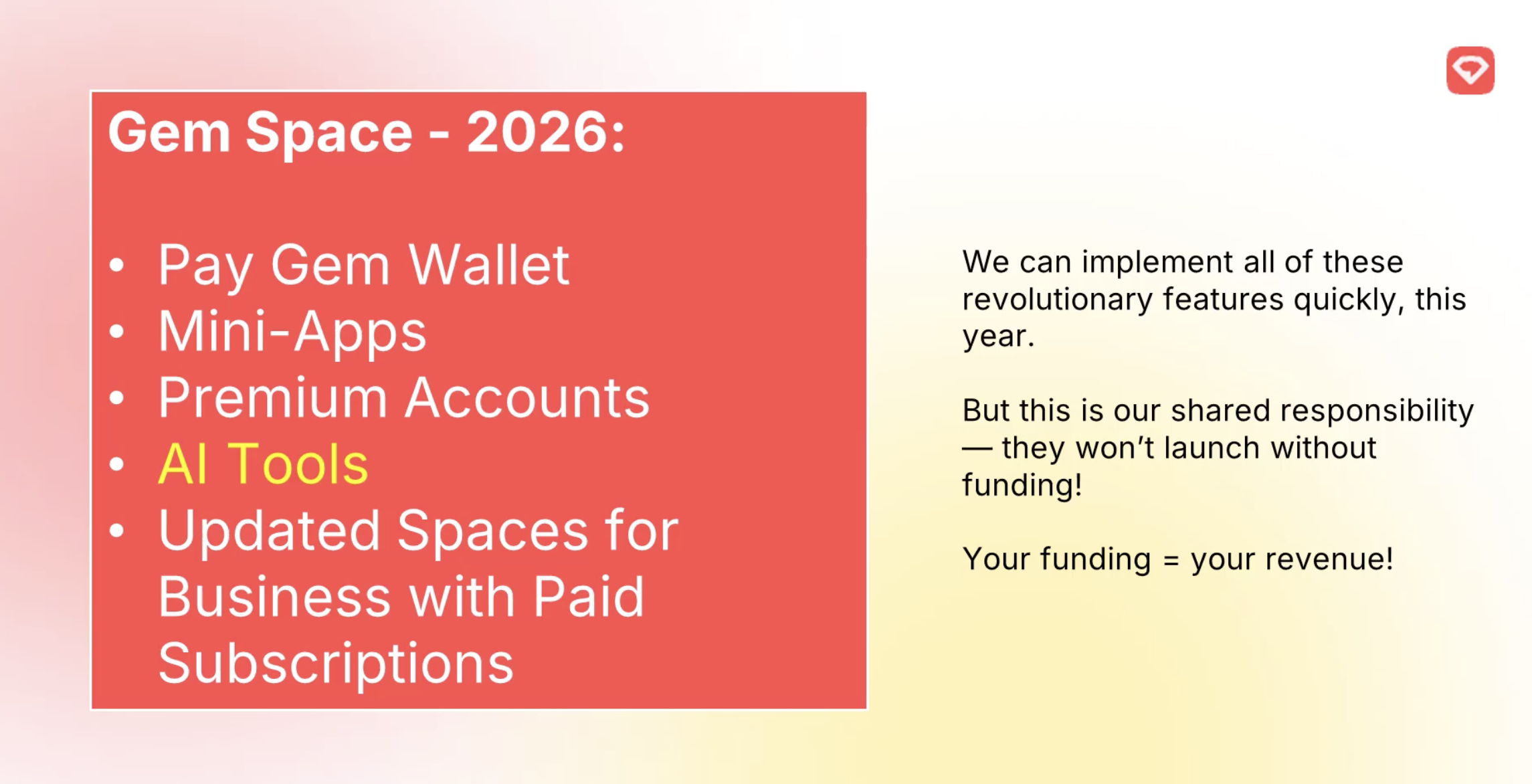
The full monetization roadmap for the remainder of 2026 was laid out in clear terms.
- PayGem Wallet — September. The wallet will launch supporting worldwide payments from day one, including Google Pay, Apple Pay, and Yandex Pay. Russian users will be able to pay directly using Mir, Visa, or Mastercard cards through the platform’s acquiring system. Cryptocurrency support is planned but will follow the initial launch rather than launching simultaneously.
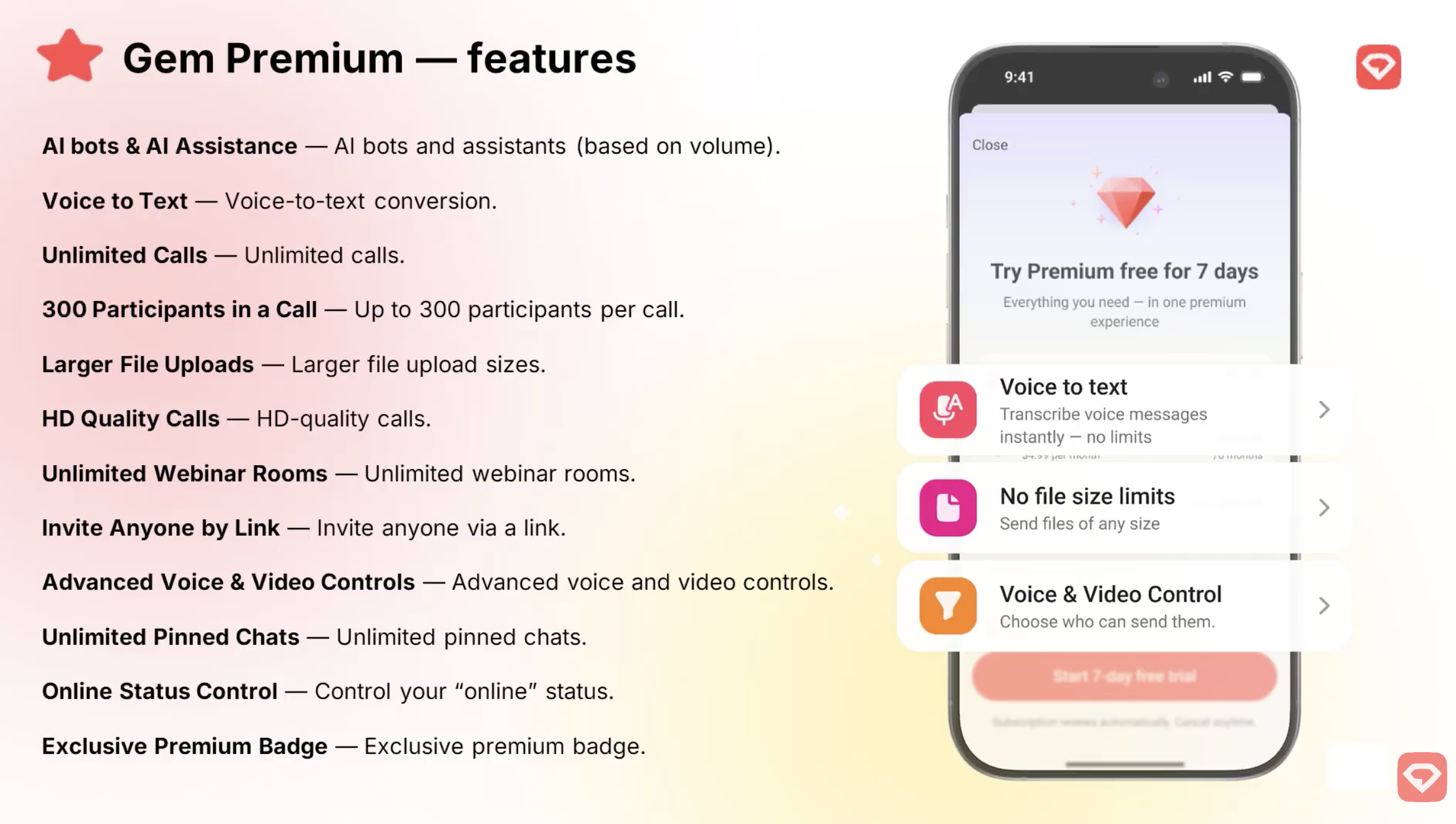
- Gem Premium — September. Premium accounts will not remove anything from the existing free experience. Everything users currently have access to will remain. Premium will add higher video quality, better call quality, more participants in web conferences, AI-based bots, and enhanced privacy controls including the ability to hide online status. The premium account is a direct revenue source for the platform and for investors.

- AI Tools — in progress now. Access to leading language models, digital assistants, voice agents, AI-powered calls made on the user’s behalf, and avatar functionality are all in active development. The reference benchmark cited was Snapchat, which introduced AI tools and premium subscriptions and reached $1 billion in revenue in a single year — growing premium subscribers by 71%. With 50 million users and a conservative 1% conversion rate, that is 500,000 premium subscribers. At $100 per year, the math is straightforward. In practice, statistical conversion rates typically run at 2 to 3%, not 1%. Additional revenue streams include PayGem commissions of 2 to 3% on transactions, mini-app commissions, and advertising revenue.

- Spaces Redesign — July 9th. Spaces are being reoriented specifically for businesses and content creators. New templates have been created to help different types of businesses set up their spaces quickly. Profile redesigns will allow visitors to immediately see who the owner is and what they offer when entering a space.
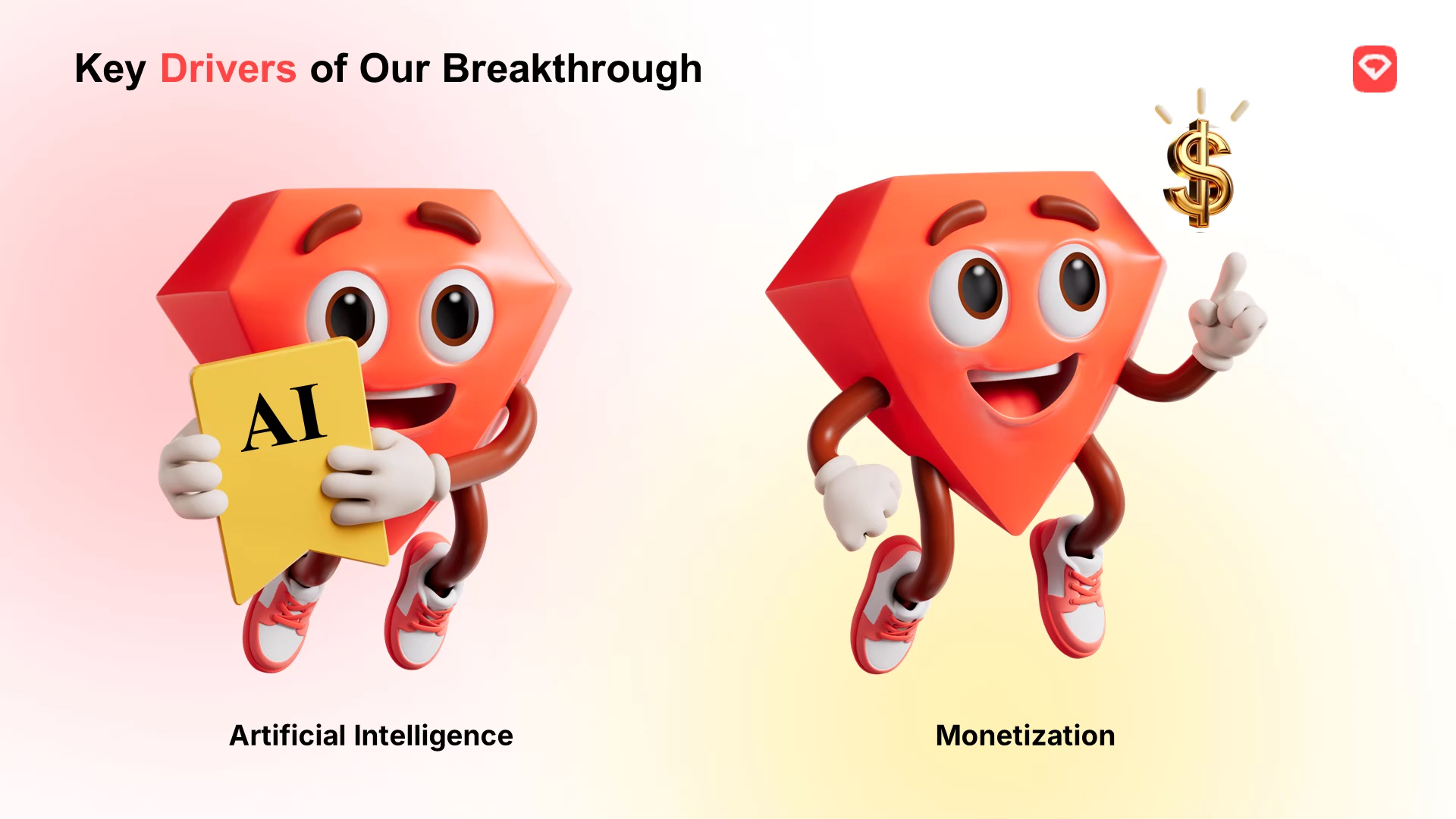
The emphasis placed on timing was explicit. The key is not to be late. Every week of delay in launching these tools is a week of lost user acquisition and lost revenue. The tools being built are aimed at ordinary users — they do not depend on geopolitics, sanctions, or conflicts. They depend on user behavior, and the behavioral data is clear: 83% of people who have tried AI tools report they cannot give them up.
Acquisition Interest: Weekly Inbound Offers
A point was made that is worth noting independently. The company is receiving acquisition offers or invitations to begin negotiations at least once per week. Two specific examples were shared from the previous week alone — an offer from a company in Milan, Italy that arrived on July 3rd, and a separate offer from an Israeli company.
These are not yet at the price the company is seeking. But they are arriving before the most valuable tools — the ones that generate real financial flows — have even been launched. The implication is direct: once monetization is active and financial flows are measurable, the acquisition conversations will move to a different level entirely.
Class D Shares Update: 95,000 Remaining
Of the 150,000 Class D shares allocated to retail investors, 95,000 remain as of July 13th — meaning 35% have already been accounted for.
A new share package has been introduced: GMAI. This package contains an equal number of Class A shares and Class D shares. A corporate activity coefficient is being introduced for Class D shares — the same mechanism that already exists for Class A shares. The more shares held, the higher the coefficient, and accordingly the higher the income from Class D monetization dividends.
This alignment is significant. It means the interests of investors who hold Class D shares are directly tied to the monetization outcomes the company is building toward — AI tools, PayGem, mini-apps, and premium subscriptions. Income from all of these will be distributed to Class D shareholders according to the coefficient. And when a strategic sale of the platform occurs, Class D shares convert into Class A shares at a 2:1 ratio.
The conference closed with a clear framing of what the GMAI package represents: it is the pinnacle of the current development phase. The buyer of the platform is not purchasing an application with a large user base alone — they are purchasing measurable financial flows that will return their acquisition investment. That is what makes the platform far more attractive to any buyer, and it is what is being built right now.
Stay informed — join our Angels Team channel in Gem Space.
Comments are closed