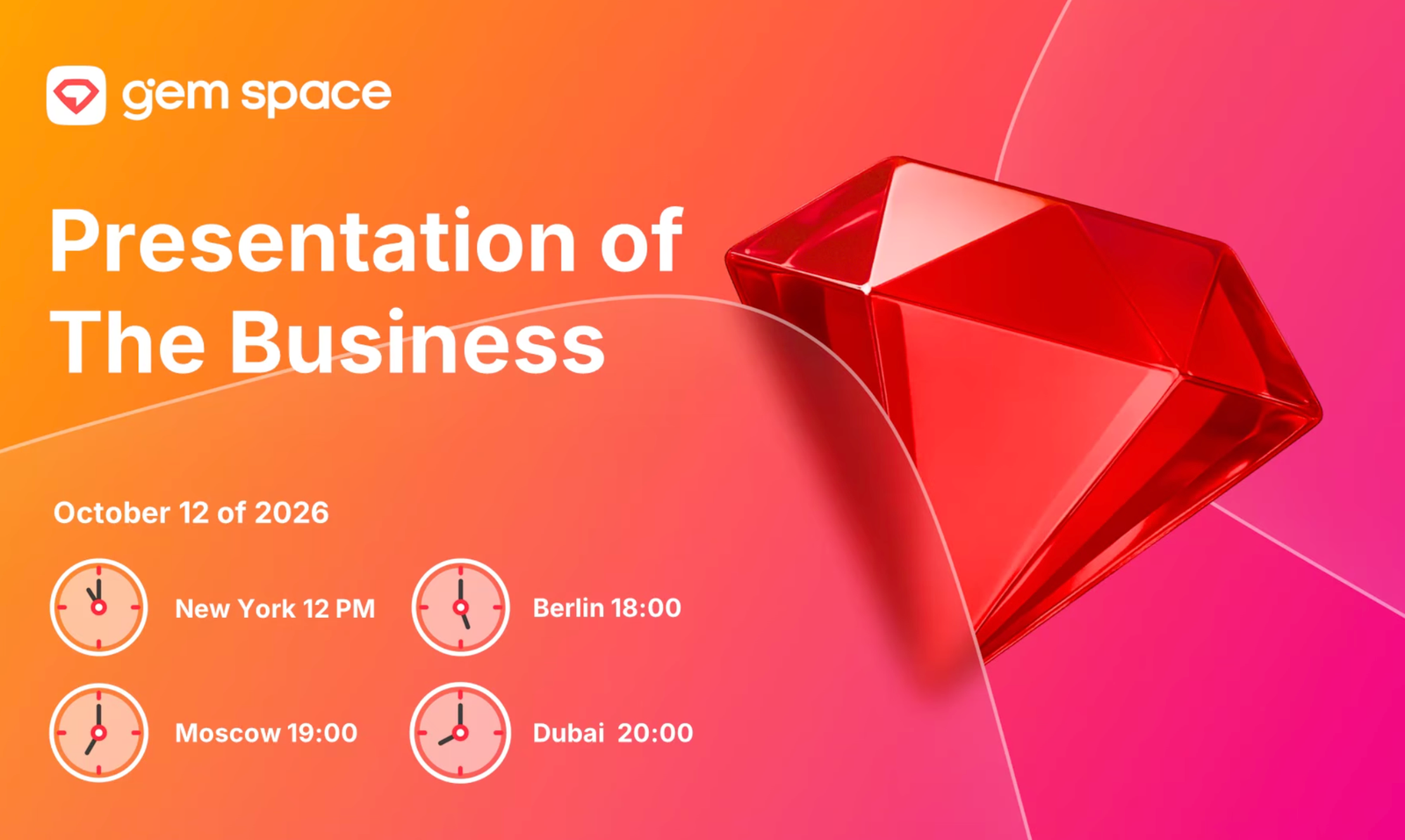
The October 12th conference opened with a direct question: did you profit from the success of WhatsApp?
Most people used WhatsApp long before they heard about its $19 billion acquisition by Facebook in February 2014. The app had become part of everyday life. But ordinary users had no oppfortunity to become investors in that business. The shareholders were founders, employees, and a small number of private investors from closed Silicon Valley venture circles. No one offered the average user a chance to own part of what they were helping to build.
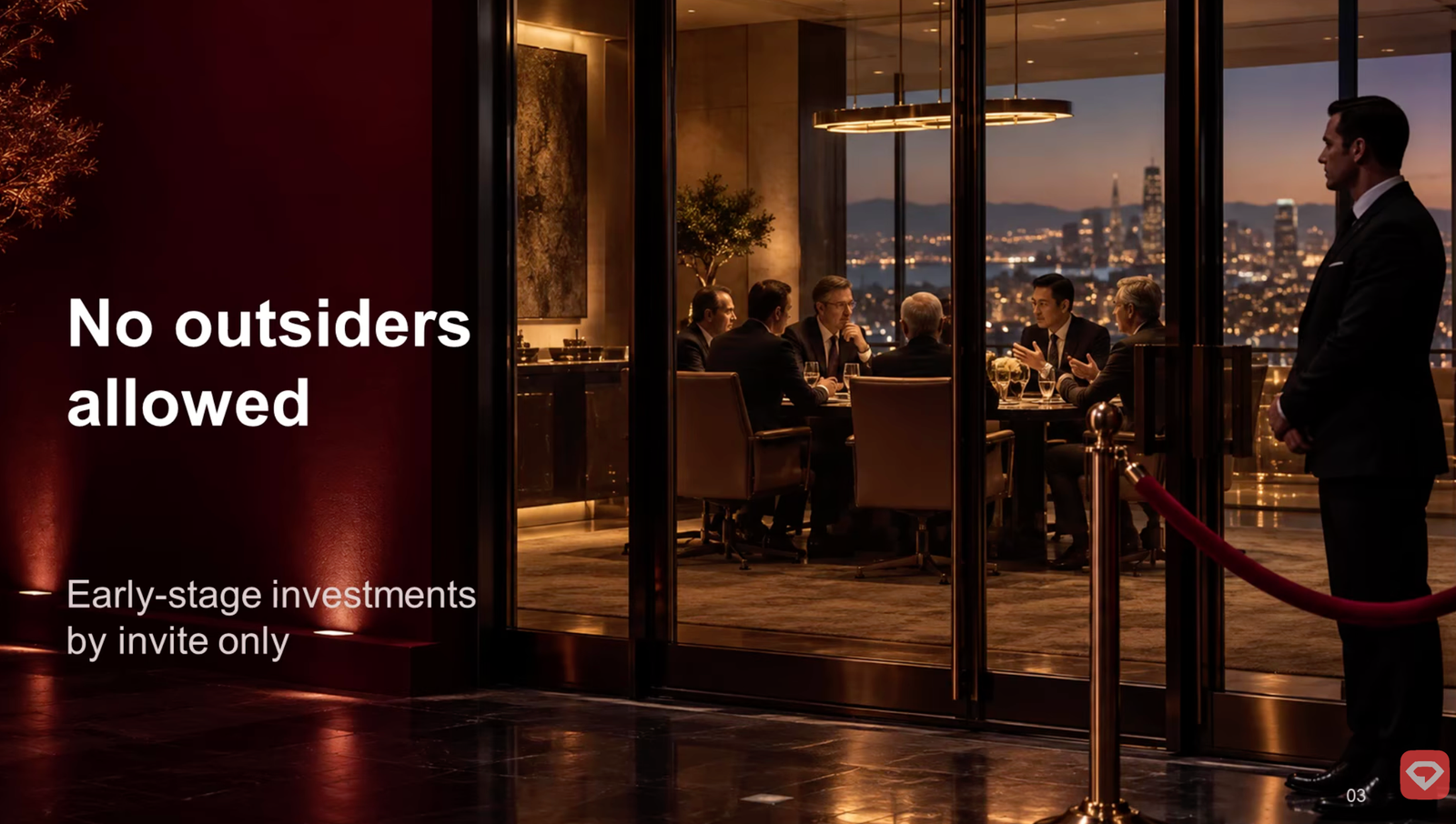
This situation is not an exception — it is the rule across virtually every major venture project of the past twenty to thirty years. Access to participation in large tech projects has historically been restricted to those already inside private investor networks. Closed events, invite-only capital raises, no outsiders allowed.
The question Gem Space asked from the beginning was whether this could be changed. Whether ordinary people with modest capital could be given a genuine chance to participate in building a large technology platform — not as users, but as co-owners. That question became one of the founding motivations of the project. Anyone can join, explore the product, understand the terms, and purchase shares they can afford — whether that means $200 or significantly more. Participation is clear and accessible.
The History Behind the Platform
The path to this point was neither straight nor easy.
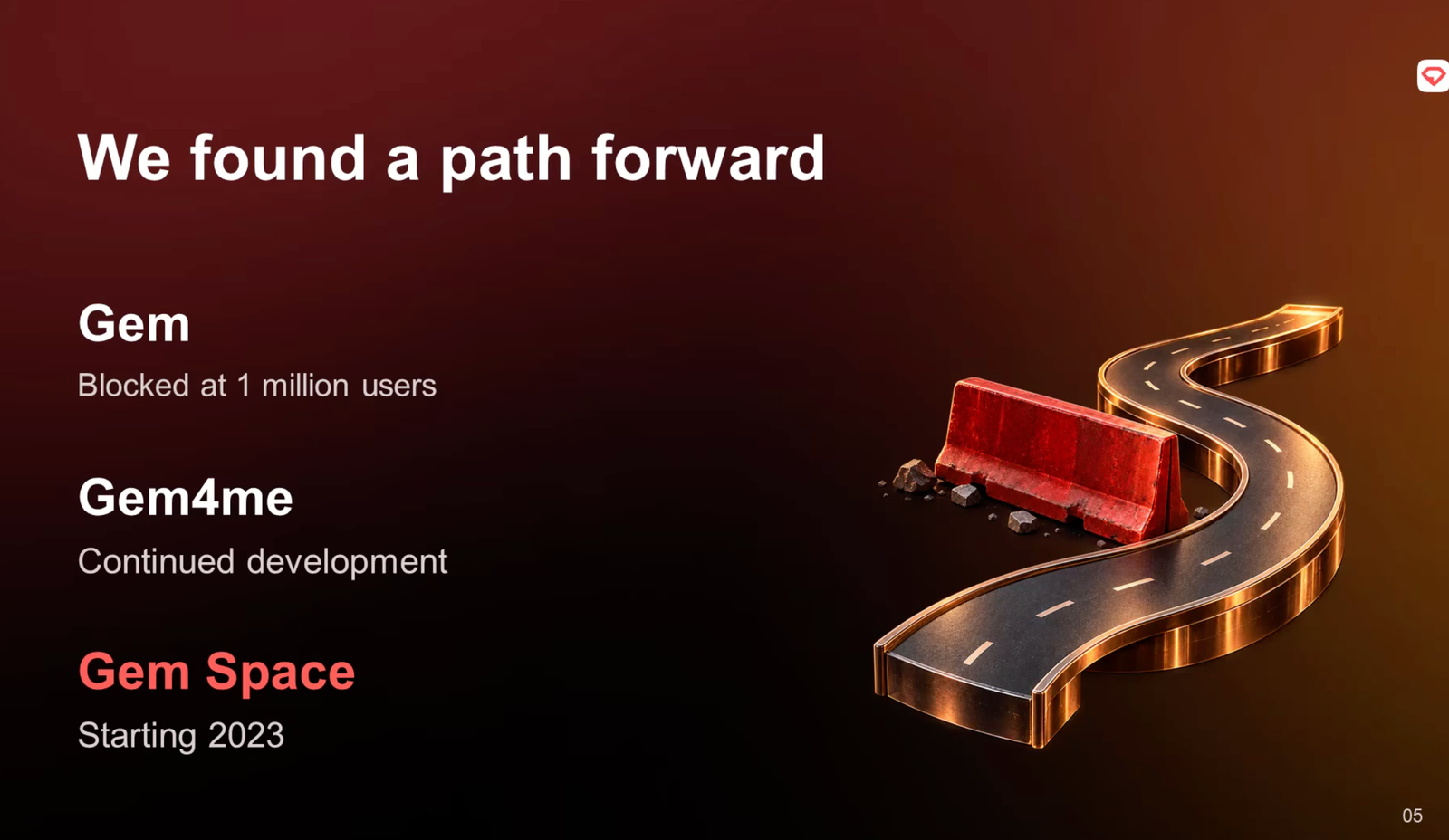
The application was originally called GEM. It grew successfully and reached 1 million users — and then one morning the team woke up to find the app had been completely blocked by Google. For everyone involved, it was a devastating blow.
But the development team and the investors who believed in the project did not give up. Working through gritted teeth, the team rebuilt the application from scratch under a new name, Gem Forme. Later, in 2023, it was renamed again to Gem Space.
The reason this history matters is straightforward: behind every working product are years of hard work, effort, and accountability. A crisis alone guarantees nothing. What defines a project is what the team does in response to it.
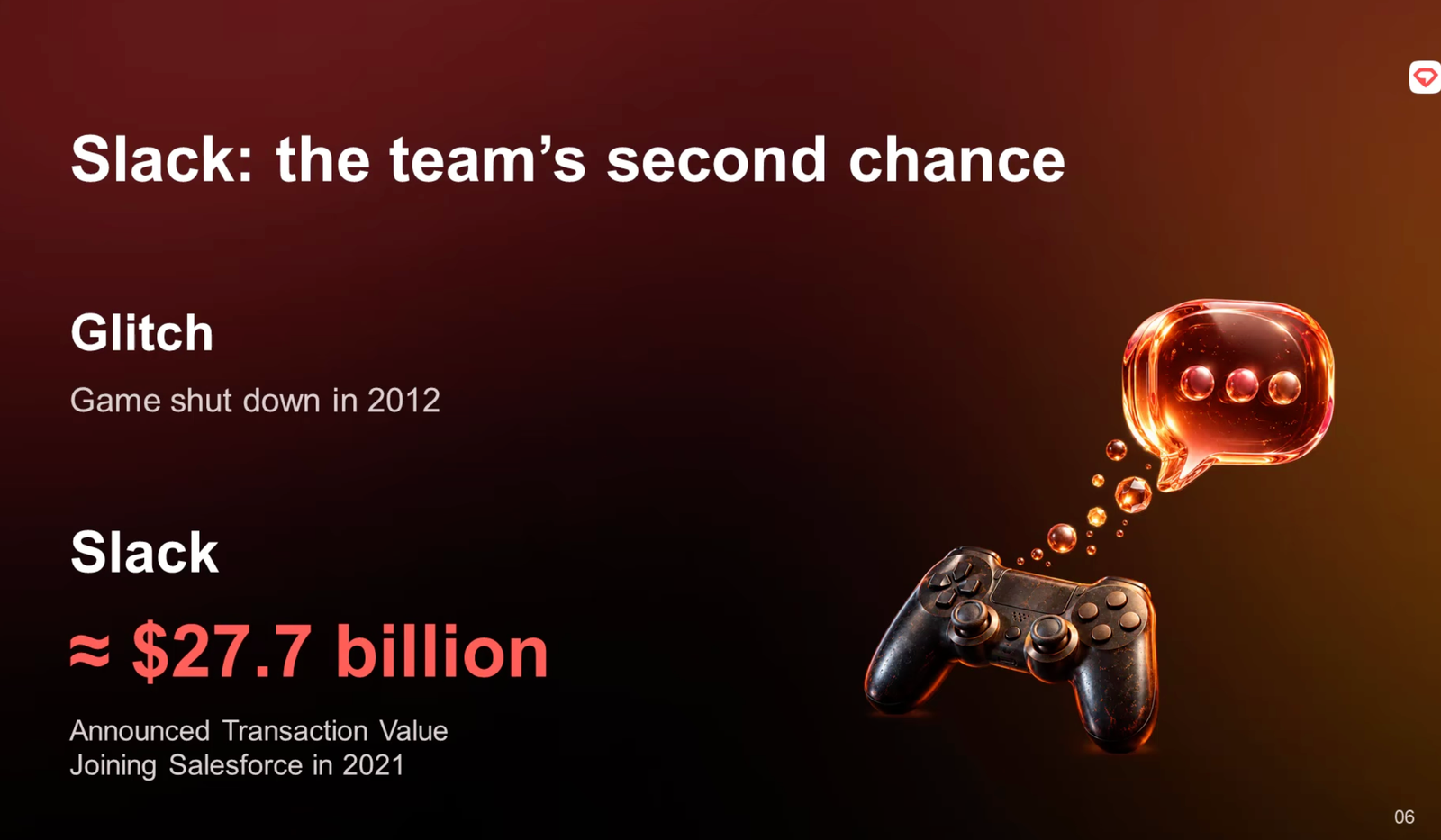
The Slack story offers a parallel worth noting. The team behind Slack originally built a computer game called Glitch, which launched in 2009 and was shut down in 2012 as commercially unsuccessful. What remained was an internal communications tool and a team that refused to quit. Investors chose to continue funding the project at that critical moment. In 2014 Slack launched, grew continuously, and was acquired by Salesforce in 2021 for $27.7 billion. A team’s ability to adapt after failure — and investors who stay the course — is what turns near-collapse into a multi-billion dollar outcome.
What Gem Space Is Today
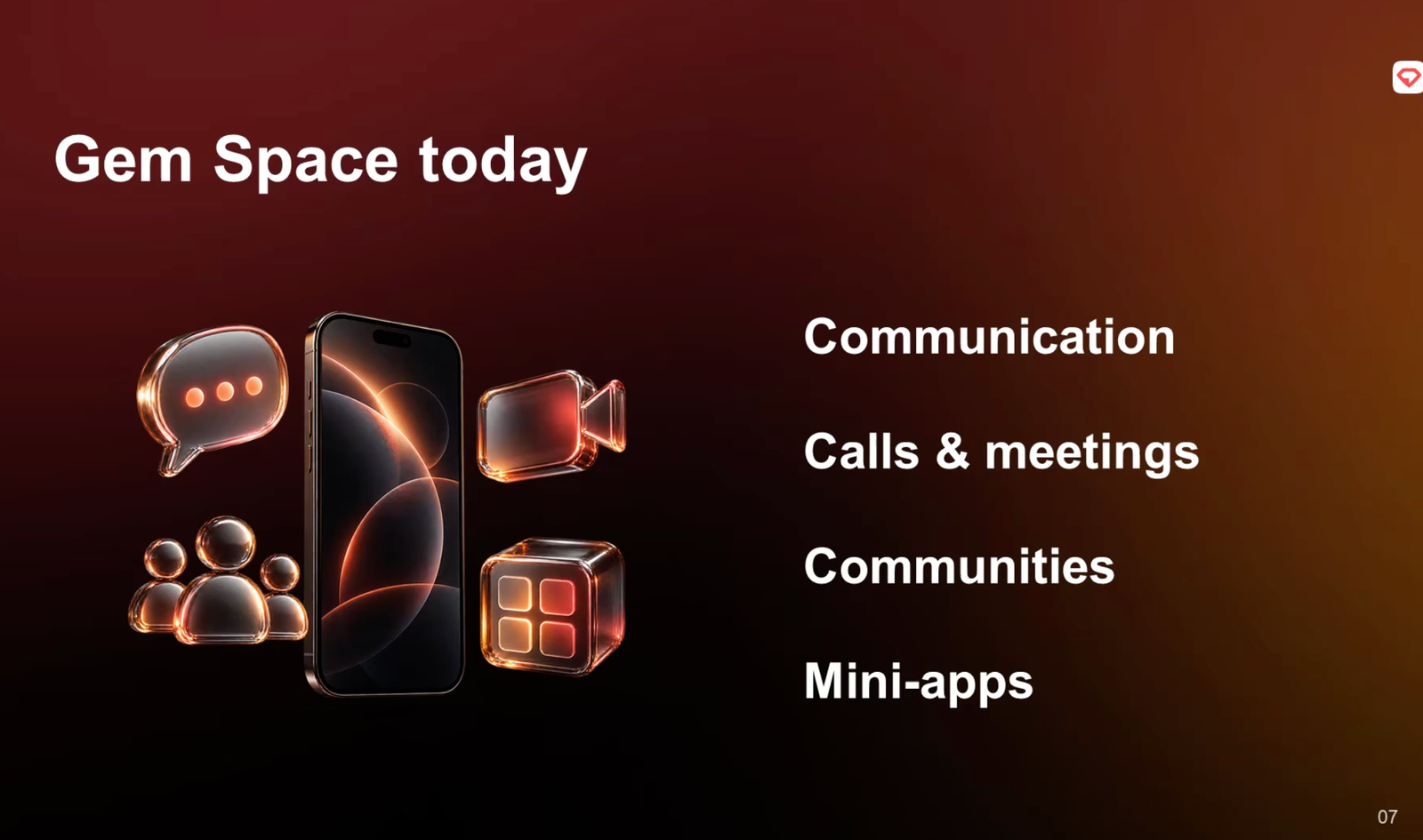
Gem Space is now three parallel business directions built on a single technological foundation.
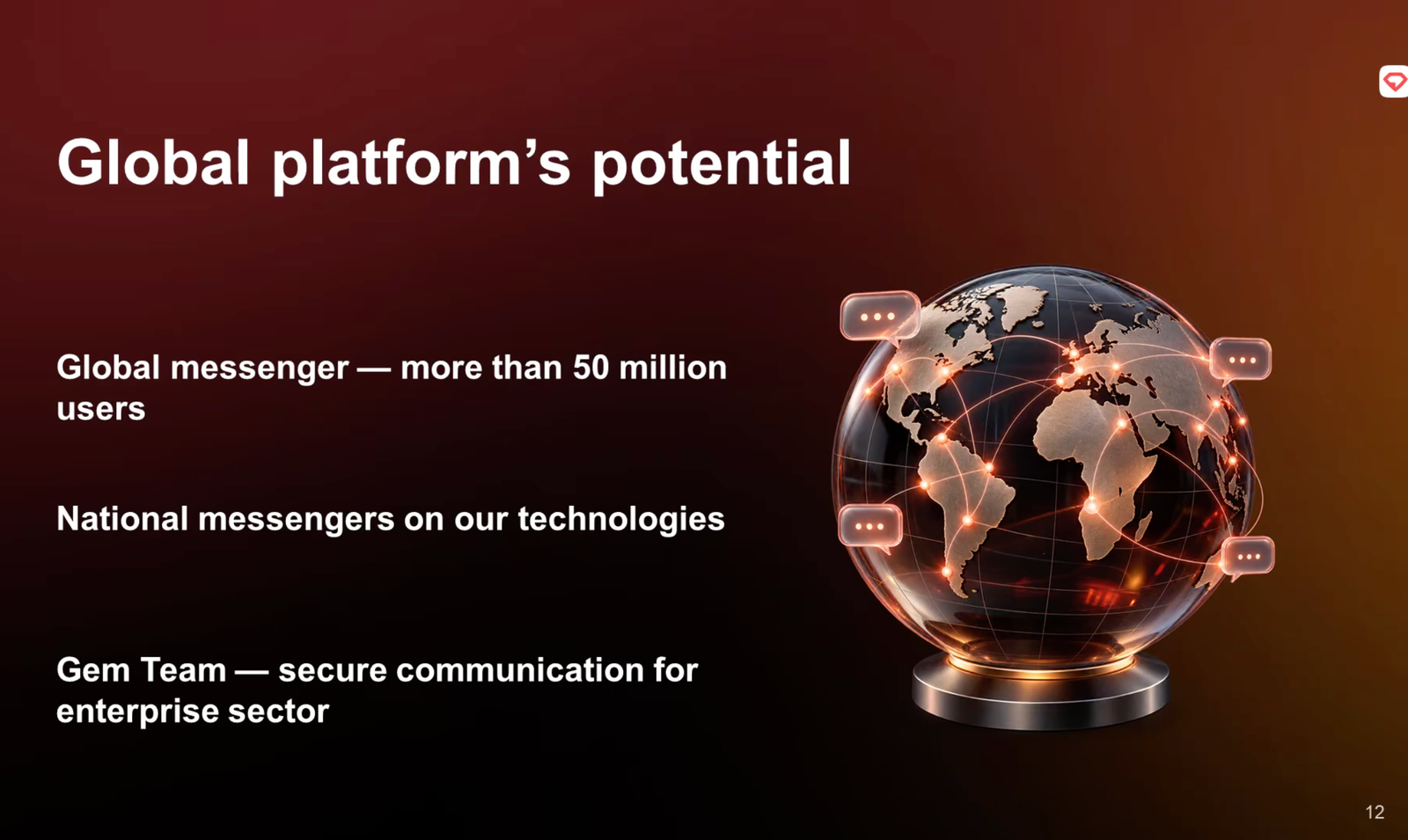
The first is the global messenger — over 50 million users across 194 countries, years of infrastructure and international deployment experience, and a platform actively adding paid services.
The second is national messengers. The migration of Gem Space infrastructure from Google servers to independent proprietary servers is nearly complete. This matters enormously for the regional sales strategy: the team can now deploy the platform in data centers in any country — Malaysia, Argentina, Mexico, or anywhere else — adapt the brand, language, and local requirements, and offer a fully sovereign national messenger with data stored locally under the client’s own control. No starting from scratch. The technical core and the deployment experience are already in place.
The third is Gem Team — the secure, isolated corporate communication platform, deployable on the client’s own servers or in the cloud, developed over ten years into an enterprise-grade product for serious organizations.
All three directions now have monetization underway, which converts the technology built over a decade into revenue and channels it toward further growth.
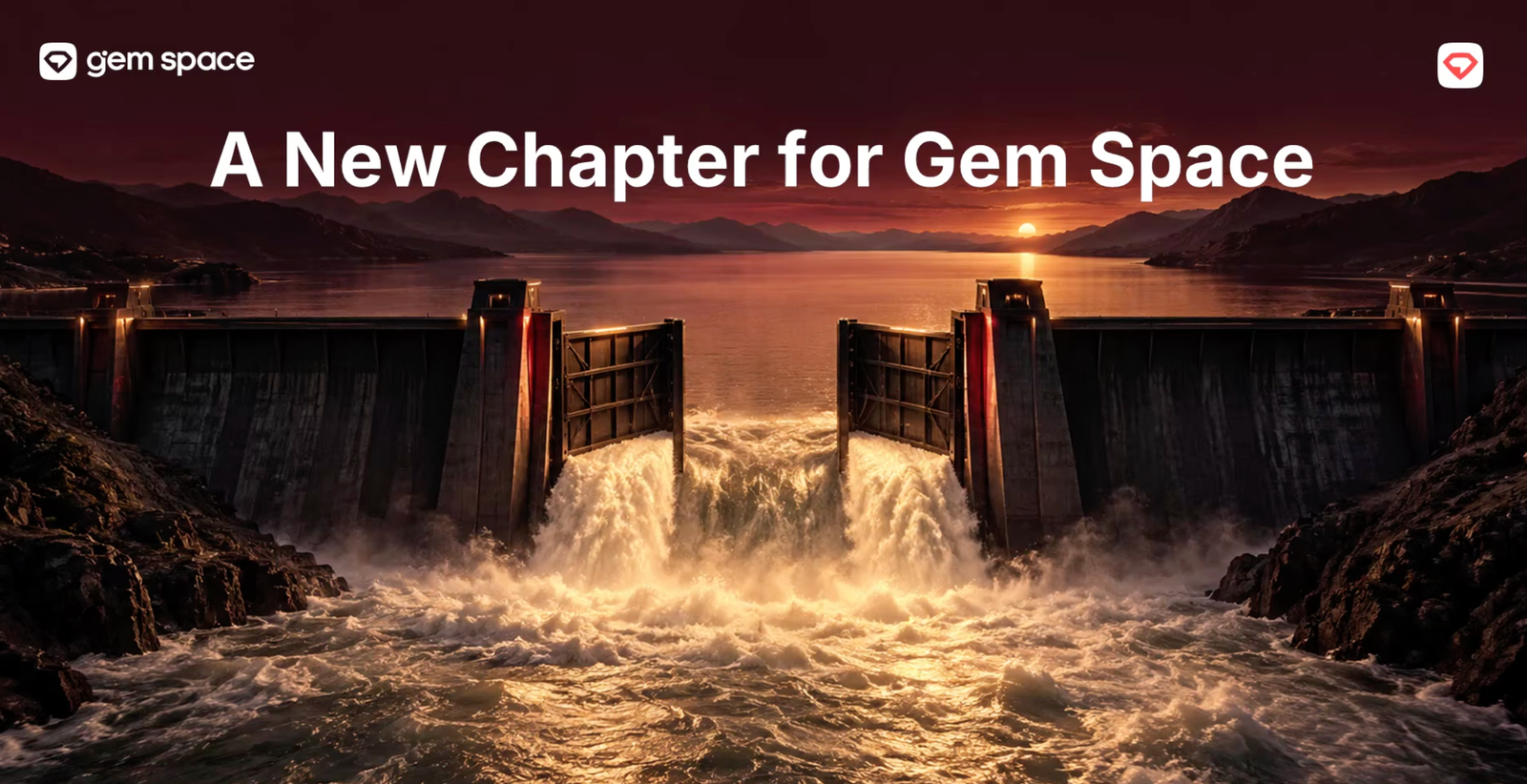
Monetization: The Dam Has Opened
The launch of Gem Premium on September 29th marked the beginning of something fundamentally different from every product update that came before it. Within two weeks of launch, thousands of users had subscribed.
The metaphor offered at the conference captures it well. Launching paid services is like the moment a dam — built over many years — finally opens and water begins flowing to the turbines. The hydroelectric plant existed before. The infrastructure was in place. But without the water moving, no electricity was generated. Now the water is moving.
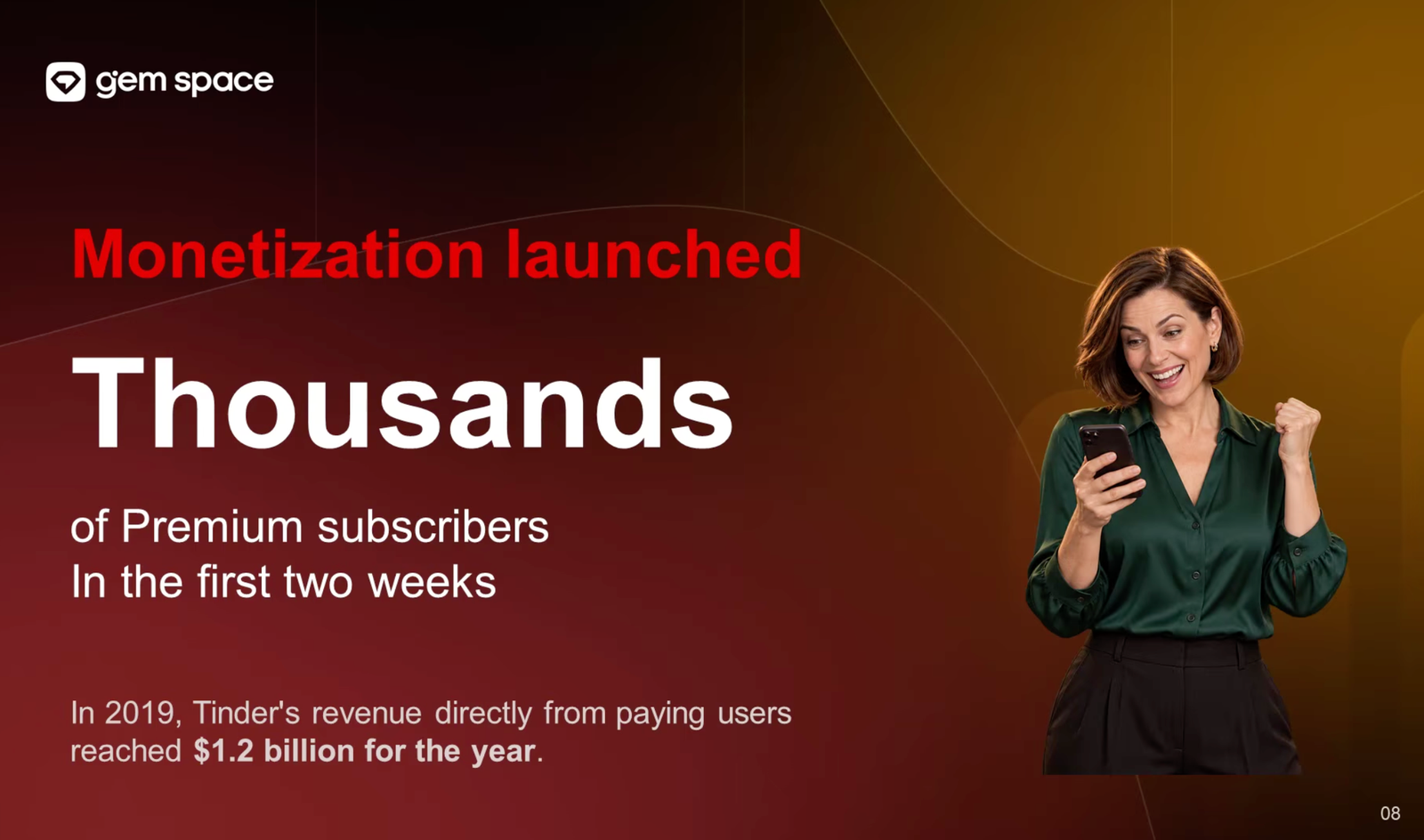
The Tinder example provides a concrete reference point. Tinder launched as a free app and in March 2015 introduced its first paid subscription, Tinder Plus. By 2019, revenue from paid features alone had reached $1.2 billion per year. The mechanism is consistent: users try the product, form a habit, encounter the limits of the free version, and upgrade when paid options let them do more.
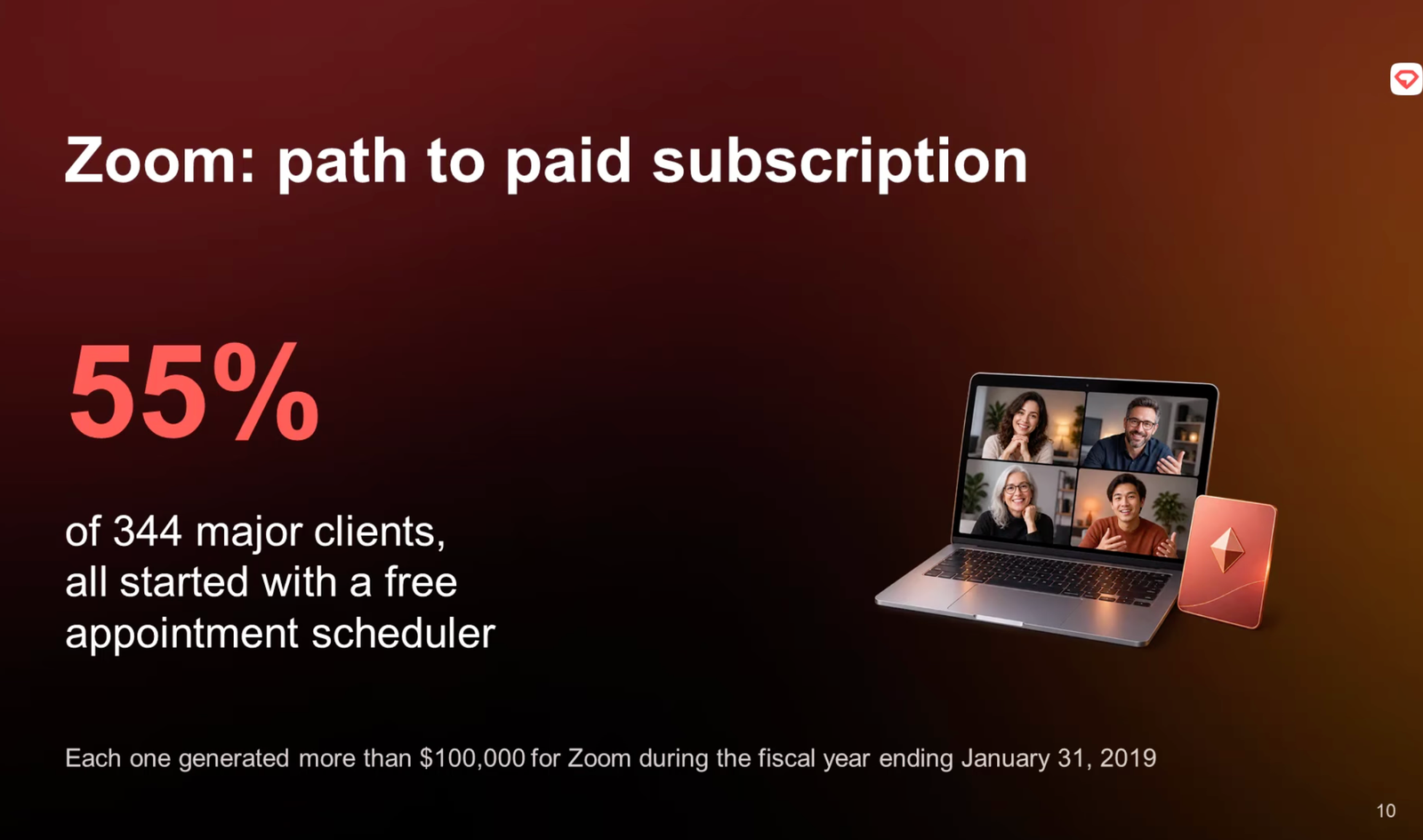
The Zoom example is equally instructive. Analysis of Zoom’s largest corporate clients — 344 companies each paying over $100,000 per year — found that every single one began with a single free account. One employee or manager tried it. The product proved its value. Subscriptions followed, then expanded across the organization.
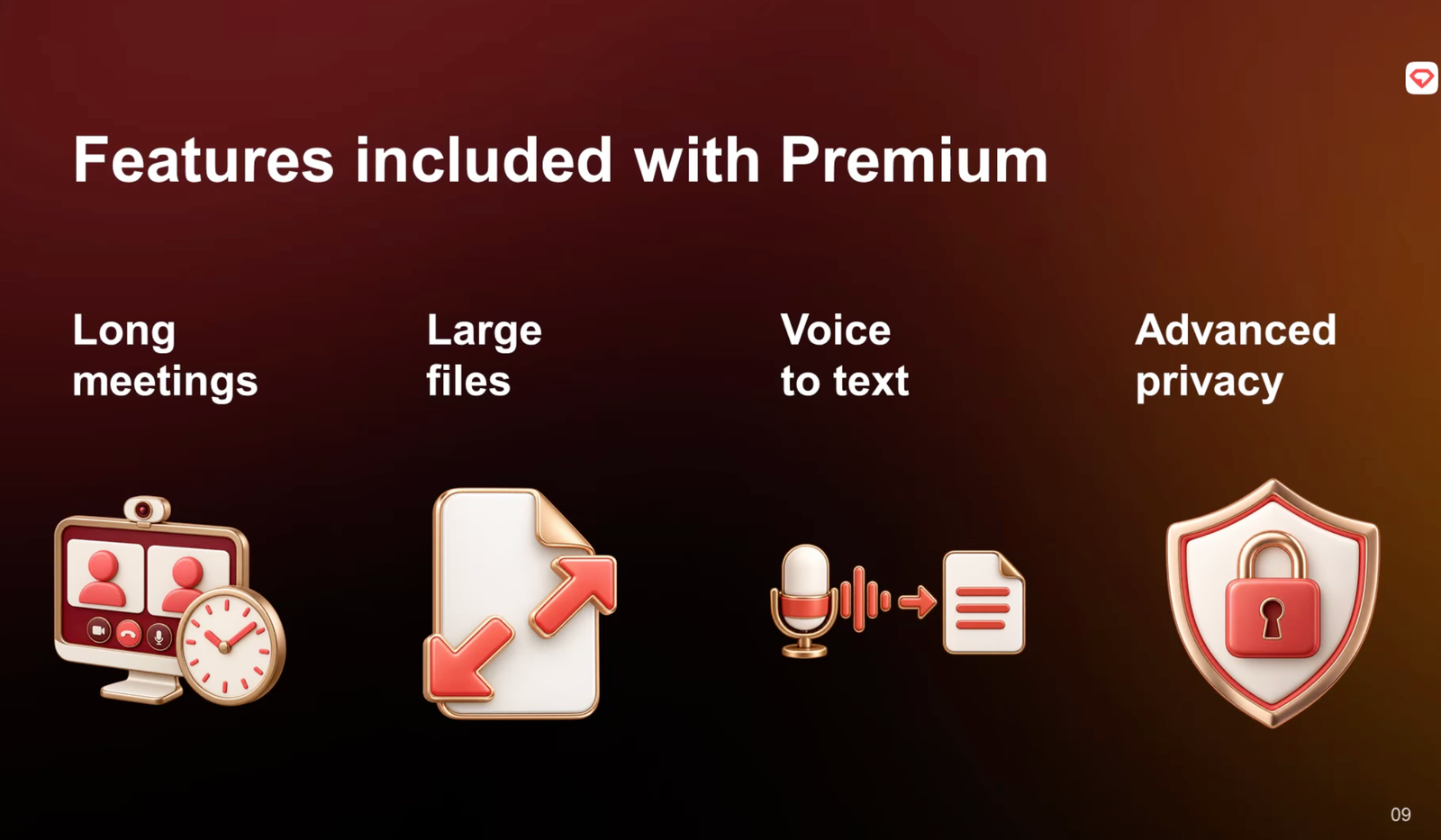
This is the subscription logic Gem Space is now implementing. Premium launched with a set of core features — unlimited call duration, up to 1,000 participants, no file size limits, unlimited voice message transcription, privacy controls, and more. The task going forward is to continuously expand what premium offers and make it more attractive, driving conversion from the existing 50 million user base.
The next monetization stage is mini-apps. There are currently 51 mini-apps in the catalog from dozens of independent developers. The immediate goal is enabling payments within mini-apps, allowing creators and businesses to earn revenue from what they build on the platform and creating a new commission revenue stream for Gem Space. Anyone who wants to sell something — a service, a product, a course, digital content — can do so through a mini-app in the Gem Space ecosystem.
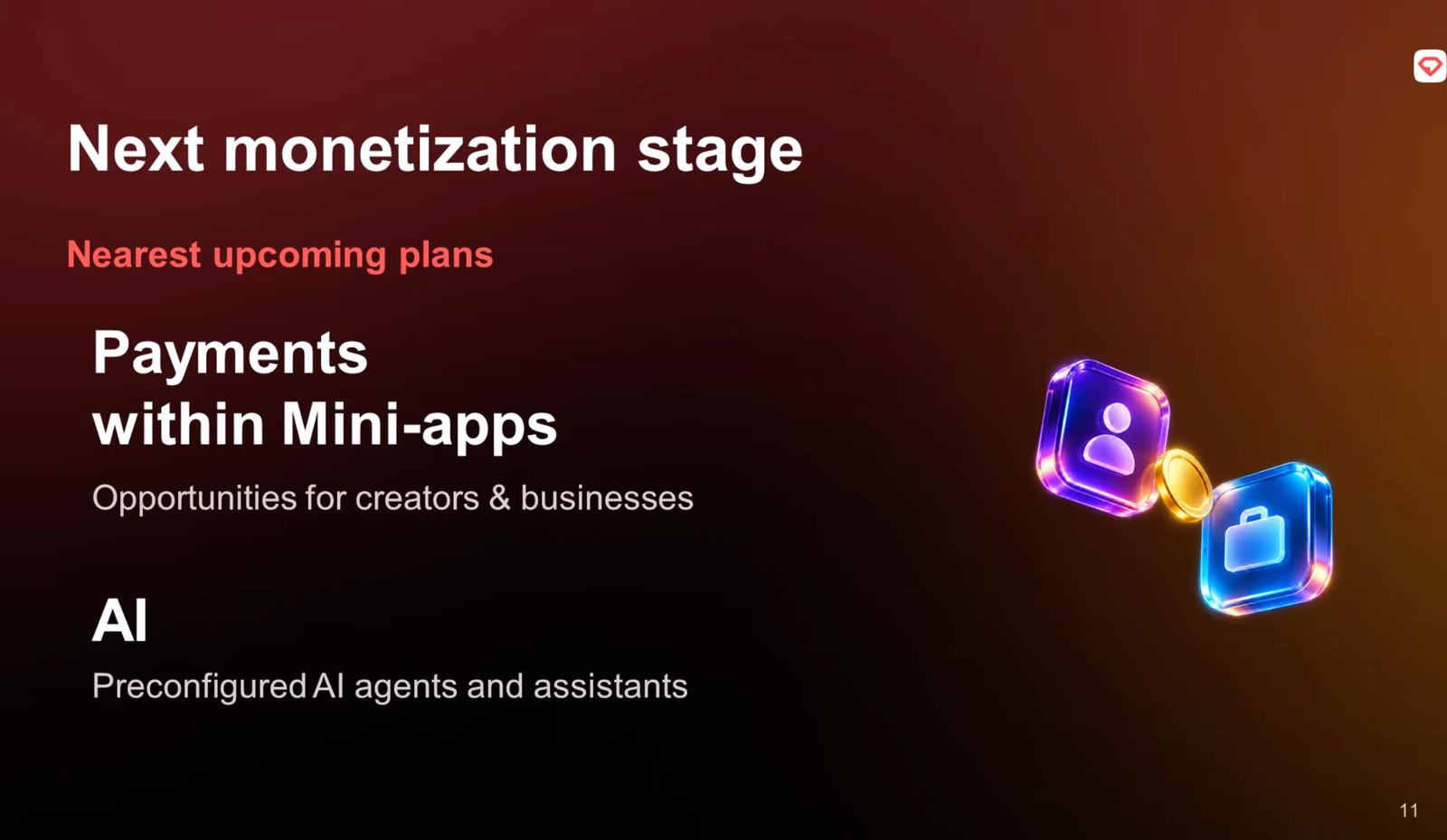
Following mini-apps, AI integration is the next major step — pre-configured agents and assistants that make AI genuinely useful for everyday users without requiring them to understand prompts or model selection. And in 2027, an advertising platform is planned — the revenue multiplier that transformed YouTube from a $1.6 billion acquisition into a business worth tens of billions once ad revenue began flowing.
NXT Tokens and the New Legal Investment Structure
A significant legal and structural development was announced at the conference: the launch of the NXT token investment model through a new licensed company, Nexera DAO LLC, incorporated in the Marshall Islands.
The Marshall Islands officially recognizes DAO LLC as a legal entity — equating decentralized organizations to traditional companies and giving them full legal standing. Nexera DAO LLC holds an official license to issue tokens on the Solana blockchain and has entered into a formal agreement with the Mauritius fund authorizing it to tokenize the fund’s shares and conduct their primary sale and distribution through NXT tokens.
The legal structure works as follows.
The Mauritius fund holds the underlying assets — the intellectual property of the applications and the fund shares that investors own. Nexera DAO LLC acts as the technological and issuing center, issuing NXT tokens on Solana. Smart contracts with legal force serve as founding documents. The tokens are recognized as instruments of participation in the company. A swap agreement — an exchange agreement — allows investors to exchange NXT tokens directly for shares in the Mauritius fund through a seamless, legally recorded process on the Solana blockchain.
The practical advantages of this structure are significant. Instant transaction speeds on Solana. Full access to corporate documentation. Compliance with DAO regulations. No corporate tax, capital gains tax, or dividend tax on income earned outside the Marshall Islands. The ability to sell tokens practically worldwide with a clear, open legal connection between the token and the fund shares. And critically — regardless of what happens in the countries where investors live, their rights to shares in the fund and to the intellectual property of the applications are firmly confirmed, secured, and will not be affected by external events.
The Mauritius jurisdiction was chosen deliberately. It is neutral, accepts investors from all passports, and operates under a combination of British law — flexible and precedent-based — and French continental law — precise and clearly defined. This combination allows the fund to navigate both principle-based and rule-based legal environments. The legal structure is now complete, and the transition to Nexera DAO LLC is in final process this week.
The GCC and MENA Region: Adapting to Permanent Instability
The team in the Middle East is working in full-time mode despite ongoing regional instability — and the strategy has shifted in response to that instability becoming a long-term condition rather than a temporary disruption.
The most significant development to note is that Gem Team demonstrated under active conditions that its software can be migrated from destroyed servers to new infrastructure within approximately 12 hours. During attacks in the UAE, Amazon cloud servers were destroyed and cloud services went down. Gem Team showed potential clients in real time how the product could be redeployed rapidly — code intact, competency matrix in place, system operational within half a day.
This capability is now actively driving commercial interest in the region. Infrastructure wars are ongoing. Organizations that rely on cloud services from major providers discovered suddenly that those services could disappear. Companies and government entities that had deployed Gem Team on-premise continued operating regardless. That is the product’s most compelling sales argument in the current environment, and the team is using it.
The promotional strategy has shifted accordingly. The message is no longer primarily about features or price. It is about survival, continuity, and the ability to maintain communications under the most adverse conditions. In a world where communication and information are described as the new gold, this message resonates at the highest levels of client organizations.
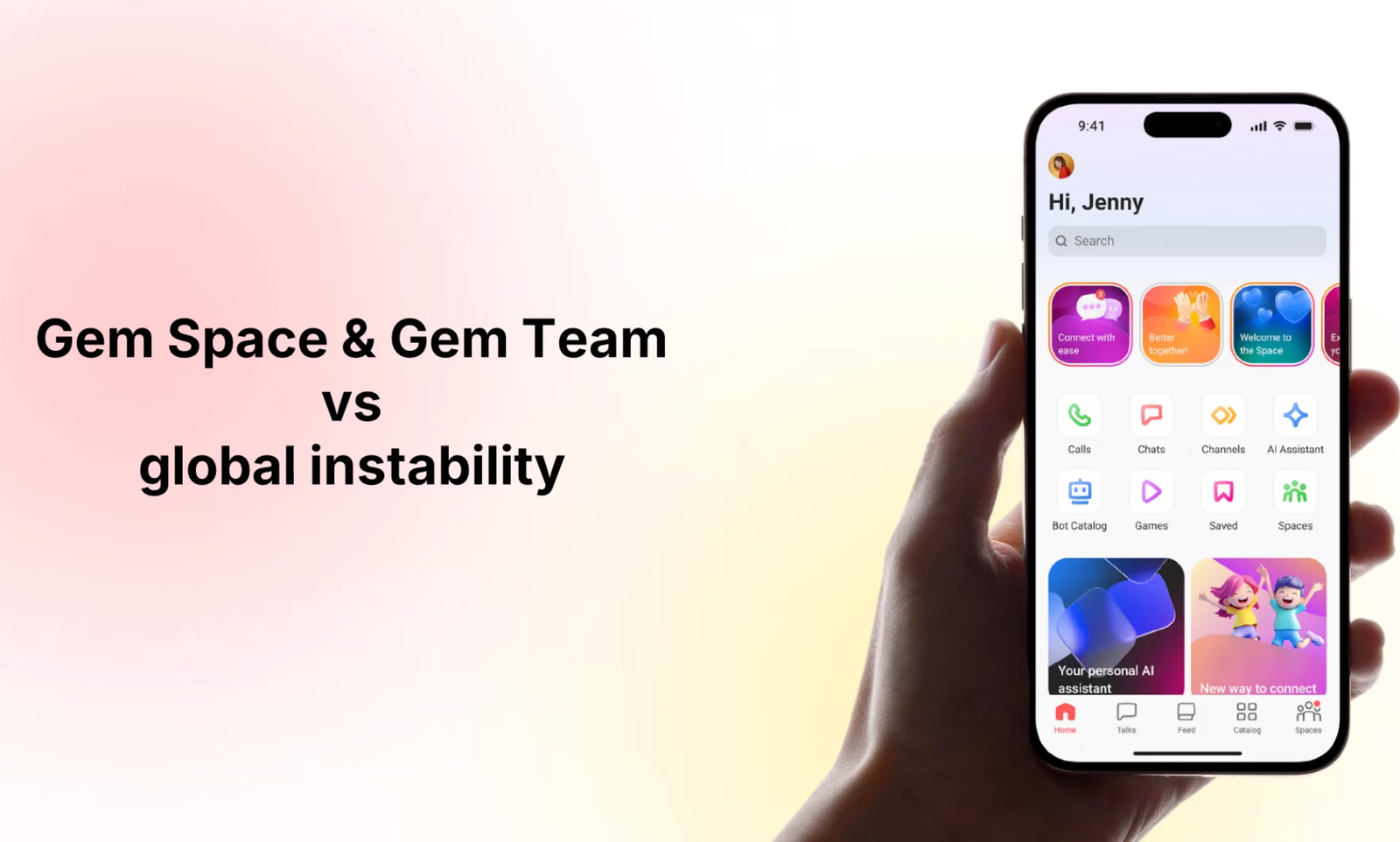
The 2008 Parallel: Crisis Produces the Best Companies
The closing remarks of the October 12th conference offered a reminder that is easy to forget during periods of fear.
During the 2008 financial crisis — which at the time felt catastrophic, with major financial institutions collapsing and countless individuals losing everything — money did not disappear. It never does during a crisis. It flows from some projects to others. And it is precisely in that environment that Airbnb, WhatsApp, Uber, Spotify, Dropbox, and Minecraft were founded. All of them found investors during the most severe crisis in a generation. All of them are now worth billions.
The difference between Gem Space today and those companies at their founding is significant. Gem Space is not a startup entering a crisis. It is an established company with global products at the final stage of development. The infrastructure exists. The technology can be deployed in any country. The users are there. Monetization has begun. The legal structure is solid and internationally sound. The team has proven its ability to survive and adapt through ten years of challenges.
The global instabilities of the current moment, rather than threatening the project, actually work in its favour. National sovereignty demands for communications infrastructure, the need for deployment-resilient solutions, the collapse of trust in centralized cloud providers, the fragmentation of the global technology market into separate zones — all of these create demand for exactly what Gem Space and Gem Team offer.
The dam has opened. The water is moving.
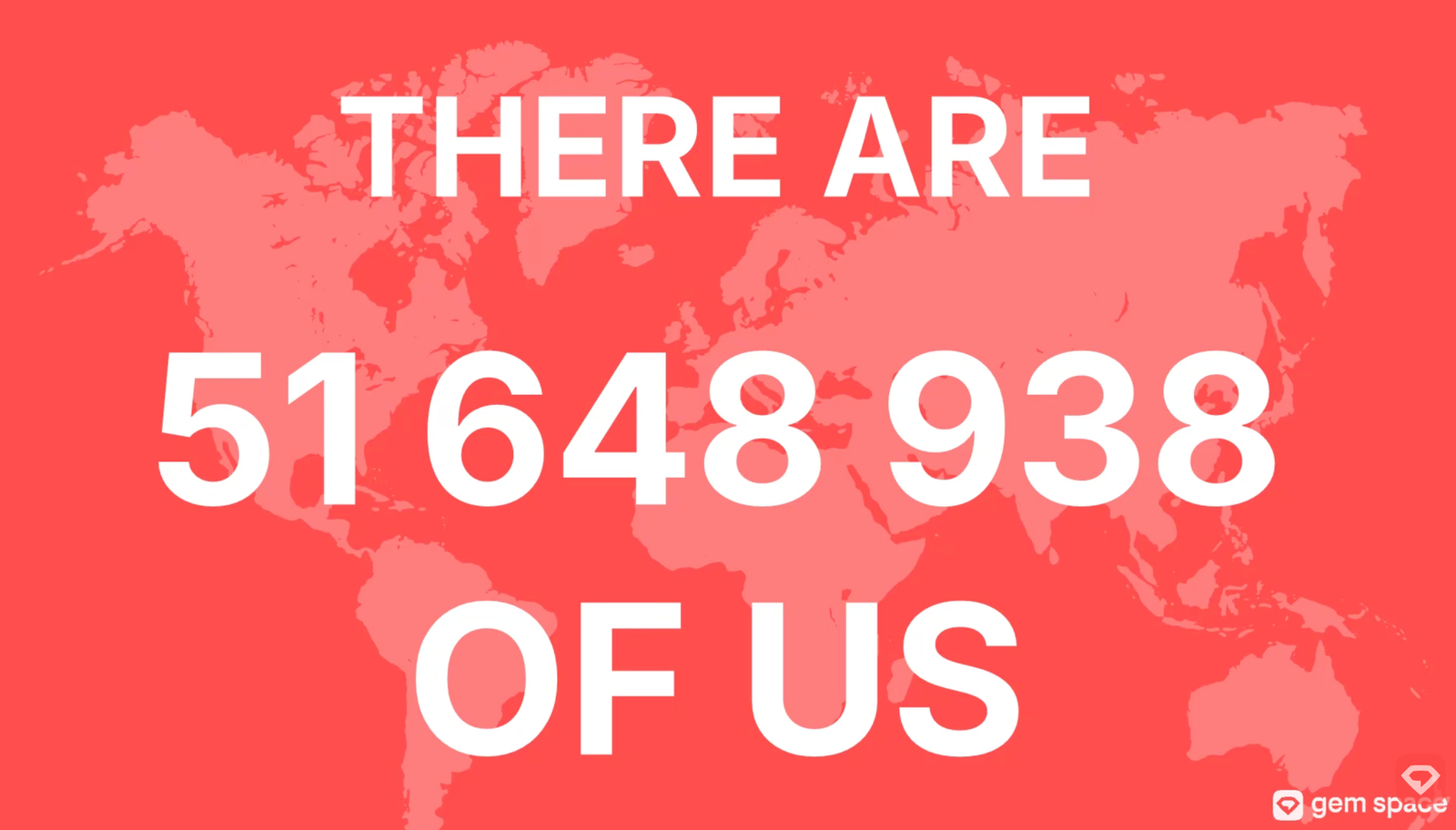
Current installations: 51,648,938 users across 194 countries.
Stay informed — join our Angels Team channel in Gem Space.
Comments are closed