
Understanding the Phase Crisis — and Why It’s Actually an Opportunity
The opening of this week’s conference took a broader view than usual — stepping back from product updates to address the larger context in which Gem Soft is operating and why that context, despite its turbulence, is actually working in the company’s favor.
A phase crisis, as defined at the conference, is a crisis that occurs during the transition from one technological and economic order to another. The world is currently in the middle of exactly such a transition. The tension is no longer seasonal — it is constant. And while that creates disruption across every industry and every market, it also creates something else: opportunity.

This is not a new pattern. During the 2008 global financial crisis — arguably the most severe phase crisis in recent memory — some of the most valuable companies in existence today were founded. The crisis did not prevent their creation. In many ways, it enabled it. People with the right ideas, the right products, and the right resilience built things during those years that are now worth billions.
The same logic applies today. Phase crises do not destroy value — they redistribute it. Companies and platforms that address fundamental human needs — communication, earning income, monetizing skills and knowledge — do not decline during these periods. They become more relevant.
Gem Soft’s platform was built with precisely this understanding. As automation increases and traditional employment models shift, platforms that enable people to monetize their intellect, skills, and capabilities become essential infrastructure for the new economy. The data that flows through these platforms becomes the primary resource of the next economic order — just as oil was the primary resource of the last one.
In turbulent conditions, the company’s response is deliberate and consistent: continue growing the user base, refine the product, expand into niches that are opening up precisely because of the instability. As a neutral platform not tied to any country or political figure, Gem Space is gaining users in markets where other services are restricted or unavailable. The platform’s value grows with every user who joins — and the conditions of the current crisis are accelerating that growth, not slowing it.
The key to resilience, as articulated at the conference, comes down to three things: the right economic model, collective intelligence, and collective will. These are intangible assets, but they are what allow the company to convert uncertainty into forward momentum. Limited resources, rather than being a weakness, have forced efficiency. As the conference put it — in today’s world, survival belongs not to the strongest or the largest, but to those who can adapt. And adaptation, grounded in the right founding decisions, creates a flywheel effect that compounds over time.
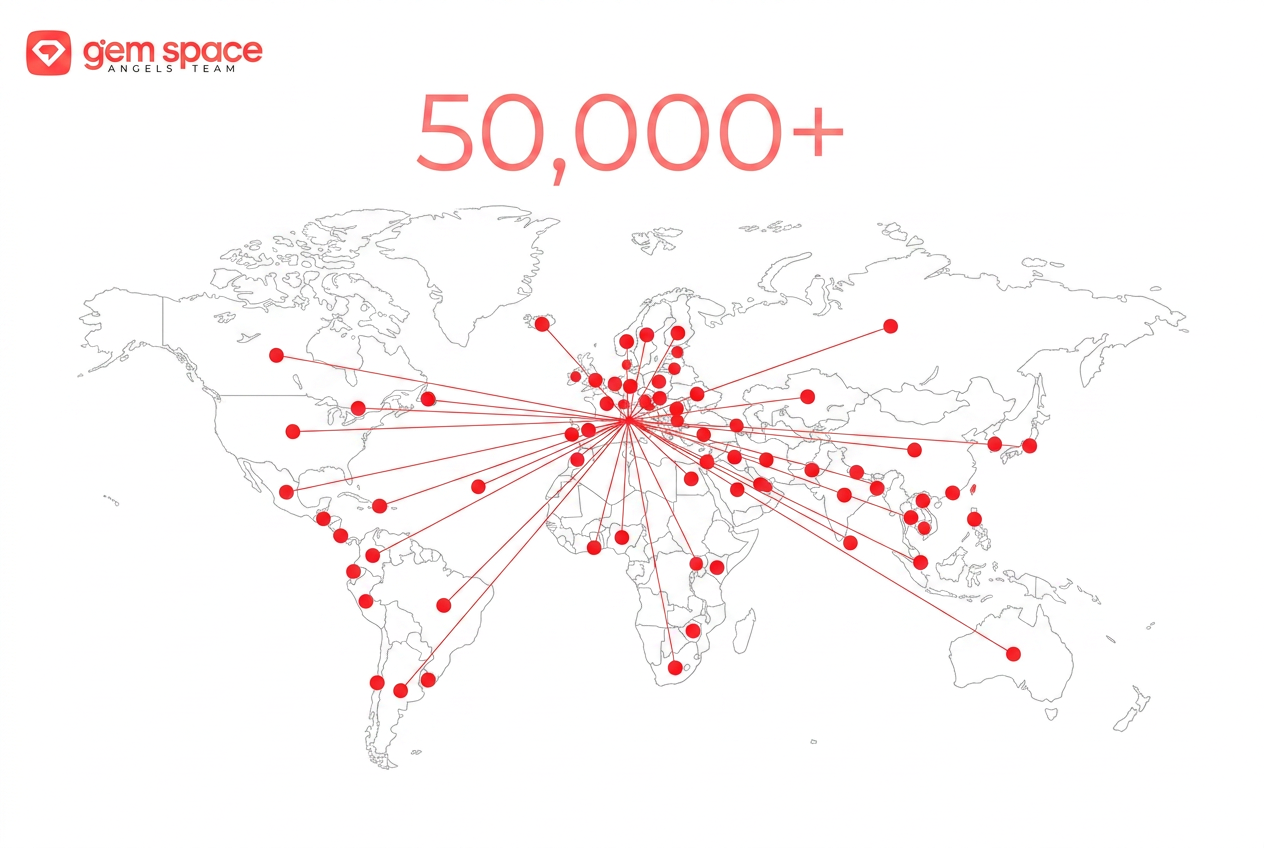
50,000 Investors Across 70+ Countries
A significant milestone was shared at the conference. The number of investors in the project has now exceeded 50,000 people across more than 70 countries worldwide.
Within this group there are two distinct categories — active investors who are actively building and running the business alongside the team, and passive investors who have committed their funds and are waiting for the project to reach its conclusion. Both roles are valid and both are important. But the active investor group — referred to internally as the president’s team — represents something particularly meaningful. These are people who invest not only money but time, energy, and personal commitment into the development of the business.
What Actually Determines Whether a Venture Succeeds or Fails
A significant portion of the conference was dedicated to something that is rarely discussed openly in investor briefings — the real dynamics of the relationship between teams and investors in venture business, and why most startups fail.
The common perception is that venture success works like this: someone has a brilliant idea, investors compete to get in, the team builds the product, goes public or sells, and everyone gets paid. In reality, that version of events almost never happens.
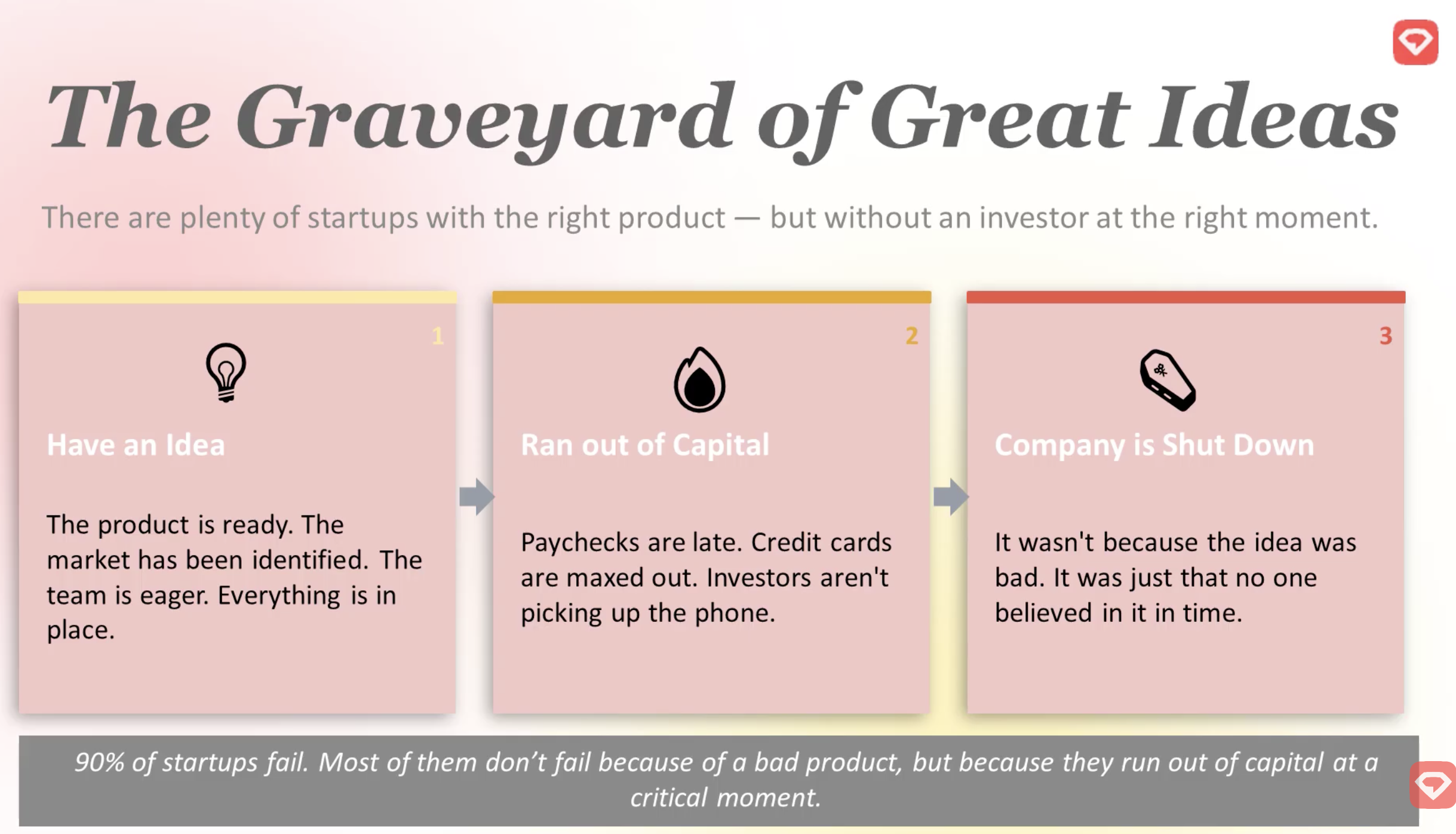
What actually happens is that teams with genuinely good ideas — the right product, the right market, the right talent — collapse not because their idea was wrong, but because funding ran out at a critical moment. Salaries get delayed. Investors stop answering. Developers who came to work for a salary leave for jobs that pay them. The company shuts down. Not because the idea failed, but because the relationship between team and investor broke down at the wrong time.
This is why 90% of startups fall into what is called the valley of death. It is mostly not a product problem — it is a capital and trust problem.
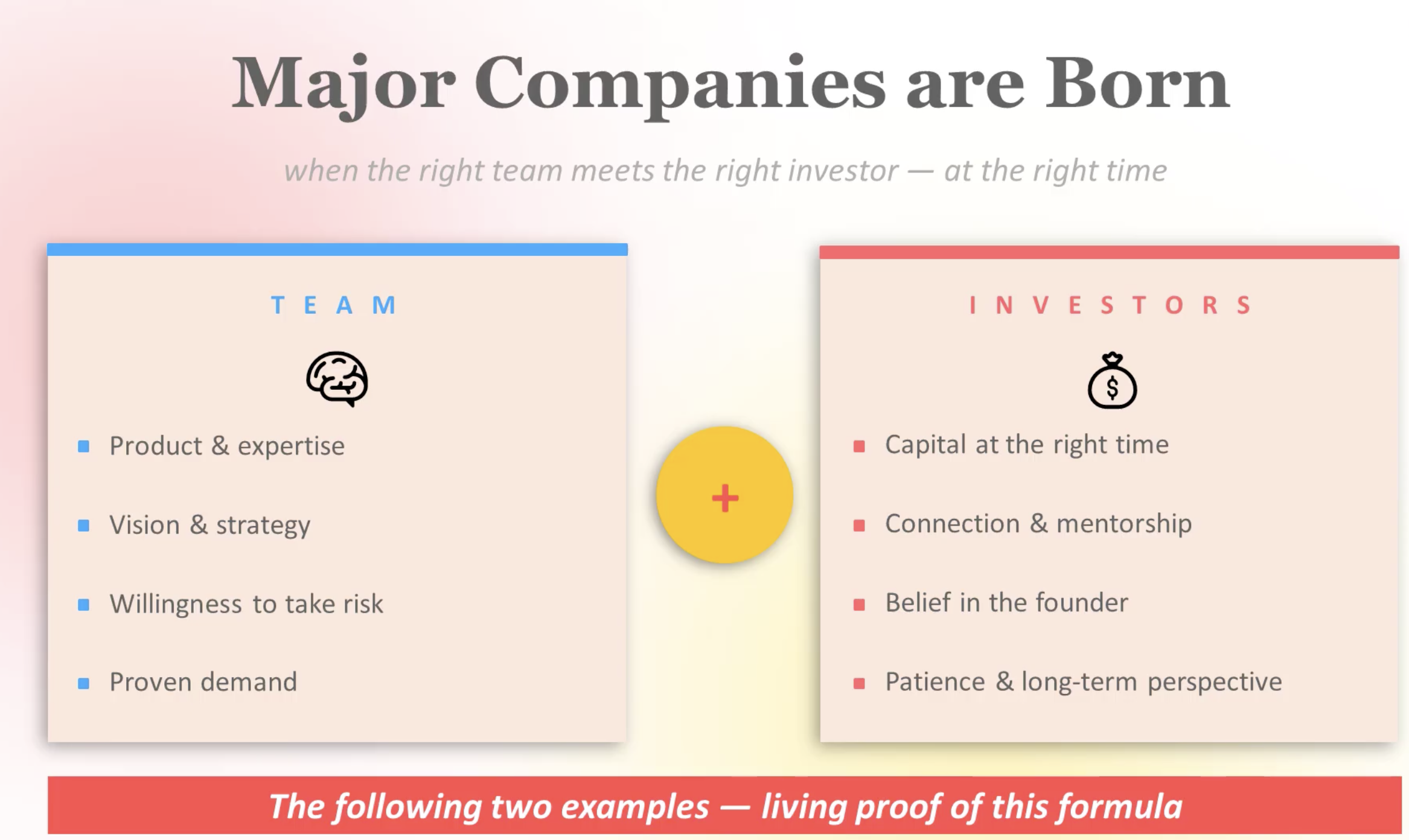
Great companies are built when the right team meets the right investor at the right moment. The team brings the idea, the product, the expertise, the vision, and the willingness to take risks. The investor brings capital at the right time, connections, mentorship, patience, and long-term belief in what is being built. When both sides hold up their end, extraordinary things become possible.
Airbnb: When Persistence Beats Everything
The first example shared to illustrate this dynamic was Airbnb.
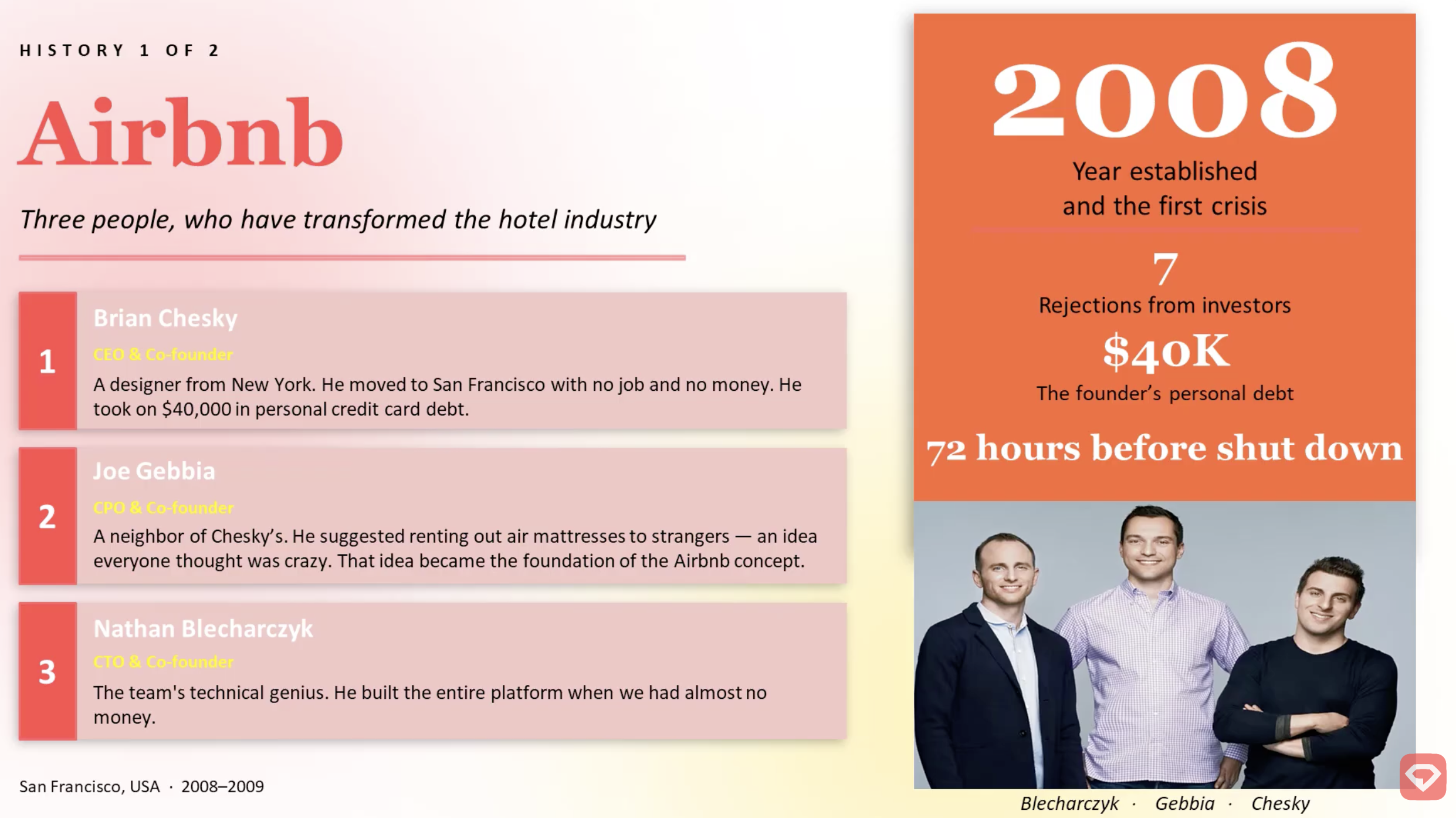
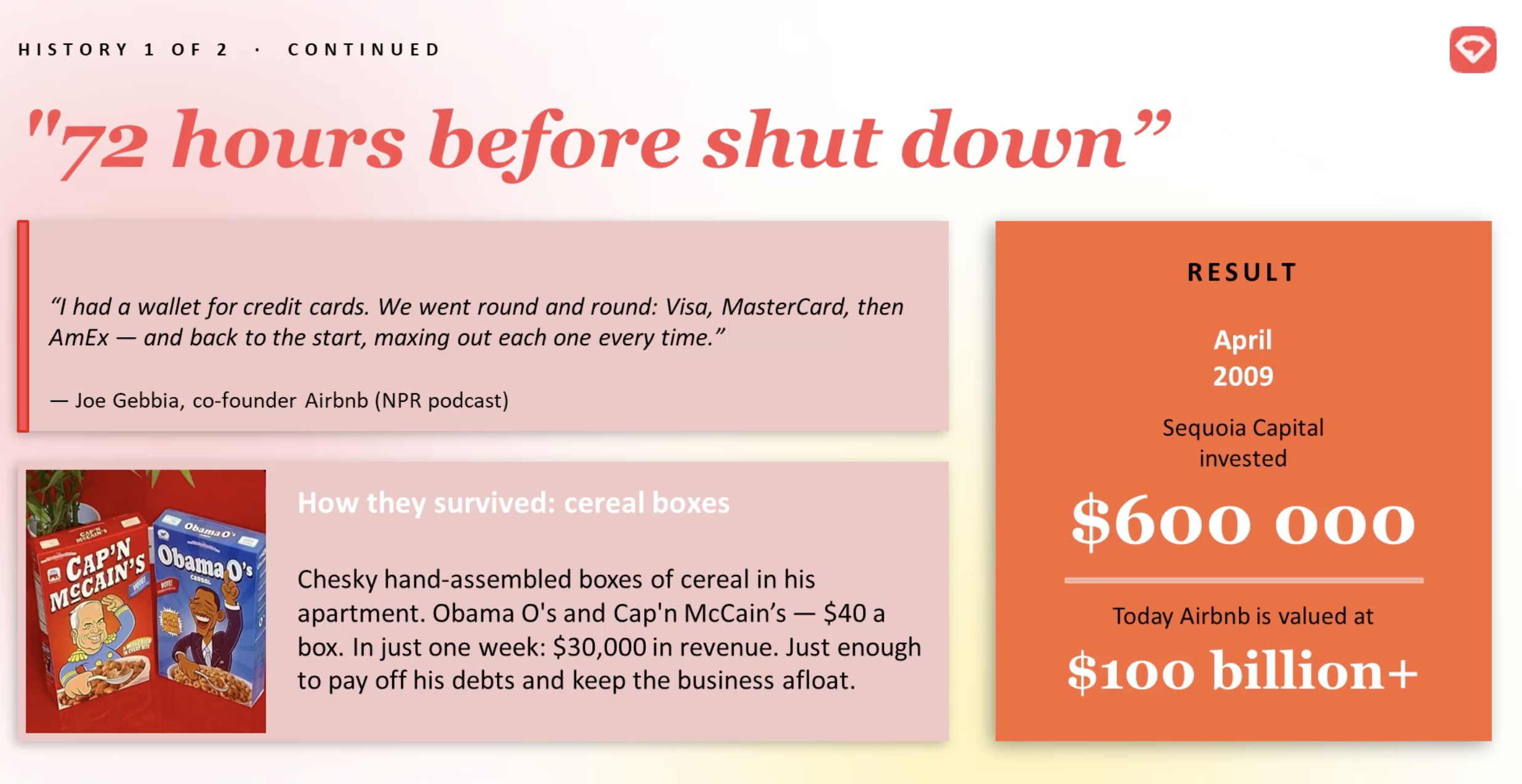
In 2008, the idea of renting out your apartment to complete strangers while you were away seemed absurd to most people. Brian Chesky, Joe Gebbia, and Nathan Blecharczyk started building it anyway. They were rejected by seven major investors. They kept going, funding development on personal credit cards — cycling through Visa, Mastercard, and American Express, accumulating around $40,000 in debt.
At one particularly critical moment, CEO Brian Chesky was manually assembling and gluing cereal boxes in his apartment — buying cereal for $5 and selling the branded boxes for $40 each, raising $30,000 in a week just to keep the company alive. That level of commitment and resourcefulness eventually caught the attention of Sequoia Capital, which provided the first $600,000 in proper funding.
Today, Airbnb is worth over $100 billion — more than the largest hotel chains in the world, despite owning none of the properties listed on its platform. It is, at its core, an IT company. The story is one of absolute persistence meeting the right investor at the right moment.
This is the kind of team Gem Soft’s leadership identifies with. The project was started without a ready-made team, without deep technical expertise at the outset, and without a clear map for how to build a global messenger from scratch. It was vision, early investor support, and stubborn forward momentum that brought the project to where it stands today — 50 million users, 194 countries, and a $2.1 billion valuation.
Slack: When Failure Becomes the Foundation
The second example was Slack — and it is perhaps an even more instructive story.
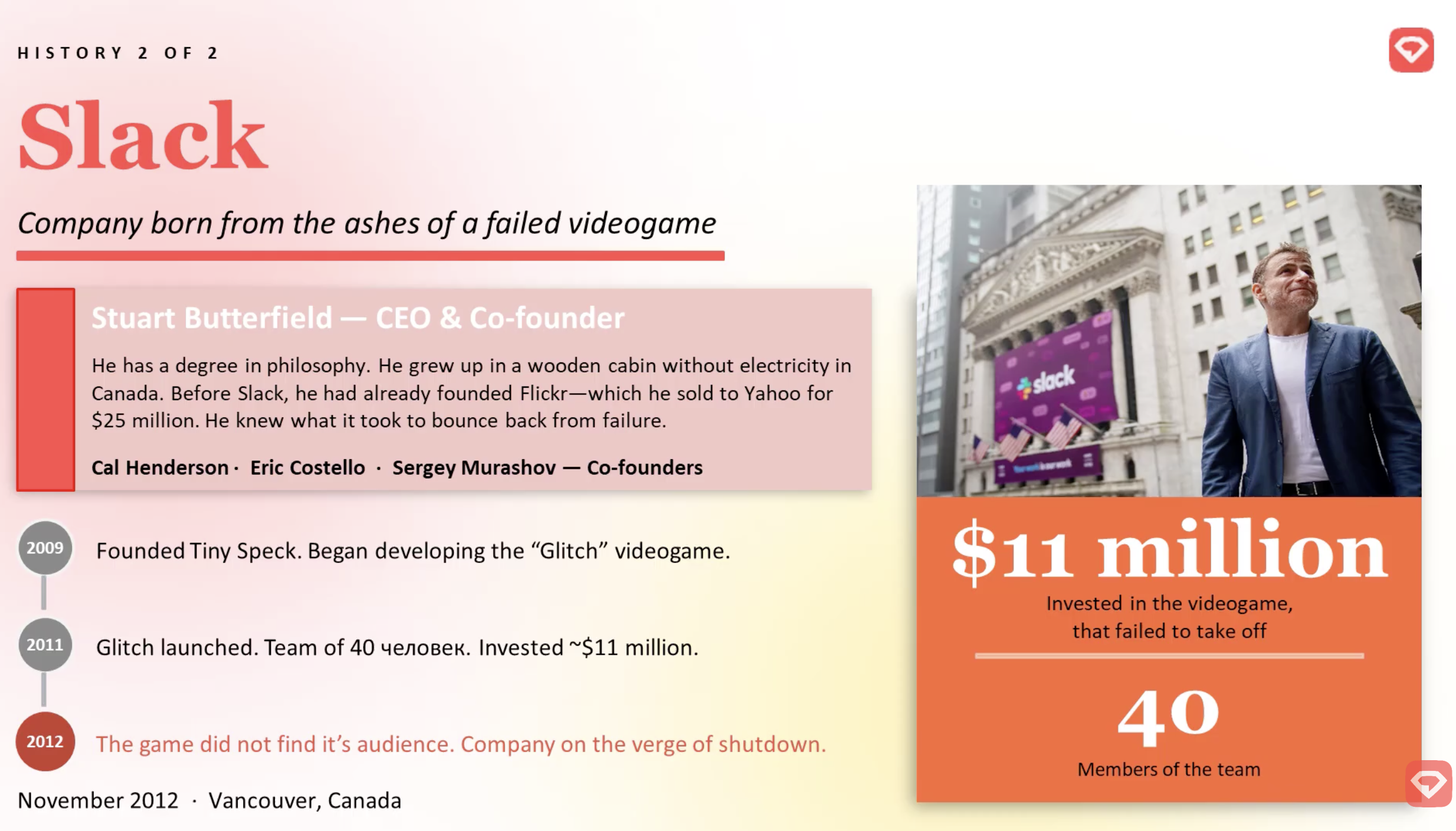
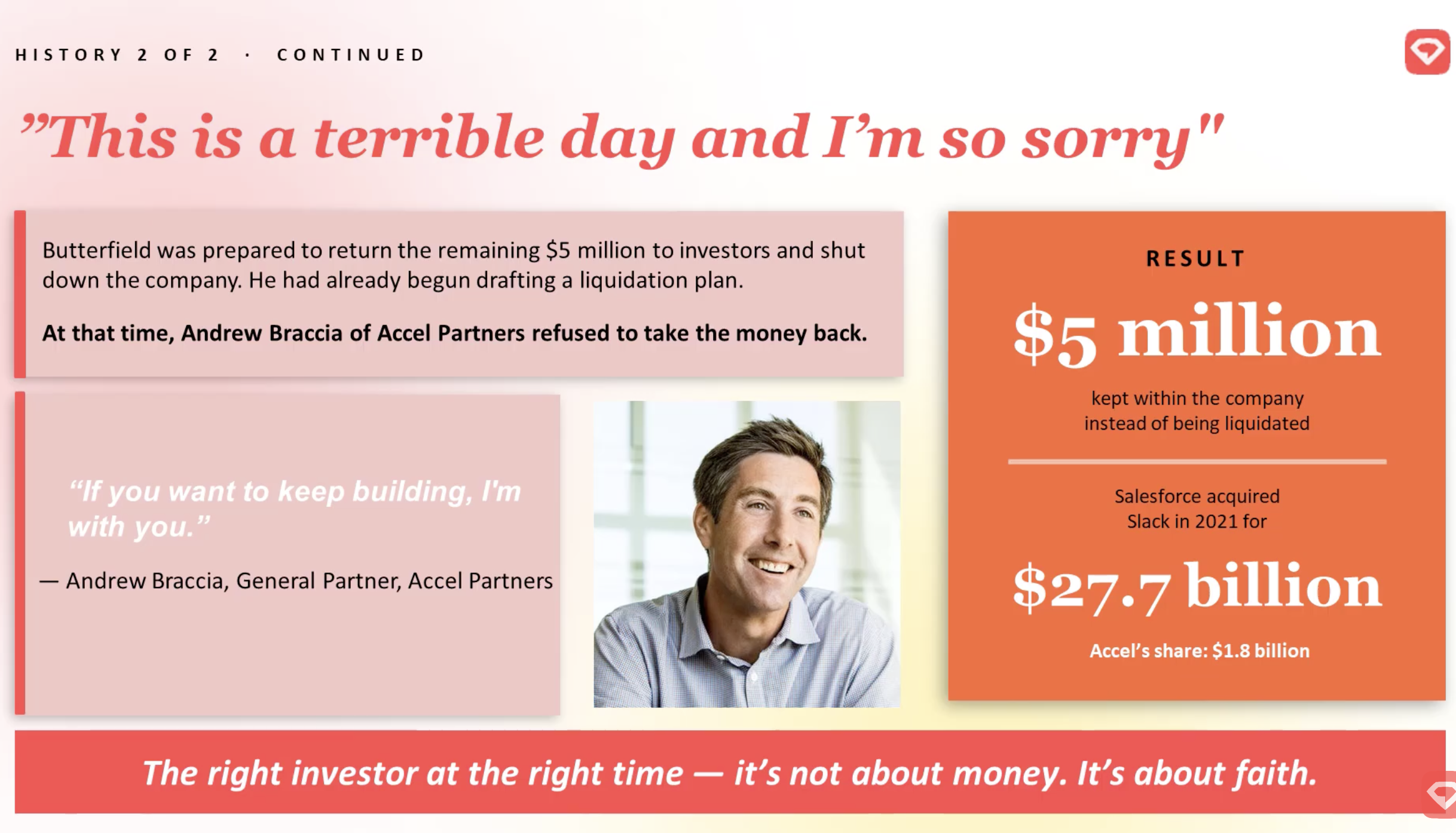
Stuart Butterfield assembled a team in 2009 to build a game called Glitch. They raised significant funding, built a team of 40 people, and worked for three years. The game ultimately failed — it was too complex, and it did not connect with users. Butterfield gathered his entire team and told them honestly that the project was over. He had $5 million of investor money left that he intended to return. He told his team to start looking for new jobs and that he would help them.
At that moment, one investor — Andrew Braccia — said something that changed everything. Despite the failure, he told Butterfield that if he wanted to keep building, he was still with him. He did not take back the $5 million.
The team regrouped and shifted focus to an internal messaging tool they had built while developing the game — simply because all the other tools available for team collaboration were inconvenient. That tool became Slack. Nine years later, the company was acquired by Salesforce for $27.7 billion. Braccia’s $5 million investment became $1.8 billion — not because the original idea worked, but because he believed in the team even when it failed.
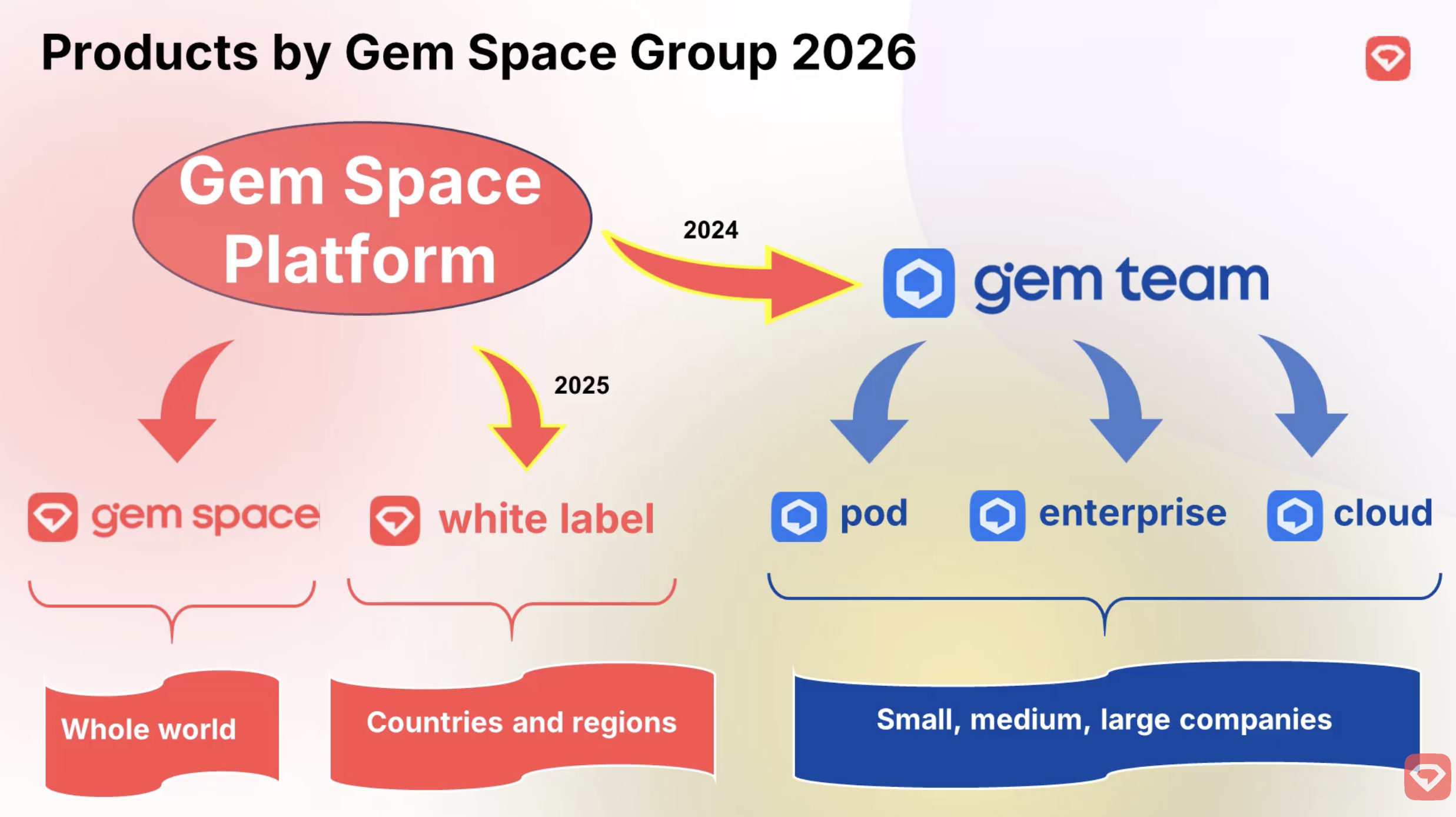
The relevance to Gem Soft’s own journey is direct. The project has evolved significantly from its original form. What began as a single global messenger has become two products — the global Gem Space messenger and its white label sovereign version for countries and regions — plus an entirely new direction launched in 2024 in the form of Gem Team, now available in three versions: Pod, Enterprise, and Cloud.
None of that evolution would have been possible without the trust of investors who stayed committed through the difficult stages. The conference closed with a direct expression of gratitude to the entire investor community — and particularly to the leadership team — for the belief and financial commitment that has allowed the project to reach its current stage.
Stay informed — join our Angels Team channel in Gem Space.
Comments are closed