The Story Nobody Remembers About WhatsApp
Most people know WhatsApp as one of the most successful messaging platforms ever built. Far fewer know how close it came to disappearing entirely.
Jan Koum, the co-founder and director of the app, came to the United States from a small town called Fastiv, near Kyiv. He arrived at 16 with no money and no English, washing floors and standing in line with his mother at the social assistance office in Mountain View, California. Years later, when he signed the contract to sell WhatsApp to Facebook for $19 billion, he insisted on signing it in the very building where he had once stood in that line.
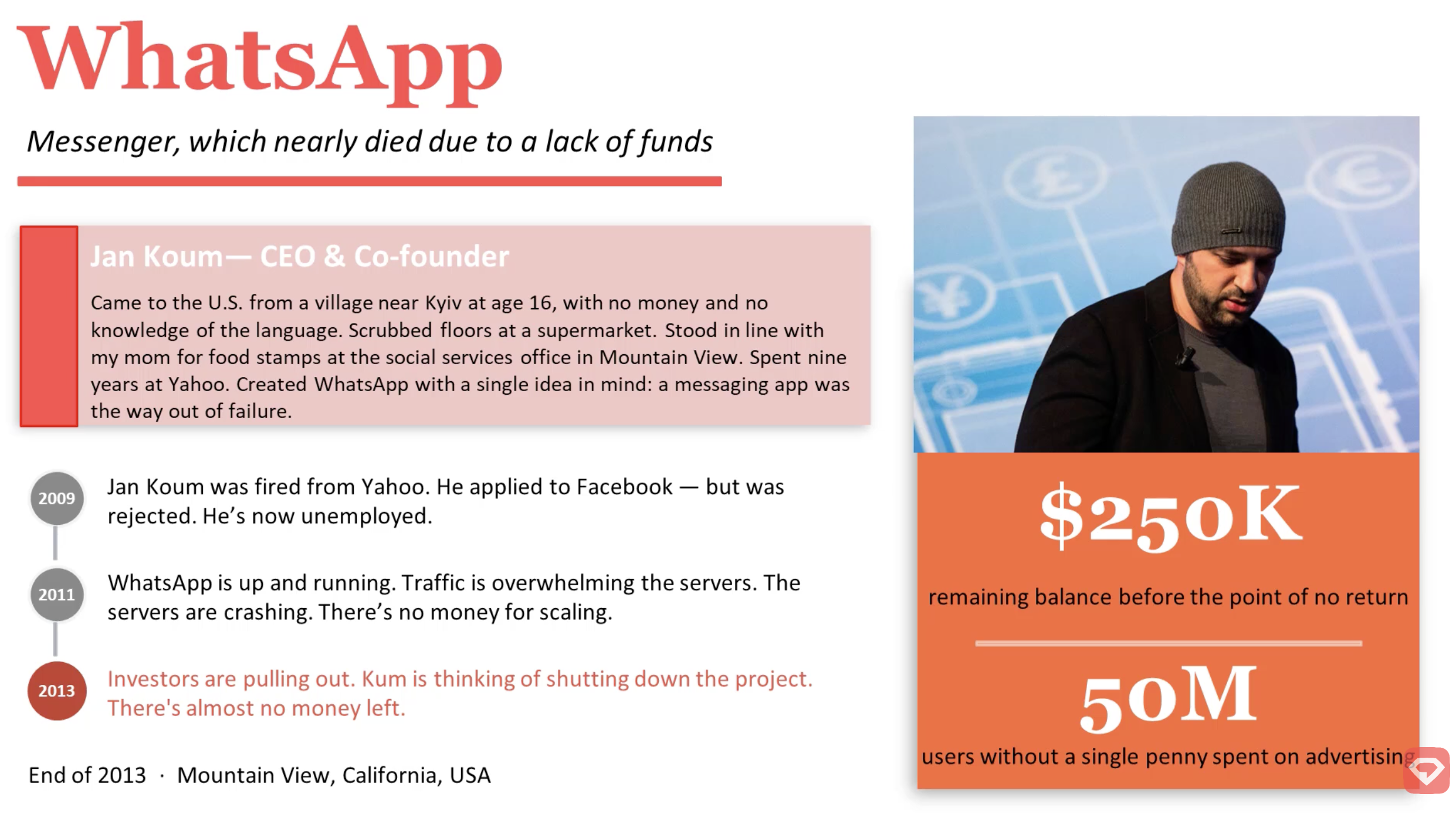
After working at Yahoo, Koum applied for a job at Facebook in 2009 and was rejected. He went on to build his messenger with an American partner — initially as a way out of a difficult personal situation. By 2011, the app had taken off and was gaining millions of users. But growth brought problems — servers crashed under the load. By 2013, a critical moment arrived. The company had only $250,000 left in the account. With 50 million users and a genuinely innovative product, WhatsApp was one month away from being unable to pay its engineers or cover its server costs.
At exactly that moment, Sequoia Capital — represented by general partner Jim Goetz — stepped in and invested $60 million. Less than a year later, Facebook acquired WhatsApp for $19 billion. Goetz’s share grew from $60 million invested to $3.5 billion.
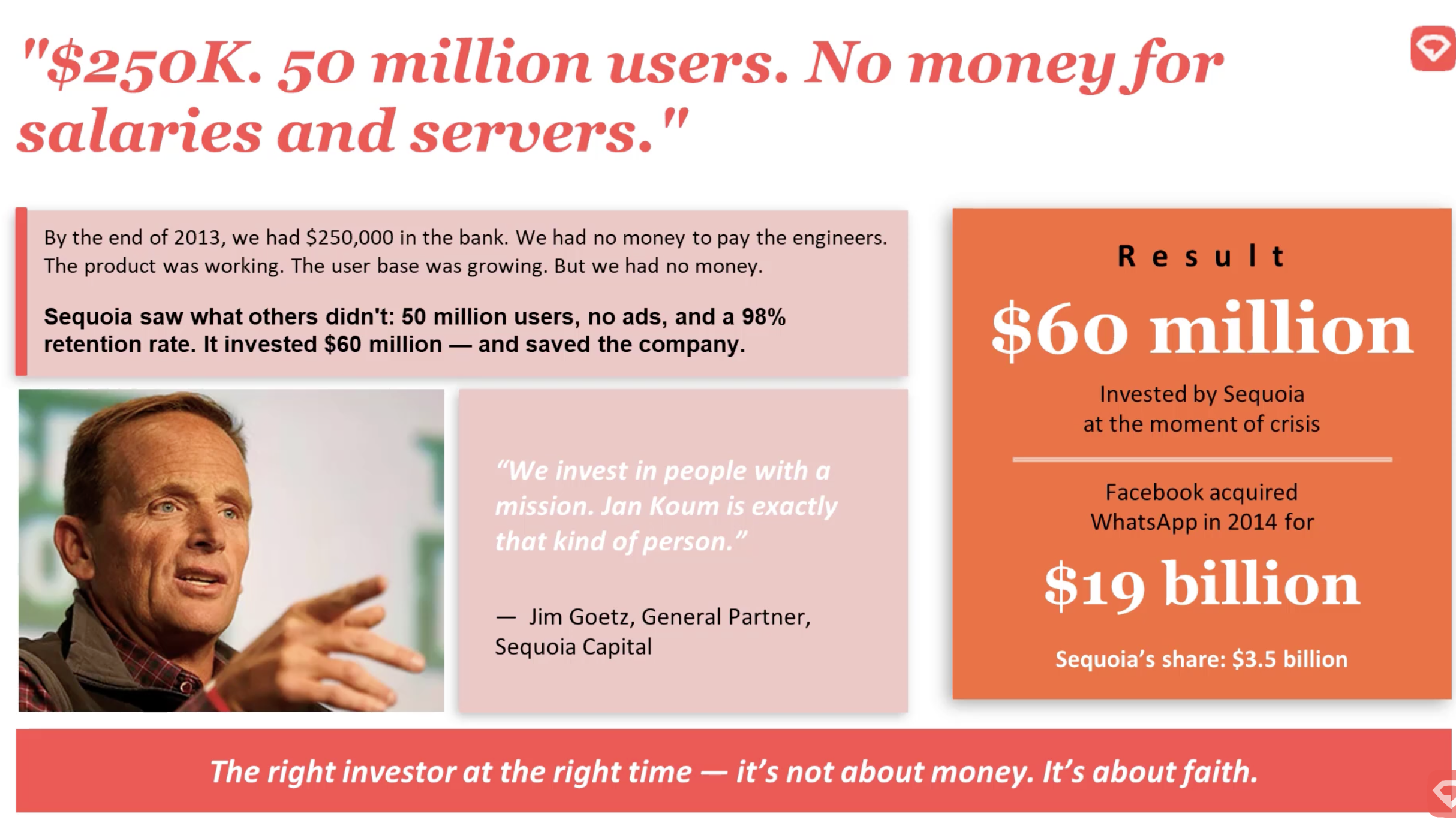
This story is relevant for a specific reason. Paying for servers is a pressing reality for Gem Soft as well. It costs hundreds of thousands of dollars every month, alongside the cost of developers working under annual contracts. Venture business is always about the interaction between the people who run it and the investors who support it. Without investors, building a business is impossible — as WhatsApp’s near-death experience makes clear. The right investor at the right time is not just about money. It is about belief.
As Jim Goetz himself has written — we invest in people with a mission.
From a Small Idea to a Global Ecosystem
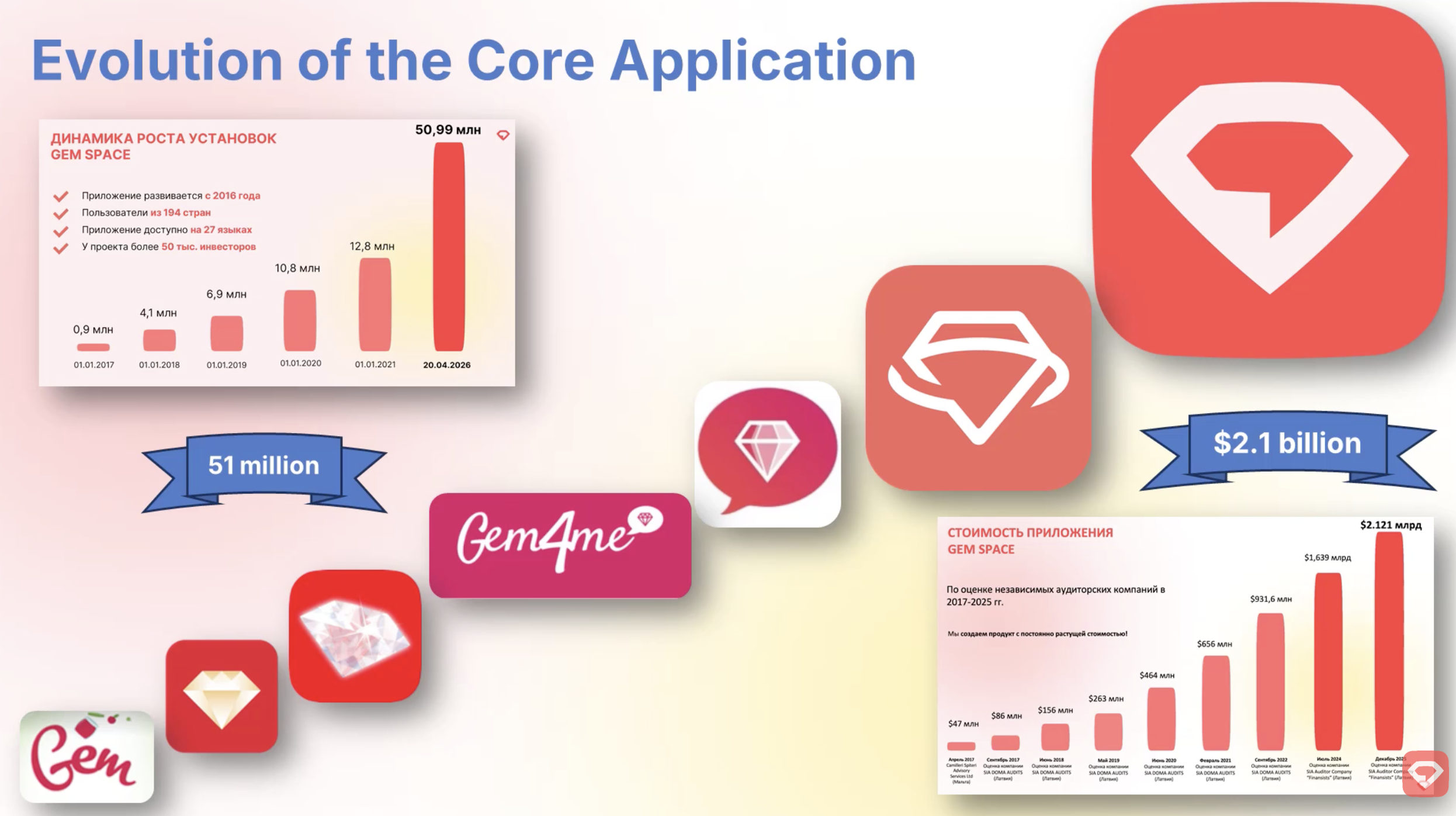
Gem Space has grown from a simple messenger concept into a global Super App with over 51 million users across 194 countries, and an independent valuation of $2.1 billion. But the evolution goes beyond numbers.
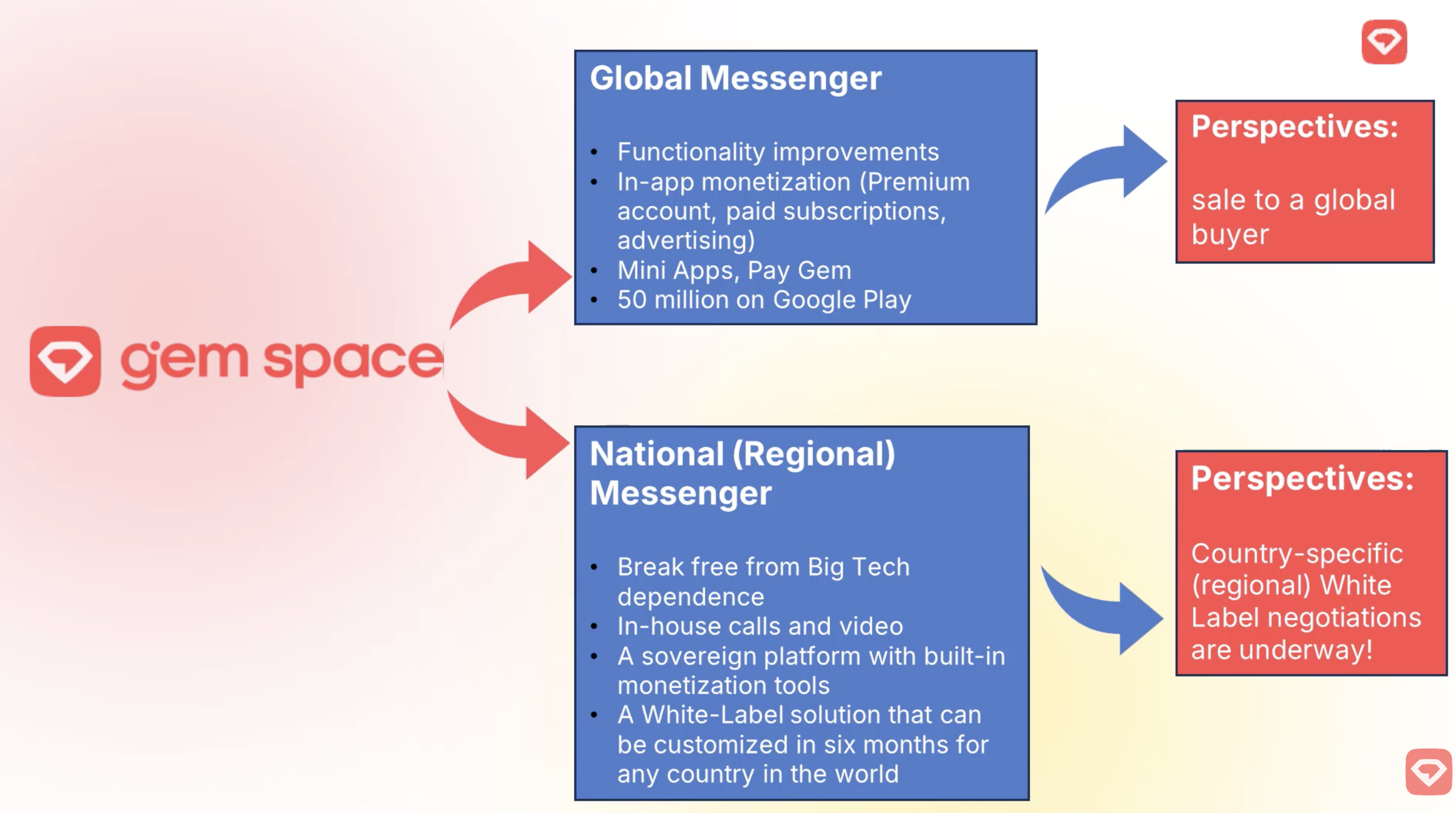
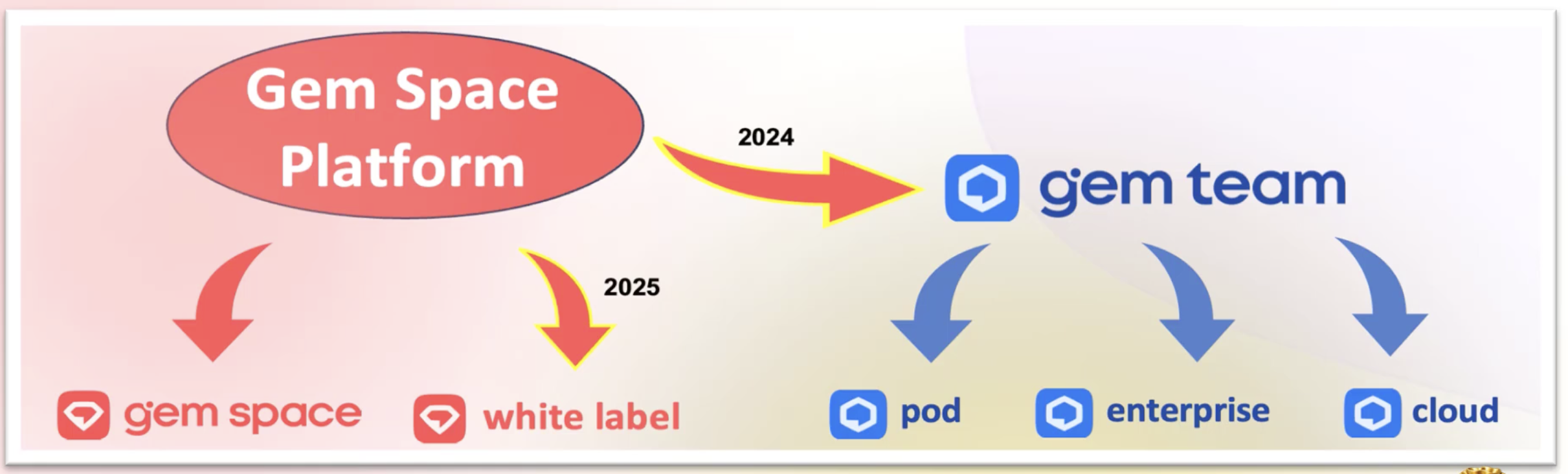
Today, Gem Space has effectively split into two distinct products. The first is the main global messenger — the core product and the source of the company’s greatest financial prospects. The second is a white label sovereign messenger solution, developed in direct response to requests from partners, companies, and government agencies who approached the company asking for a messenger they could deploy, customize, and fully control within their own country or region. Clients can bring their own branding, their own users, and retain complete local management and control.
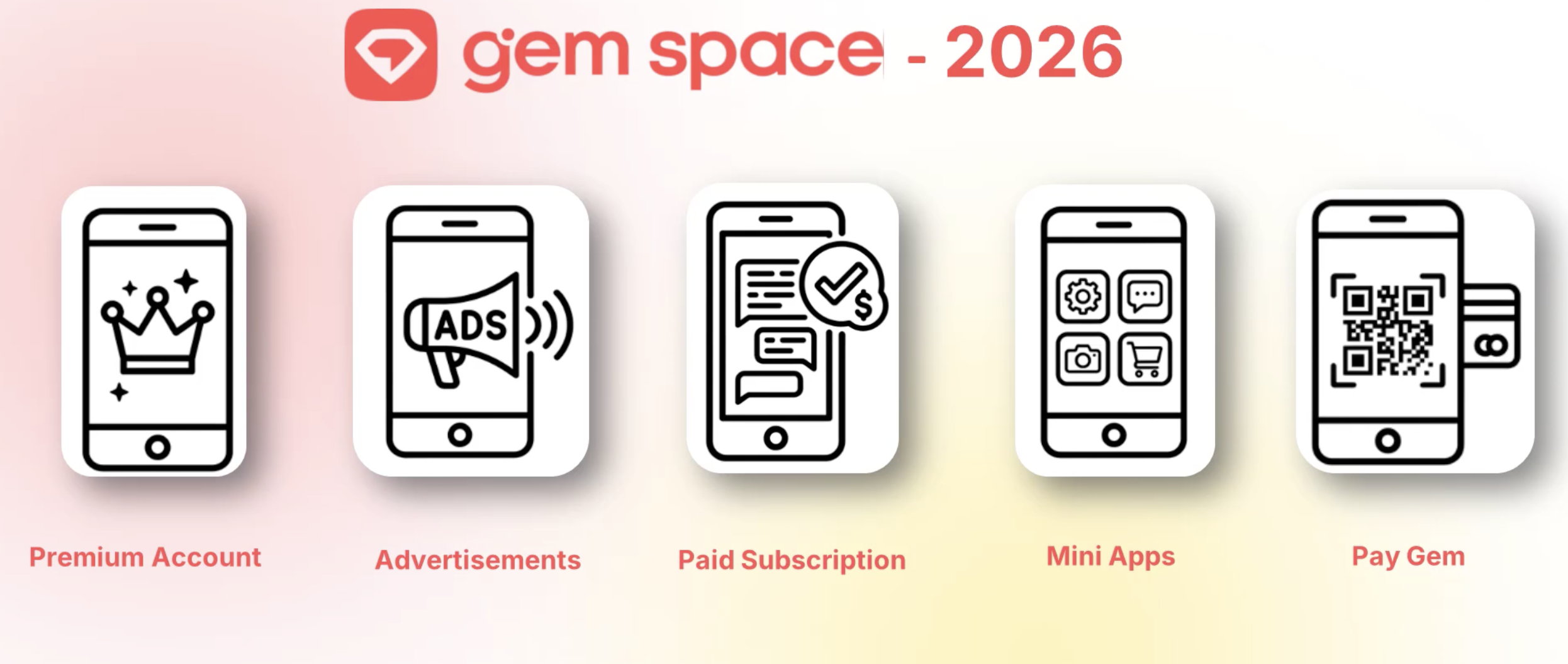
The second major avenue for Gem Space as a core product is internal monetization — launching financial flows directly within the app. This is not in planning stages. It is actively being built right now.
The tools in development include premium accounts with an expanded feature set for a small additional fee, advertising for content creators and stores within the platform catalog, paid subscriptions for bloggers who build audiences compelling enough for people to pay for access, and the mini-app platform — which will allow third-party developers, companies, and entrepreneurs to bring their products and services directly to Gem Space users. Eventually, tens or even hundreds of thousands of external participants will be able to offer both informational and physical products through this system. PayGem — the electronic wallet supporting multiple currencies including cryptocurrencies — is in the final stages of development.
Gem Team: Three Products, One Ecosystem
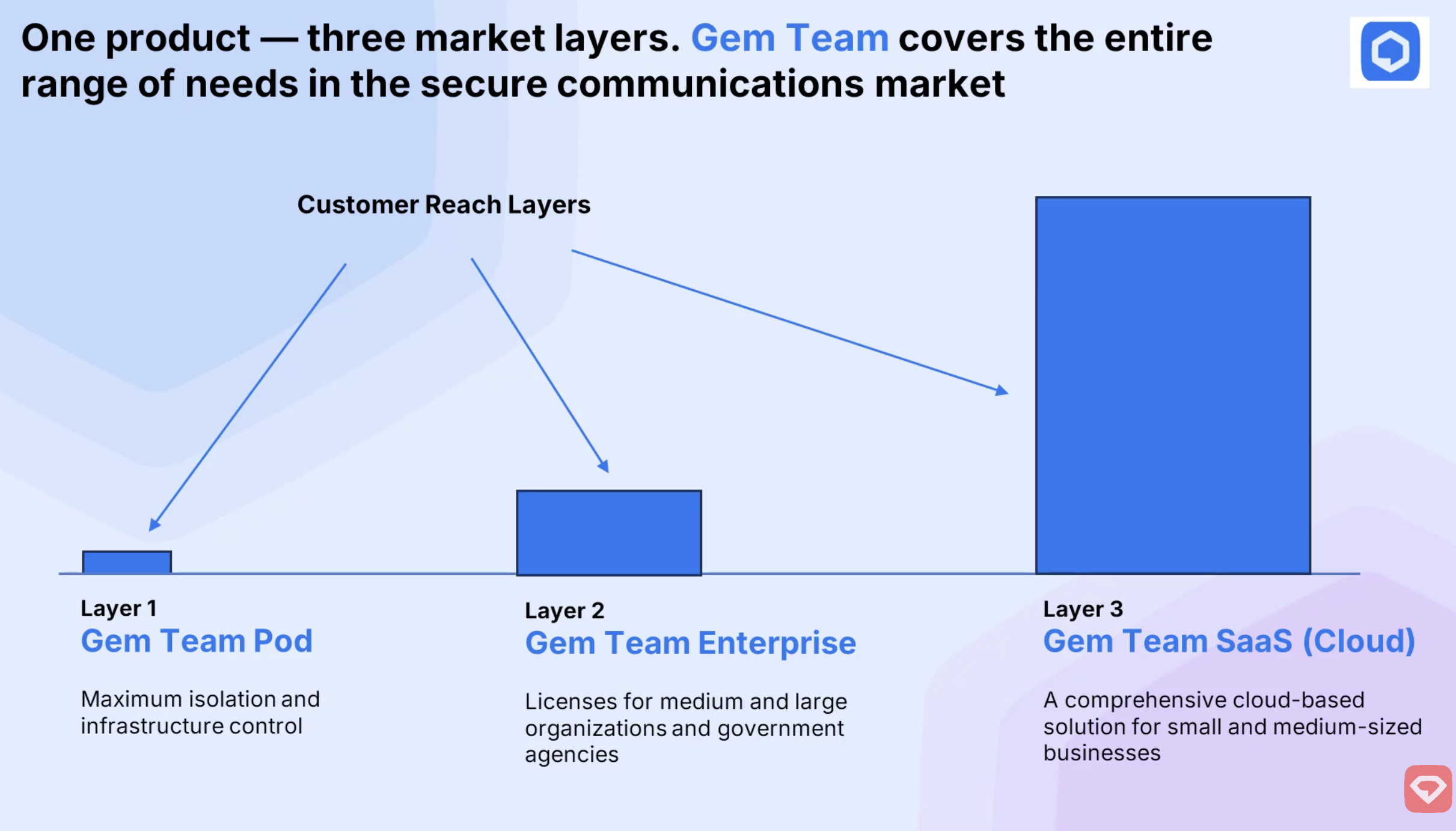
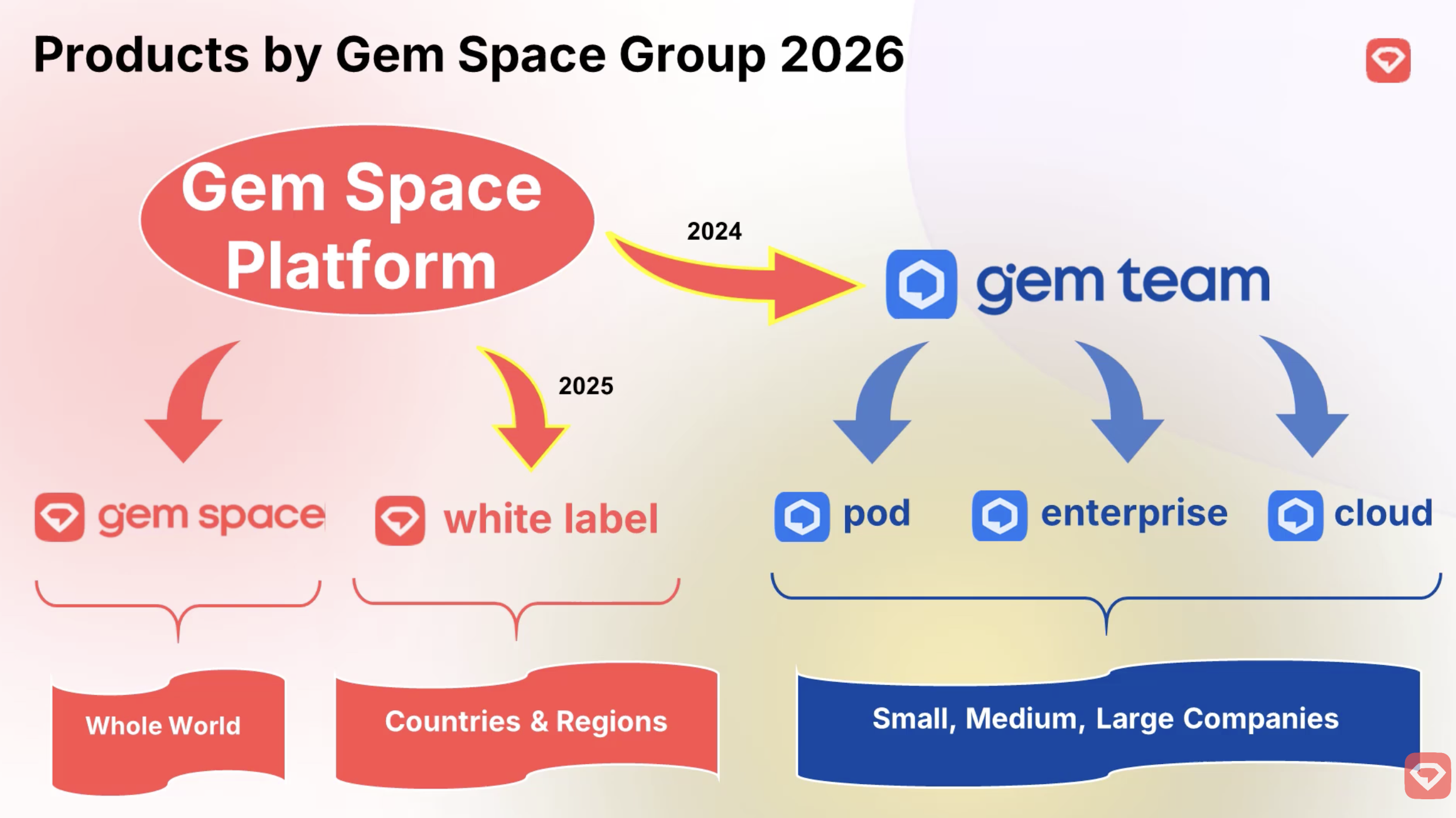
In 2024, the company launched a second major direction — the Gem Team secure corporate ecosystem. It now comprises three distinct products serving three different market segments.
Gem Team Pod
Gem Team Pod is a portable, fully localized solution hosted on a physical server that a company can keep on-site and transport anywhere — by plane, car, yacht, or to a remote industrial facility. It provides completely isolated and secure communication for organizations of up to 200 people. Target clients include financial companies, family offices, banks conducting M&A, hedge funds, senior management teams, remote industrial operations such as drilling rigs and factories, mobile units for government agencies, and even military field command applications. The global market for this solution is substantial.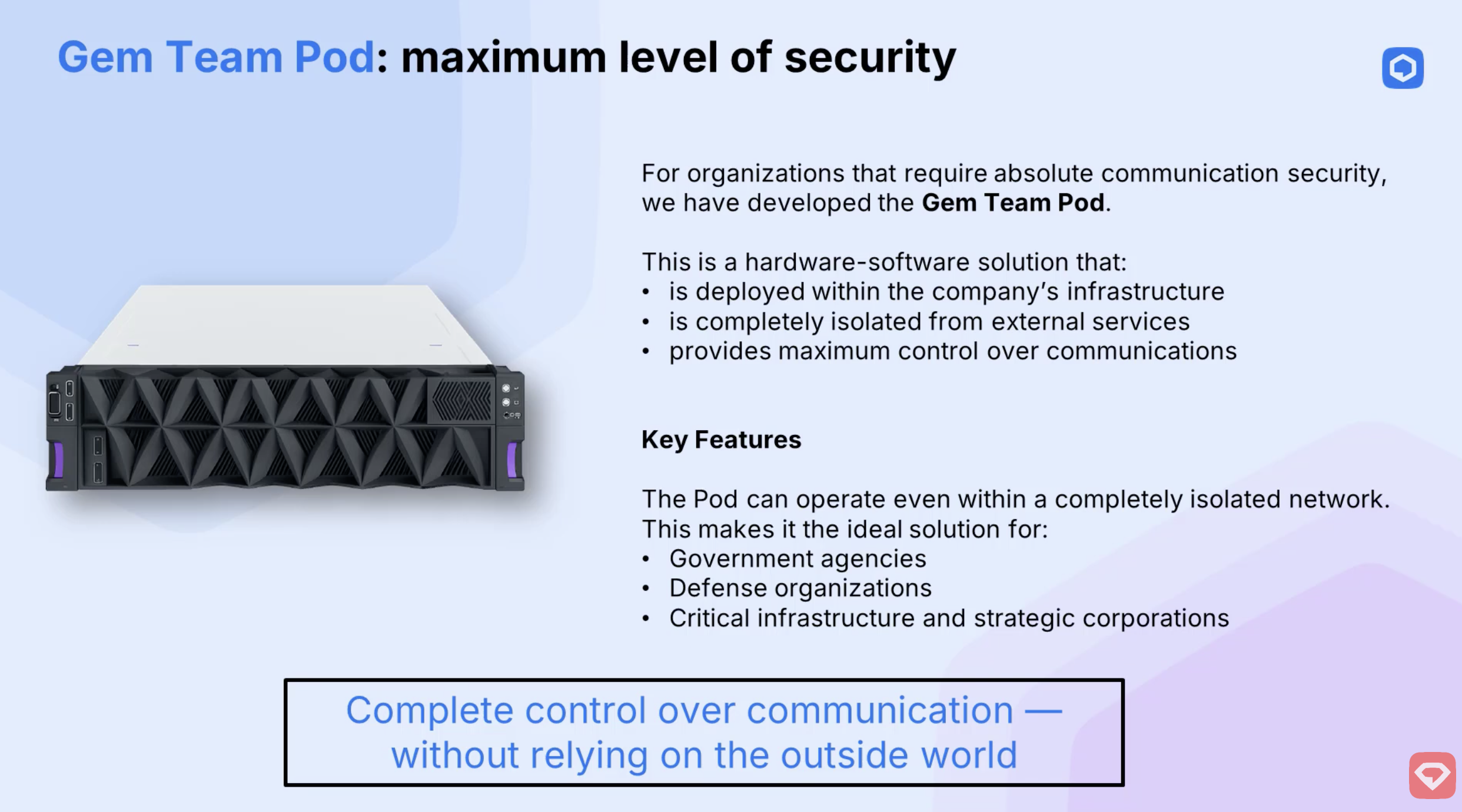
Gem Team Enterprise
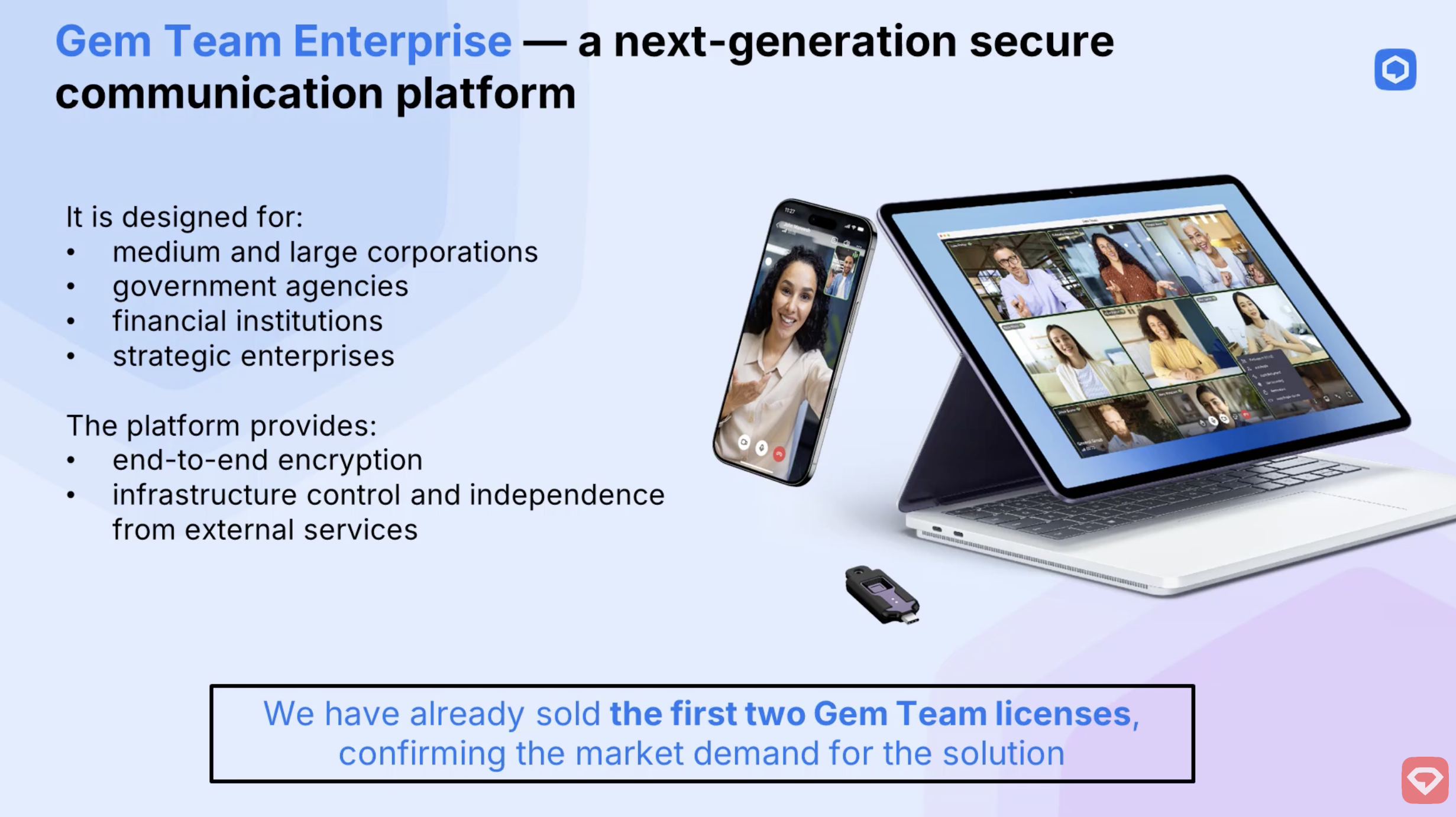
Gem Team Enterprise is the solution for medium and large companies installing on their own servers. Two contracts have already been signed, with more expected this spring.
Gem Team Cloud
Gem Team Cloud is targeted at the mass market — small and medium-sized companies with 10, 50, or 100 employees. It is cloud-based, deployable in approximately half an hour without specialist knowledge, and four to five times cheaper than Gem Team Enterprise. The admin registers, shares a link with their team, and secure communication begins immediately within a space the company fully controls. The analogy used to describe the architecture is an apartment complex — a shared platform where every tenant is completely isolated from every other, with no data overlap, but with all shared infrastructure available.
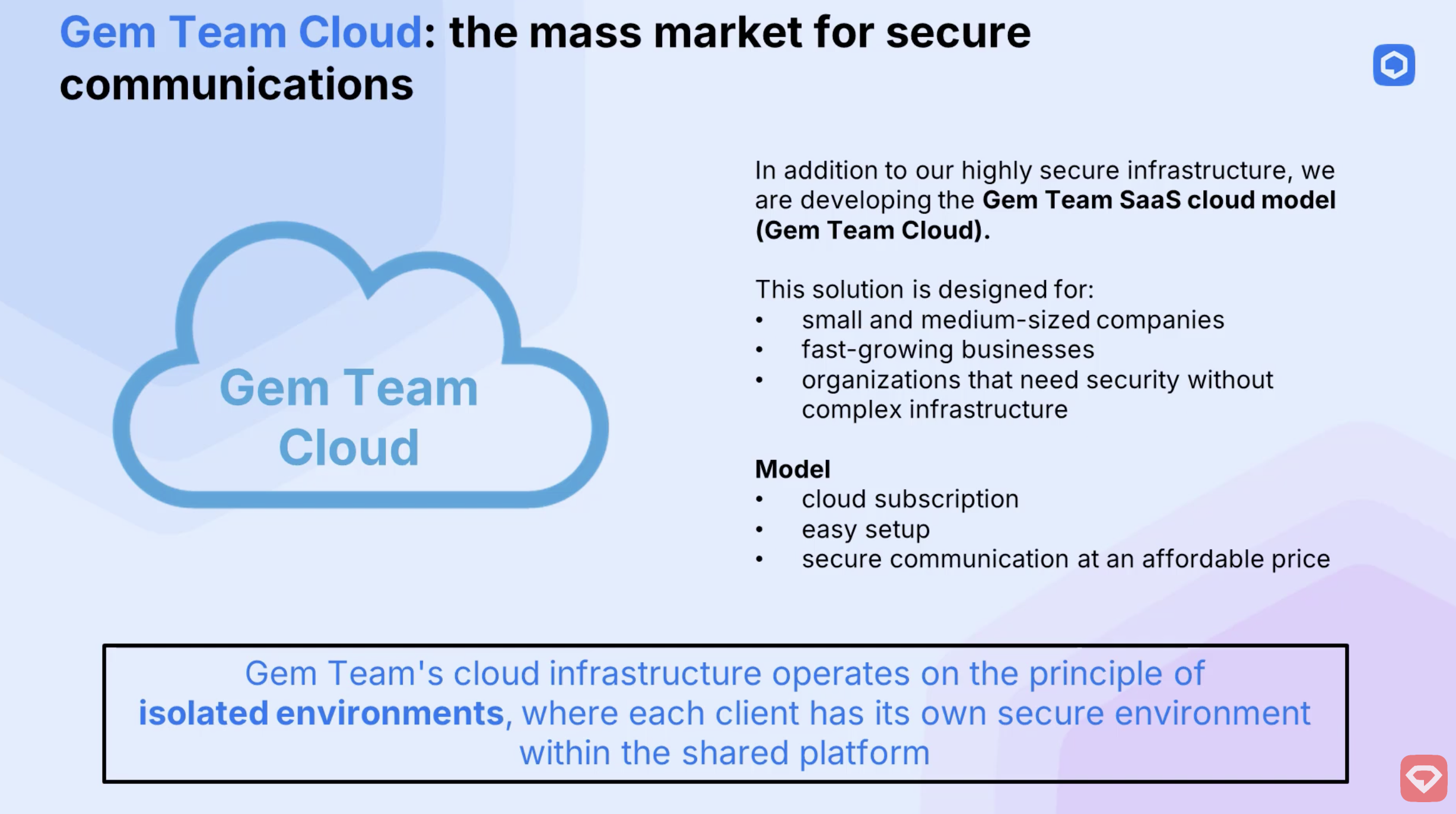
Gem Team Cloud is expected to be ready by June 1st.
The Platform Economy and Why It Matters
The company’s direction is not simply about building products. It is about building a platform — and understanding why platforms are the defining economic model of the era ahead.
A phase crisis, as described at the conference, is a period of transition from one economic order to another. In such periods, old models collapse and new ones emerge. The companies that position themselves correctly during these transitions — building infrastructure that addresses fundamental needs — do not just survive. They become the most valuable entities of the next era.
The resource of the new economy is data. The exchange, transmission, and structuring of information is what drives value in the world that is taking shape. Platforms that collect, organize, and enable transactions on large amounts of data become enormously valuable — and their value grows with every user who joins.
GemSpace does not buy traffic or pay for advertising. Its growth is entirely organic. When users download the application and grant access to their contacts, they contribute to a database that is genuinely valuable — and that value compounds over time. New economic relationships emerge on the platform. New forms of commerce, new ways to earn, new ways to connect buyers and sellers without intermediaries. The mini-app system, the wallet, and the advertising layer are all expressions of this model.
The company is also actively working on and negotiating the integration of artificial intelligence models on the platform — not models developed in-house, but models from various vendors who will be invited to promote and operate within the Gem Space ecosystem. This will further accelerate the platform’s overall value.
Following the Path of the Platforms That Won
The product diversity of Gem Soft today follows a well-established pattern in the technology industry. Zoom started as a business video conferencing tool and expanded into Zoom Chat, Zoom Rooms, Zoom Webinars, and education services.
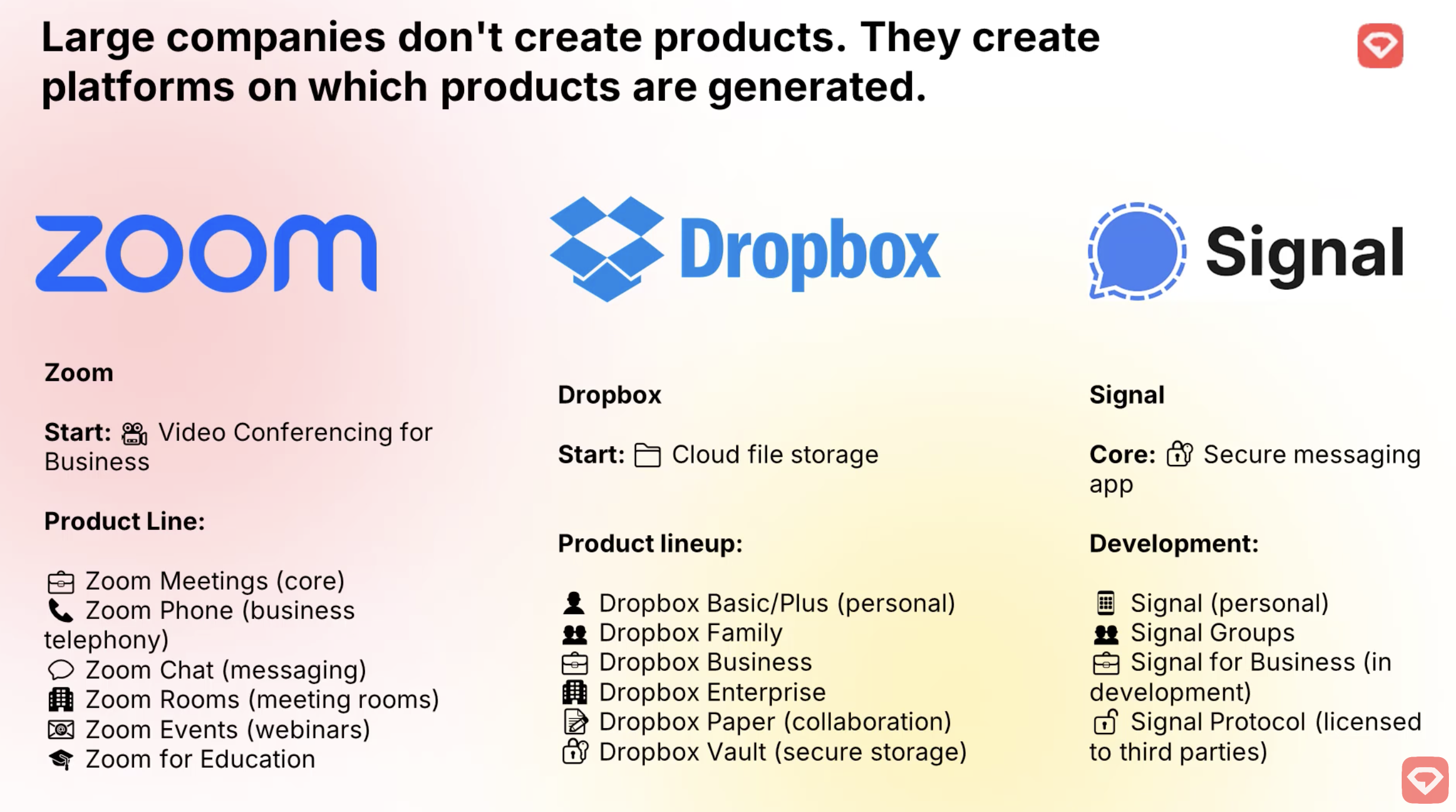
Dropbox began as cloud file storage and grew into a full collaboration platform. Signal evolved from a secure messenger into a broader product line. Once a platform is built, developing adjacent products and generating revenue across new segments becomes a natural and efficient process.
Gem Soft’s ecosystem today covers Gem Space as a global messenger, Gem Space white label as a country-specific or regional sovereign solution, and Gem Team across three tiers from maximum-security portable infrastructure to accessible cloud-based communication for small businesses. On a single technological foundation, the company addresses multiple global markets simultaneously.
2026: The Year of Money
The company is no longer at the startup phase. It is no longer searching for a concept. Both products exist, both are being actively promoted, and the monetization phase has begun.
The exit strategy for investors encompasses the core global sale of Gem Space, white label country-specific sales across more than 200 countries, and Gem Team licensing across all three tiers. Recent global events — far from slowing this down — have accelerated demand. Sovereignty and independence in digital communications has become a top priority for governments, corporations, and private organizations worldwide.
Ten years of development. Survival through a pandemic and multiple global crises. Over 51 million users. A $2.1 billion valuation. And the products are ready.
The company is no longer looking for spectators who watch progress from the sidelines. It is looking for those who want to make history — the way Jim Goetz made history by believing in WhatsApp at exactly the right moment.
Stay informed — join our Angels Team channel in Gem Space.
Comments are closed