
The August 3rd briefing opened with a detailed analytics overview covering the first half of 2026 — the most comprehensive performance review shared with investors to date.
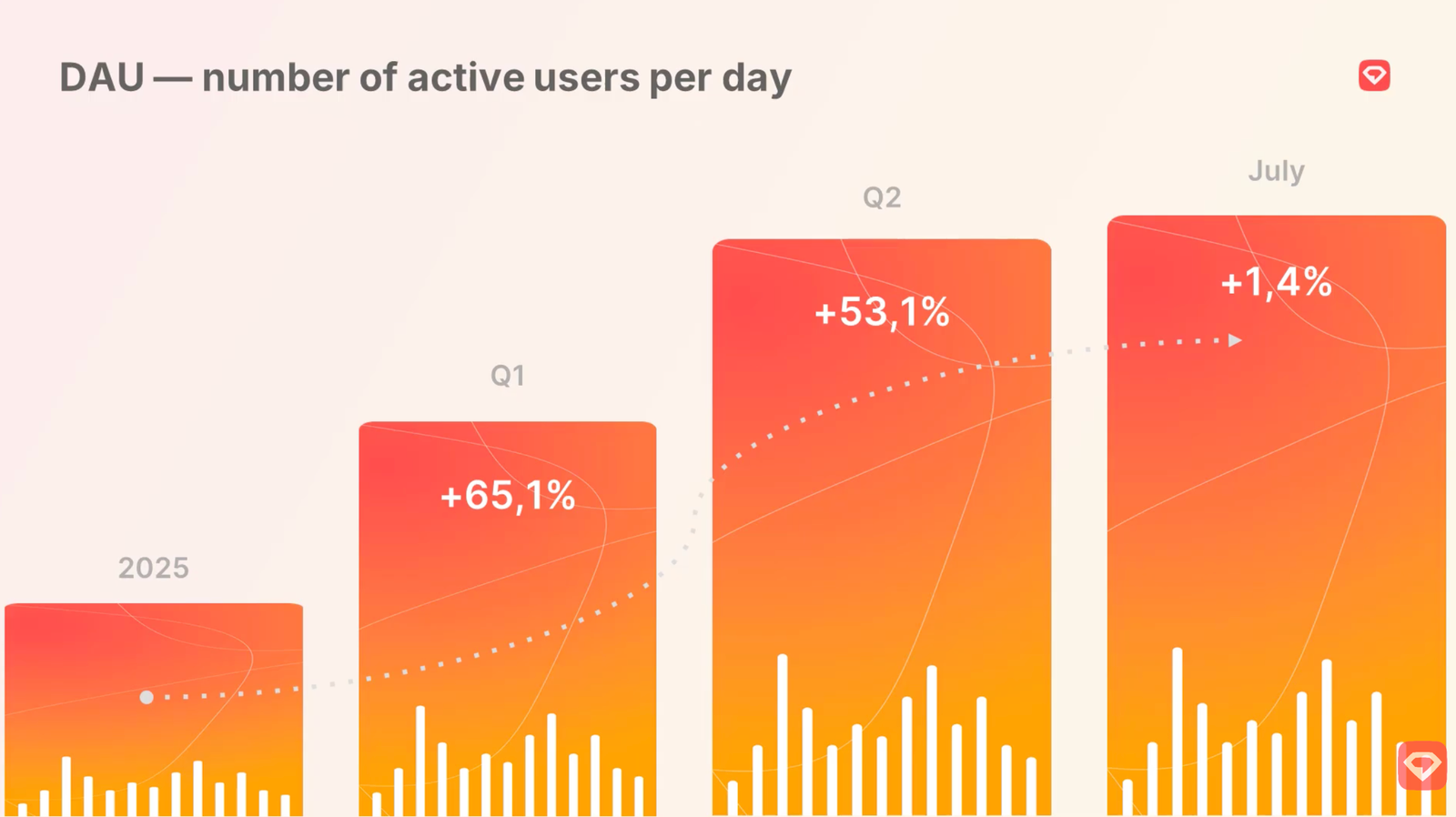
Daily active users grew 65% in the first quarter and 53% in the second. July added a further 1.4% and growth is expected to continue strongly through Q3. A significant contributor to this momentum has been the blocking of competing messengers in the Russian market, which has driven increased installs, higher user activity, and stronger return rates to the platform.
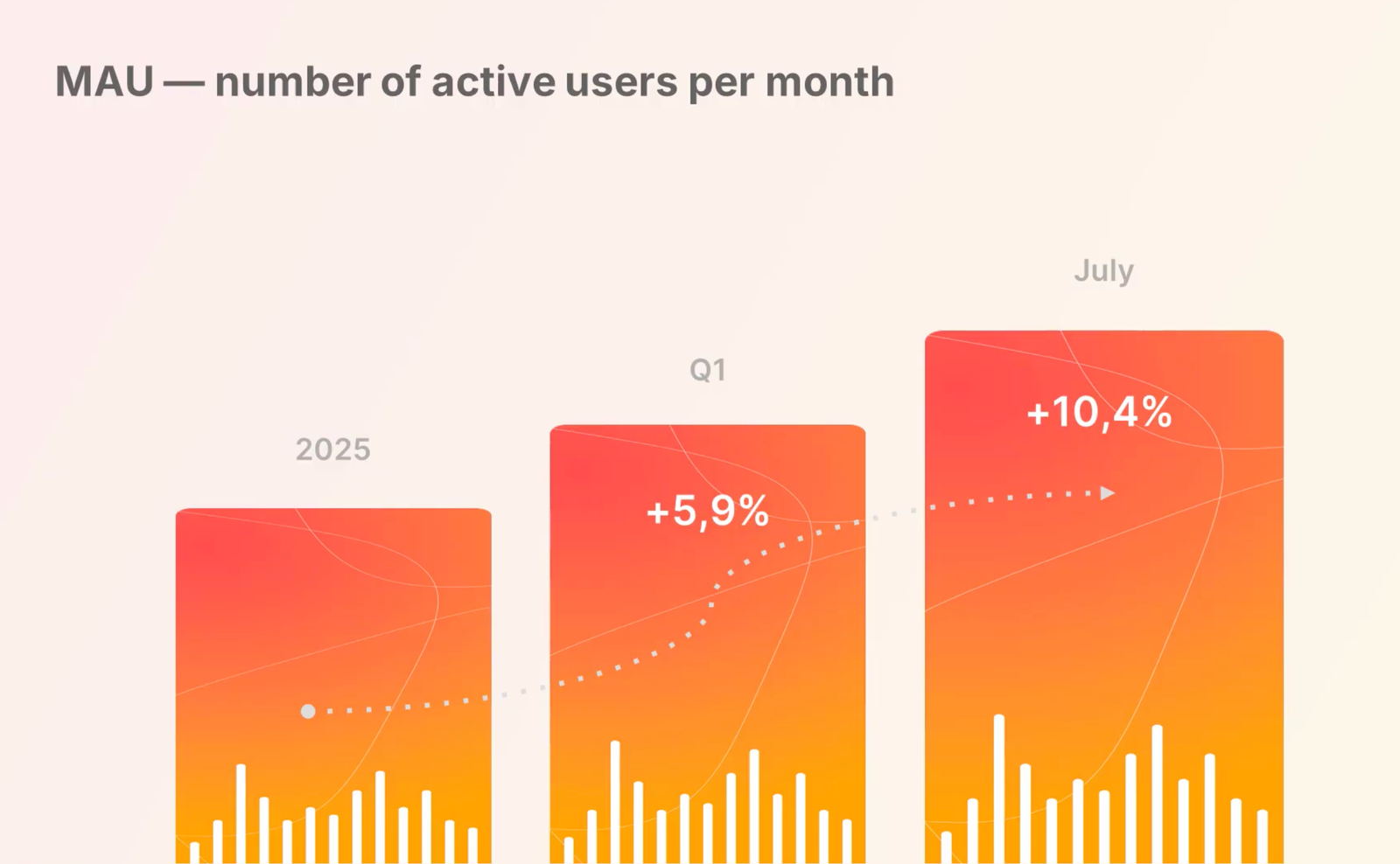
Monthly active users increased by 10.4% over the period, with ongoing efforts focused on continuing to grow this metric.
Two metrics being monitored with particular care are the install-to-registration conversion rate and user retention — both of which are directly tied to the effectiveness of the subscription monetization system being built.
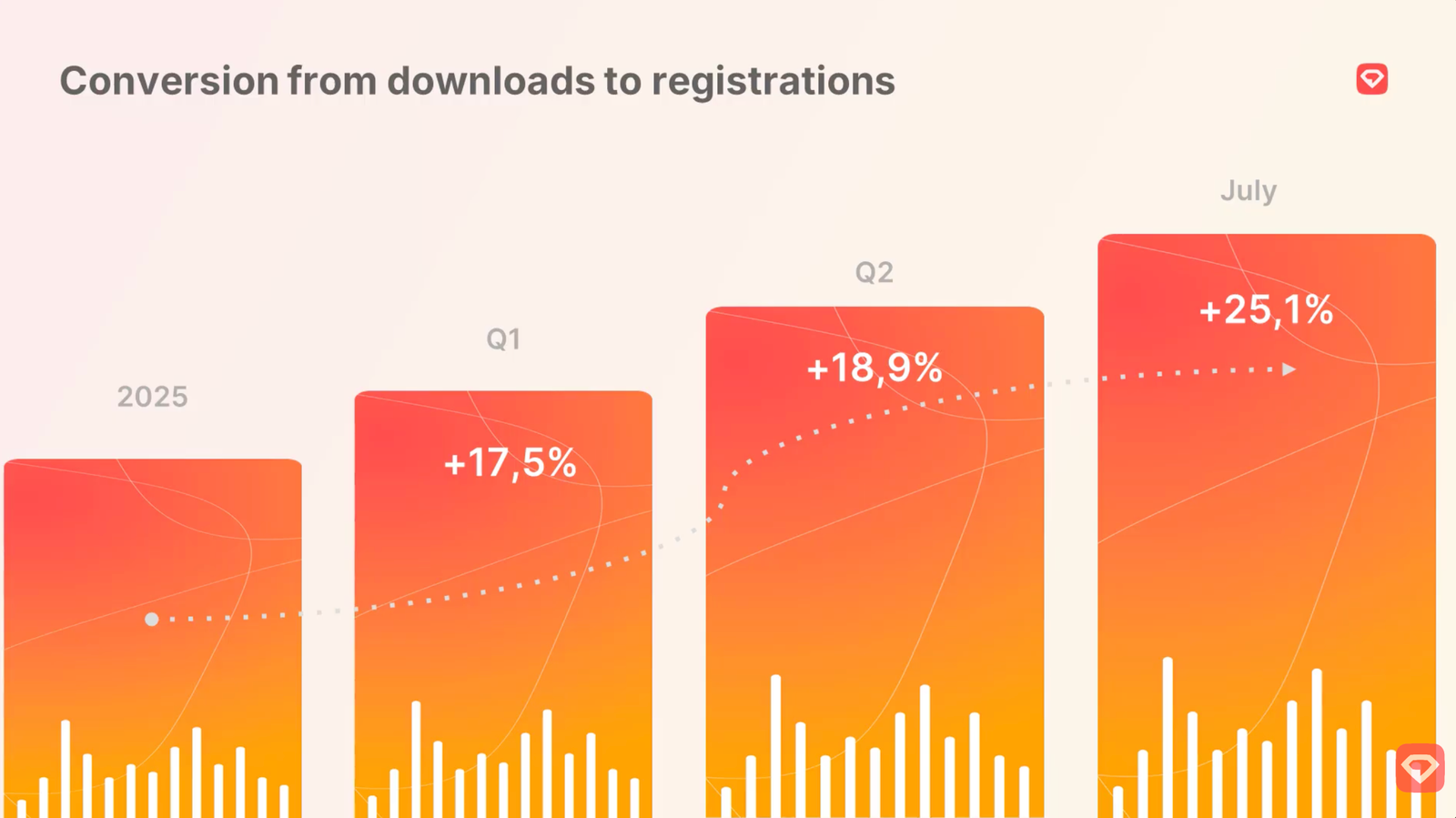
The install-to-registration conversion rate has grown at double-digit rates every month since the start of the year: 17%, 18%, and in July, 25%. This means the company’s investments in promotion, marketing, and advertising are converting more efficiently into active registered users — and that higher conversion rate will directly translate into more paid subscribers once Gem Premium launches.
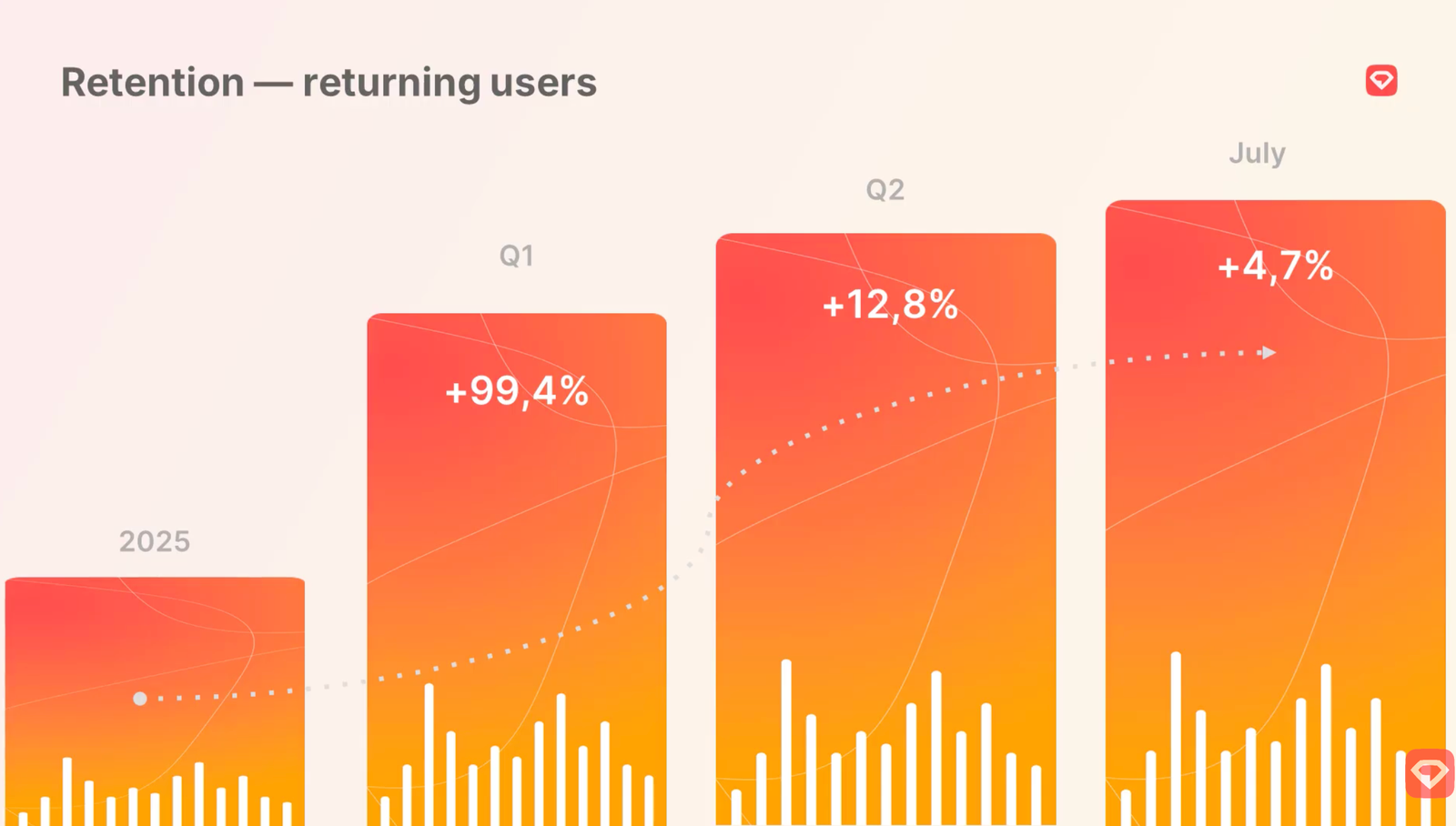
Retention is also improving steadily. Significant growth was recorded in Q1, followed by an 8% increase in Q2, with July adding nearly 5%. Users are not only installing the application — they are returning to it and engaging with it more purposefully.
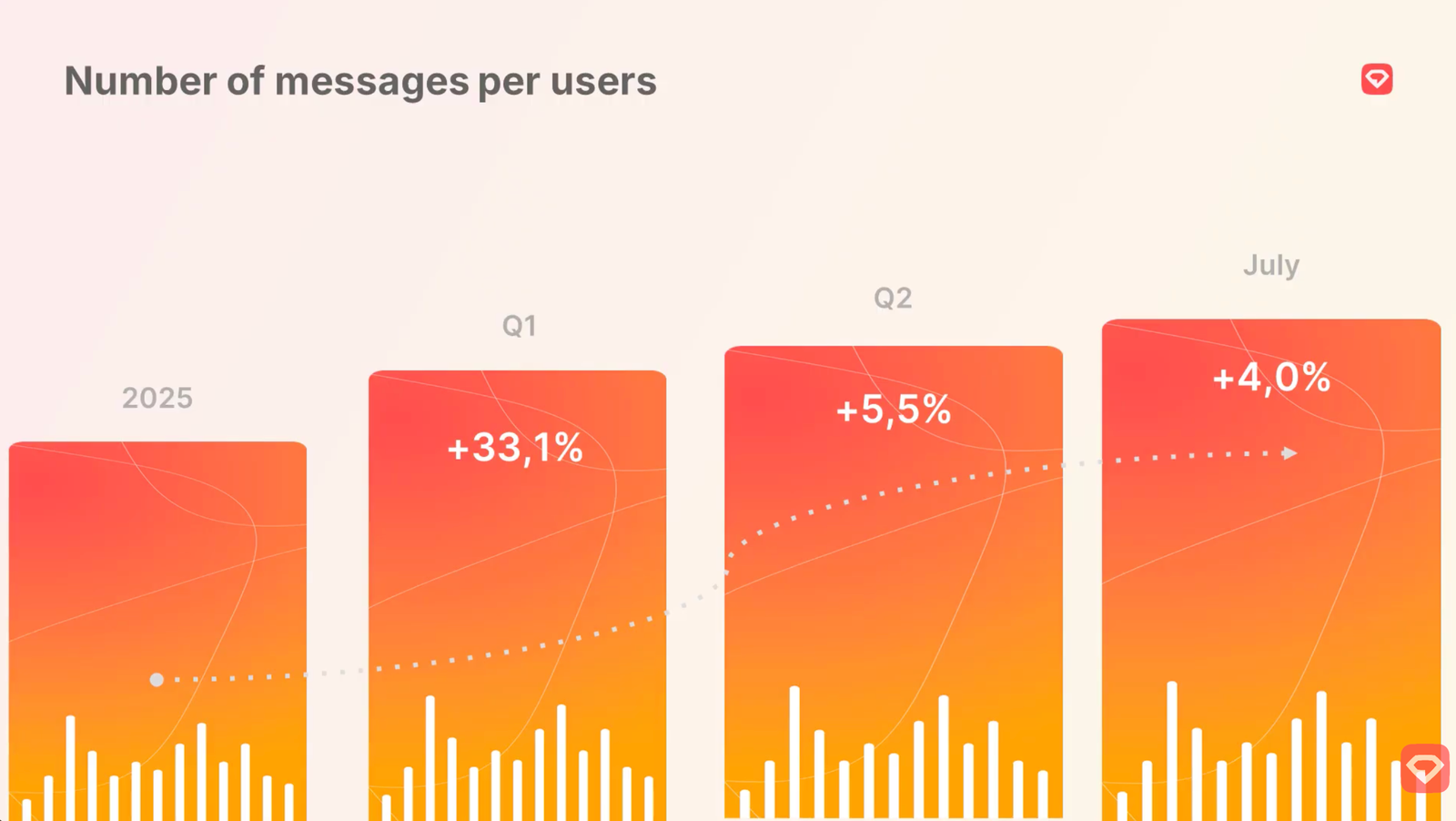
In-product user activity grew 33% in Q1, 5.5% in Q2, and a further 4% in July. Users are communicating more and completing more targeted actions within the product. This is the active, engaged user base that monetization will now be built on top of.
June and July Releases: What Shipped
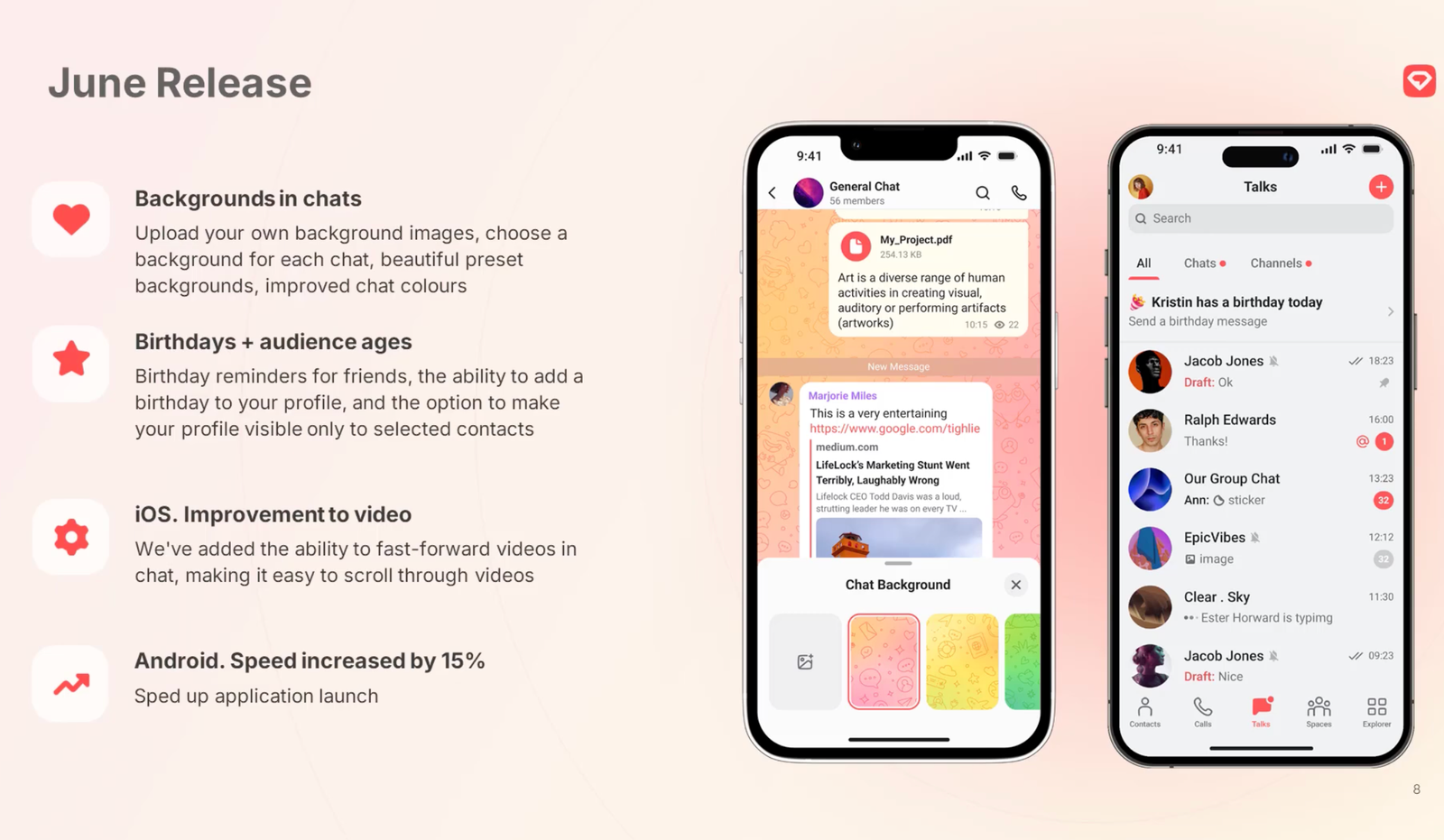
- Chat backgrounds launched in June — users can now select their own images and backgrounds for individual chats. Alongside this, the chat design and color scheme were refreshed, with the chat bubble design revised multiple times based on user feedback. The current version is the result of that iterative process and represents a noticeably fresher and more modern look.
- Birthday functionality was introduced as a retention tool — giving users an additional reason to communicate and interact with their contacts. It also serves a secondary purpose: helping the company better understand the age demographics of its user base, enabling more targeted marketing campaigns. Initial data is already being collected.
- Video player improvements shipped for iOS, with Android performance also enhanced, reducing application startup time.
- Call quality and regional bypass received a significant update released on July 21st. The approach chosen — implementing internal proxies and the ability to rapidly switch between servers — gave Gem Space a meaningful competitive advantage. While other messengers had their calls blocked in certain regions, Gem Space was able to switch to available servers and maintain call functionality without interruption. Call quality ratings had dipped during the restriction period but have since recovered and improved. Additional improvements included fixing the issue where calls appeared active after ending, adding microphone issue indicators, implementing automatic audio stream reconnection, and introducing connection quality indicators so users understand their current network conditions.
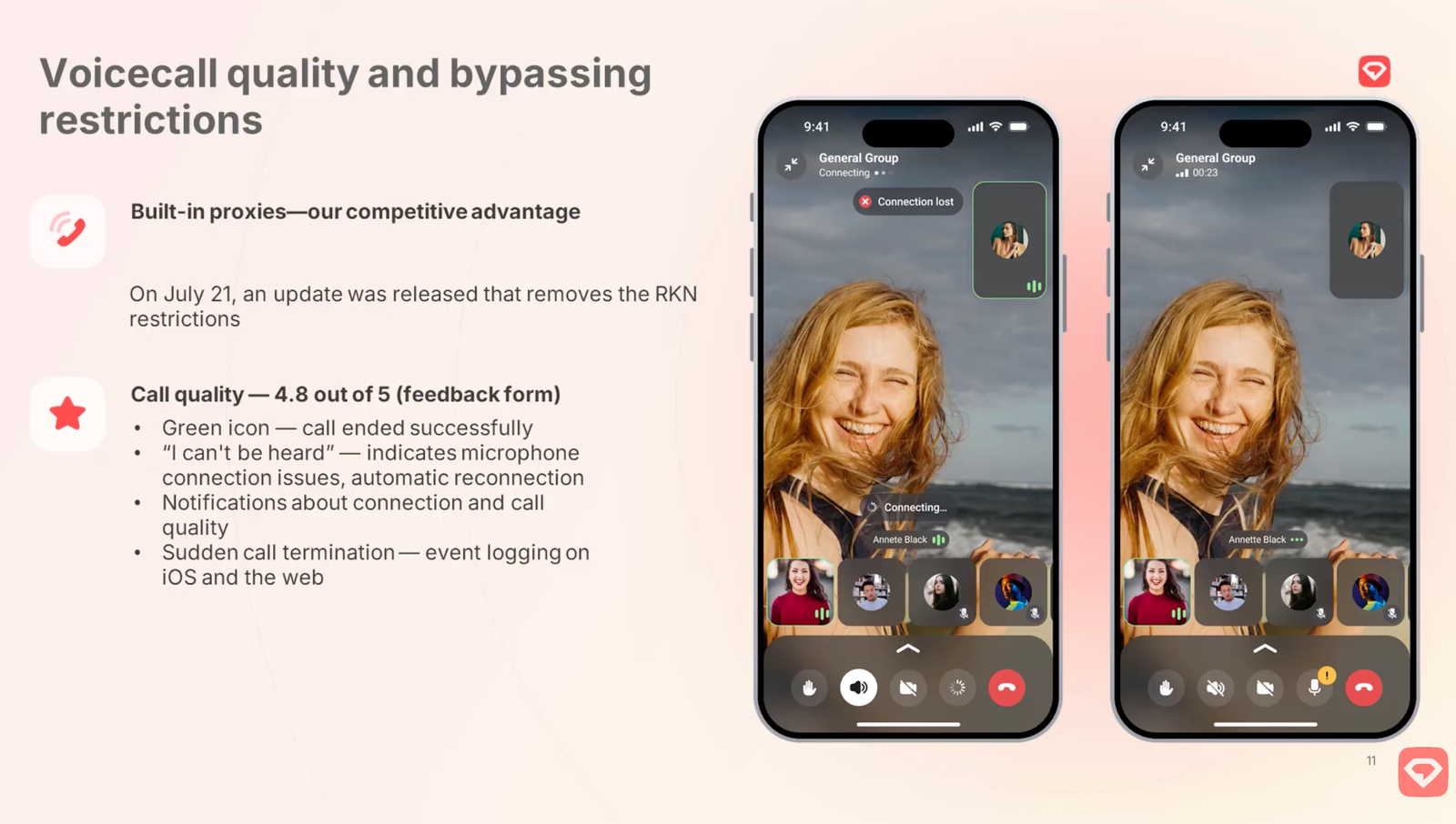
The call quality feedback rating currently stands at 4.8 out of 5.
Mini-App Platform: Early Results
The mini-app ecosystem launch is showing early positive signs without any dedicated advertising campaign having been run.
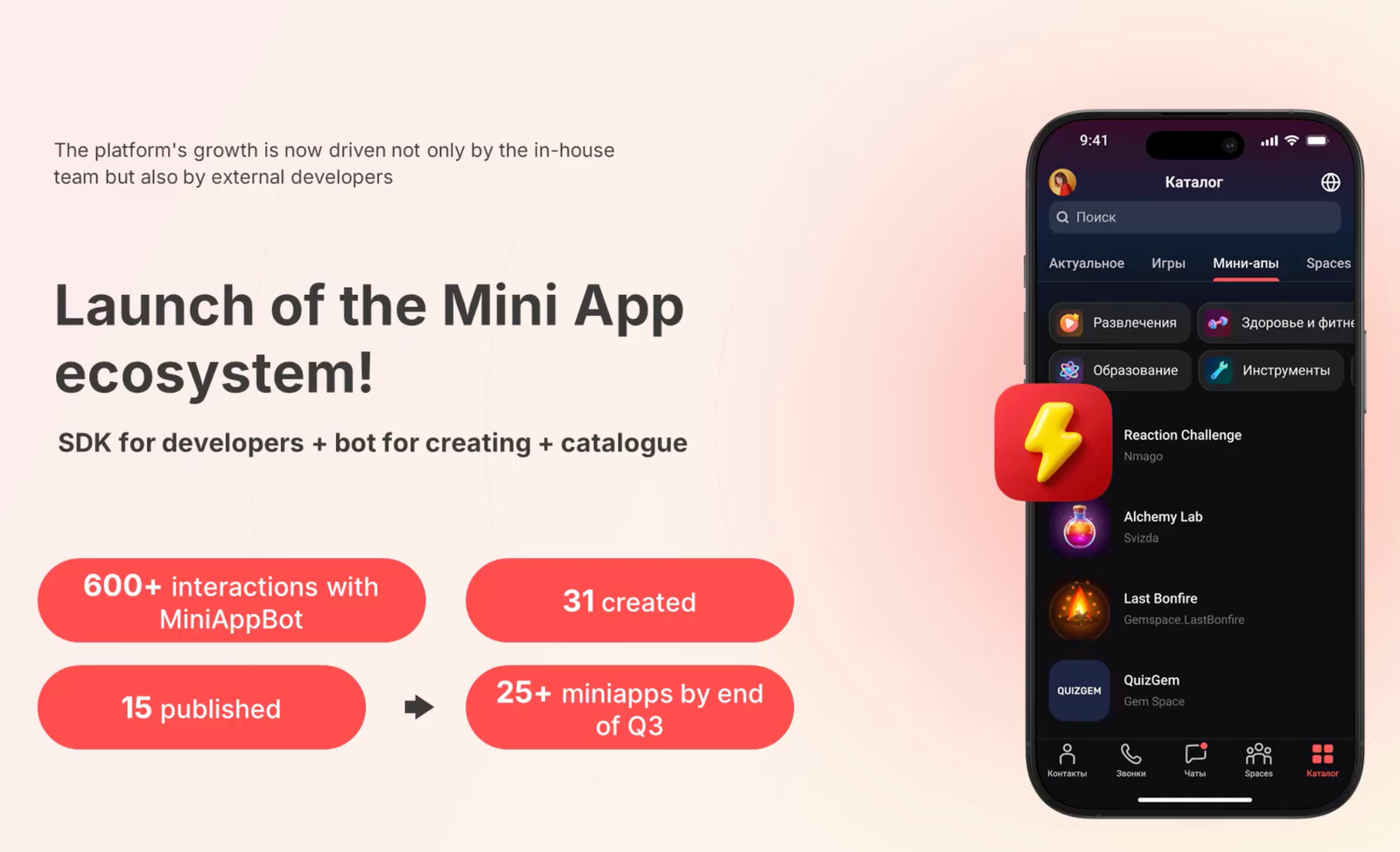
Over 600 users interacted with the mini-app creation bot in July — studying the instructions and creating bots on the platform. 31 mini-apps were submitted for review, with 15 currently published after passing the quality check process. The target is to have more than 25 mini-apps live by the end of September.
Current mini-apps are predominantly games and entertainment, but new categories are in development. Search functionality and category filters will be added to the mini-app catalog in upcoming releases. A feature allowing users to share mini-apps directly with friends is planned for September. A “become a developer” banner will also be added to increase developer awareness of the platform.
The principle behind the platform remains significant: growth is no longer driven solely by the internal development team. External developers bring their own products to the platform, which in turn attracts their own users. The ecosystem grows itself.
Spaces Redesign: Supporting Creators and Monetization
The Spaces redesign has shipped with a focus on making the platform genuinely useful for content creators and businesses — the first step in developing Spaces as a monetization driver.
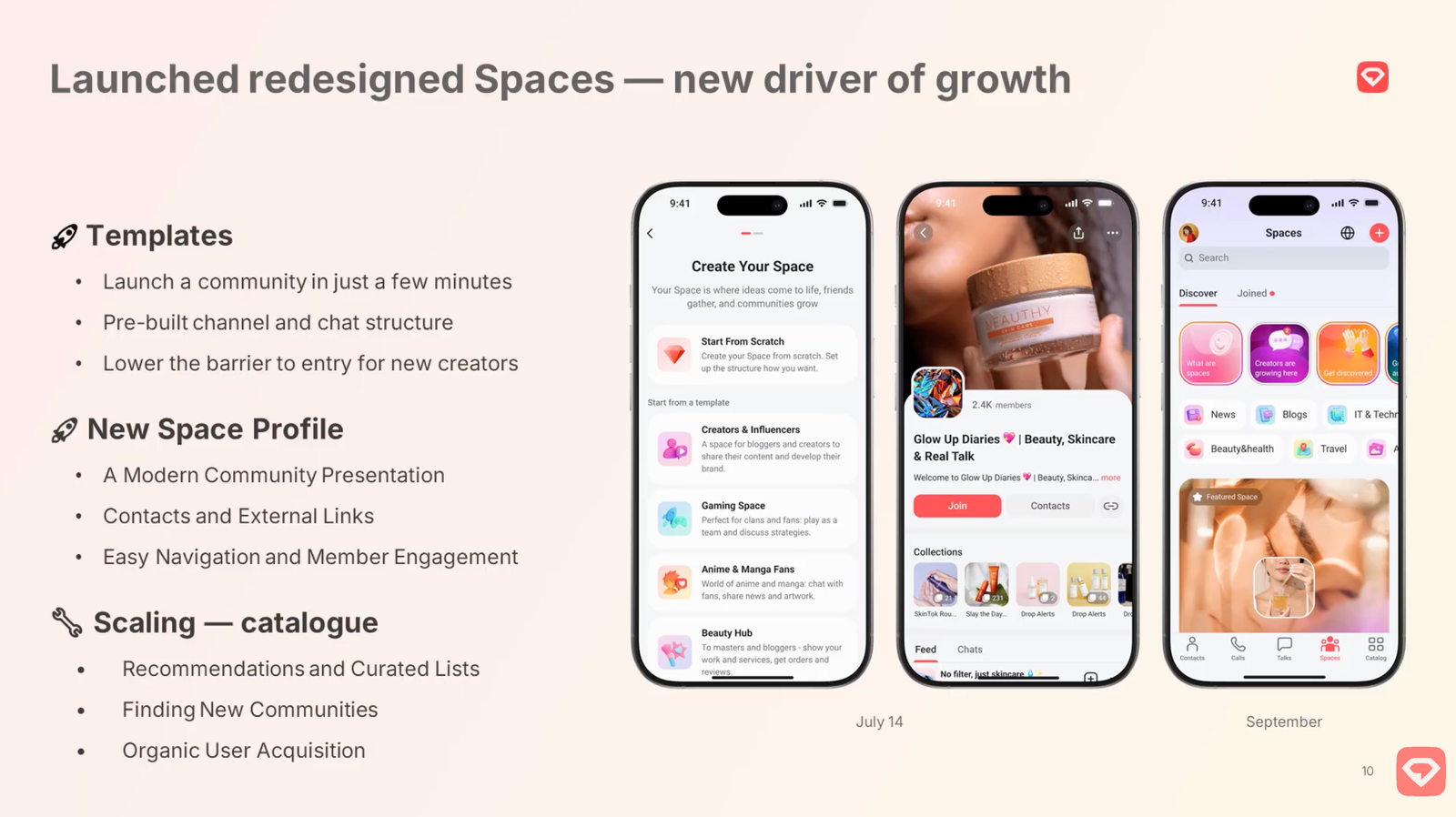
Templates now allow new creators to set up a Space quickly using a preset structure of channels and chats suited to their type of content or business. When a template is selected, the framework is created automatically, making the onboarding process significantly faster for new authors.
Profile customization has been expanded significantly. Creators can now add a header image, customize their space profile more extensively, add email addresses, phone numbers, and external links. After creating a Space, authors receive a guided set of prompts indicating what still needs to be completed to make the Space work at its best.
A catalog of Spaces is being developed — with search and recommendation functionality — to drive organic discovery and user attraction to the platform’s creator economy. The catalog will be a major step in connecting content creators with audiences they could not reach before.
Gem Premium: On Track for September
The Gem Premium subscription launch remains on schedule for September. Progress reported at the conference:
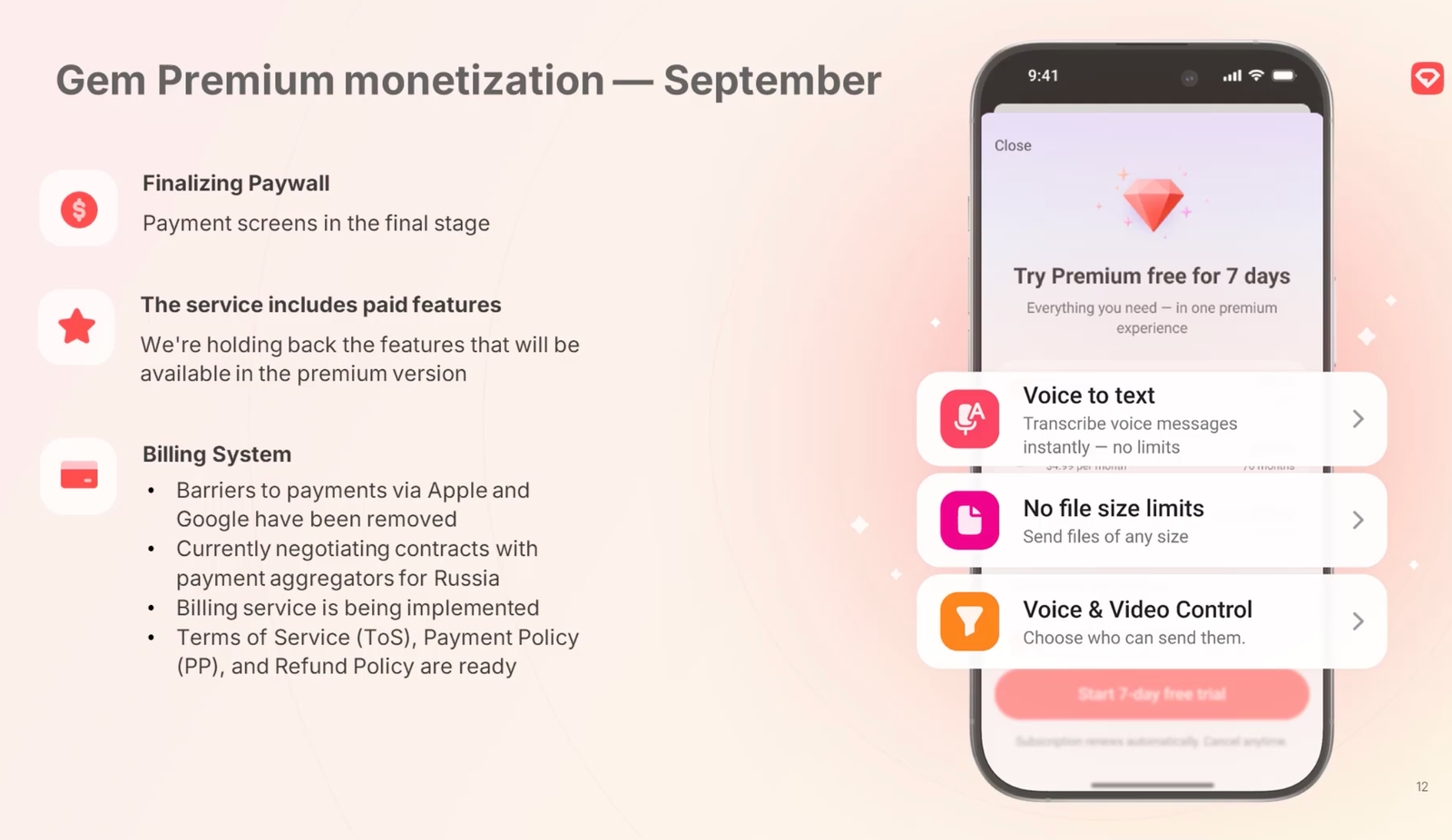
The paywall with payment screens is in its final stages. Paid features are being completed — the system is actively determining which features will sit behind the premium tier. The billing system is being implemented. Legal documentation including terms of use, privacy policy, and refund policy is ready. Apple and Google payment obstacles have been resolved. Integration with payment aggregators for CIS countries is at the contract stage.
The premium subscription will not remove anything from the existing free experience. All current functionality — chats, calls, channels, and so on — remains free. Premium adds higher quality, more capability, and AI-powered features for users willing to pay a small monthly or annual fee.
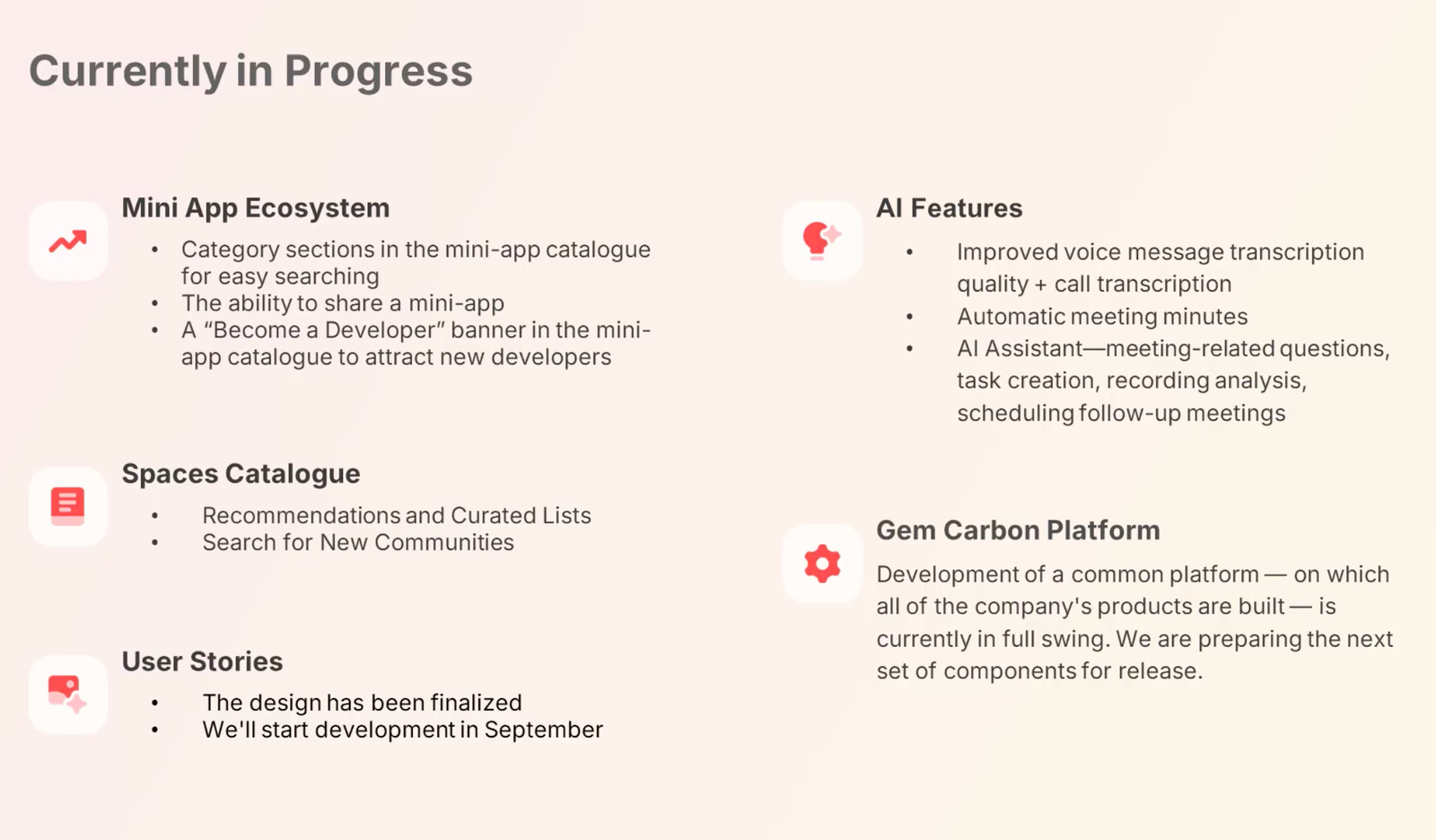
User stories are planned as the next major feature after Gem Premium launches, with design already complete and development beginning in September — targeting a September to October release.
B2B: Gem Team 3.0.2, AI Platform, and Call Intelligence
The Gem Team 3.0.2 release was officially launched and is now publicly available. Key additions in this release include cloud solution support alongside on-premise deployment, a streamlined two-step registration process for new companies, webinars unified with the B2C feature set, protected chats in MVP mode, the ability to mark chats as unread, and scheduled message sending for cross-timezone teams.
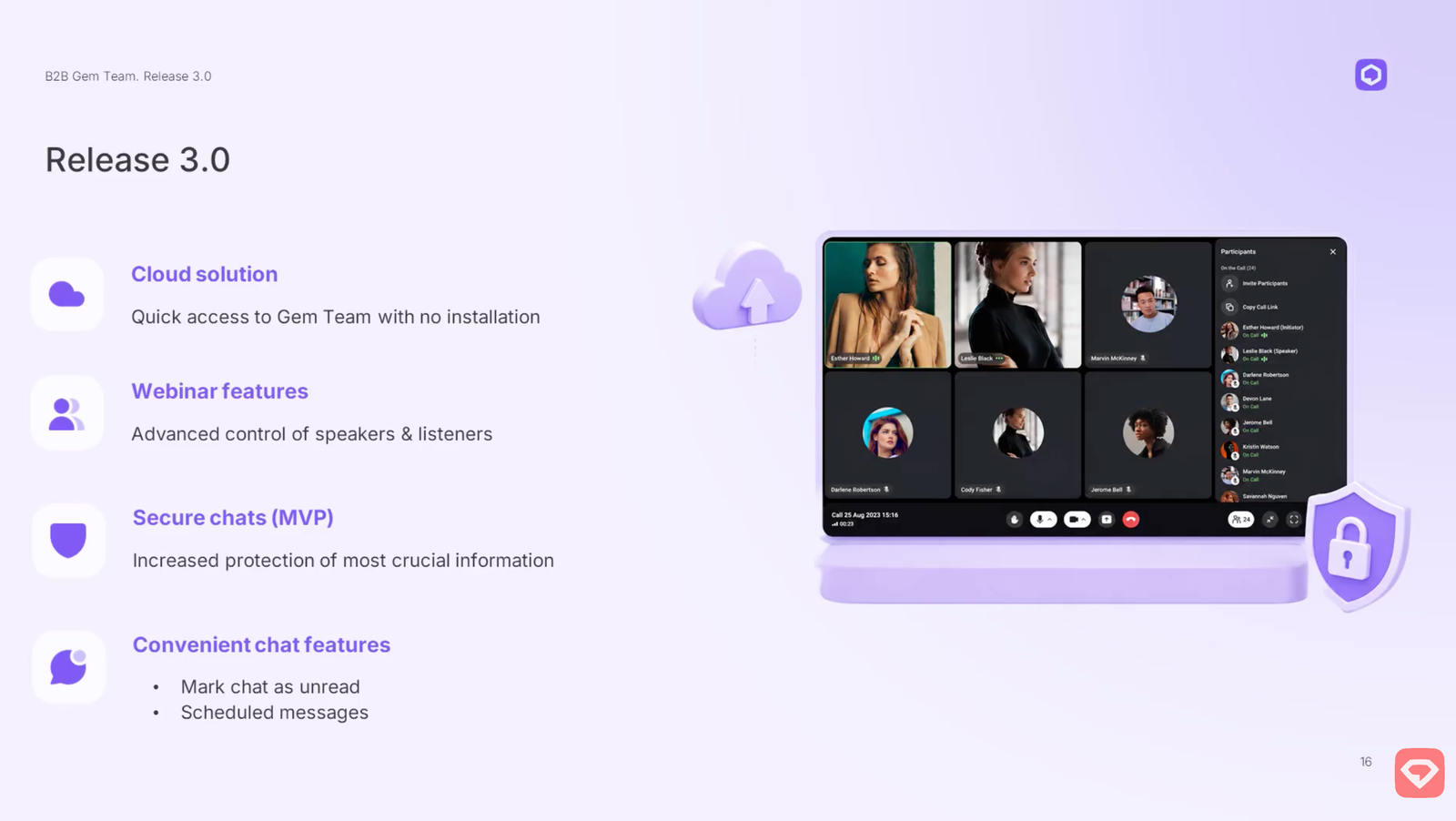
The next release will complete device management — allowing users to verify new devices from existing ones, securing protected chats against any unauthorized access.
The AI Platform for Calls: A Detailed Roadmap
The most extensive new announcement at the August 3rd briefing was the detailed roadmap for AI-powered call features — a complete platform being built around call history, transcription, and intelligent assistance.
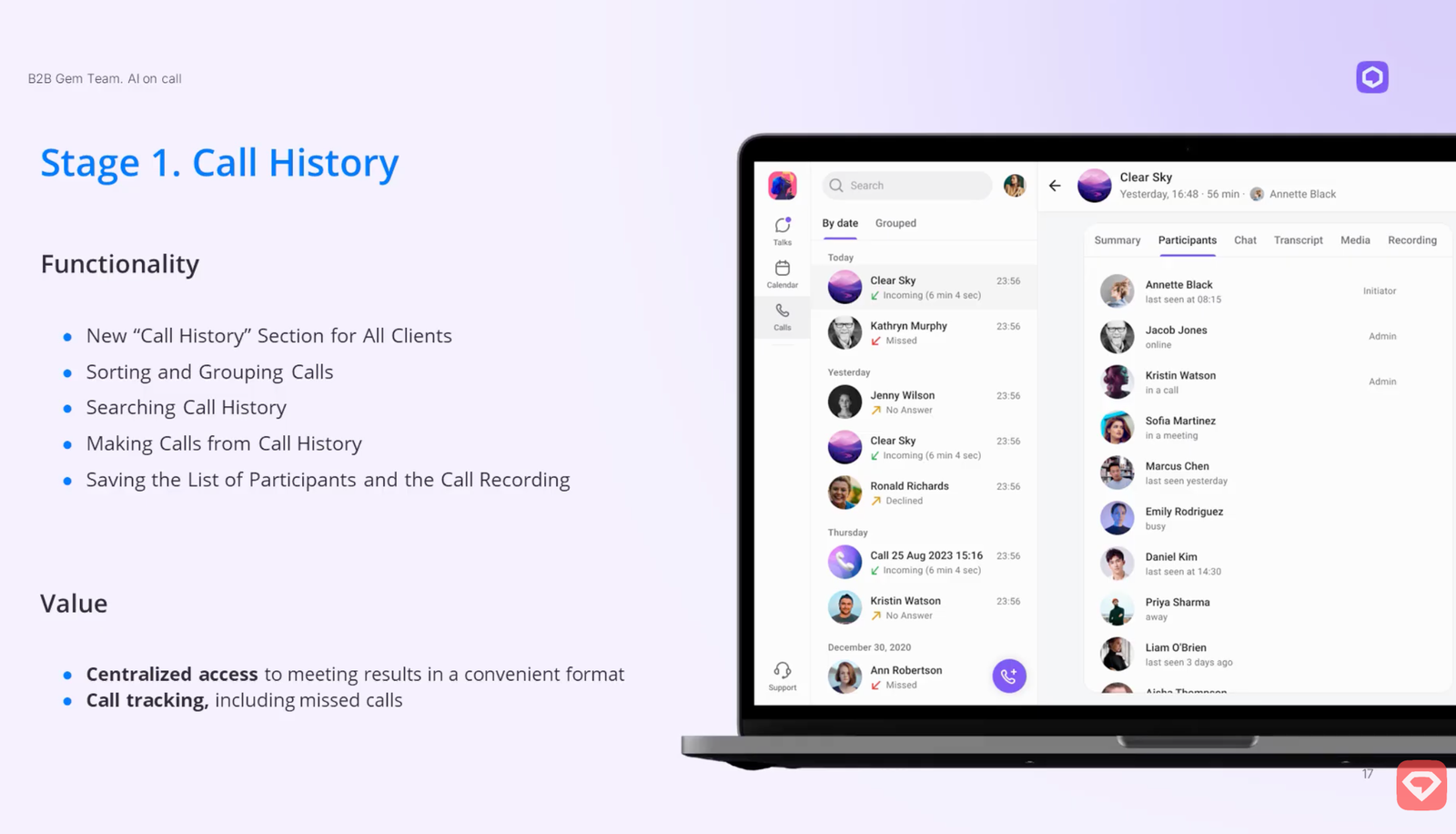
Stage One: Call History
A dedicated call history section is being built — a searchable, organized record of all calls. Users will be able to view calls as a flat list or grouped by participant or chat. Each call entry will include participants, any meeting recording made, and — once transcription is available — a full text record of what was said. Everything will be accessible across all devices.
Stage Two: Transcription
Transcription is the foundational feature on which everything else is built. During a call, every spoken phrase will be captured and displayed as text in real time — visible to all participants. Participants will be able to correct the text immediately if the model makes an error. Moderators and administrators will be able to mark phrases as important, exclude phrases from the final transcript, edit the text, and view a history of all edits with the ability to revert to previous versions.
After the call, the transcription is saved in the call history and accessible offline to all participants. Specific phrases can be sent directly to a chat to continue a discussion on a particular point without retyping anything from memory. The full transcript can be searched, labelled, and exported as a file for attachment to official meeting records.
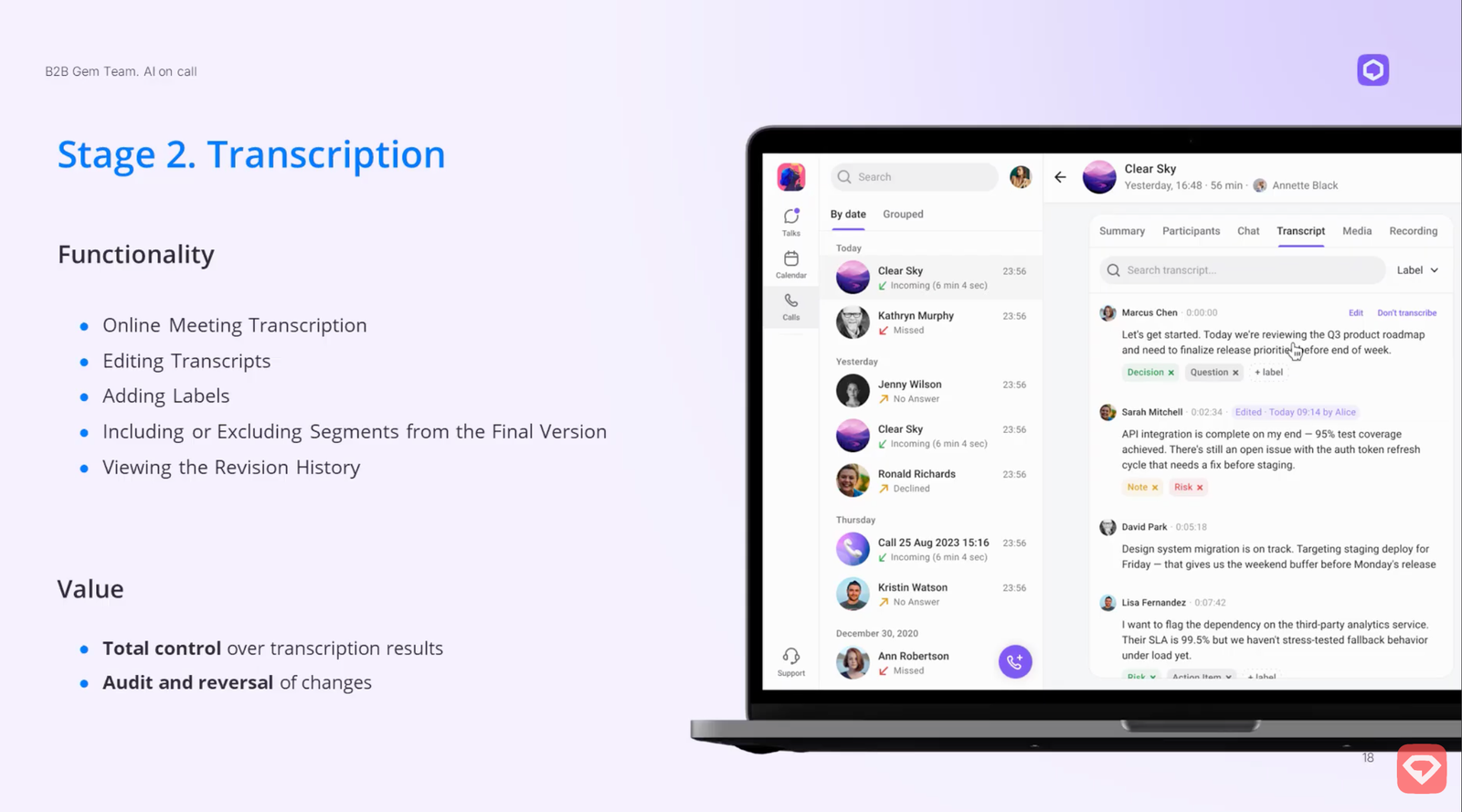
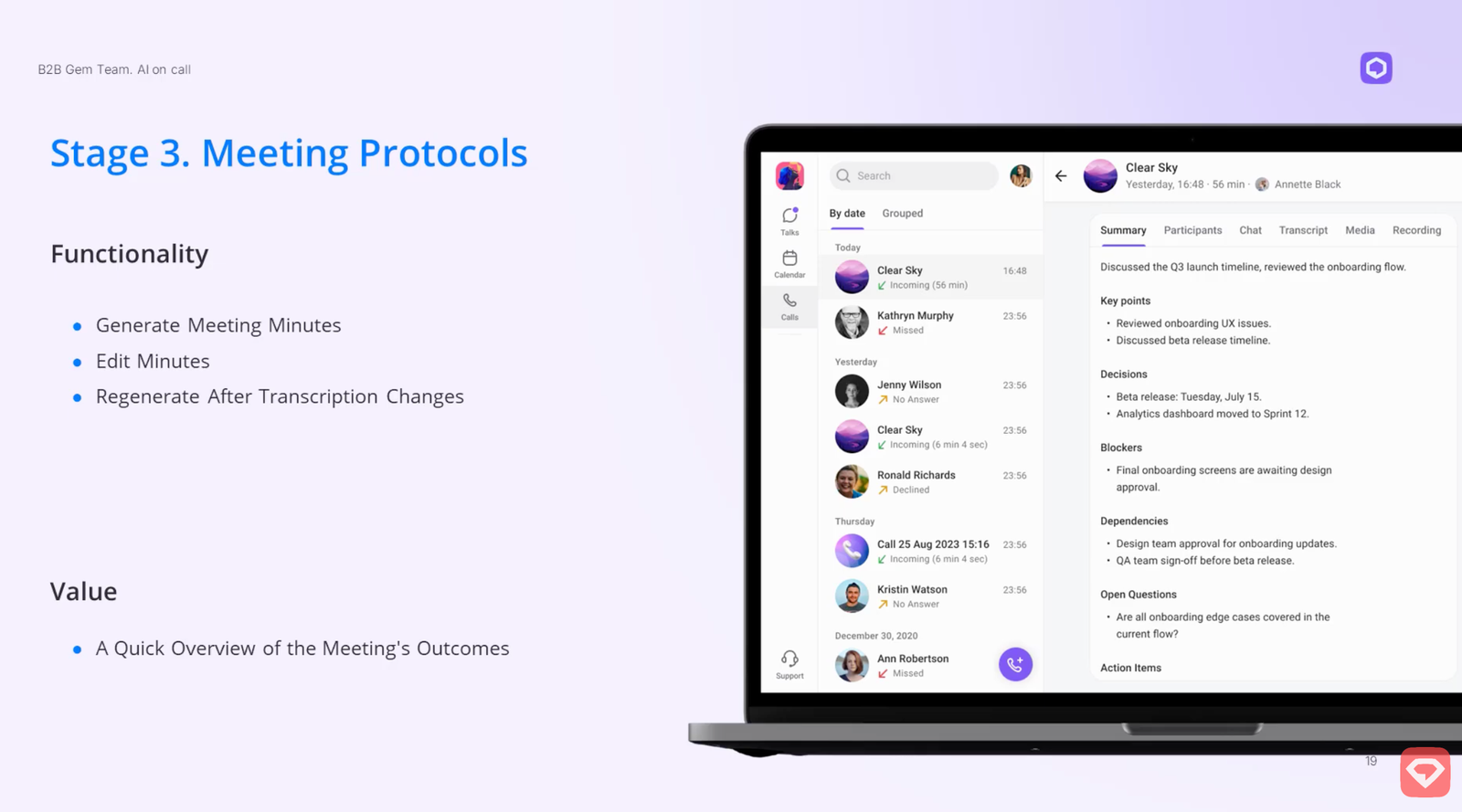
This transcription capability also forms the foundation for a high-quality, automatically generated meeting protocol. Users can indicate during the call whether a specific exchange relates to a problem, a solution, or a task — and the protocol generation model uses exactly this structured input rather than having to interpret raw conversation. The resulting protocol clearly shows what was discussed, what decisions were made, what questions remain open, and who is responsible for which tasks.
Stage Three: Meeting Protocols
Chat functionality will be introduced within calls — allowing file sharing, reactions, and eventually voting. All chat content from a call will appear in the call history alongside the transcription, creating a complete record of everything that happened.
Stage Four: Chats During Calls
Chat functionality will be introduced within calls — allowing participants to share files, add reactions, and eventually participate in votes directly within the call environment. The decision to sequence transcription before chat was deliberate: spoken conversation during a meeting always contains more information than what can realistically be typed in a chat, and capturing that spoken content accurately was the higher priority. Once transcription is in place and delivering its full value, chat adds a complementary layer — allowing participants to share supporting materials, respond to specific points, and signal agreement or questions without interrupting the speaker.
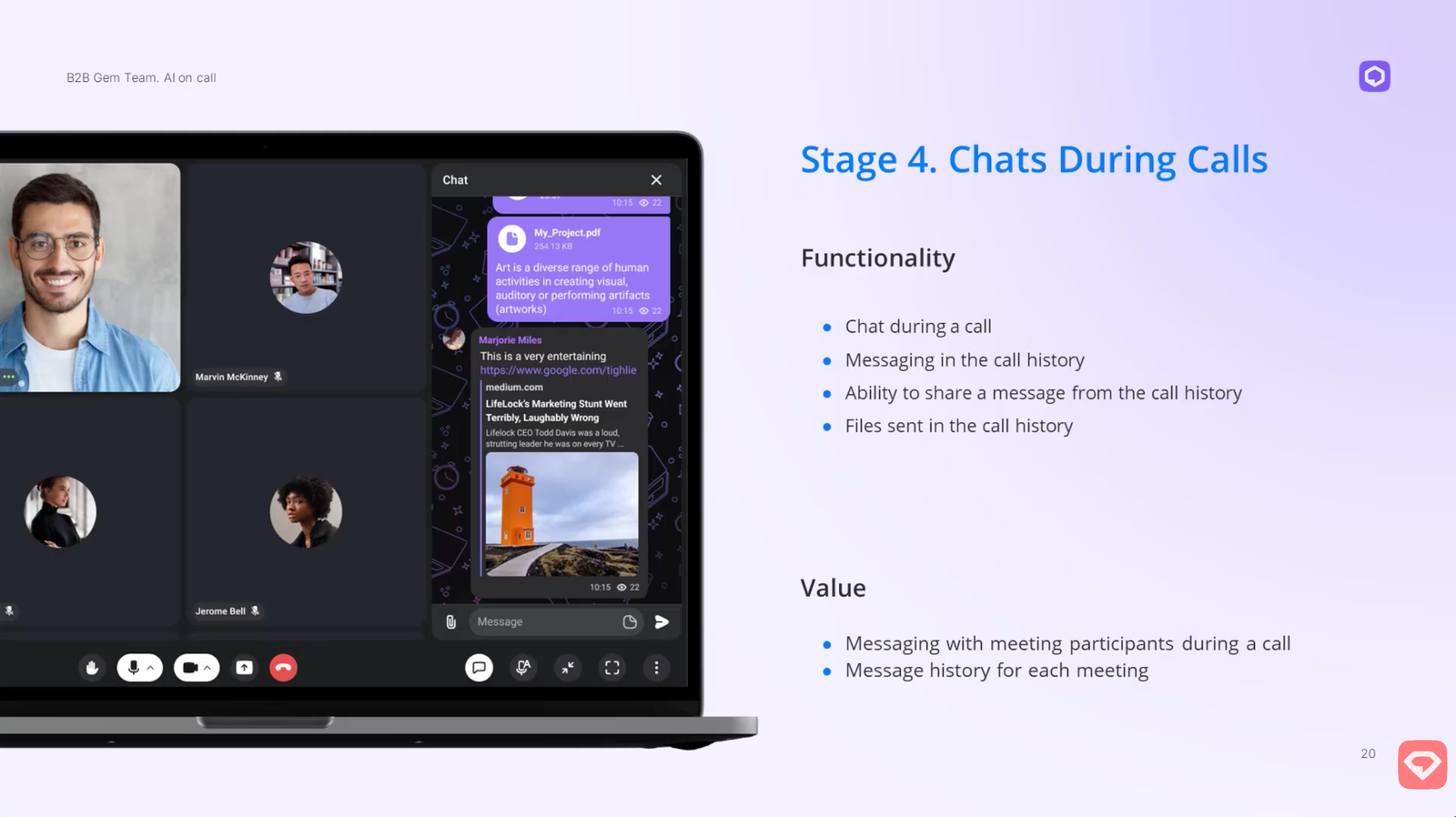
All chat content from a call will be saved and will appear in the call history section alongside the transcription, creating a single, complete record of everything that happened during the meeting — spoken, written, and shared.
Stage Five: AI Assistant
An AI assistant will be available directly within the call history section. It will have access to the transcription, the in-call chat messages, and any files shared during the call. It can summarize everything, answer specific questions about what was discussed, extract information from files shared during the meeting, and — through agent functions — create tasks in Jira, write articles, or schedule follow-up meetings in the calendar based on the discussion outcomes. Quick-access functions will be available based on what the AI identifies as most relevant to the specific meeting.
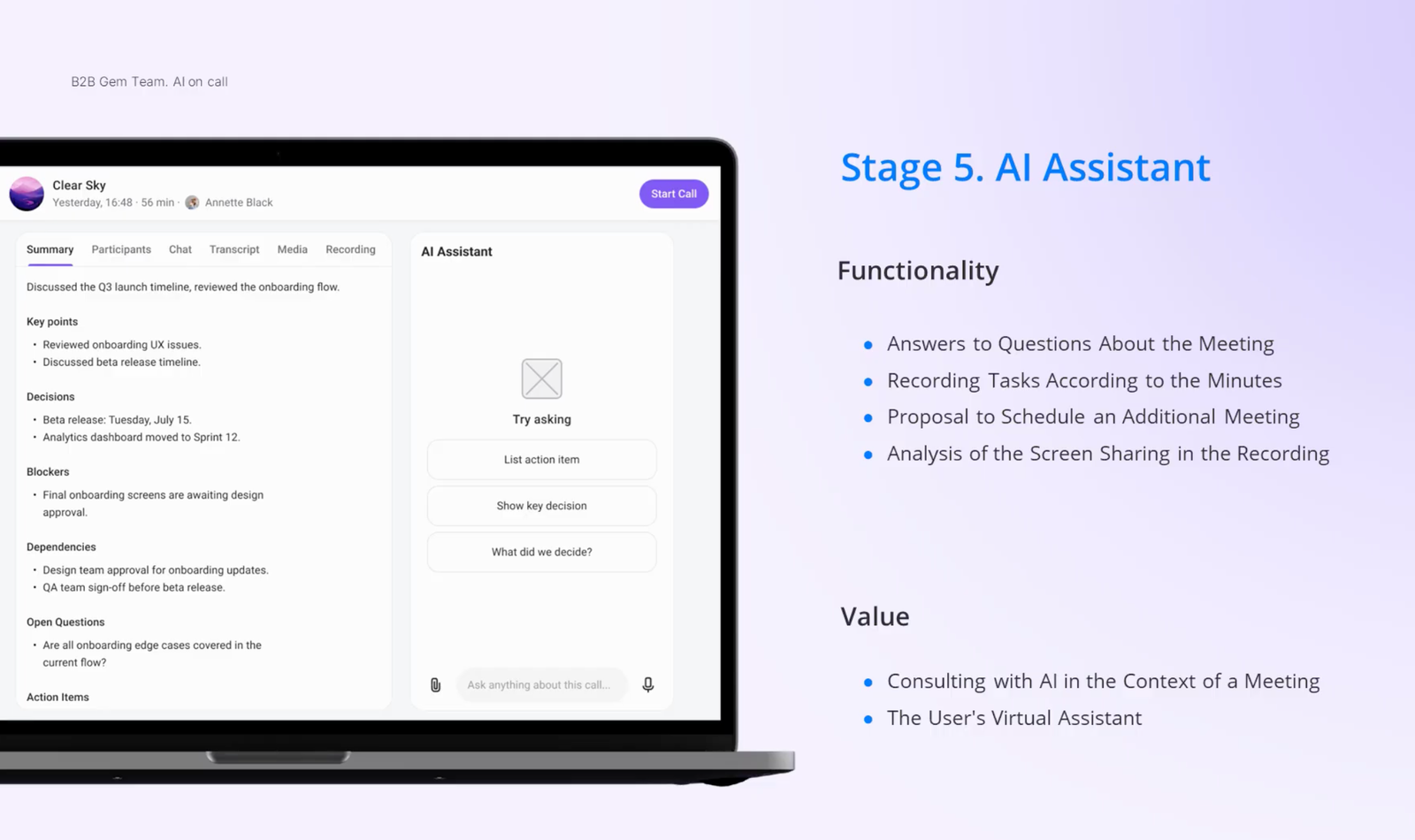
This represents a comprehensive AI platform for calls — covering history, transcription, protocol generation, in-call chat, and intelligent post-meeting assistance — built for both Gem Space B2C and Gem Team B2B contexts.
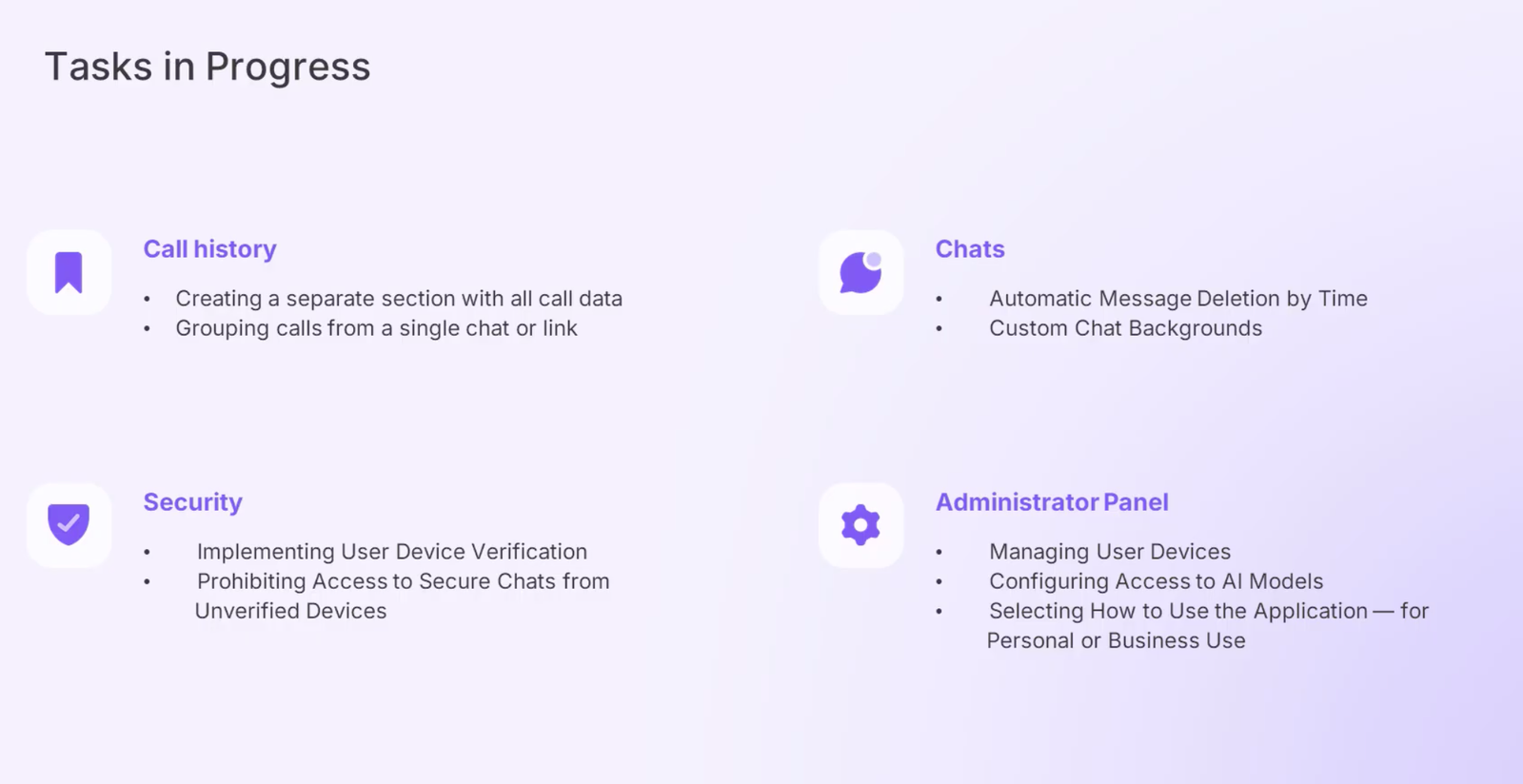
Additional AI features in development for Gem Team include auto-deletion of messages by time configuration, user-customizable chat backgrounds for the corporate environment, advanced device management in the admin panel, and flexible configuration of AI model access — including the ability to connect to OpenAI and other external models for companies with open network policies, or to deploy entirely local models within a closed perimeter for organizations that require maximum isolation.
Other tasks in progress:
Current Installations: 51,330,000
Total registered active users stand at 51,330,000 as of August 3rd. Android installs on Google Play currently stand at 42 million — with the 50 million Google Play milestone remaining a key strategic target that will significantly strengthen the platform’s negotiating position in regional and global sale discussions.
GCC Region and Strategic Sale Update
Work in Qatar and Saudi Arabia continues through the US-Qatar Business Council, which provides a regular meeting cadence with counterparties across the region. North Africa is also being actively developed — negotiations are underway with two countries, tests are being conducted, and documents are being signed.
A wealthy oil-rich country outside the Gulf is currently in negotiations regarding the purchase of Gem Space for deployment as a national messenger. This country spent five years attempting to build its own messenger and was unsuccessful. The chances of a deal are assessed as high as the acute phase of the current regional conflict subsides.
On the question of when a strategic sale might occur: the assessment is that when the platform reaches approximately 50 million users with monetization cash flow established, the likelihood of a strategic sale will increase significantly. Both conditions are being pursued simultaneously — user growth through the platform’s own organic and paid channels, and monetization through Gem Premium, PayGem, mini-apps, and AI tools.
Stay informed — join our Angels Team channel in Gem Space.
Comments are closed