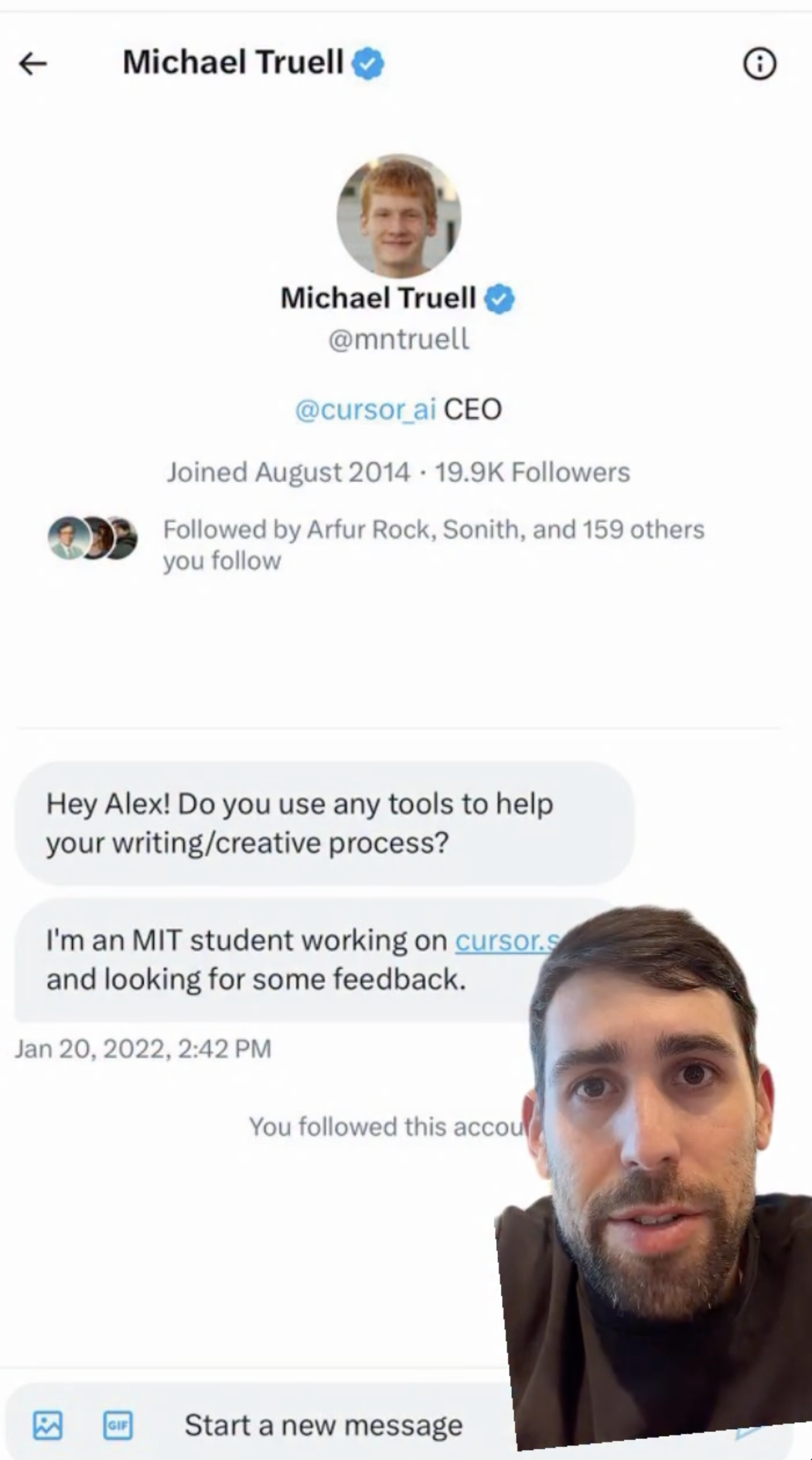
On June 16, Elon Musk bought Cursor for $60 billion. But the real buzz isn’t the deal—it’s an old screenshot: founder Michael Truell DMs an investor… and gets crickets. The post went viral, with everyone calling it a “missed opportunity.” But the story runs deeper.
If you want to sell your company for $60B, you have to get used to your emails being ignored. That’s the rule.
But 99% of founders miss the real lesson: the early stage is about product marketing, not going viral. They hate that—they think code and word-of-mouth will carry them. The second fatal mistake? Copying what current leaders (like Cursor) do when you have zero users. The result? A blown budget and zero results.
⚠️ Marketing a product like Cursor with 1 employee versus 500 is a completely different universe. Mix up the two strategies, and you won’t survive to see that final deal.
GemSpace’s management team spent 10 years growing methodically—no wasted spending, no stupid mistakes, constantly strengthening both the product and our legal structure to protect every co-owner, even the smallest contributors. That’s exactly what got us to the finish line with a global product and real investor trust.
Why the Final Stretch Eats Cash (And That’s OK)
The “Valley of Death” at the start is scary, but the gauntlet at the end is worse. Once your product proves itself—millions of users, hitting Series B/C rounds—the land-grab phase kicks off. Marketing budgets explode by 10x or 100x. It’s a war for market share, and every single percentage point of conversion costs millions.
Real-world endgame spending:
- Instagram ($1B, 2012) – In their last year, they poured huge amounts into user acquisition to drive explosive growth in their metrics. Spending was astronomical compared to year one.
- WhatsApp ($19B) – Tens of millions went into SMS verification and ads in developing countries to push past 450M users. At the start? Zero.
- YouTube ($1.65B, Google) – The year before the buyout, they burned through cash on bandwidth and marketing to outrun competitors. Early on, pure virality did the job.
- Figma ($20B, Adobe) – They ramped up their enterprise marketing and conference budgets exponentially. They were selling an ecosystem, and that cost a fortune.
So What Does This Have to Do with GemSpace?
“That’s for giants,” you say? Think again. We are a giant in this space. GemSpace is proven technology with nothing left to prove. We have—and improve daily—capabilities that almost nobody else on the planet can match. We run flawlessly across 194 countries. As of today, even conservatively, our valuation exceeds $2 billion. We’re in pre-sale mode, and we’ve never been stronger.
The examples above aren’t just nostalgia. They highlight one thing: funding becomes more critical the closer you get to a deal. And negotiations are already underway.
Once we hit self-sustainability, the door closes forever. Right now we’re sprinting the last 100 meters. The more fuel we have, the faster we grow, the bigger the contracts, the higher the dividends.
And here’s the key difference: we’re not stock-market shareholders. We’re co-owners of actual equity, on equal footing with management—same risks, same rewards. In return, you get a stake in a billion-dollar corporation and the kind of abundance that changes your life and your family’s.
A Once-or-Twice-in-a-Lifetime Shot
Windows of opportunity like this don’t open often. When you’re at the deal table, you either floor it or watch someone else walk away with your prize.
We’ve already survived the “ignored emails” phase and are walking into negotiation rooms with billion-dollar players. Right now, every dollar you put in gives you maximum leverage—and every day you wait is a lost percentage.
Join GemSpace while we’re still open. While the valuation is still discounted before takeoff. While private entry is still possible.
Don’t sleep on the quiet DMs—the signal you ignore today might be the one that rewrites your entire future. 😇🫶
We’re moving forward. Will you join us?
Comments are closed