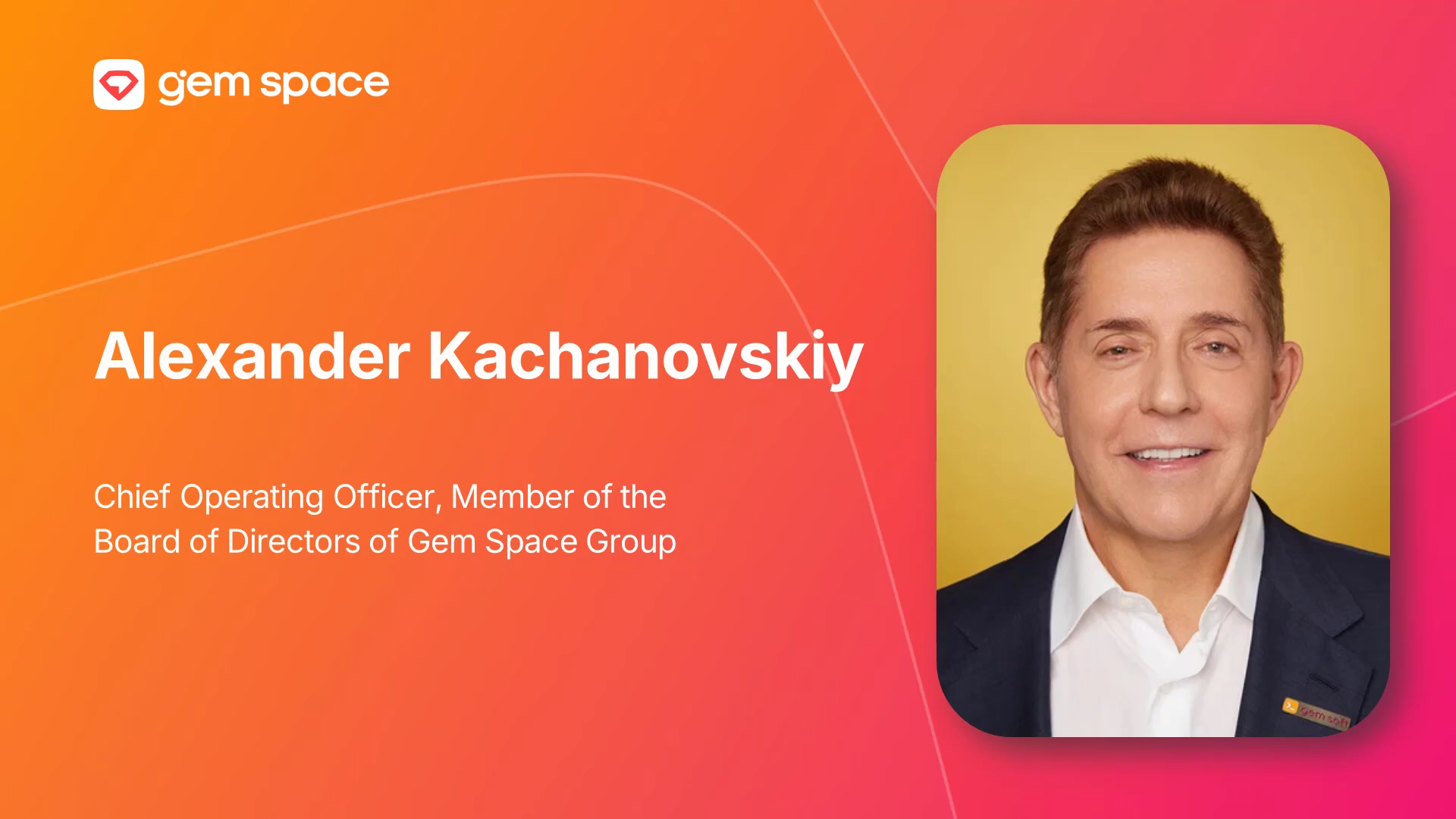
Gem Space continues to move forward as a global communication and digital infrastructure project, strengthening its technological independence, refining its licensing strategy, and positioning itself for long-term growth. During a recent reporting meeting, Alexander Kachanovskiy, Member of the Board of Directors, shared key updates on infrastructure decisions, regional sales logic, licensing agreements, and the broader strategic vision behind the project.
Infrastructure Independence and Server Strategy
One of the central topics addressed was the company’s transition away from heavy reliance on third-party services, particularly Google. In the early stages of Gem Space, Google services were used extensively for messaging operations, calls, notifications, and other core functions. This approach is common for growing applications, as it allows teams to scale quickly using ready-made solutions.
However, since August, Gem Space has experienced a significant increase in users, which led to sharply rising operational costs. In response, the team made a strategic decision to rewrite and internalize critical services. Today, while data storage may still utilize Google infrastructure, all operational processes—such as messaging, calls, and notifications—are handled directly within the Gem Space application.
This shift has delivered several key advantages:
- Lower operational costs by reducing dependency on external service fees
- Greater independence from any single cloud provider
- Enhanced flexibility, allowing the platform to be migrated to any cloud environment, including Amazon, Alibaba, or regional cloud solutions
As a result, Gem Space has strengthened its position as a secure, adaptable, and globally scalable platform.
Regional Sales and White Label Solutions
Another important topic was the logic behind regional sales and white label licensing. Gem Space offers flexible solutions tailored to different markets and partners.
In large regions—such as Southeast Asia, including Indonesia, Malaysia, and the Philippines—partners can receive geographically limited rights to deploy a fully branded white label version of the application. This allows partners to adapt the design, branding, and market positioning while operating within agreed regional boundaries.
There are multiple models available:
- Partial ownership and regional control, with clear geographic limitations
- White label licensing, where Gem Space provides ongoing technical support, maintenance, and development
- Full transfer scenarios, including codebase handover and developer training, for long-term partners
These solutions vary significantly in cost, with white label sales typically priced at least 1.5 times higher than standard licenses due to their complexity and long-term value.
Licensing Agreements and Revenue Outlook
During the meeting, clarification was provided regarding a licensing deal concluded in July, valued at $3.8 million. The agreement covers a one-year license period, with renewal expected on an annual basis.
License pricing is directly linked to the number of active users. As user counts fluctuate, future license costs may increase or decrease accordingly. While final figures for renewal cannot yet be confirmed, management expressed strong confidence—estimated at around 90%—that the license will be renewed under similar conditions.
Market Expansion and Regional Progress
Regarding development in Russia, Gem Space noted that while internal solutions such as coworking tools continue to evolve, no major licensing agreements have yet been finalized in that market. Current commercial focus remains on international markets, with updates to be shared as new milestones are reached.
The company also announced that promotional programs will be extended beyond December 29, with full details to be released on that date.
A Strategic Parallel: Lessons from Skype
To illustrate Gem Space’s long-term vision, Alexander Kachinowski shared a business story from the early 2000s—the rise of Skype.
Developed by a small Estonian engineering team with limited access to capital, Skype challenged the dominant telecom model by offering free international calls. Instead of relying on expensive infrastructure, the team built a distributed system in which users themselves formed part of the network.
Despite skepticism from the market and lack of initial industry support, Skype eventually became a global standard for communication and was acquired for billions of dollars. The story serves as a reminder that transformative infrastructure projects often appear risky or unconventional at their inception.
Gem Space, according to leadership, now finds itself in a similar phase—competing with established global platforms, facing market resistance, and requiring long-term investment. However, this stage is seen not as a weakness, but as a defining characteristic of large-scale infrastructure projects.
Content Growth and User Engagement
Beyond technology and licensing, Gem Space continues to expand its in-app content ecosystem. Product and marketing teams have launched a wide range of themed channels, including:
- Seasonal and New Year content
- Food, recipes, and nutrition
- Wellness, yoga, breathing, and recovery
- Humor, memes, and entertainment
- Psychology, motivation, and intellectual analysis
- Practical lifestyle content, such as cleaning tips and home organization
These channels are designed to increase user engagement, retention, and overall platform value. Users are encouraged to explore, subscribe, and share content within the app.
Promotions and Upcoming Events
Gem Space also reminded participants that several promotions remain active until December 29, including:
- A bonus share package
- The Breakthrough Plan of the Month, offering increasing rewards with each additional package purchased
The company encourages partners and users to take advantage of these limited-time opportunities and to stay engaged with upcoming events and announcements.
Looking Ahead
Gem Space continues to progress across B2C, B2B, and B2G segments, focusing on sustainable growth, technological independence, and long-term value creation. With infrastructure upgrades, flexible licensing models, expanding content offerings, and a clear strategic vision, the company remains committed to building a global communication platform designed for the future.
No responses yet