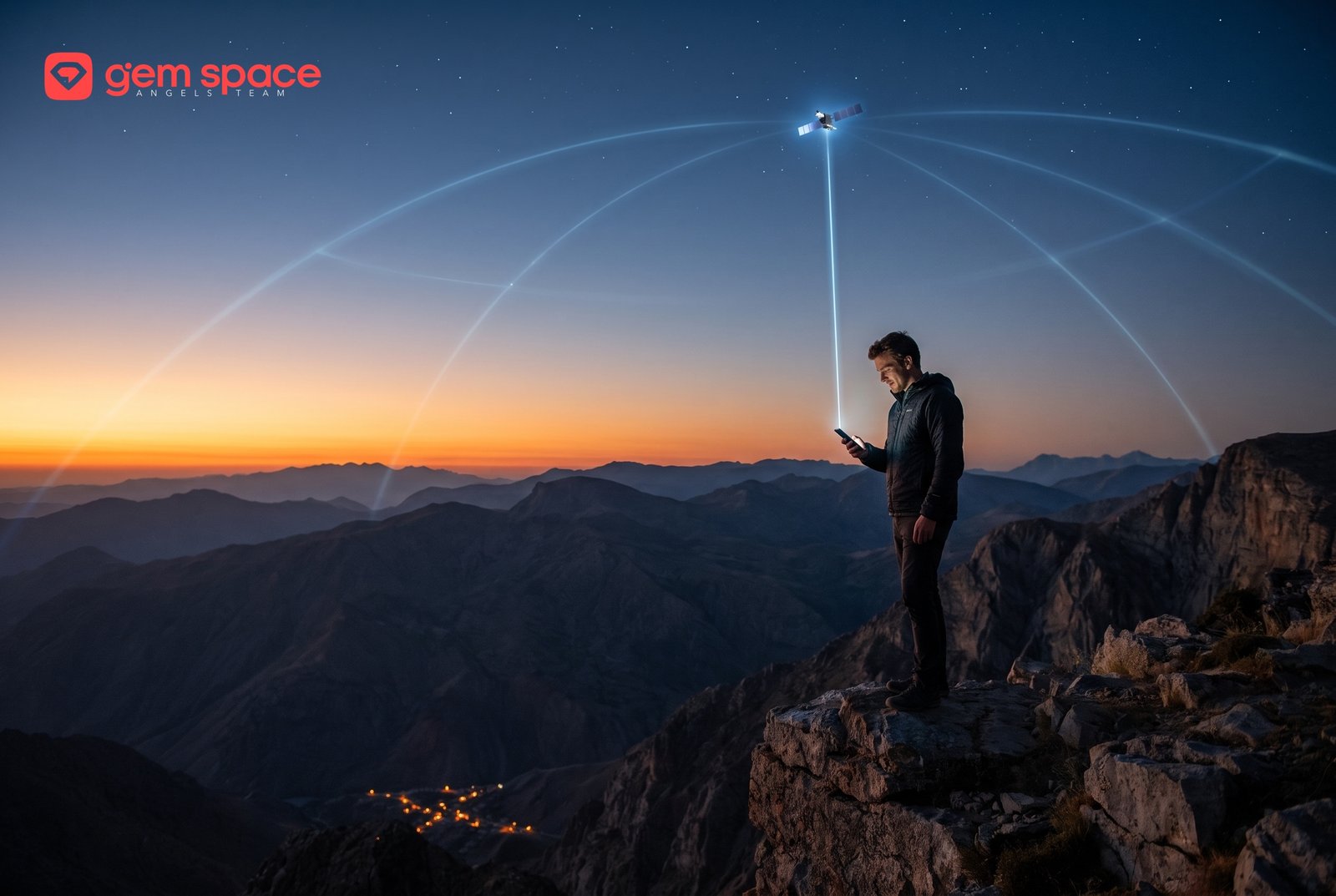
Picture this: you’re in the mountains, adrift at sea, or stuck in a village that’s never had cell coverage. And yet—your messenger works. No Wi‑Fi. No carrier. Just a direct link to a satellite overhead.
Sounds like a fantasy? It’s real.
Right now, ordinary smartphones are already bypassing cell towers:
· Costa Rica launched satellite messaging for regular devices.
· Europe signed new partnerships—over 600 OneWeb satellites are already in low Earth orbit.
· China connected 47 Huawei and Haotai models to space.
· Russia just allocated test frequency bands.
And the largest satellite network of all—Starlink Direct to Cell, with roughly 650 units—is already circling the planet.
But here’s the key: building new towers is becoming less economically viable, especially in rural and remote regions. At the same time, entire nations still treat internet access as a luxury—and nobody is running fiber to them anymore.
The future belongs to whoever can serve those regions from orbit, bypassing the old infrastructure entirely.
That’s exactly where Gem Space is focused. Talks are underway with a telecom provider to make the platform work offline—first for enterprise clients, then for the full superapp. In the Middle East, pilot deployments over satellite channels are already underway.
We’re used to thinking of the internet as permanent and universal. But maybe it’s simply transforming—becoming invisible, orbital, and finally accessible to everyone.
Today, Gem Space has 51 million users across 194 countries, with an independent valuation above $2 billion. Tomorrow, it’s connectivity that needs no towers.
And those who get in early? They’ll be in a very different position from those who just watch from the outside.
When the world goes satellite—will you be a user, or a co‑owner? Your move. 😇🫶
Stay informed — join our Angels Team channel in Gem Space.
Comments are closed