The August 31st briefing opened with a detailed analytics overview confirming that positive growth trends are continuing across all key metrics.
Monthly active users grew 2% in August compared to July. Daily active users remained essentially at July’s level with a slight 0.3% increase — but the composition of user activity has shifted meaningfully. Messages per user increased 1.3% in August, and the number of app launches per user grew 2.3%.
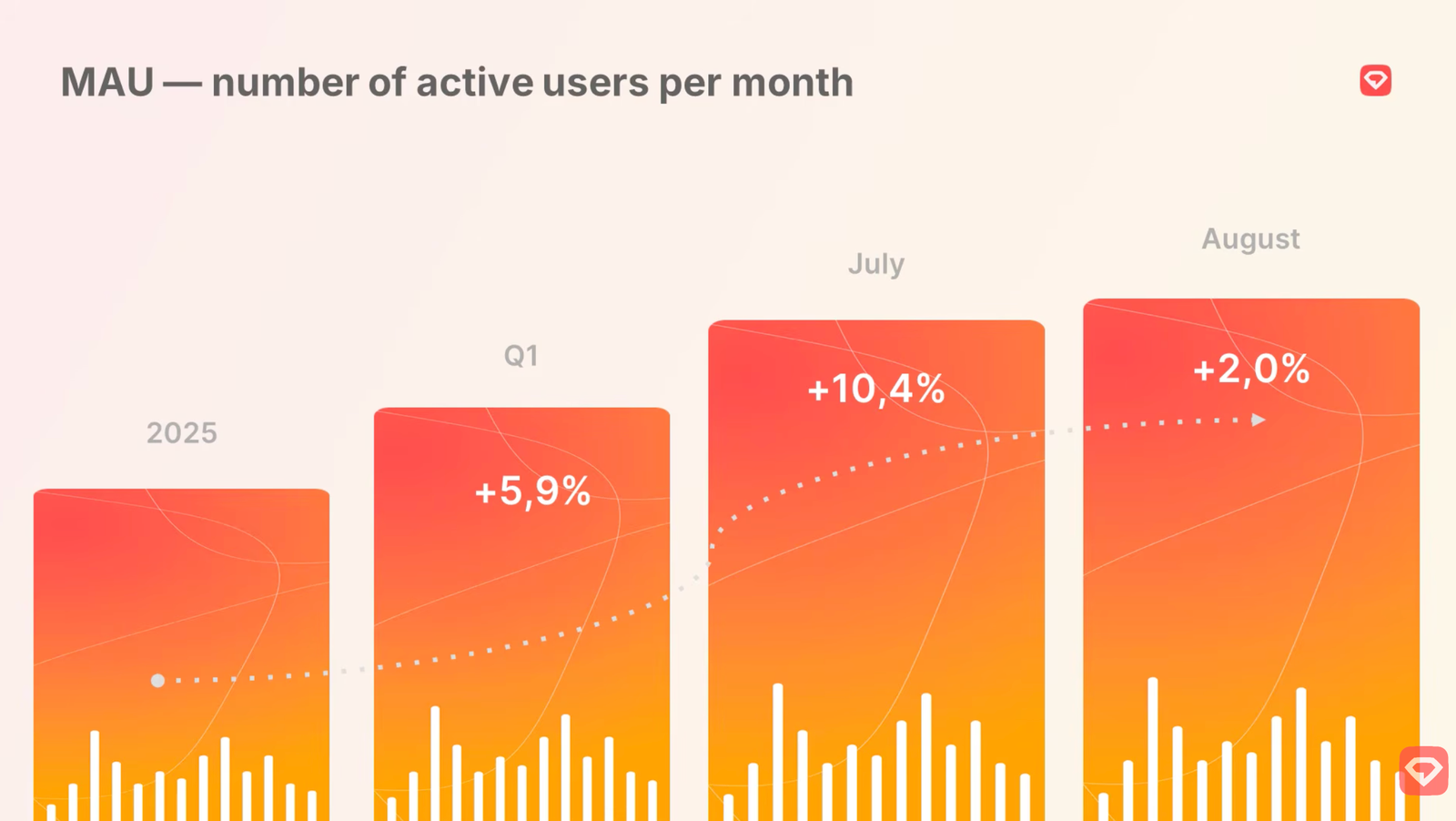
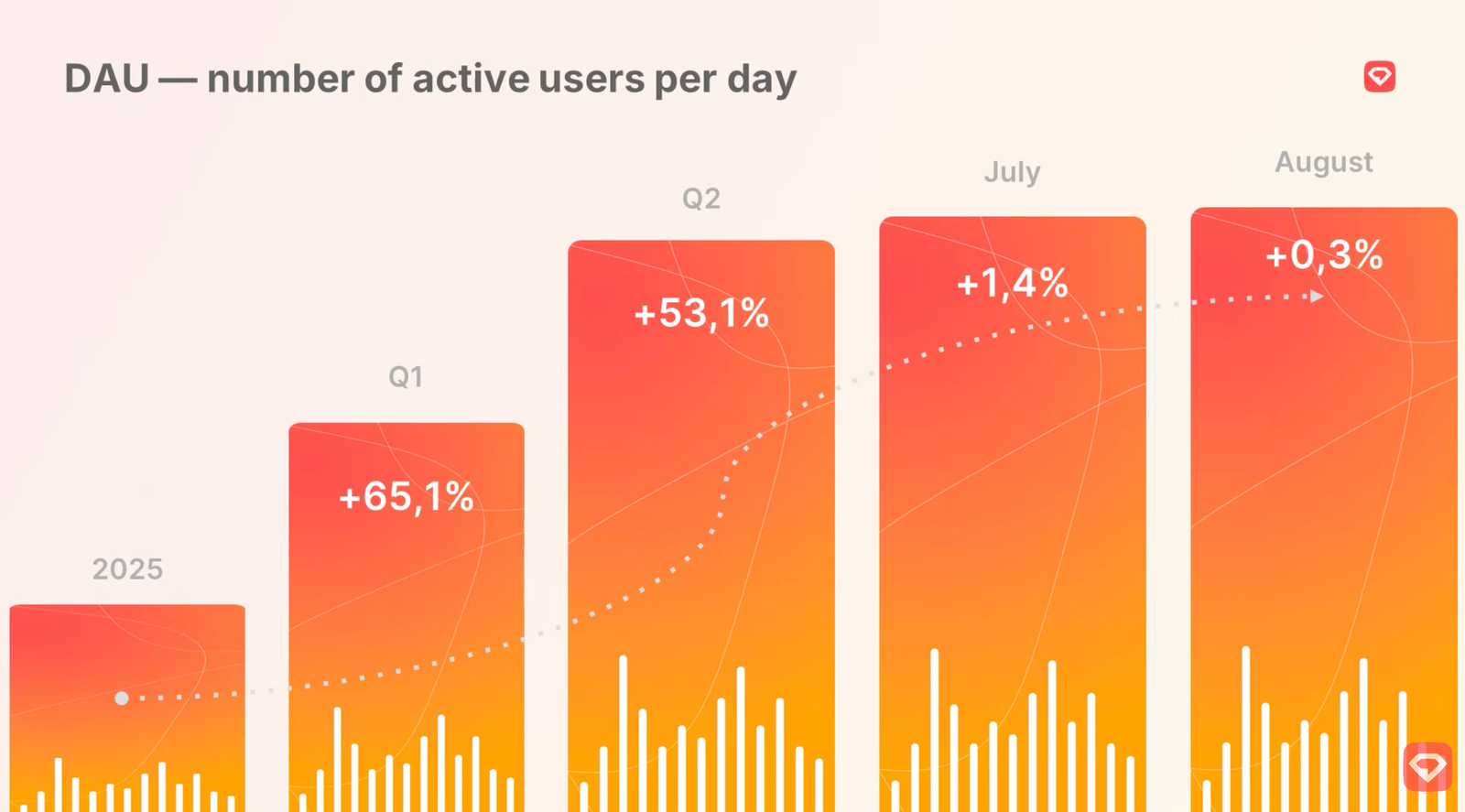
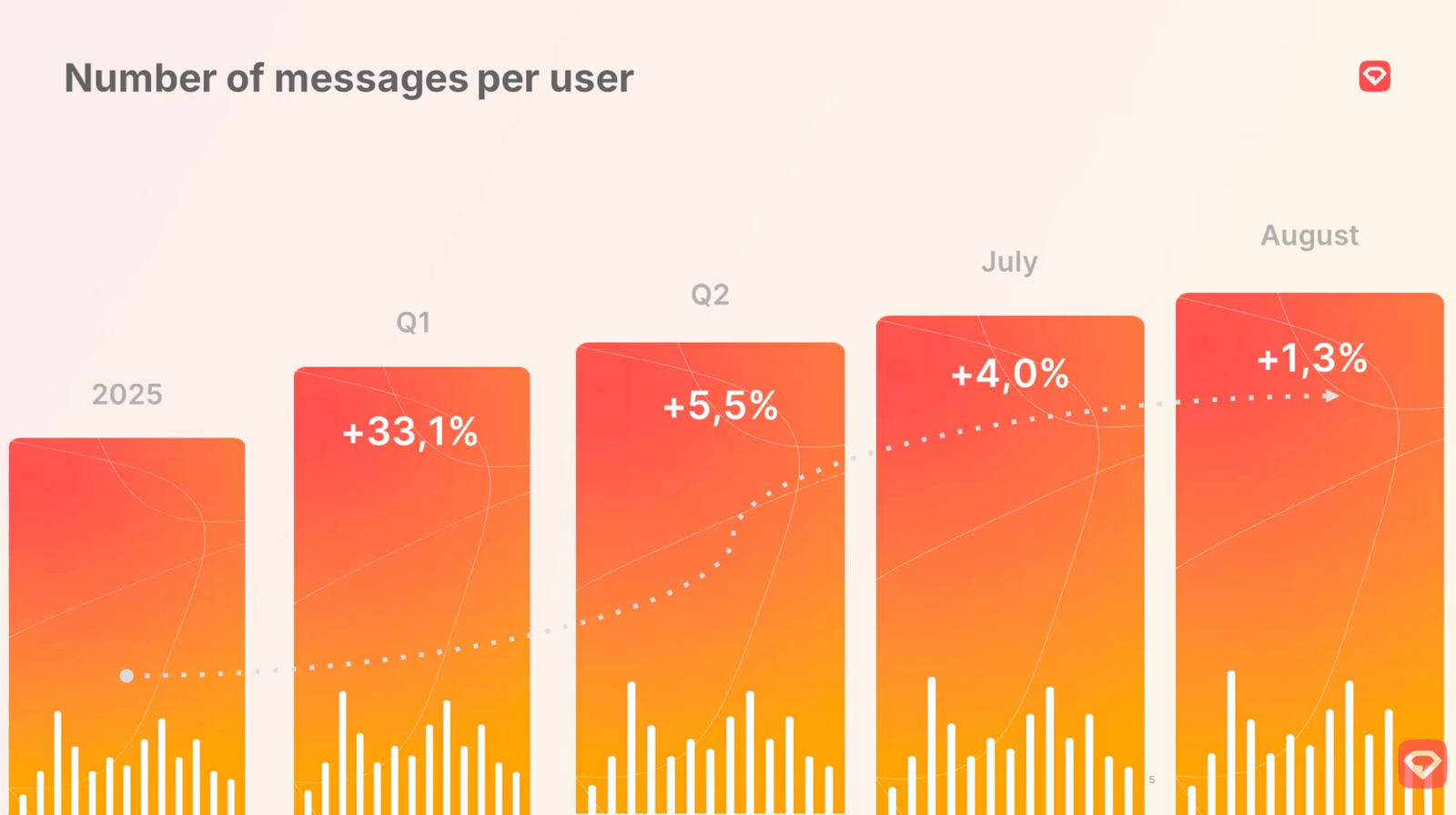
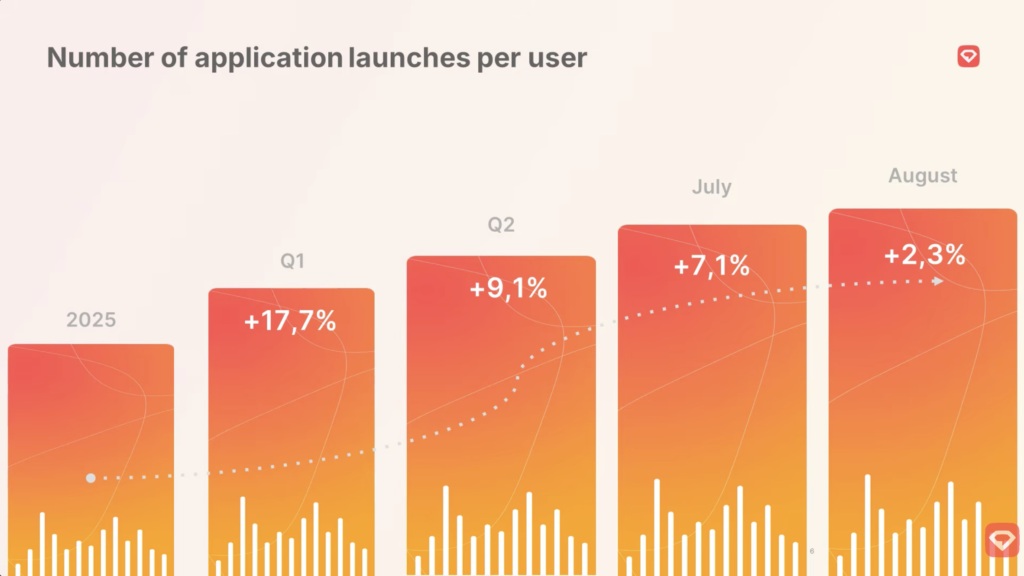
Together these numbers tell an important story: users are not just installing the app — they are building a habit of returning to it. They are opening it more frequently and using it more actively with each passing month. This is the behavioral foundation on which a successful subscription monetization model is built.
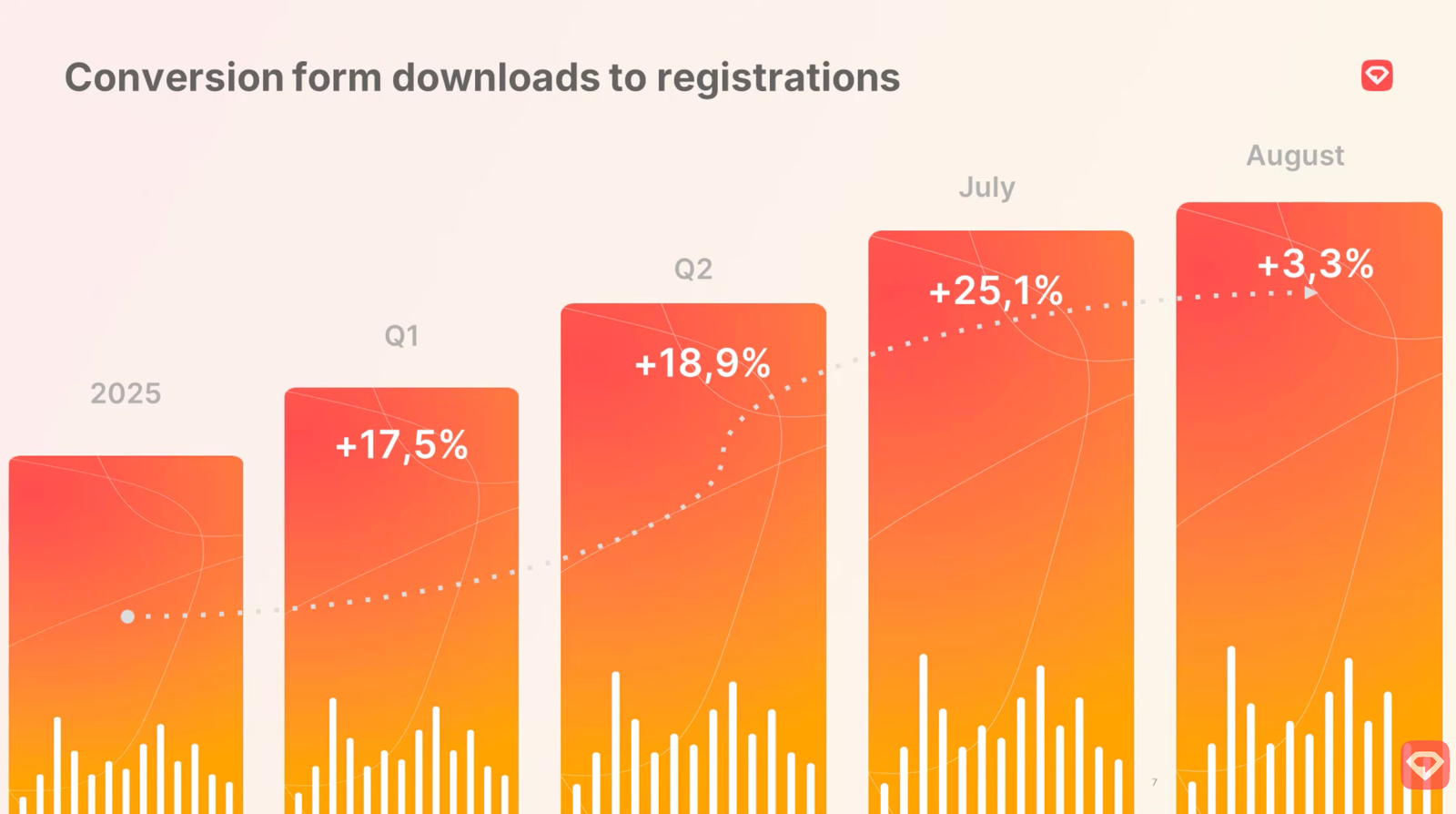
The install-to-registration conversion rate grew another 3.3% in August compared to July, with growth continuing at the end of the month — meaning the September figure will be even higher. The team is approaching the practical ceiling for this metric, closing in on 100% conversion of installs to registrations. Every marketing investment is now converting into an active registered user with very little waste.
August 28th Release: What Shipped
The August 28th release delivered several meaningful updates.
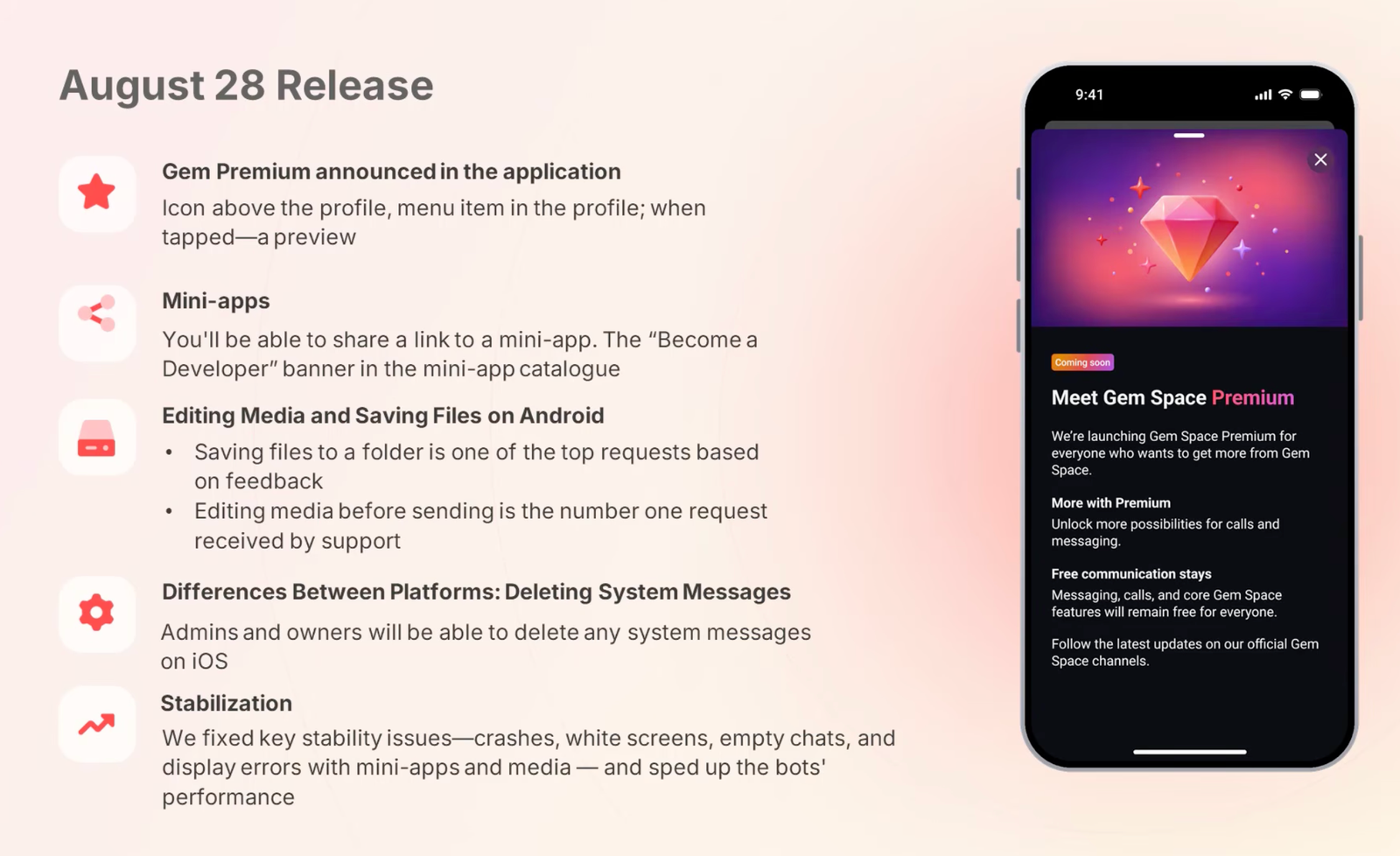
Gem Premium was announced inside the application for the first time. An indicator has appeared above the user profile and a dedicated menu item has been added — signalling to users that something new is coming while making clear that the core Gem Space experience remains free. This is a deliberate communication choice: Premium adds, it does not take away.
Mini-app sharing links are now live — users can share links to specific mini-apps directly with each other, which is expected to meaningfully accelerate organic spread of the mini-app ecosystem.
A banner inviting users to become developers has appeared in the mini-app catalog, actively recruiting new creators to the platform.
Media editing before sending has launched on Android. Users can now add captions, flip, rotate, or crop images and videos before sending. This feature will roll out to all users within a week and will later be extended to all platforms.
Android users can now save files to folders — allowing files received in the app to be shared with other apps, viewed, or edited externally.
On iOS, admins and group or channel owners can now delete system messages.
Significant stability work was also completed in this release: white screens when opening chats, empty chat displays, and mini-app rendering errors have all been addressed. Bot performance has been further improved.
Mini-Apps: 85 Created, 23 Published, 4.7x Audience Growth
The mini-app platform is showing strong early momentum. In August, the audience using mini-apps grew 4.7 times — nearly five-fold — compared to July. 35 developers created their own mini-apps on the platform during August alone. In total, 85 mini-apps have been created on the platform, with 23 currently published. The gap between created and published exists because quality standards must be met — apps that do not pass review are sent back for revisions rather than published immediately.
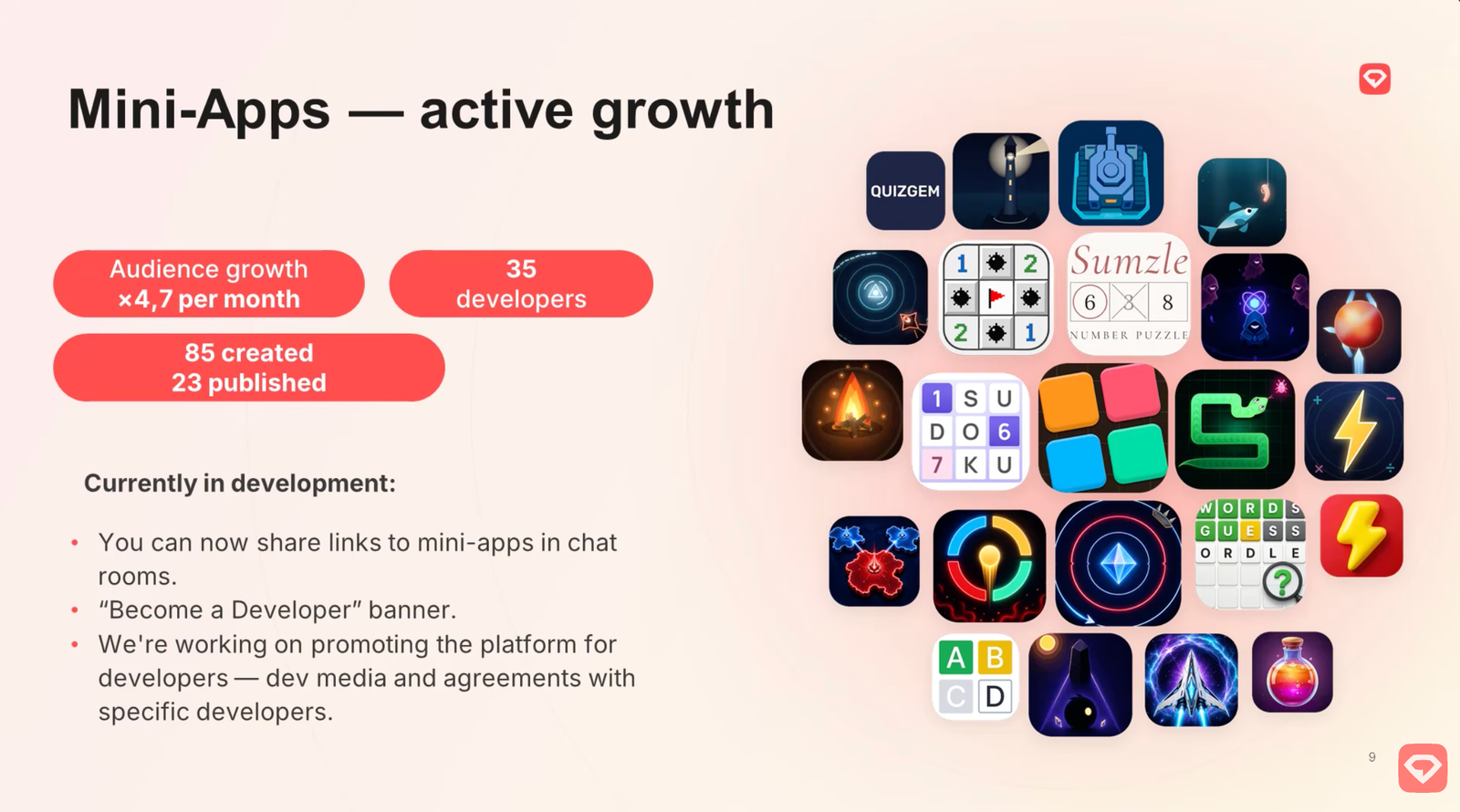
The platform is being actively promoted to the developer community through dev media, specialized developer websites, and direct outreach to developers already present on the platform.
The current mini-app mix is predominantly games, but the strategic direction is shifting toward utility and service-oriented apps — the categories that monetize most effectively and for which users are most willing to pay. The target audience segment identified for the highest monetization potential is women aged 25 to 54, one of the platform’s largest user cohorts, across five categories: health, psychology and self-development, esoterics, lifestyle, and finance.
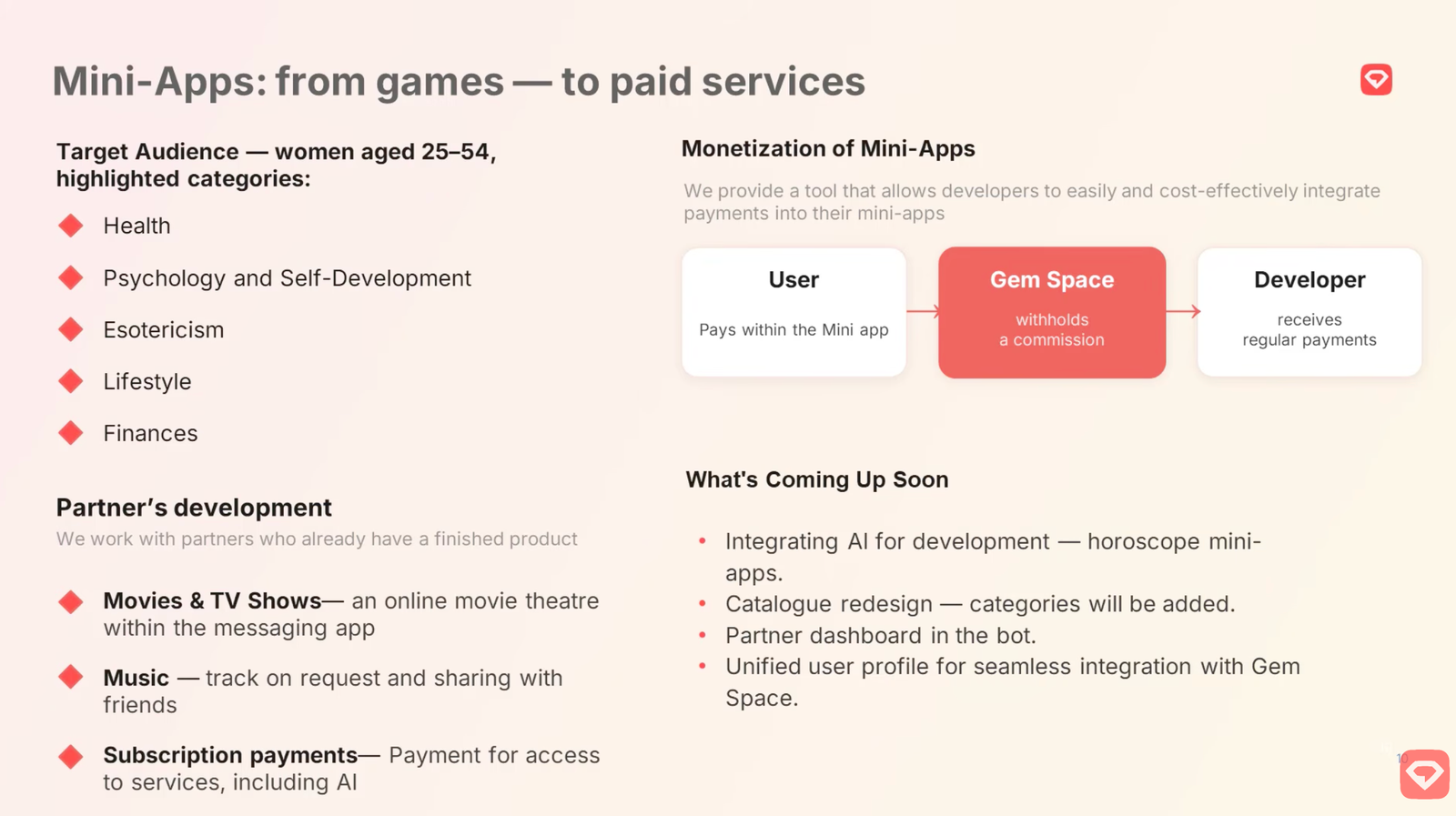
Partnership negotiations are underway with companies that have existing ready-made products to bring onto the platform. An online cinema mini-app is currently in development with a partner in the movies and series sector. Music mini-apps are being explored, allowing users to request tracks and share them. A subscription payment mini-app is being developed specifically for countries with current payment restrictions, enabling users to pay for services — including AI access — that they cannot currently reach through standard channels.
The monetization model for mini-apps is being finalized. When a user makes a payment inside a mini-app, Gem Space takes a commission and the developer receives regular payouts. This agency model is in active development.
A horoscope mini-app built by the internal team using AI is already ready. The September release will bring a redesigned mini-app catalog with new categories and improved discoverability. A partner dashboard will be introduced in the bot, giving developers more control over managing their apps. A unified user profile enabling seamless authorization across mini-apps without separate registration is also in development.
Gem Premium: September 27th Launch Confirmed
The most significant announcement of the briefing was the confirmation of a specific launch date: Gem Premium goes live on September 27th, 2026.
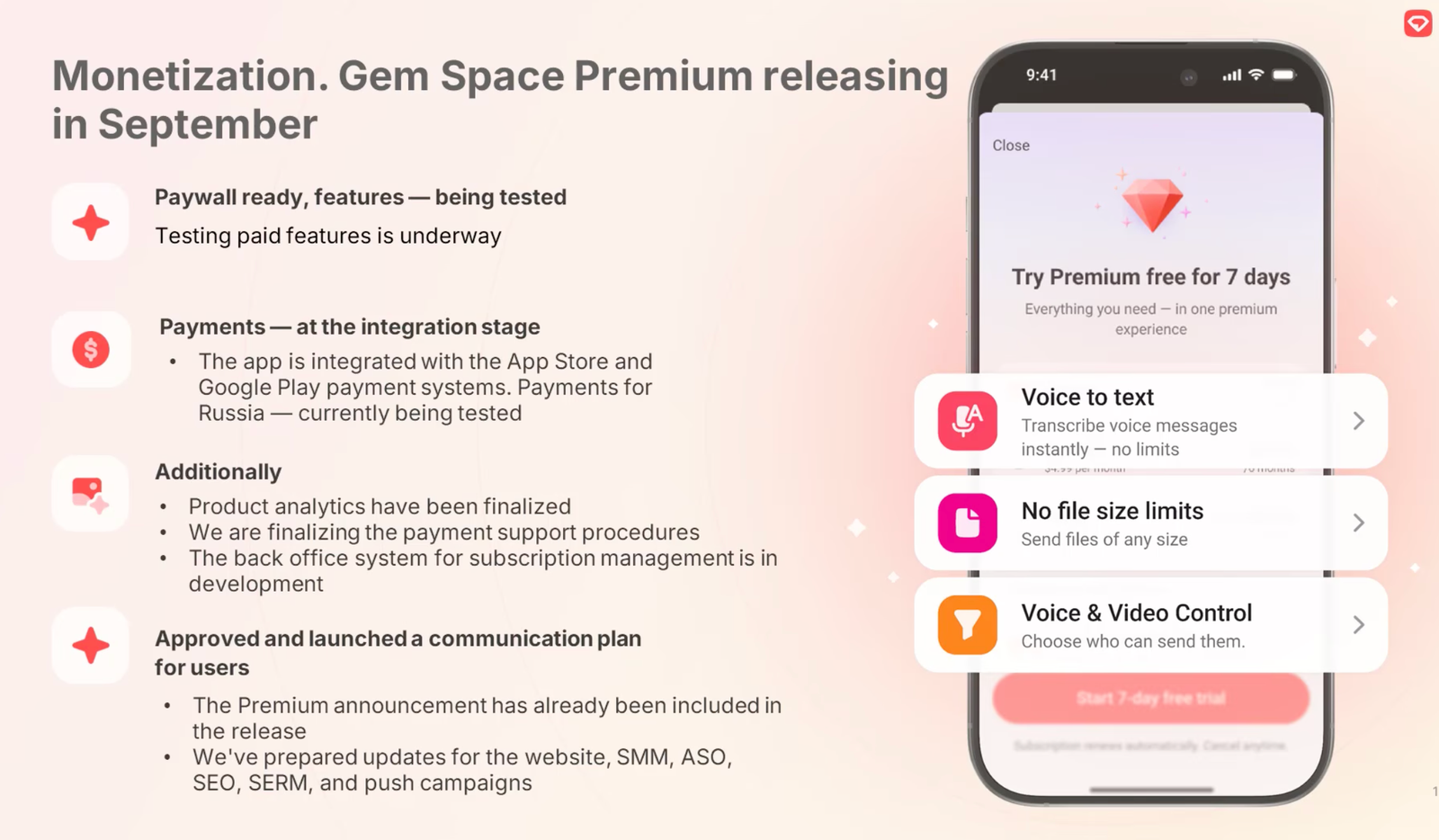
Paywalls and paid features are complete and in testing. Payment integration with the App Store and Google Play is in final stages, with Russian payment integration already in the testing phase. Payment aggregators for CIS countries have been contracted and setup is underway.
All marketing materials are prepared — website updates, ASO, SMM, SEO and SER optimization assets are ready. A full communication plan with users has been developed and agreed upon. The Premium announcement has already gone out on social media.
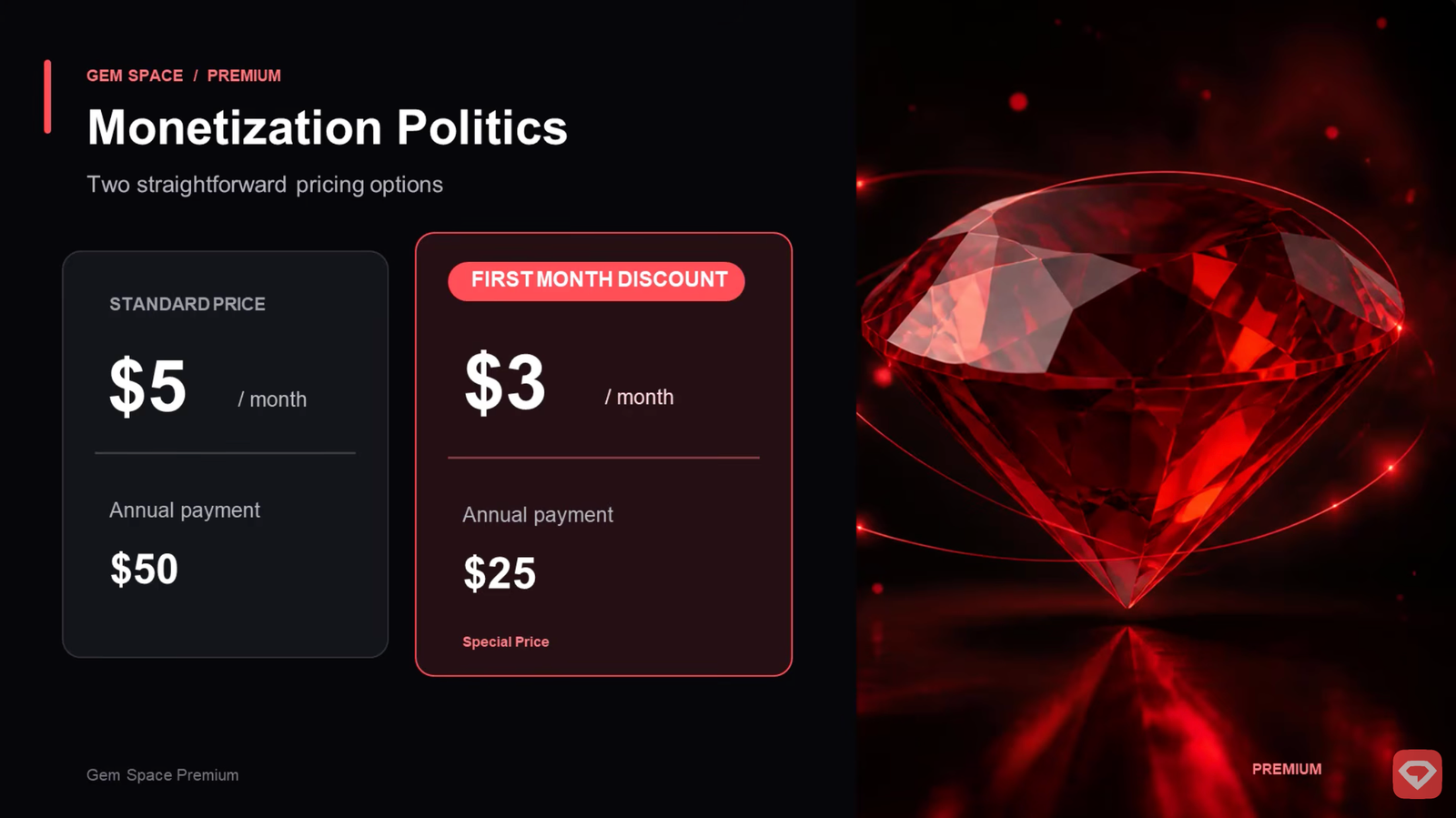
On pricing: the standard launch price will be $5 per month or $50 per year. For the first month of launch, existing investors and long-term users will receive a special price of $3 per month or $25 per year — a deliberate decision to reward the community that has been part of the journey. The plan is to expand the premium package over time until it reaches a standard price of $100 per year, packed with services users will actively choose to pay for. The Snapchat reference — 24 million subscribers generating over $1 billion in annual revenue — remains the benchmark.
Premium features being prepared include expanded call capabilities, unlimited webinar functionality, AI-powered tools, enhanced privacy controls, and more.
Also coming after Premium launch: user stories, targeting an October release. Design is complete and requirements are being finalized. Sticker improvements are ongoing with AI supporting the creation process.
The proprietary product analytics platform went live on August 31st. This transition reduces the cost of analytics by a factor of ten — from tens of thousands of dollars per month to a few hundred — while giving the team full control over their own data.
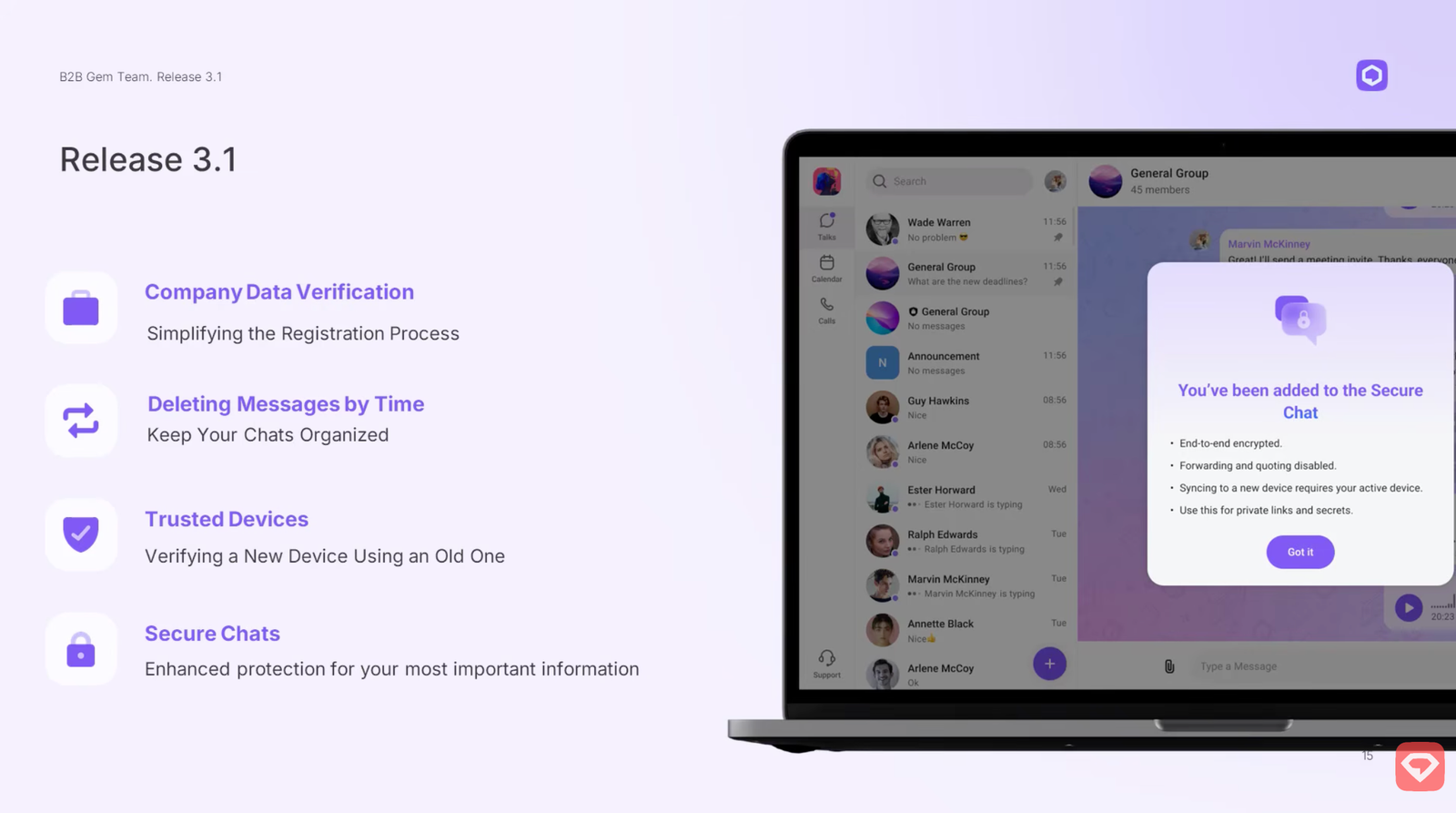
B2B: Gem Team 3.1 and the Call Intelligence Platform
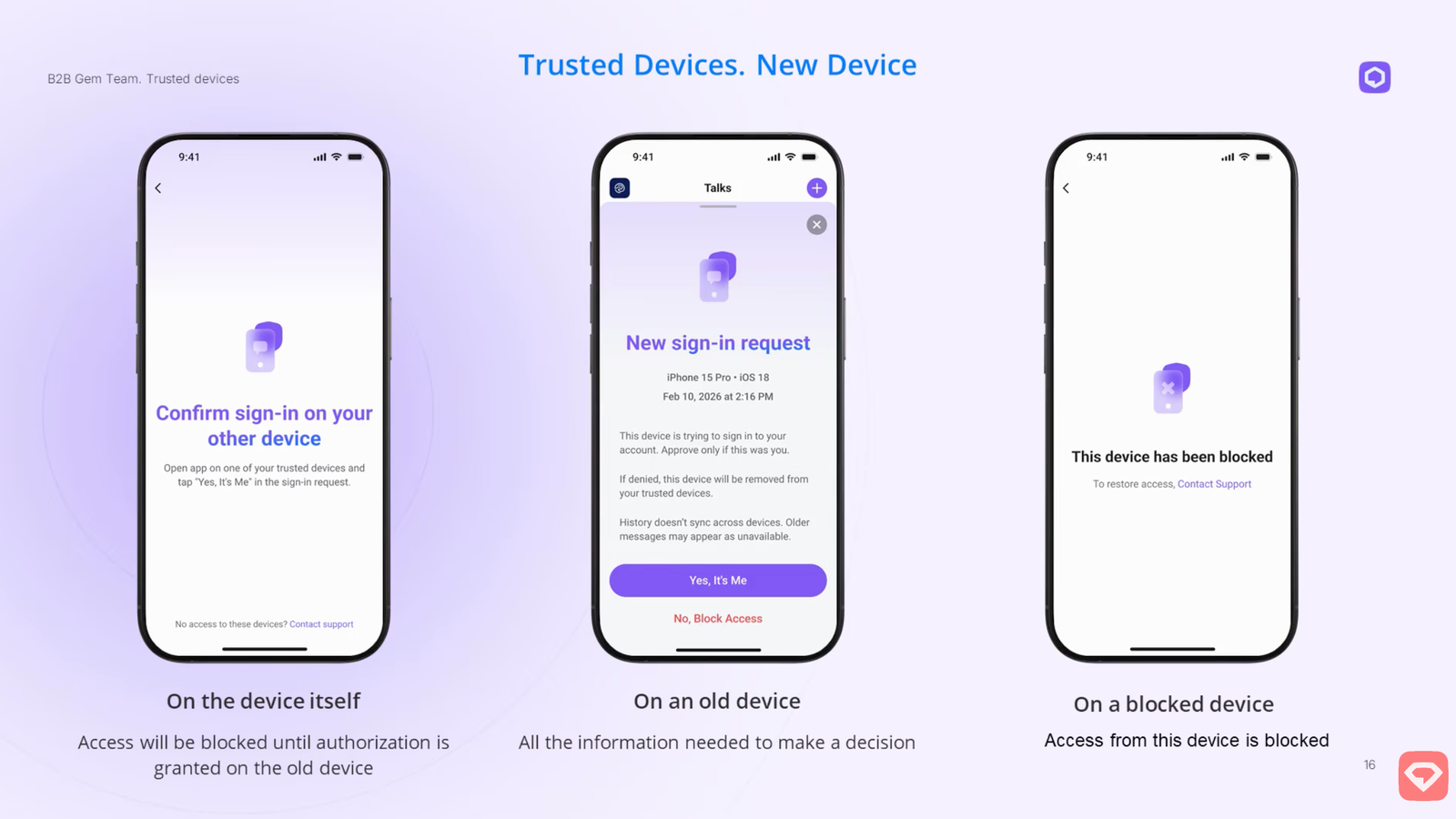
Version 3.1 of Gem Team is preparing for release. Key additions include CRM integration with automatic company data retrieval — clients simply enter their tax number and the system fills in their company information automatically, simplifying both registration and invoice payment significantly. Time-based automatic message deletion is also being released in 3.1, with flexible settings from one hour to six months, applicable to personal chats, group chats, and protected chats. Trusted device verification is also shipping — ensuring that protected chats can only be accessed from confirmed devices, with the ability to simultaneously use multiple confirmed devices in group chats of up to 500 participants. New users logging into a protected chat will see clear guidance explaining the security features and how to confirm their device.
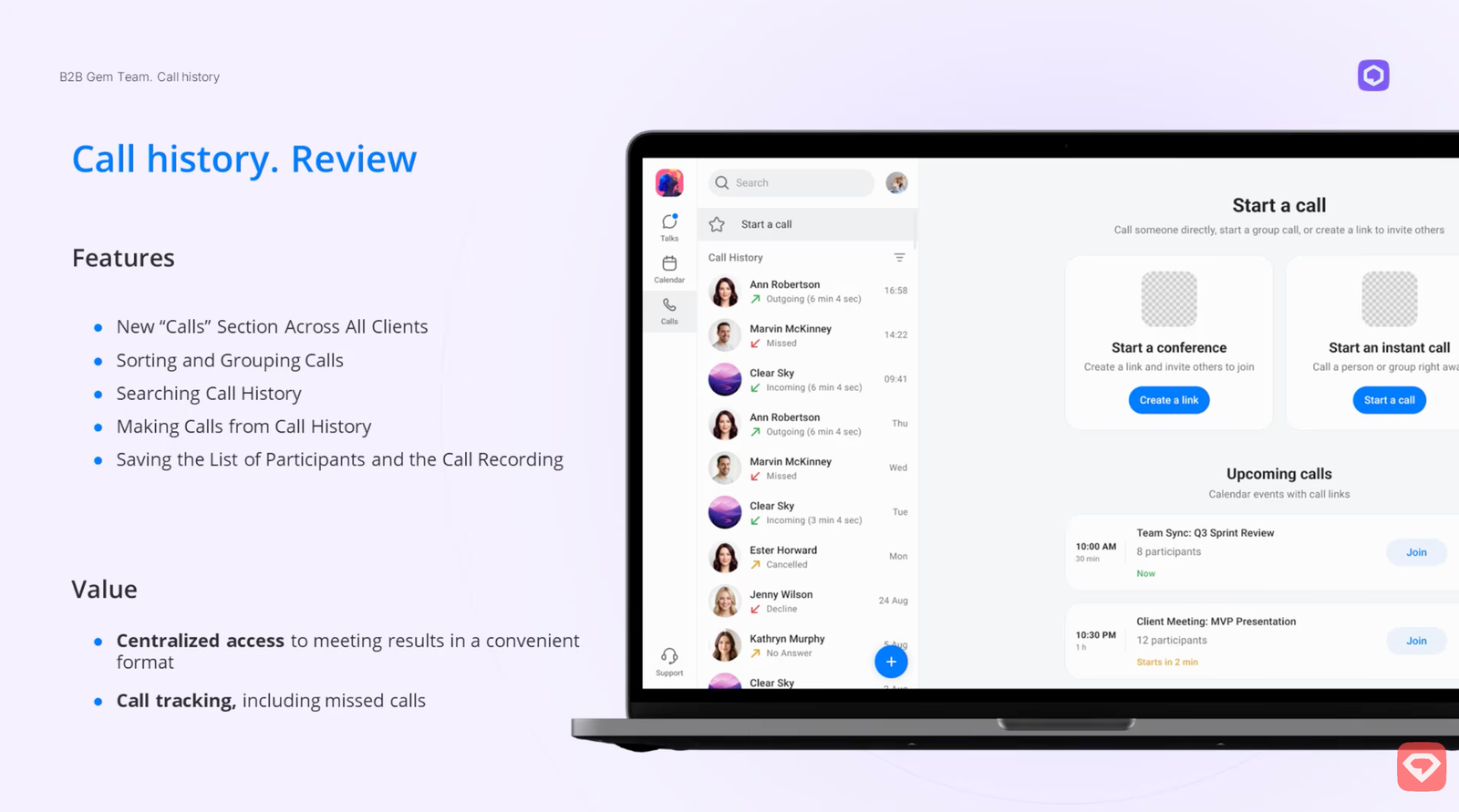
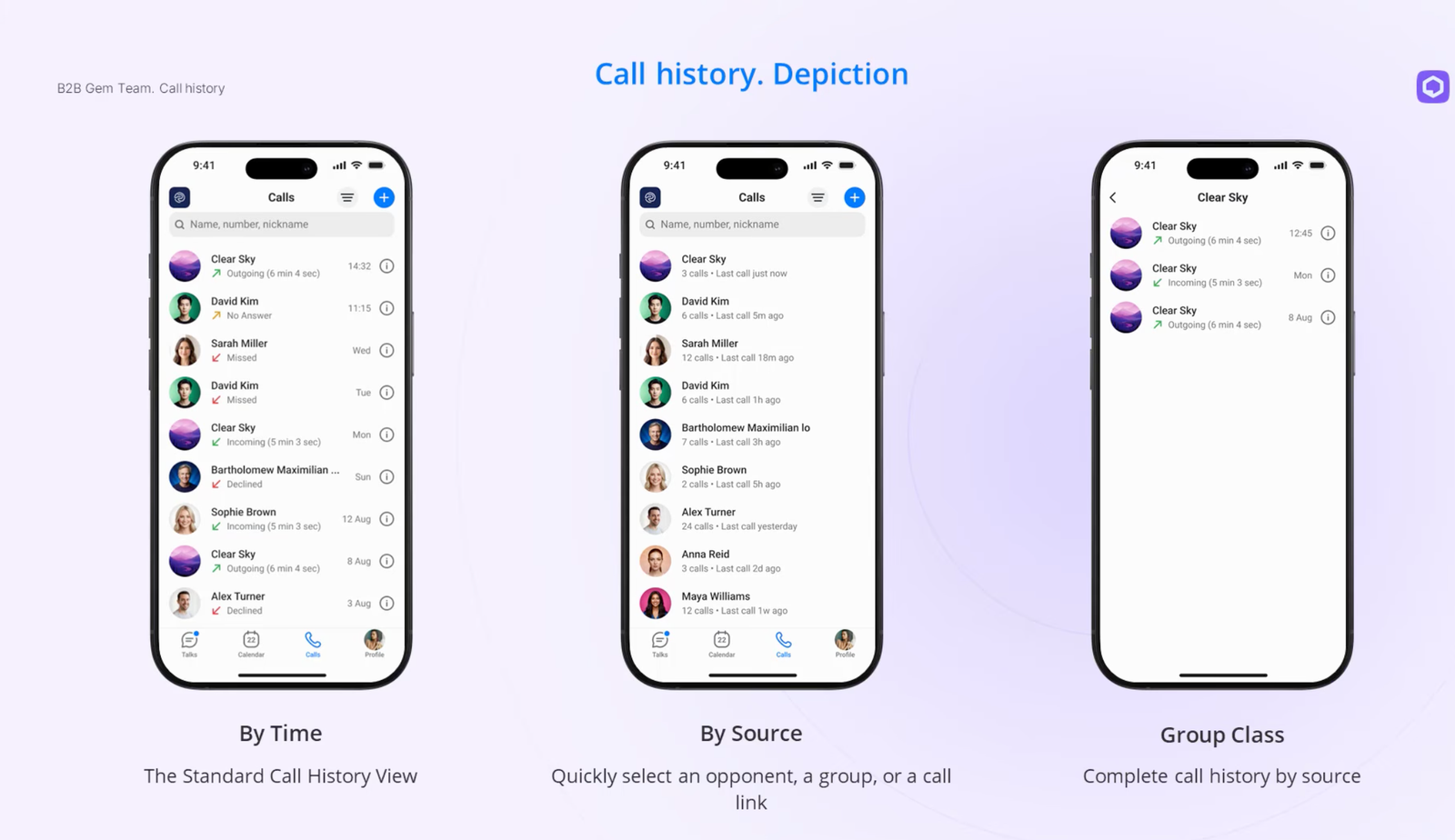
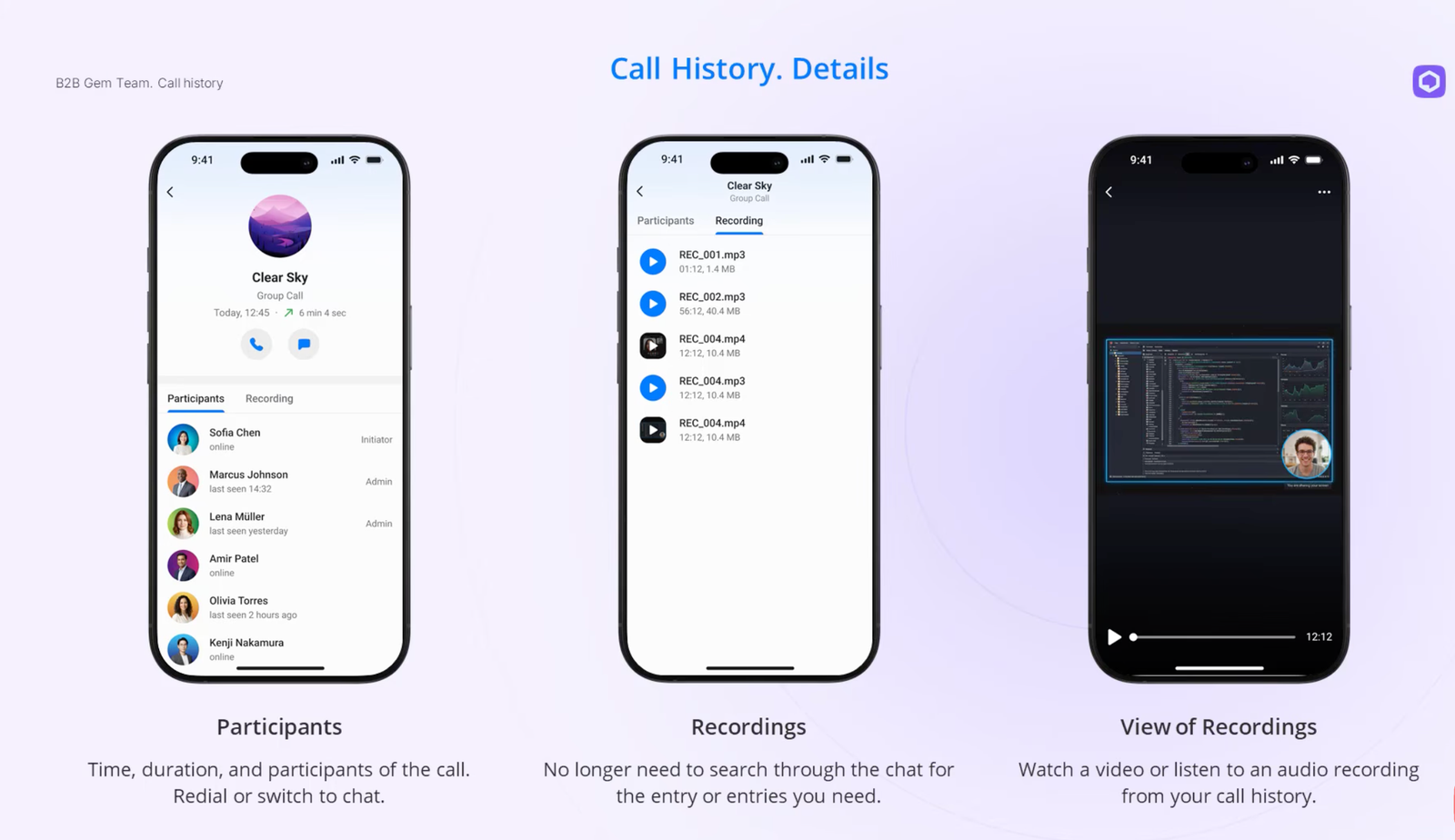
The AI-powered call intelligence platform is now in active development, beginning with the call history feature. The call history section will serve as the foundation for transcription, summarization, and AI-assisted meeting management. It will provide a complete record of all calls — personal, group, link-based, and webinar — sortable and filterable by user, group, date, and topic. Each call entry will show participants, duration, and any recordings. From within the call history, users can message or call participants directly. Search will work not only by contact name but also by participant — allowing users to find a specific call by remembering who else was on it.
The call history section will also serve as a dashboard for upcoming meetings and calendar events for the day, allowing users to see what is scheduled, where to join, and plan their day from a single interface.
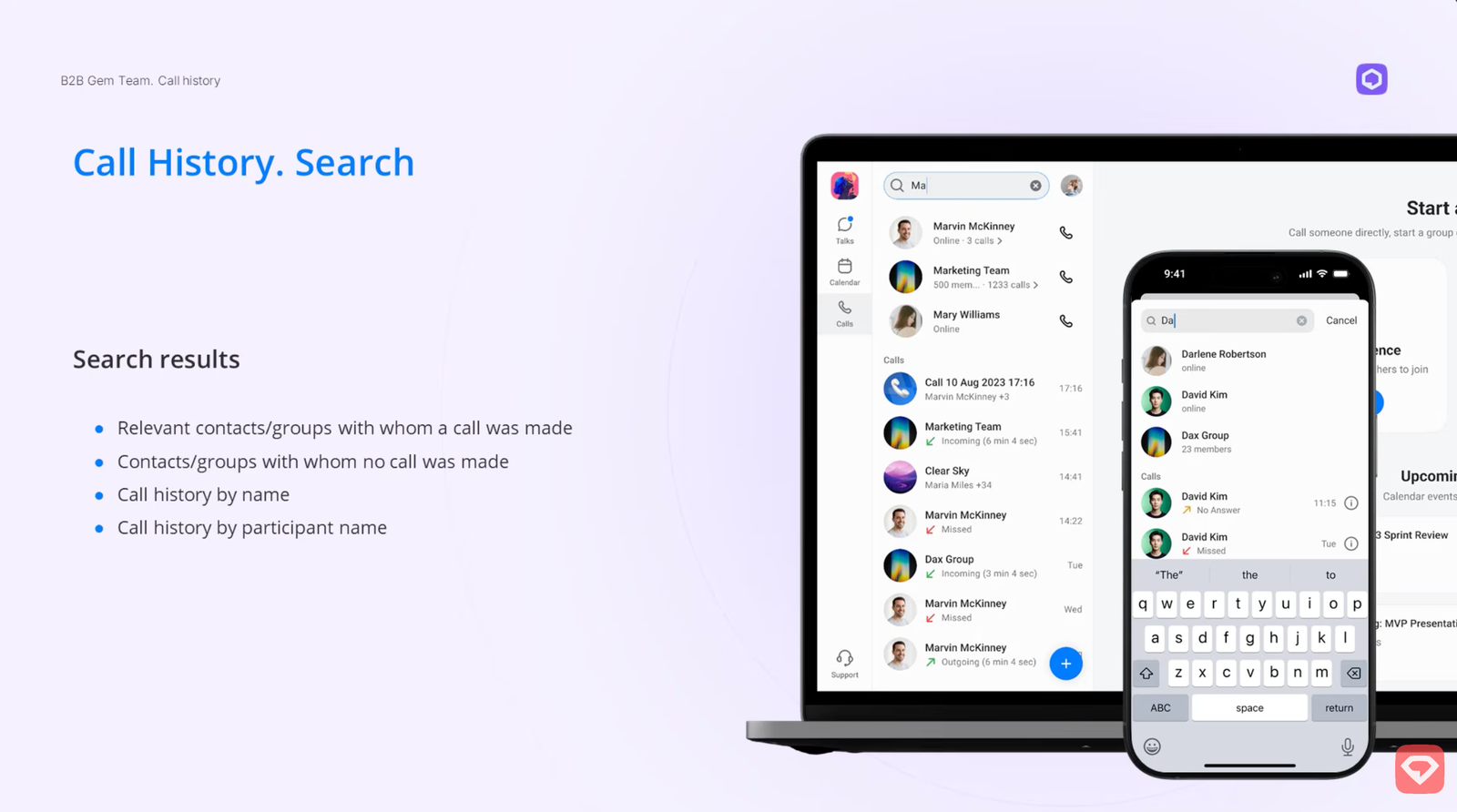
Beyond call history, work is underway to expand cloud solution payment coverage to new countries and providers. Documentation is being improved significantly — with detailed articles now available on the website with search and navigation, and with contextual documentation accessible directly from within the platform interface. Users will see documentation relevant to their workflow; administrators will see management and configuration guides.
Infrastructure optimization is also in progress — routing calls to servers more efficiently based on call type and size, reducing active server requirements and cutting costs for both the cloud solution and for clients deploying on-premise.
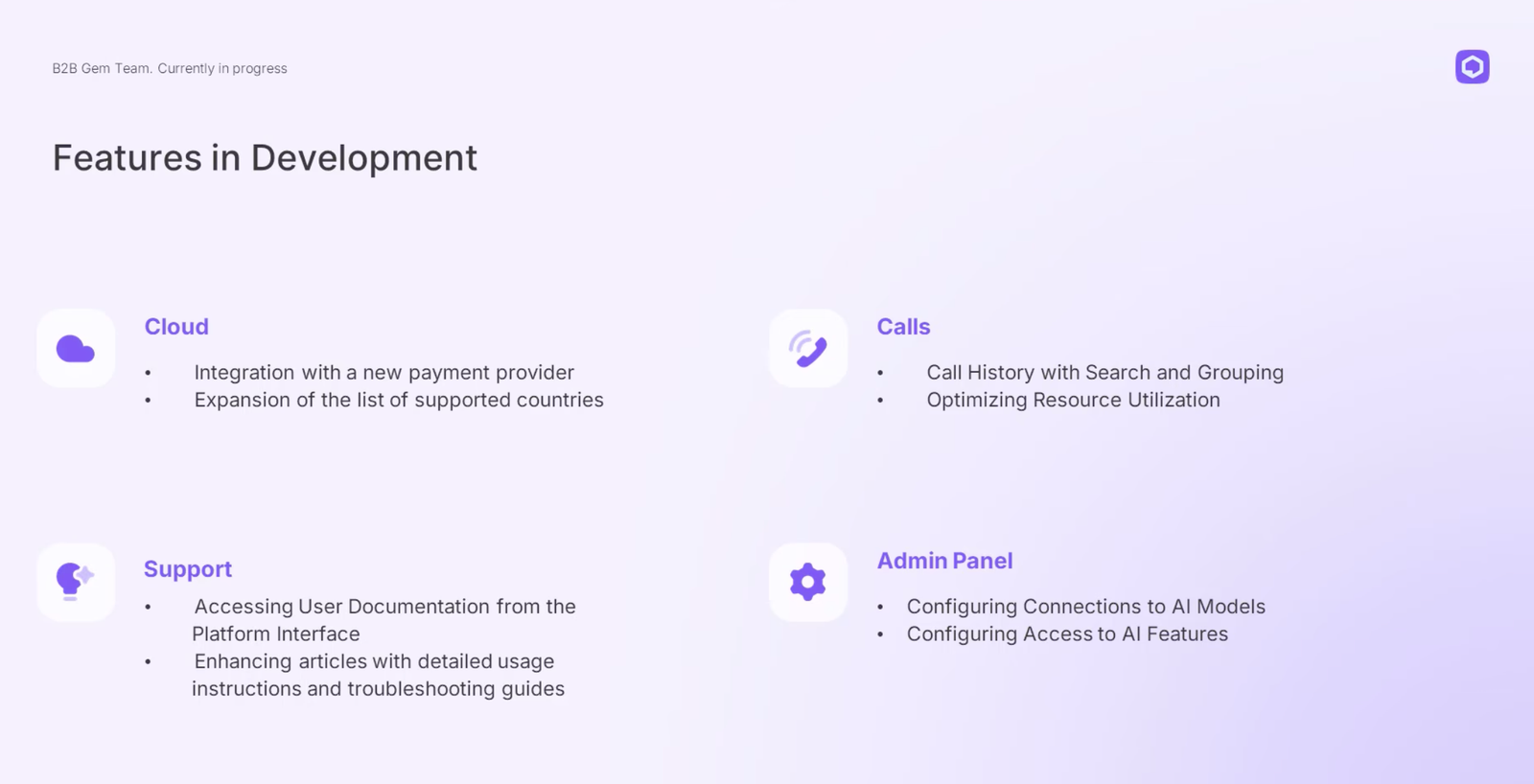
AI model integration configuration is being developed in the admin panel. Administrators will be able to connect either cloud-based models like OpenAI, Claude, or DeepSeek — routing requests externally without maintaining their own hardware — or fully local on-premise models for organizations requiring a closed environment with no data leaving their perimeter. Feature availability at the user level can also be configured — for example, enabling call transcription for some users while restricting voice message transcription.
Dividends Confirmed: September 1st Payout
The most eagerly awaited announcement of the briefing was the confirmation of the Class C share dividend payment from the first license renewal.
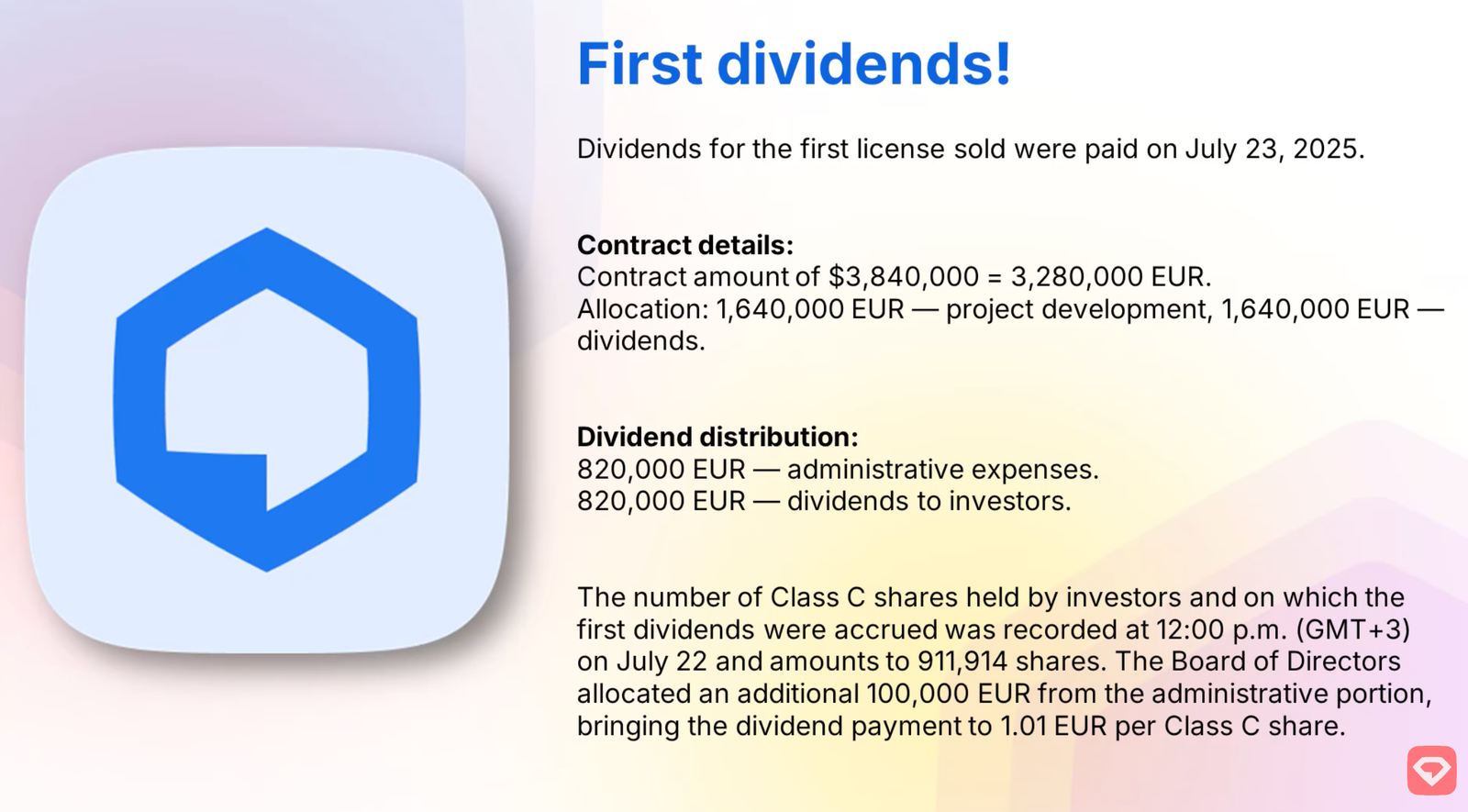
The first license sold in July 2025 was valued at €3,280,000. Of that total, the base license fee was €610,000. The renewal for the second year came in at €626,000. Of that renewal amount, €313,000 is being distributed to private investors as dividends — the other €313,000 directed to development and promotion.
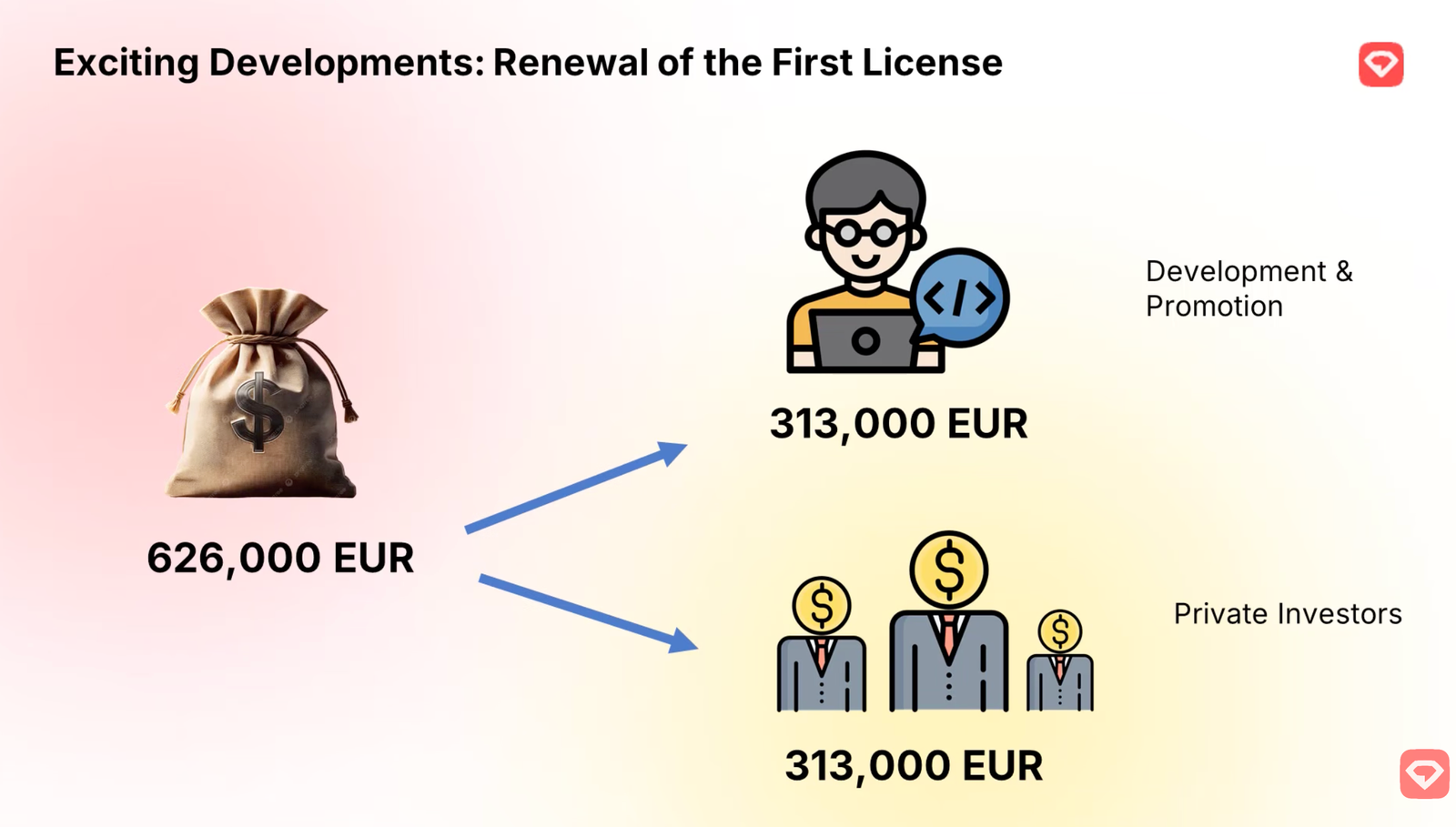
The dividend per Class C share is €0.34 (34 euro cents), calculated across approximately 911,000 Class C shares — the same share count as at the time of the original license sale.
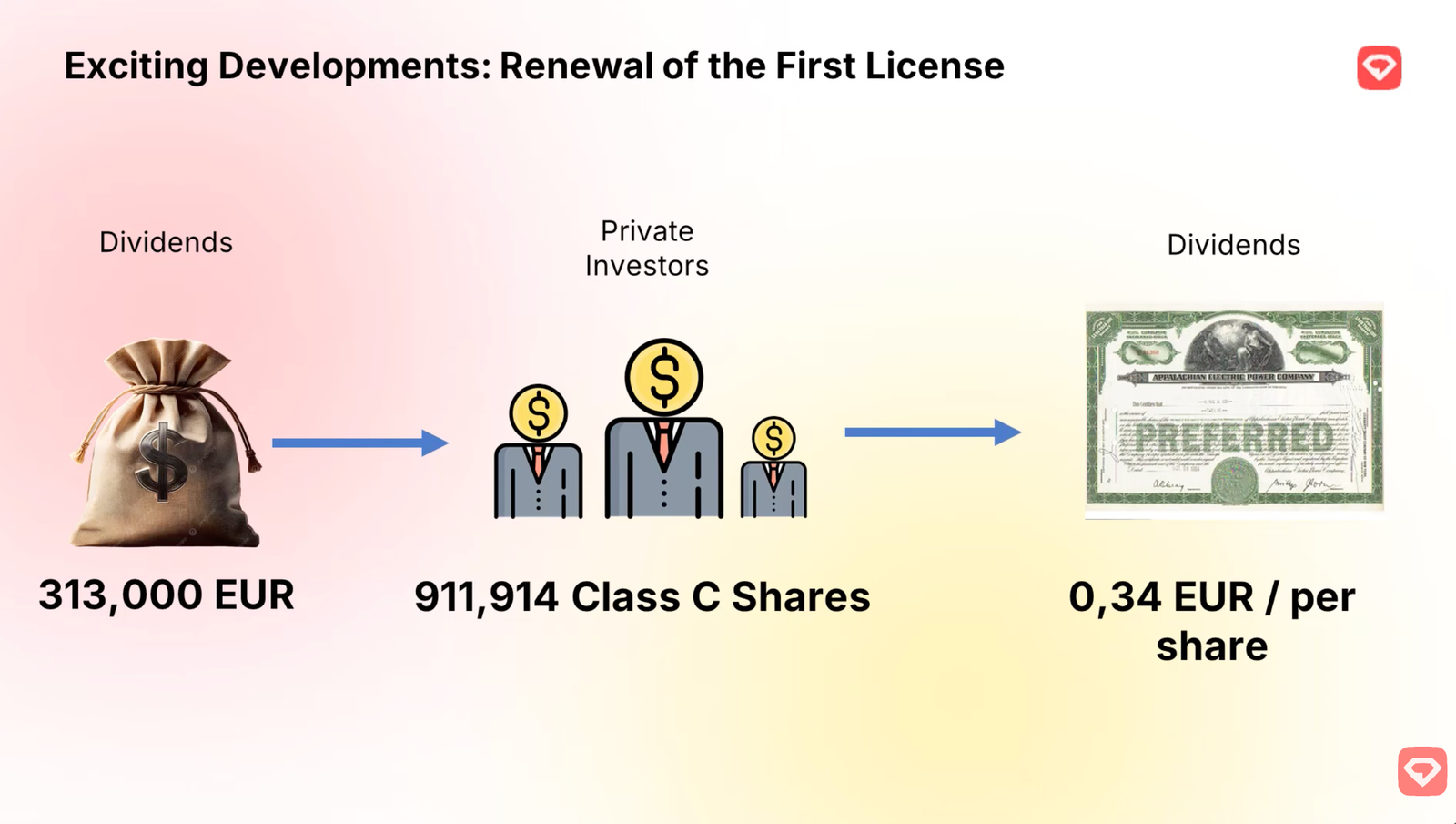
Dividends will be credited on September 1st, 2026.
An important note on access: because all legal confirmations have been received but the funds have not yet physically arrived, the initial ability to use dividend funds will be limited to purchasing packages. The ability to transfer dividends to personal accounts and withdraw will be enabled at a later stage, following the same process as last year’s dividend payment.
Key Q&A: Share Classes, Valuation, and the Road Ahead
Several important questions were addressed at the conference.
On the comparison to Slack — Slack was sold for $27 billion with 10 million users, all of whom were paying corporate customers. Gem Space has five times the users but is not yet monetized. The path to a comparable or higher valuation runs directly through monetization — which is exactly what is being built right now. Class D shares were created specifically to finance this transition.
On Class D share dividends — dividends from internal monetization (mini-apps, premium subscriptions, PayGem, AI tools) go to Class D shareholders. Class C share dividends come from Gem Team license sales. Class A share returns come from regional and global platform sales.
On the Slack question of why early investors in Class A shares do not receive monetization dividends — the explanation offered draws a direct parallel to venture financing rounds. Every major platform — WhatsApp, Instagram, Dropbox, Slack, Airbnb — required multiple funding rounds. Investors in earlier rounds take greater risk; investors in later rounds provide the capital that gets the platform to exit. Without the later-round investors, earlier investors might receive nothing at all. Both groups are necessary and both benefit from the platform ultimately selling.
On the “year of money” — the Gulf conflict disrupted the licensing pipeline that was expected to generate significant revenue in 2026. That deferred demand remains intact and the team returns to the region in the first week of September. In parallel, monetization has been under development since November 2025 and launches officially on September 27th.
Remaining Class A shares available to investors: 1,312,790. Remaining Class C shares: 1,493
Ambassador Program
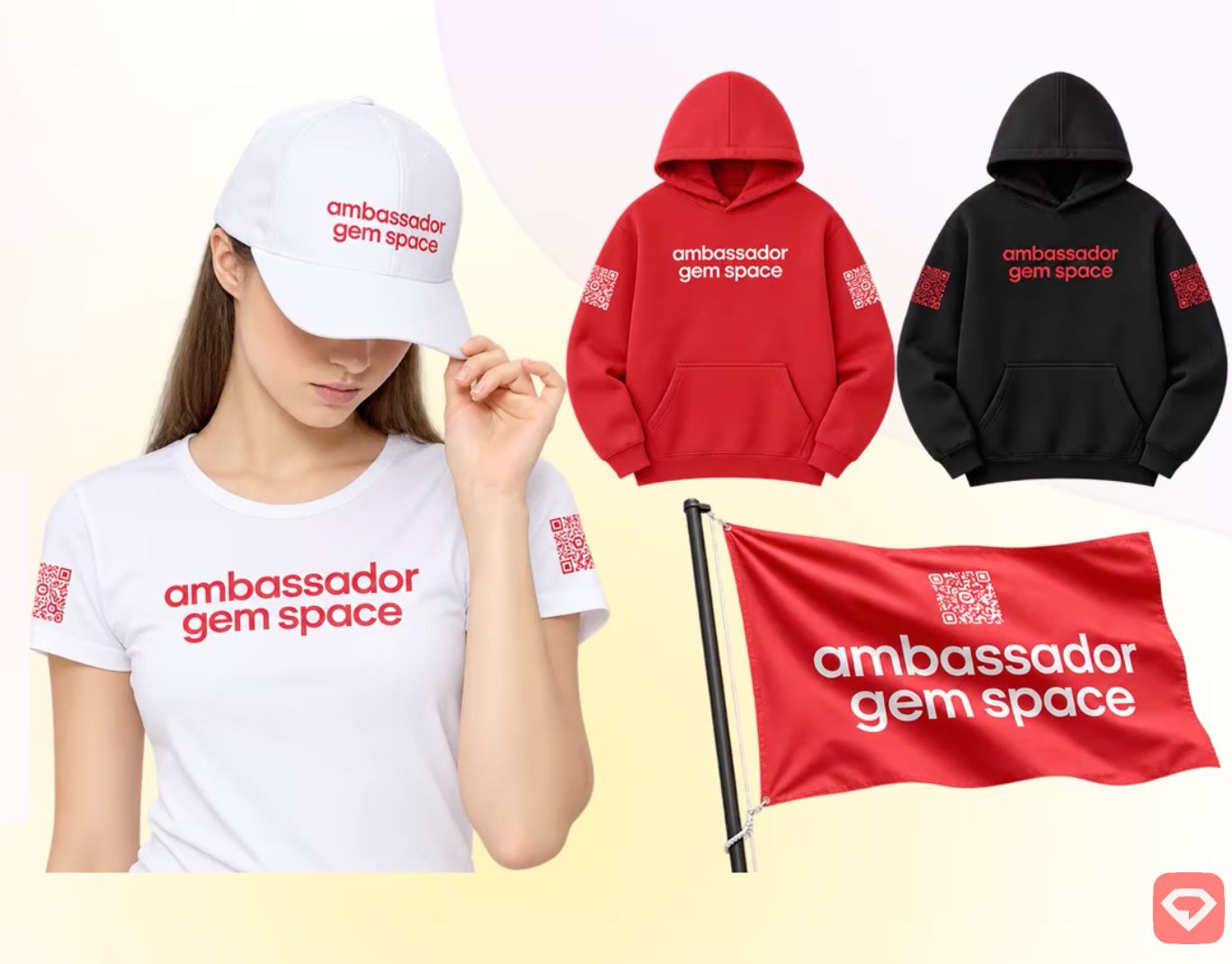
The Gem Space Ambassador Program is launching with a dedicated ambassador website, ambassador certification and digital cards, and branded merchandise including t-shirts and caps. Program regulations are being published in the business center this week. The program gives investors and community members a formal identity and the tools to confidently represent and promote the project.
Coming Up
Next conference: September 7th, followed by a business presentation and further briefings through the month. The team returns to Qatar and Saudi Arabia the first week of September. Premium launches September 27th. September is the month everything moves from plan to reality.
Stay informed — join our Angels Team channel in Gem Space.
Comments are closed