The August 10th conference opened with a direct response to investor questions about the pace of contract signings in the GCC and MENA regions.
The position is clear: the conflict in the region has slowed timelines, but it has not cancelled the opportunity. The company has a permanent office in the region, has spent significant time in negotiations, has attended exhibitions, and has built relationships at decision-maker level across multiple organizations. A contract at a large holding company is currently under approval — with the final signatory explicitly stating that they want to wait for the situation to calm before beginning full operations. This is not a rejection. It is a deferral.
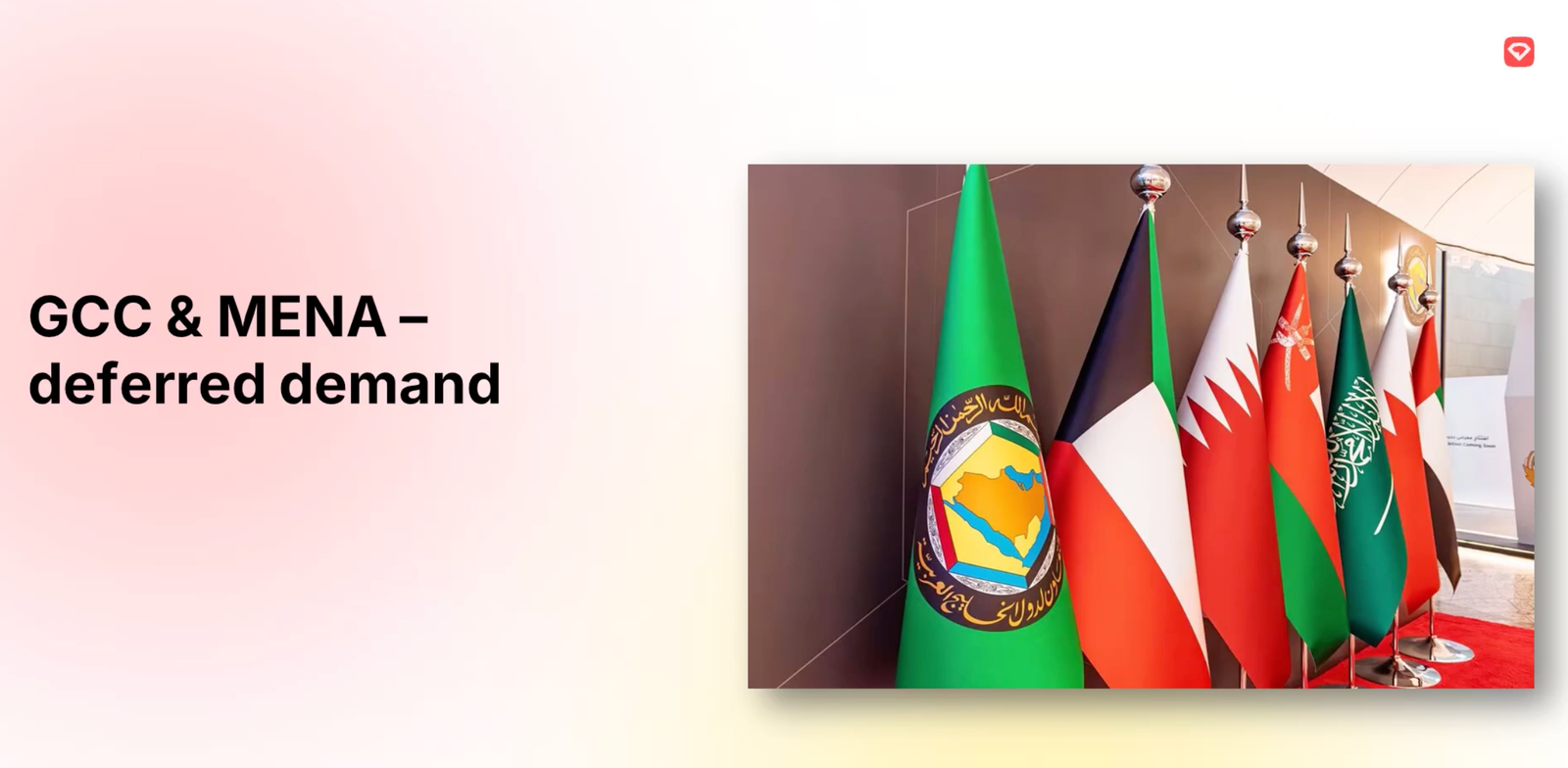
The strategic logic behind choosing this region remains sound. Each GCC country has its own Vision 2030 plan — different in detail but aligned in goal: transforming the region into financial hubs and data processing centers. In today’s economy, computing power drives the development of large language models. And this region has two things most regions do not — abundant capital and abundant energy to power the computing infrastructure those models require. The combination makes it one of the most strategically important markets in the world for exactly the kind of technology Gem Space and Gem Team offer.
The company has many signed MOUs, NDAs, and other agreements in place. The next stage is converting them into revenue. The deferred demand is real and building — and when the acute phase of the current situation resolves, the pipeline of prepared deals is expected to move rapidly.
The Broader Context: Global Instability and the Platform Response
A striking example was shared at the conference to illustrate the phase crisis playing out in global markets. In South Korea — one of the world’s most developed economies, where approximately 30% of the adult population participates in stock trading — the stock index lost 40% in a single day. Approximately 30% of the index’s total value is concentrated in just two companies, Samsung and a major RAM chip producer. People who had been saving for apartments or retirement through stock market participation lost those savings overnight.
This is the phase crisis described in previous conferences — the turbulent transition between economic formations. It is not a conspiracy or an anomaly. It is the consequence of massive structural change happening at extraordinary speed.
The response Gem Space has developed to this environment is the monetization roadmap — a strategy that does not depend on geopolitical stability, stock market conditions, or regional conflict timelines. It depends on one thing: the number of users on the platform and their willingness to use services.
The three pillars of this response are mini-apps — where developers bring their own users rather than the platform spending to acquire them; wallet and payment infrastructure — which will unlock commerce within the ecosystem; and AI agent expertise — where the company acts as an intermediary between users and large language models, generating revenue without bearing the cost of building the models themselves.
An important observation was made about the current AI market: companies developing large language models are operating at a loss. Their revenues are growing but their costs are growing faster. This is precisely why the Gem Space model — building specialized AI agents on top of existing models rather than building the models themselves — is the right positioning. The wave of interest in AI tools is real and growing. The goal is to catch it and monetize it through the platform that is already built.
Mini-Apps: 19 Live and Growing
The mini-app ecosystem is growing visibly and the dynamics are exactly what the platform hoped for.
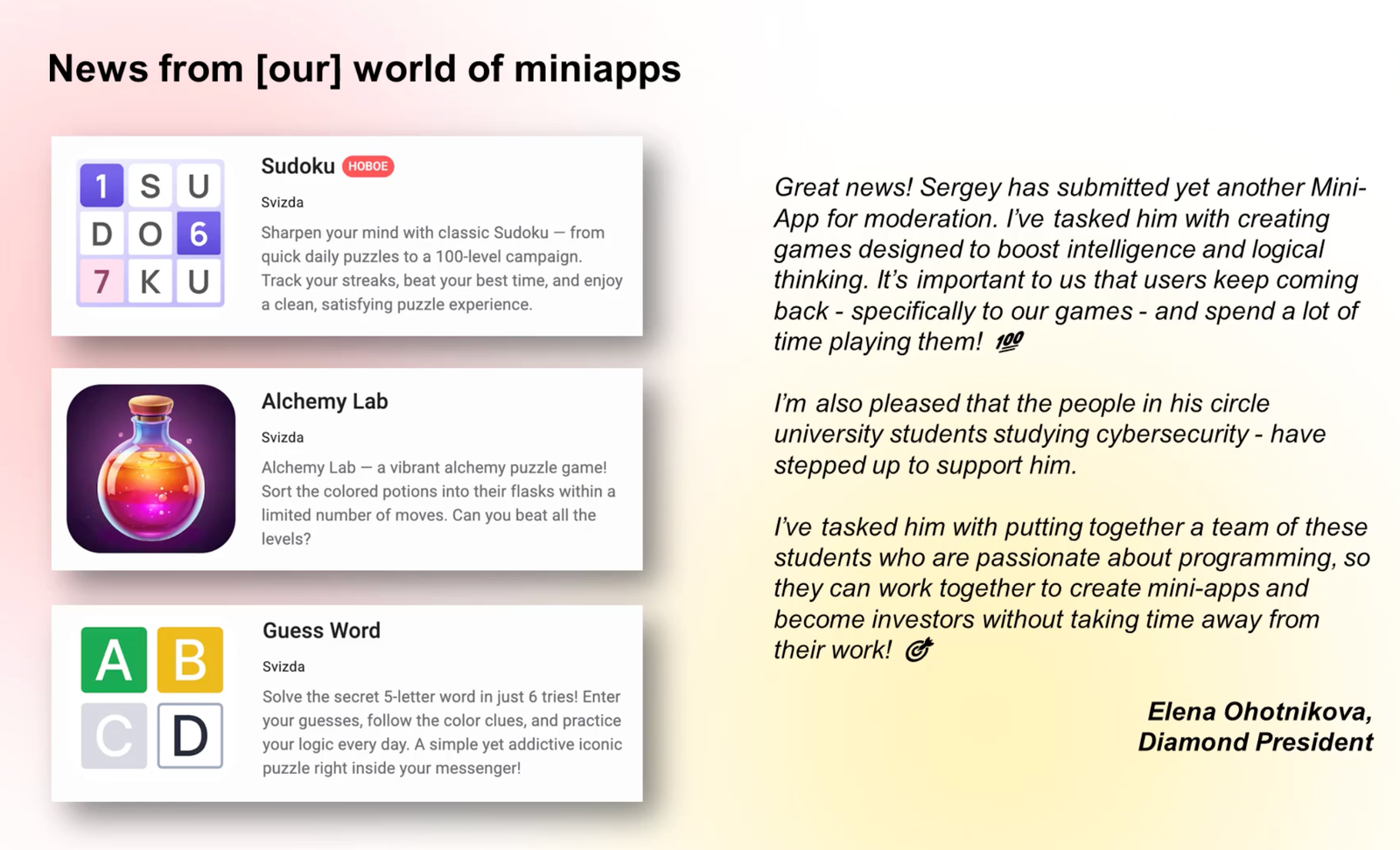
The first mini-app was created by the company itself on July 7th. As of August 10th, 19 mini-apps are live — built by individual developers and small teams who saw the platform working and decided to bring their own products to it. A notable example was shared: a single developer on a team created three games in succession — Guess World, Alchemy Lab, and Sudoku — demonstrating both how accessible the creation tools are and how quickly one committed developer can build a meaningful presence on the platform.
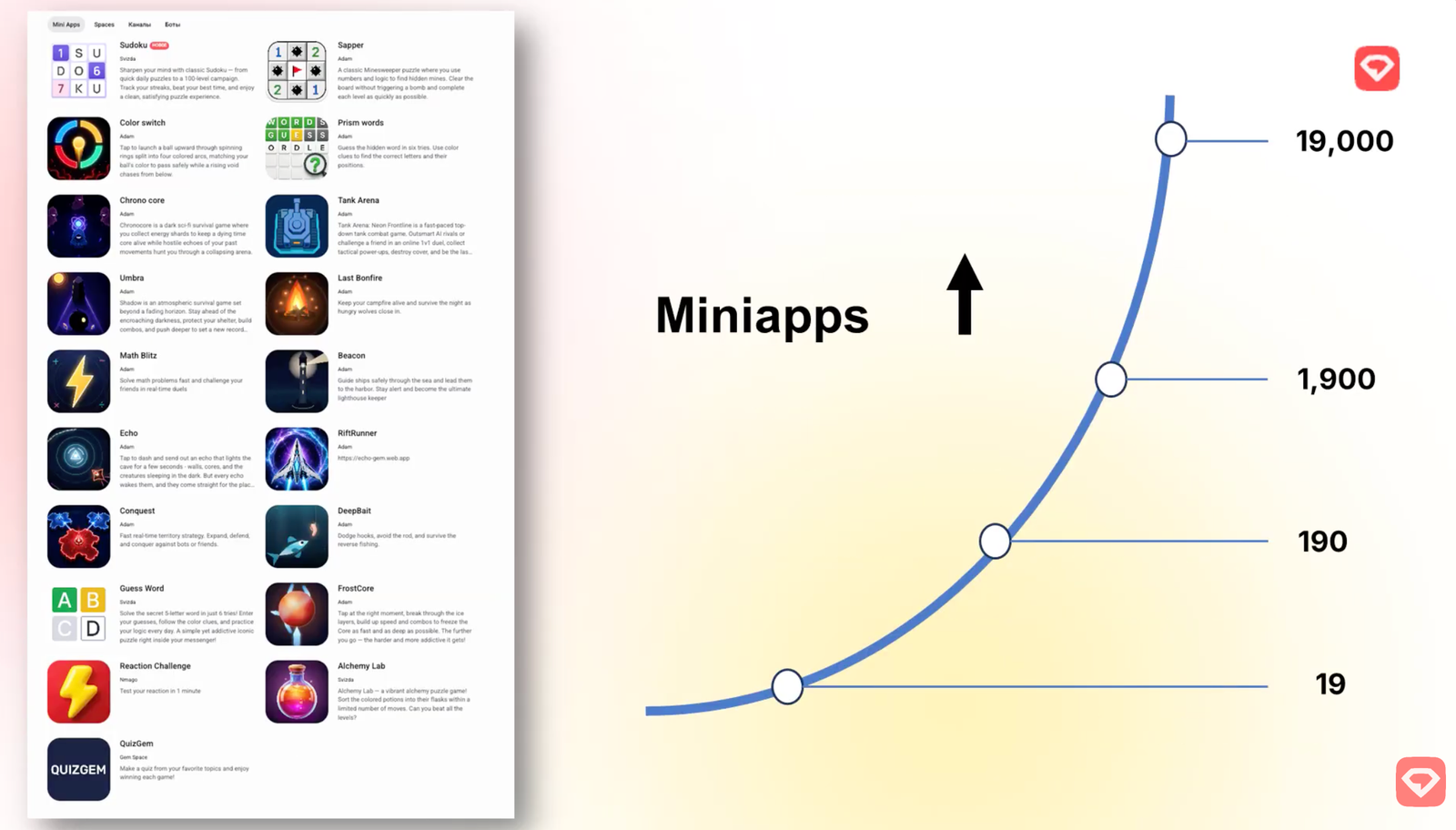
The dynamic being observed is precisely what was anticipated. When developers see one mini-app on the platform, they note it. When they see ten, they become interested. When they see nineteen, some decide to join. As the catalog grows, the pace of new additions accelerates. The target progression — 19 today, then 190, then 1,900, then 19,000 — reflects a realistic network effect dynamic that mini-app ecosystems have demonstrated in other contexts.
Most current mini-apps are games, but other categories are coming. The next stage being prepared is in-app purchases within games — a multi-billion dollar industry that has been expanding for decades and that will generate commission revenue for the platform from every transaction. When the PayGem wallet launches in September, this commercial layer becomes fully operational.
Paid channels — where content is available only to subscribers — are also planned as part of the coming monetization wave.
First Gem Team License Renewal: €626,000 Confirmed
The most concrete financial news of the conference was the confirmation of the first Gem Team license renewal.
The original license contract was signed on July 14th, 2025. Payment was received toward the end of August 2025, with a portion allocated to shareholder dividends at that time. The renewal contract for the second year has now been signed.
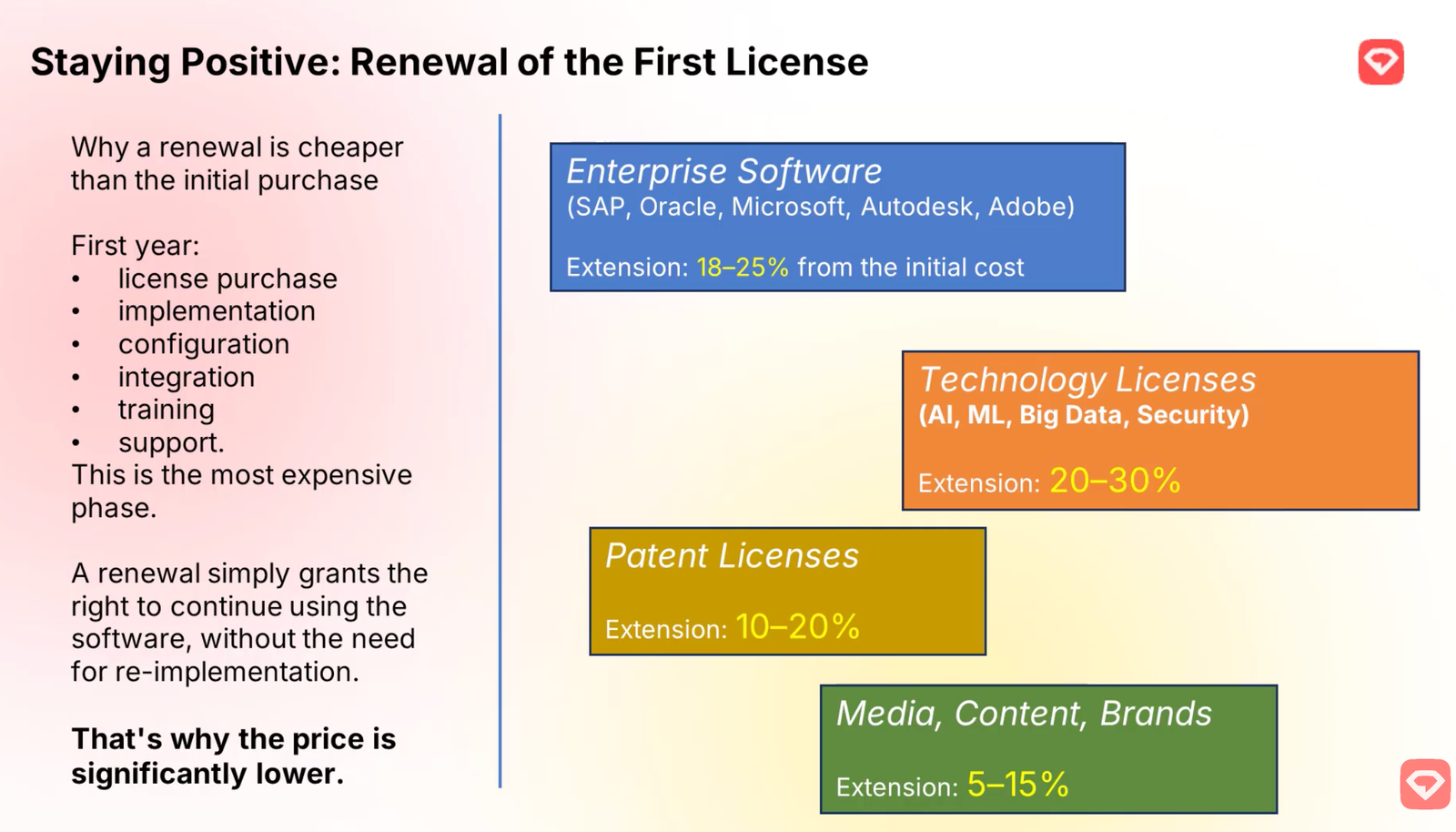
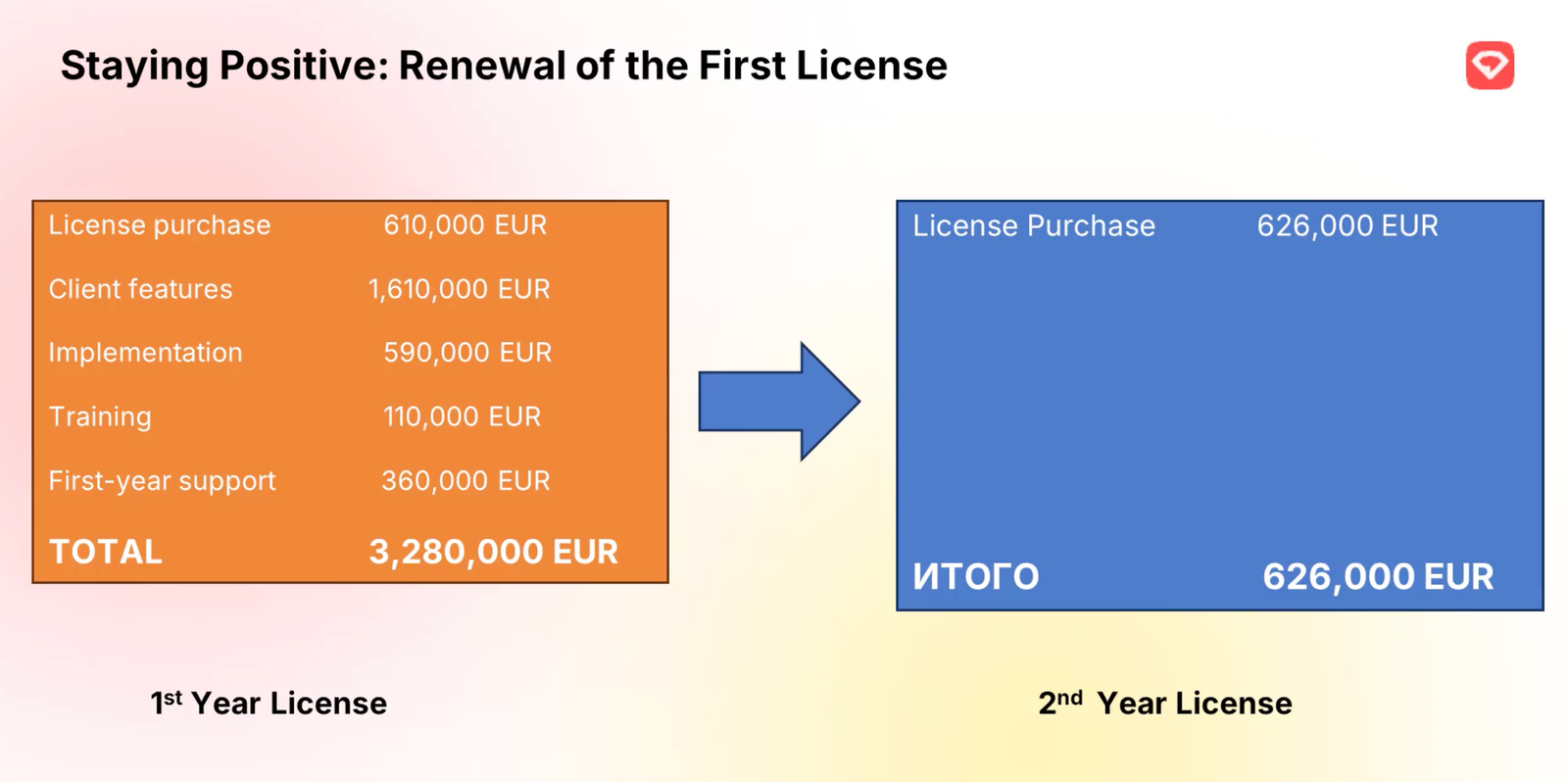
The renewal amount is €626,000 — up from the original base license fee of €610,000. To provide context on why the renewal amount is lower than the total first-year payment: the initial contract of €3,280,000 covered not only the license itself but also custom development tailored to the client’s specific requirements, implementation, integration with their servers, staff training, and first-year support. All of that work was a one-time cost. The client has since fully transitioned to independently managing the license and is satisfied with the results. Renewal amounts in the technology licensing industry typically range from 18% to 30% of the initial contract value — which is exactly where the Gem Team renewal lands.
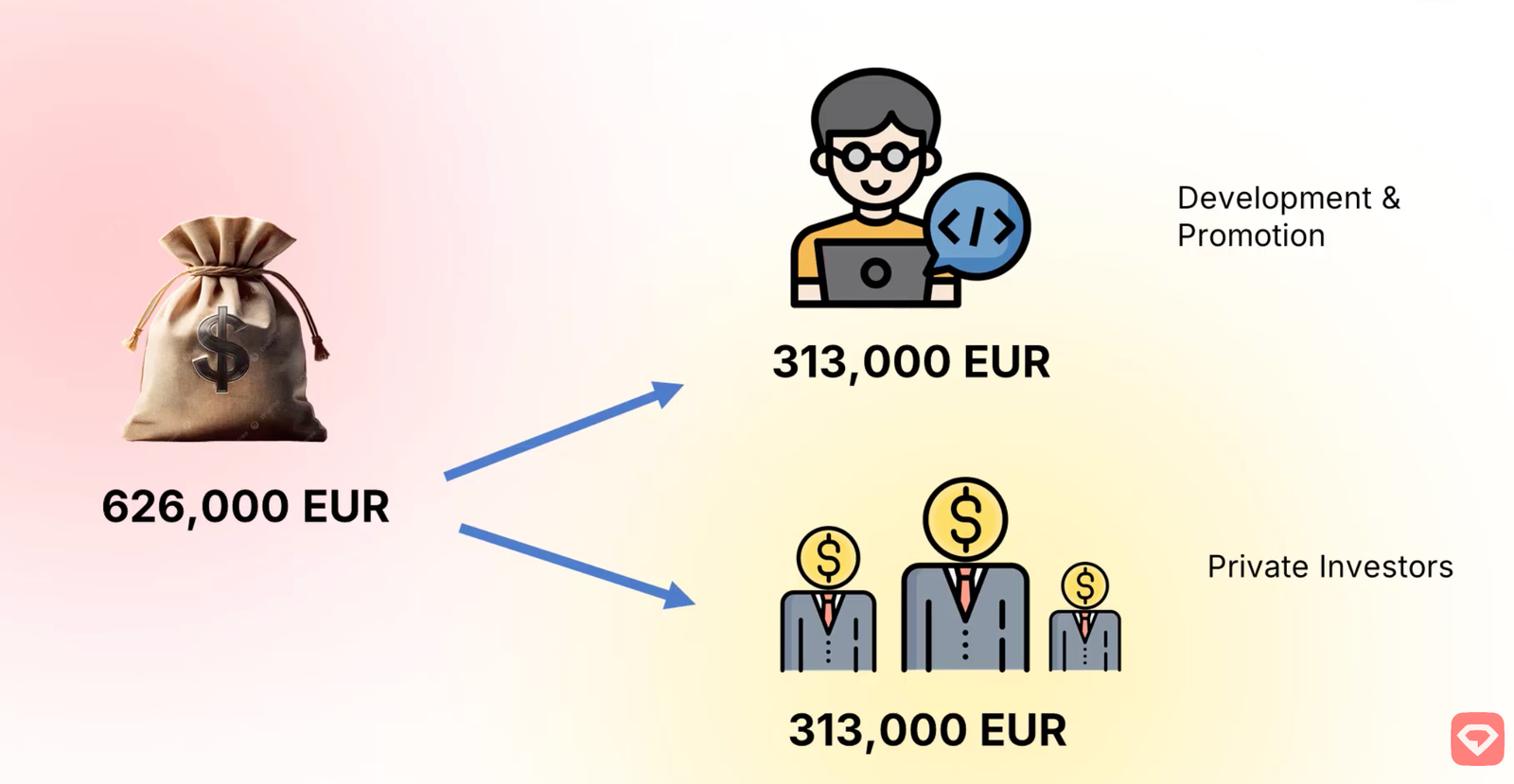
The board of directors has decided to split the €626,000 renewal payment equally: €313,000 allocated to development and promotion of new license sales, and €313,000 distributed in full to private investors. Unlike the first payment, no portion has been allocated to the administrative team — the full investor share goes directly to shareholders.
The reasoning behind directing half to development and promotion is deliberate: securing the third, fourth, fifth, and subsequent licenses requires investment in the pipeline. The first and second licenses are the foundation. The deferred GCC demand, when it converts, will bring significantly larger numbers.
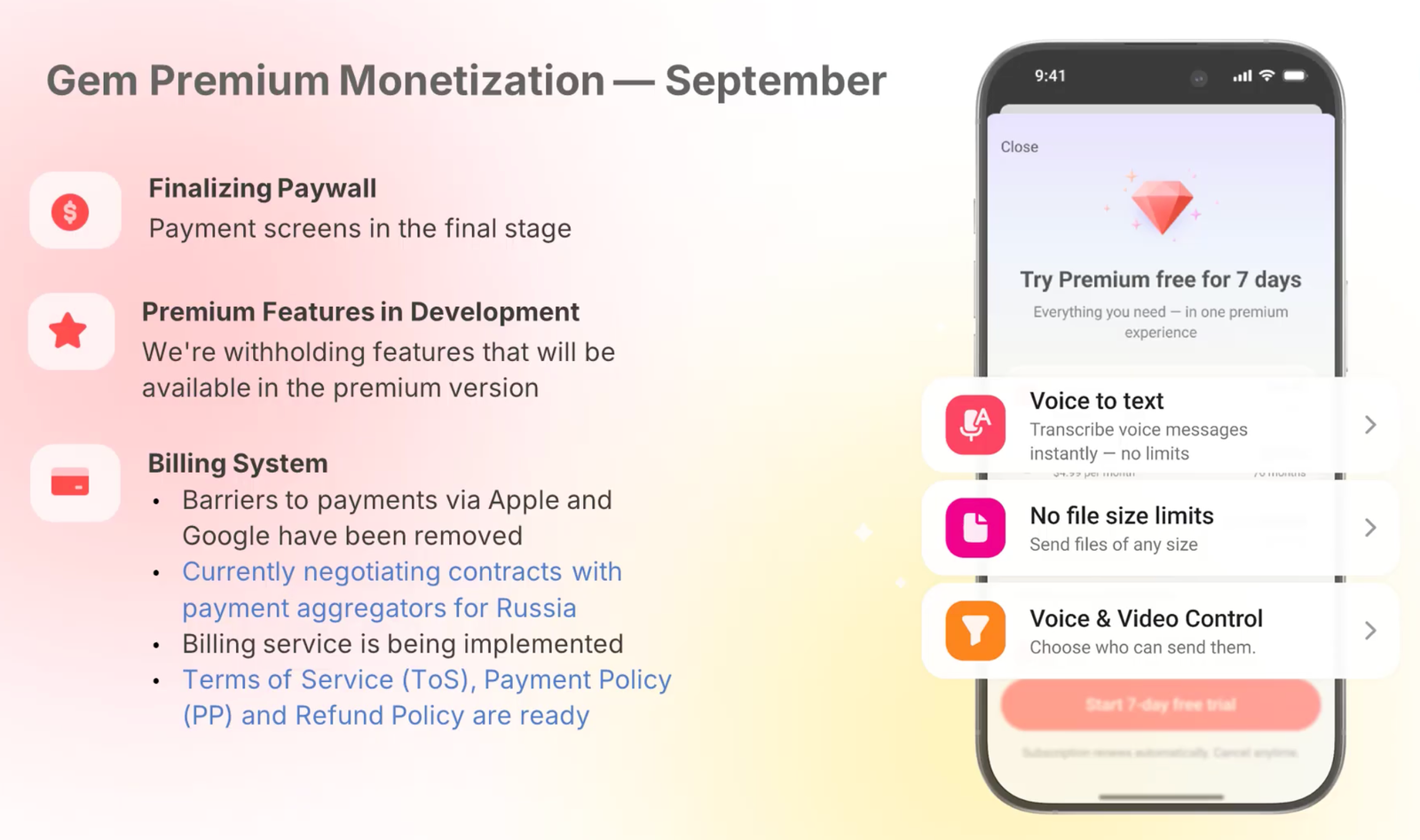
Payment Infrastructure: September Launch Confirmed
The payment system is in its final stages of implementation. Payment screens are complete. The billing system is handling payments through Apple App Store and Google Play — enabling worldwide payment processing. A separate service for CIS country users has been negotiated with regional payment aggregators and setup is underway, also targeting September.
Paid subscriptions launch in September alongside the payment infrastructure. The premium tier will not remove any existing functionality from free users — all current features remain available without charge. Premium adds higher quality, additional capabilities, and AI-powered features for users willing to pay.
The principle behind this model is straightforward: not everyone needs advanced features, but those who do are willing to pay for them. This is standard practice across all mature app ecosystems. For Gem Space, it represents the first direct revenue stream from the B2C user base that has been built over ten years.
Class D Share Update: Approximately 58,000 Remaining After Leadership Allocation
An important update was shared on Class D share availability. This week, approximately 30,000 Class D shares are being distributed as part of the leadership bonus allocation. As a result, the counter — which stood at approximately 88,000 available shares — will drop to approximately 58,000 or slightly below. This will also significantly increase the number of partners holding shares with CCA 15 and CCA 20 status, as more shareholders cross the relevant thresholds.
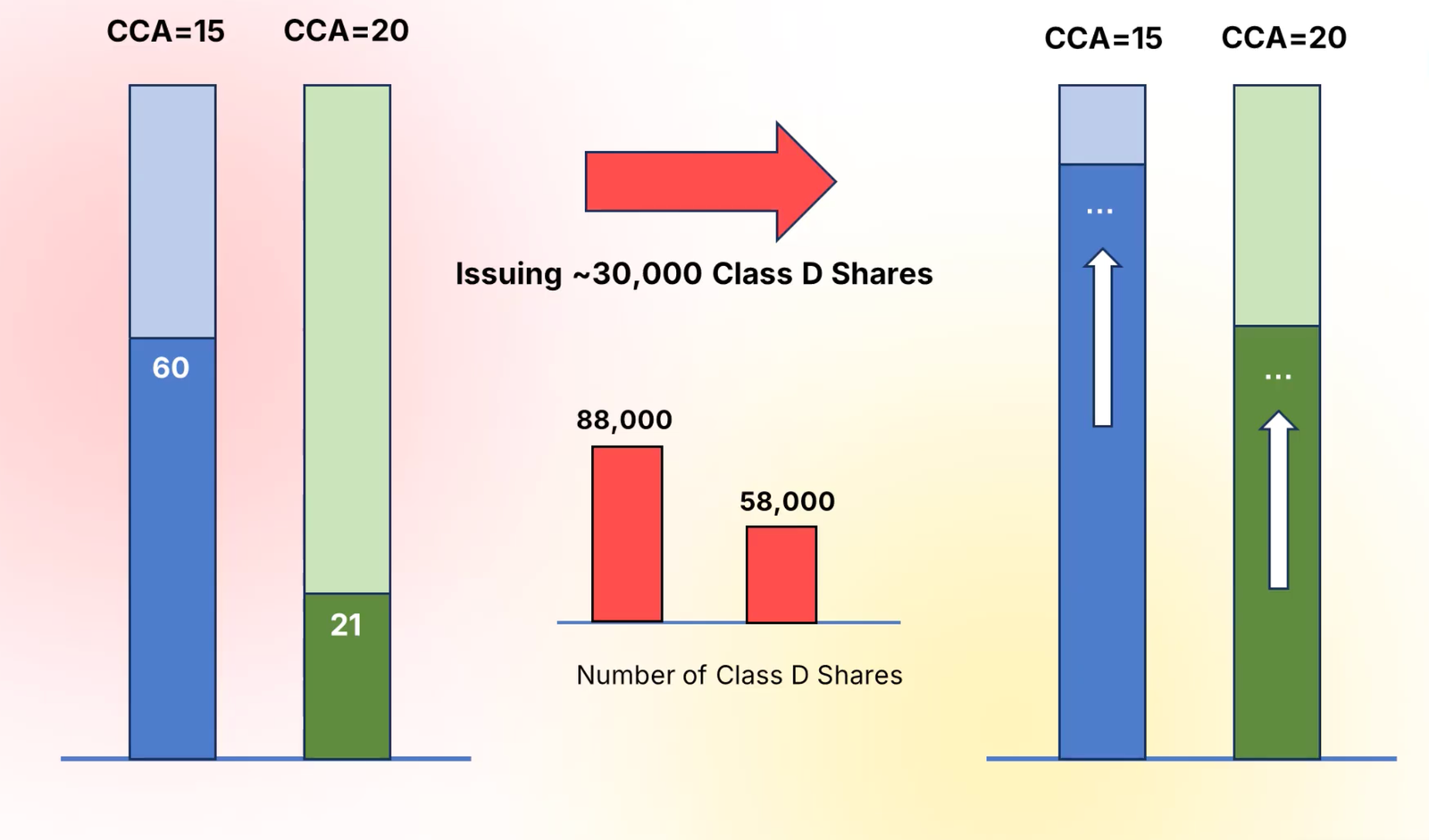
The Maximize CCA promotion remains active: investors holding between 500 and 999 Class D shares receive a CCA coefficient of 15, and investors holding more than 1,000 Class D shares receive a CCA coefficient of 20. This promotion ends when 100 investors in each category are reached — not on a fixed date. Given the leadership allocation taking place this week, those limits may be approached sooner than expected.
The Path Forward
The conference closed with a restatement of the core thesis that guides the company’s current phase. The platform is built. It operates in 196 countries. The user base exceeds 51 million. The tools that generate revenue — mini-apps, wallet, premium subscriptions, AI agents — are launching now or in September. The deferred demand in the GCC will eventually convert. The phase crisis unfolding globally is affecting financial markets, but it does not affect a platform whose revenue depends on user engagement rather than market sentiment.
Every license sold, every mini-app published, every premium subscriber acquired, and every payment processed through PayGem brings the platform closer to the valuation and the strategic sale that represents the culmination of ten years of work.
Stay informed — join our Angels Team channel in Gem Space.
Comments are closed