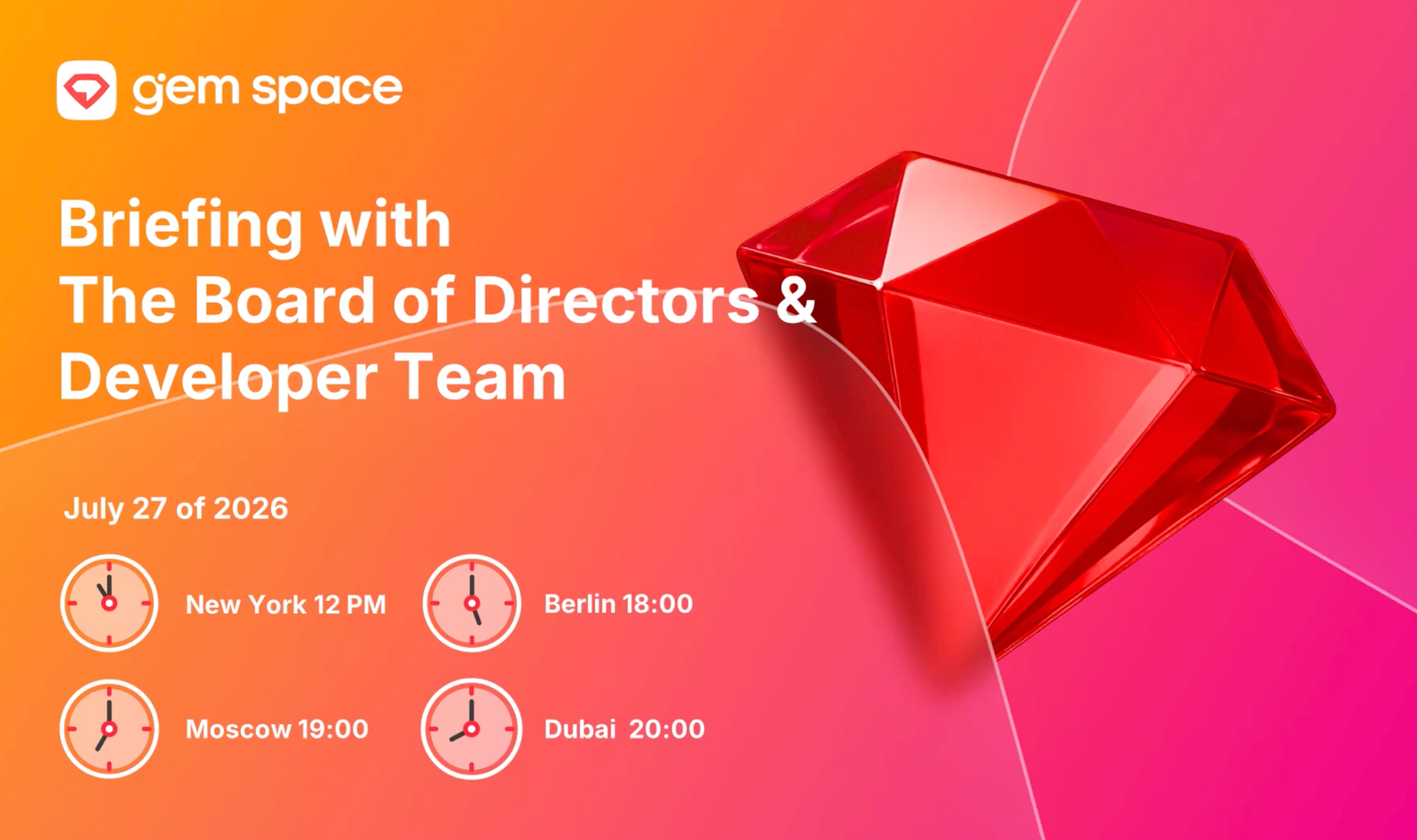
The end of June and the beginning of July produced four releases across the platform — varying in size but collectively delivering over 100 improvements and fixes on both the client side and the back end.
The most significant development in this period is one that users may not see directly but that fundamentally changes the foundation of the product: Gem Space is now undergoing a full architectural transformation, migrating to a new core solution that was previously tested and proven on the B2B products. New modules have replaced parts of the old infrastructure. This is a landmark milestone — not a feature addition, but a structural upgrade that will make everything built on top of it faster, more stable, and more scalable.
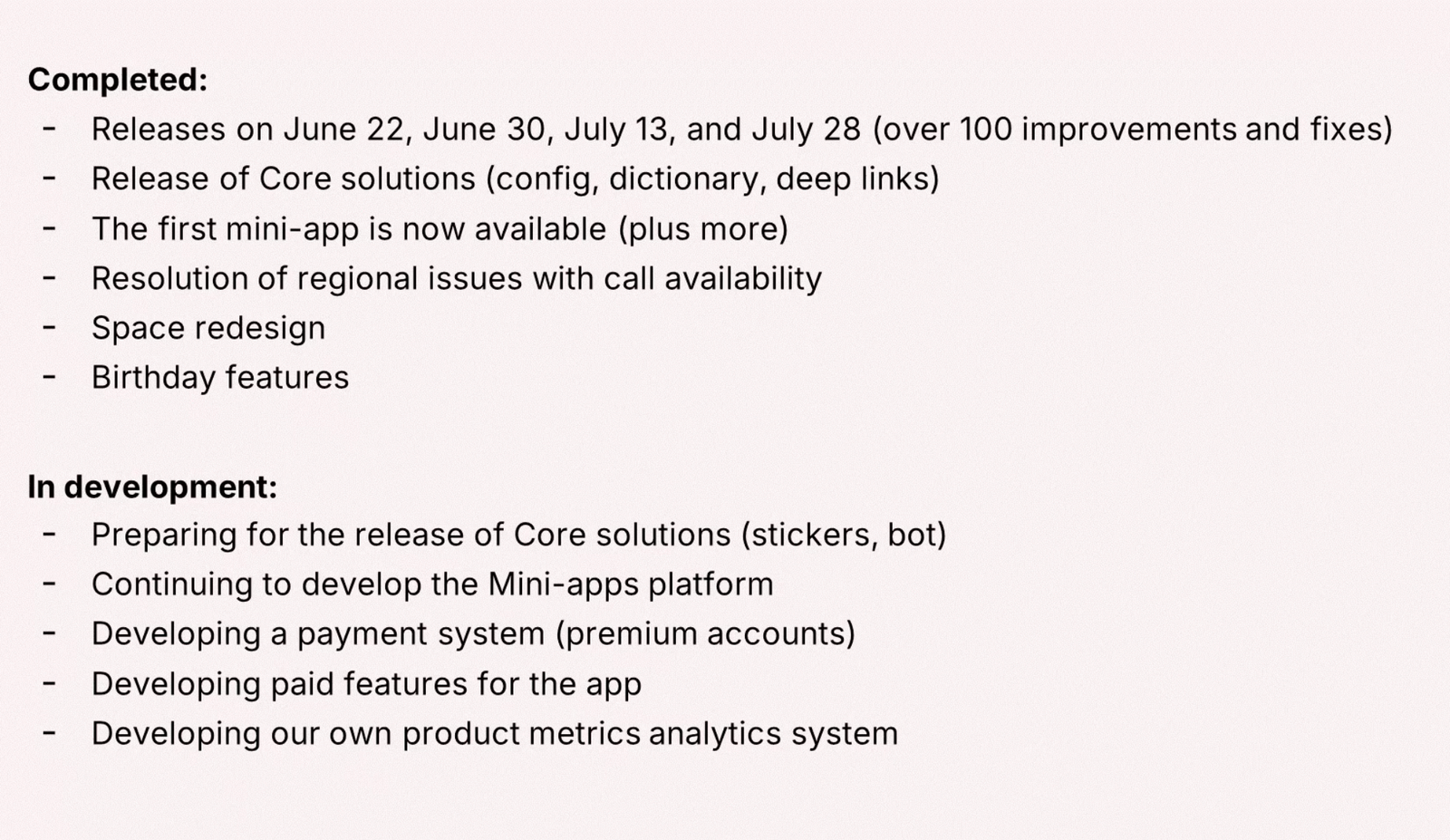
Alongside this, the mini-app platform launched and is already growing daily. The first mini-app is live and available to all users, with more appearing continuously. This is being treated as a serious standalone platform — not simply a feature within Gem Space, but a separate ecosystem in its own right.
Regional call issues that some users experienced have been successfully resolved through coordinated work between the infrastructure and back-end teams. The challenges of the current environment were navigated effectively.
The Spaces redesign has also shipped and is live. The new visual interface is significantly more inviting and intuitive — more on this below.
Birthday functionality is now available. Users can add their birthdays, and contacts receive reminders and the ability to send congratulations directly within the app.
What Is Currently in Development
Several major tracks are underway that will define the product through the rest of 2026.
- Stickers and bots are in active development. The bot work in particular will resolve current hosting dependencies on Google Cloud, with the team transitioning fully to a proprietary solution. This will significantly improve bot performance across the platform — including the Gem AI bot, which has experienced some slowdowns recently. This is confirmed as temporary and will be fully resolved by the end of summer with the new core bot solution.
- The mini-app platform has a dedicated team working on it full time with substantial plans ahead.
- Paid features represent a major new development track. One full team is focused entirely on integrating the payment process into the application — the technical foundation for everything monetization-related.
- A proprietary product analytics system is being built from scratch. The third-party solution currently in use will stop functioning properly this autumn, and rather than switch to another external provider, the team has decided to build a fully in-house analytics platform. This will give the marketing and product teams direct access to user behavior data to inform development priorities. Completion is expected by autumn.
Gem Team and Co-Work: Cloud 3.0.2 and CRM Integration
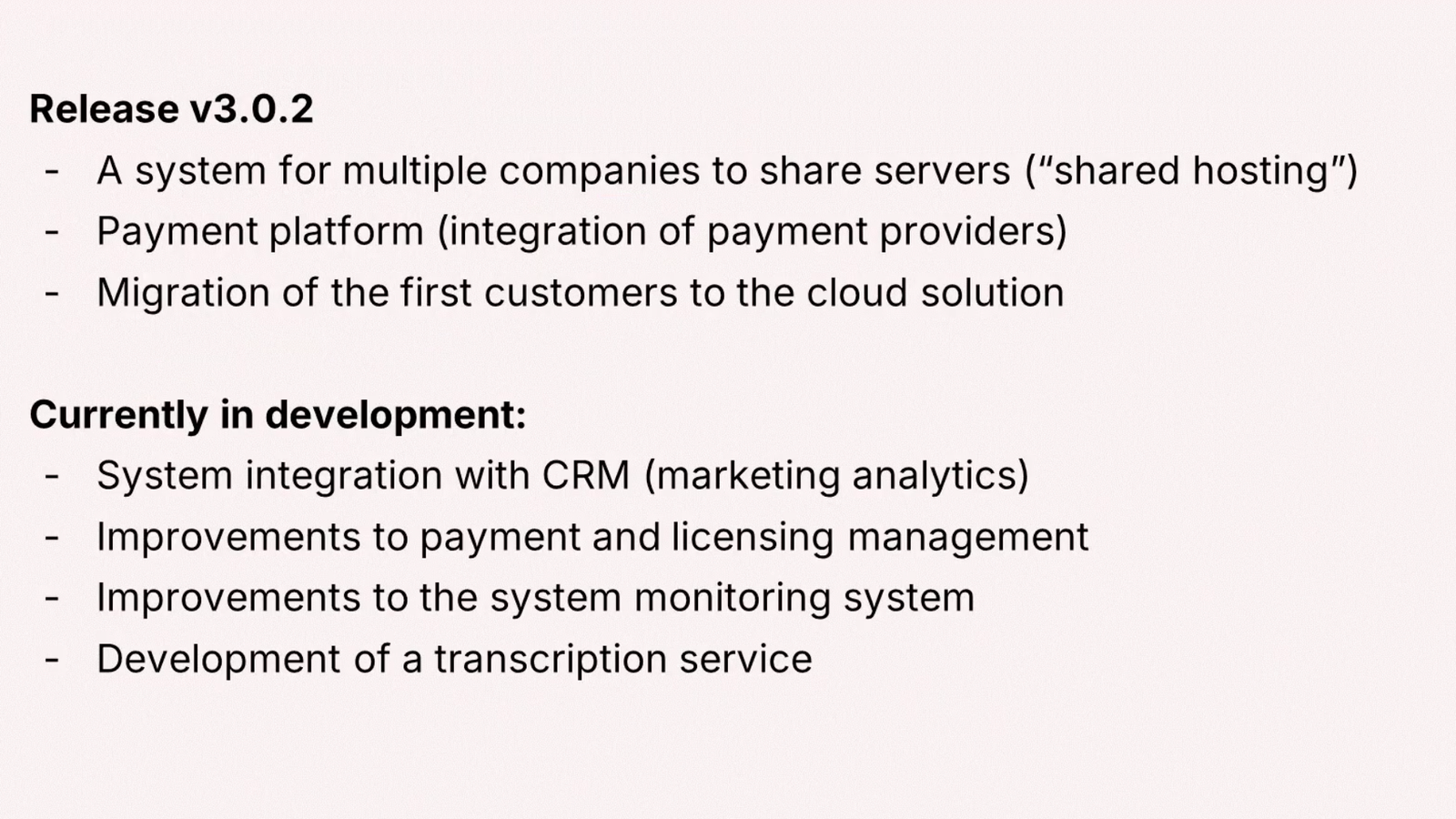
On the B2B side, version 3.0.2 is approaching release. This is a fully operational production release of the cloud solution — meaning individual companies can now create accounts on Gem Soft’s own servers and use the Co-Work or Gem Team platform as a complete corporate messenger, without needing to install or maintain any hardware themselves.
This is particularly relevant for small and medium companies that cannot afford their own server infrastructure but need a reliable, secure alternative to mainstream messengers — especially in environments where Telegram or similar products are blocked or restricted. The solution is simple: register, add employees, and communicate securely through a ready-made corporate environment.
Existing clients who previously used the on-premise solution are being migrated to the cloud by dedicated back-end and infrastructure teams. This is a complex process — it is not simply creating a new account, but transferring all accumulated data including messages, files, chats, and call records to the new environment.
CRM integration is another significant active track. This will allow the marketing and product teams to directly manage license purchases, issuance, upgrades, and renewals for corporate clients. It enables direct monitoring of sales funnels and real-time visibility into license status — how many users hold licenses, whether they are renewing, and whether new accounts are being added. The back office team is handling these integrations.
The license payment system introduced with the cloud platform is continuing to be developed and improved, with work ongoing on the UI and monitoring capabilities.
A major new development for the B2B solution is call transcription. The team is building a proprietary transcription service for voice messages from calls, using LLM models to convert voice to text. This is made possible by the switch to the company’s own calling system approximately nine months ago, which opened the door to a range of AI-powered voice features. Testing is planned for early autumn with a release to follow.
What AI Really Is — And What Gem Space Is Building
A significant portion of the July 27th conference was devoted to clarifying what AI actually means in practice — and what the Gem Space team is specifically building within it.
A common misconception exists that using AI means asking questions to ChatGPT or Google Gemini. That is indeed using artificial intelligence — but it is the most basic level, comparable to buying the most advanced smartphone available and using it only to make phone calls.
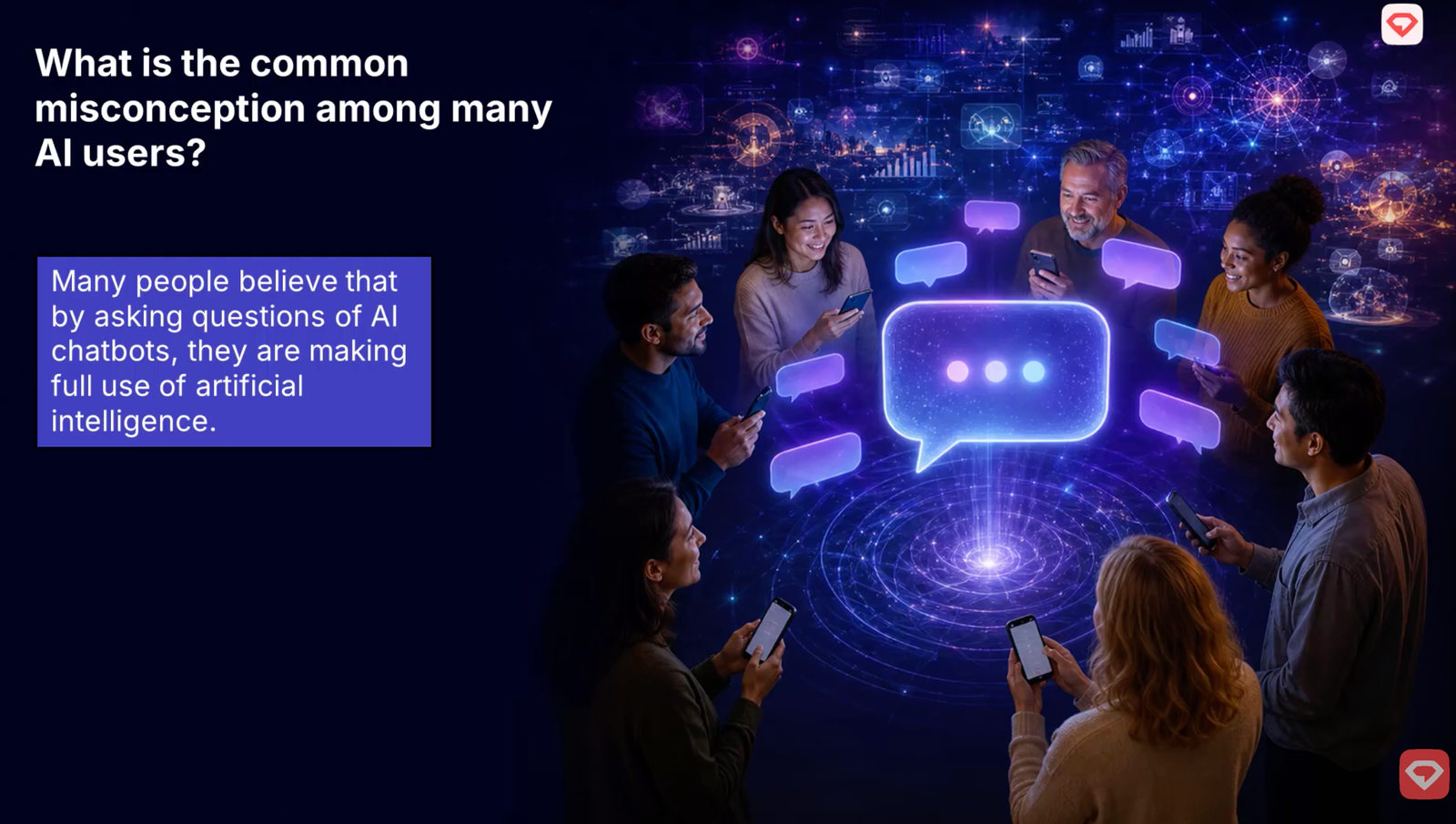
The real power of AI exists across three levels. At the first level are AI bots — tools that answer questions, generate text, translate, and handle information. Most people who use AI today are at this level. At the second level are AI assistants — tools that help users accomplish specific tasks more effectively. At the third and most powerful level are AI agents — systems that take a task and carry it through to a specific result, autonomously, without requiring the user to manage each step.
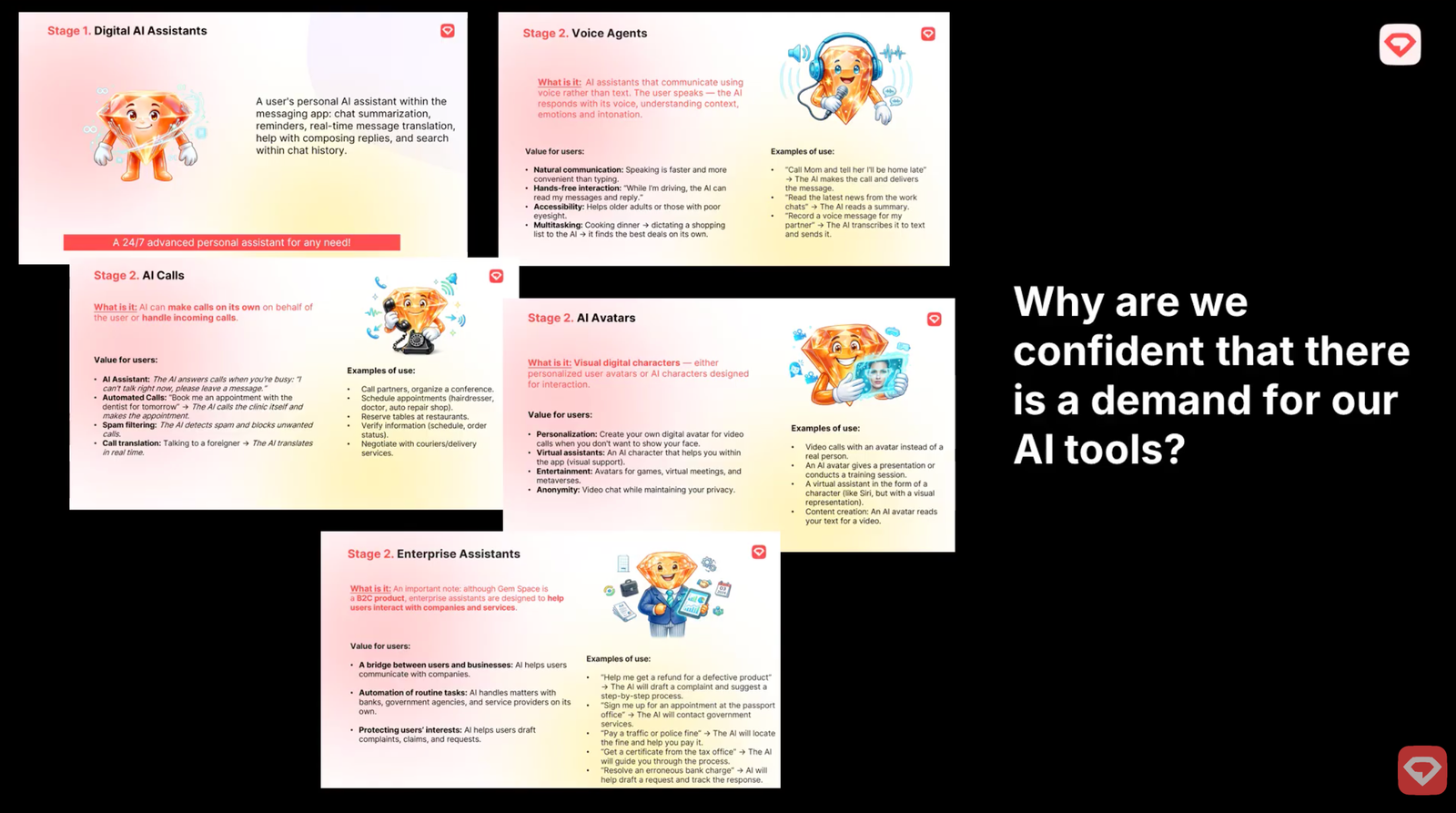
The companies that will win in the AI economy are those that make agent-level AI accessible to everyday users — within reach, simple to use, and integrated into the tools people already use daily. That is precisely what Gem Space is positioning itself to do.
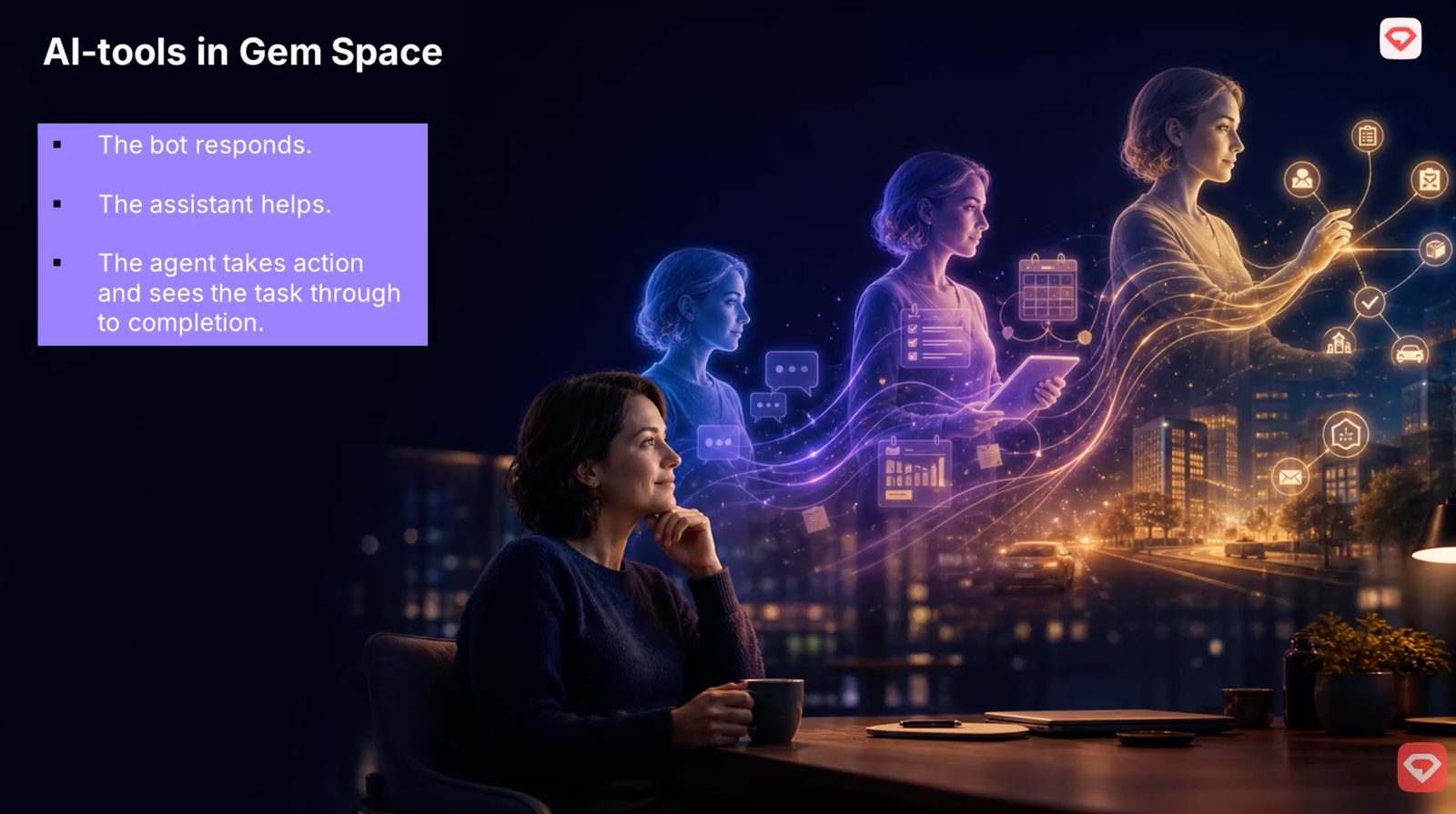
To make this concrete, four examples of AI agents in development were presented at the conference.
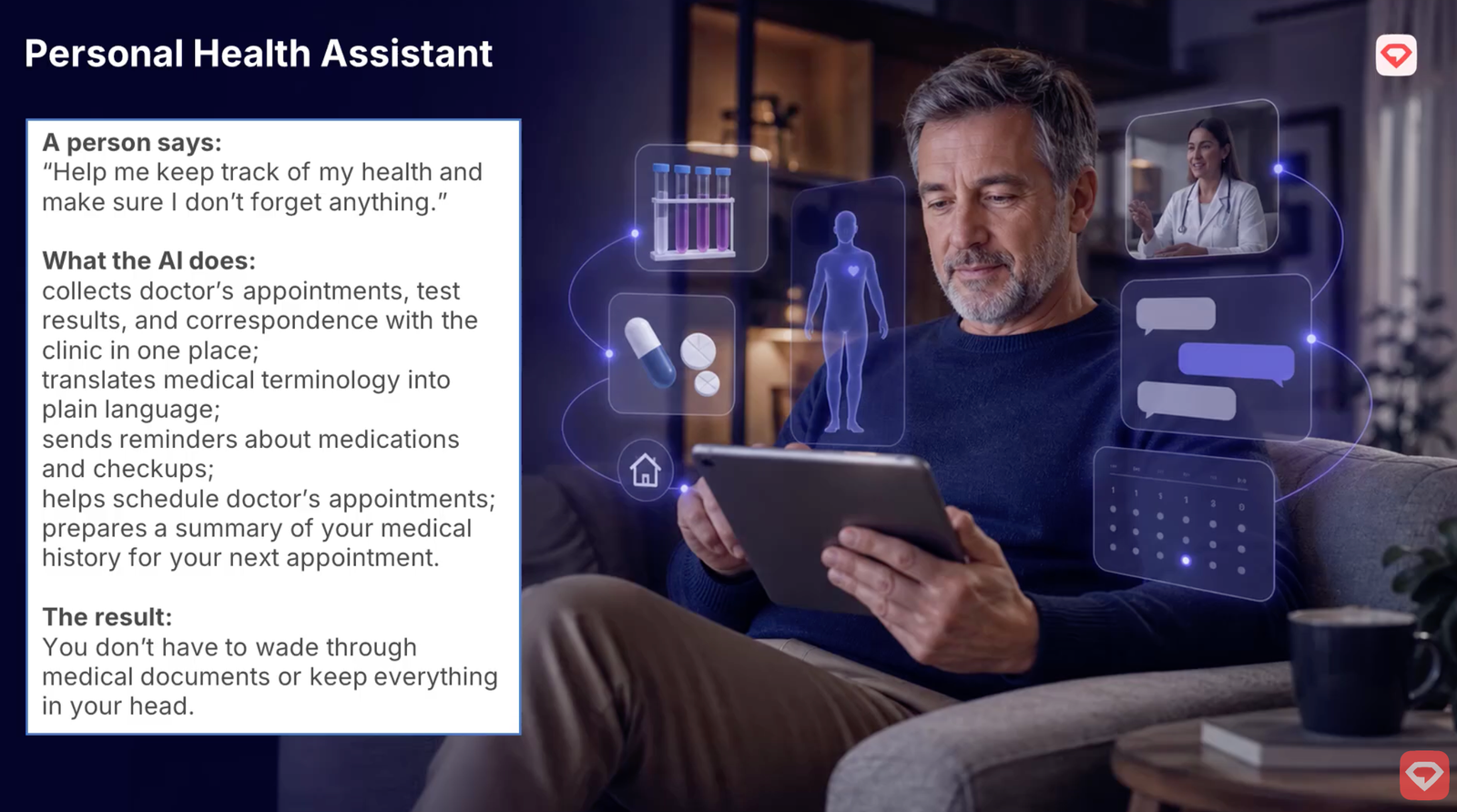
A personal health assistant that gathers doctor appointments, test results, and medical correspondence in one place, translates medical jargon into plain language, reminds users about medications and checkups, helps schedule appointments, and prepares a brief medical history for each visit. The user never needs to read medical documents or hold everything in their memory.
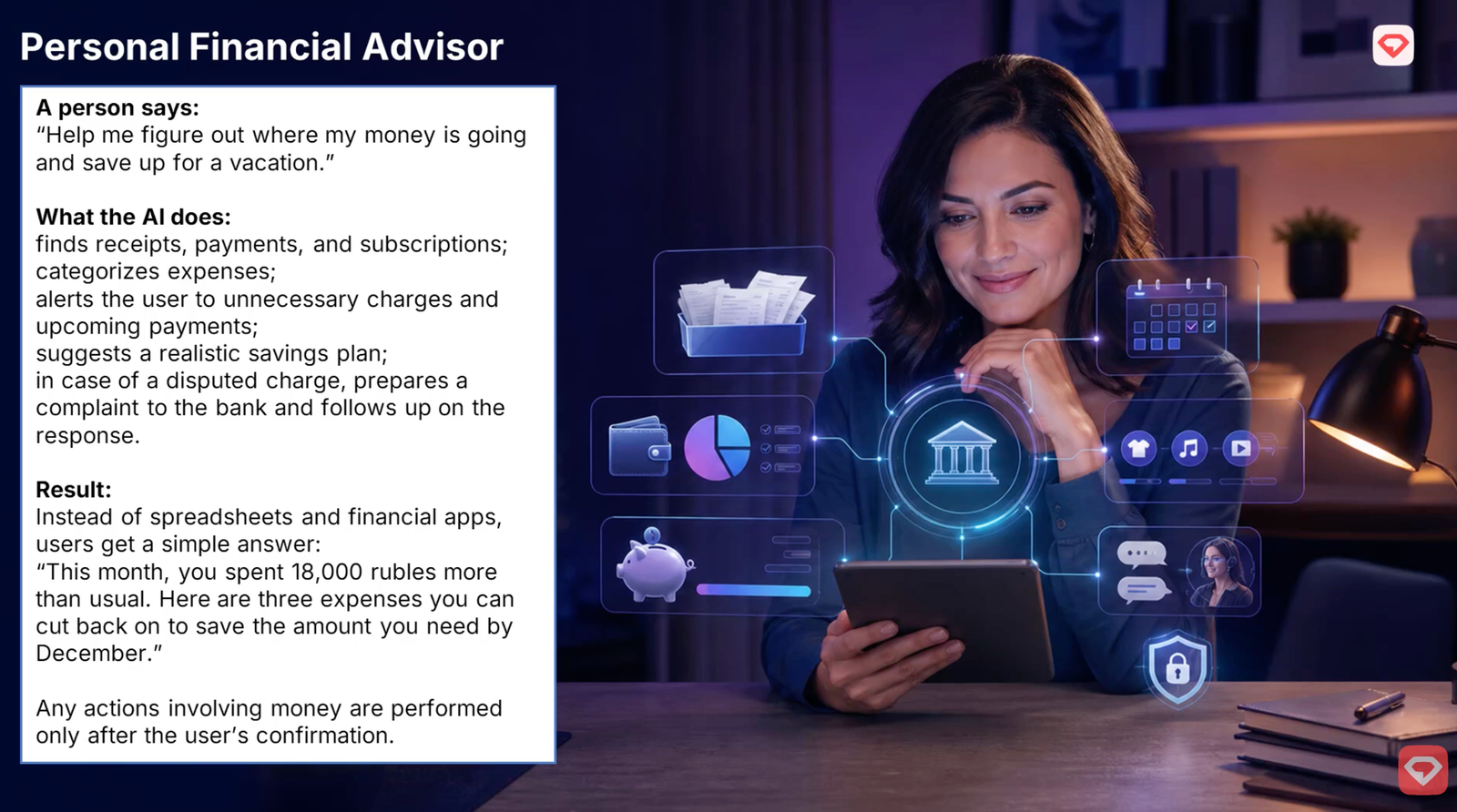
A personal financial controller that tracks income and expenses by finding receipts, payments, and subscriptions, categorizes spending, alerts users to unnecessary charges, provides realistic savings plans, and prepares bank appeals for disputed transactions. Instead of managing complex financial spreadsheets, the user receives simple, actionable answers.
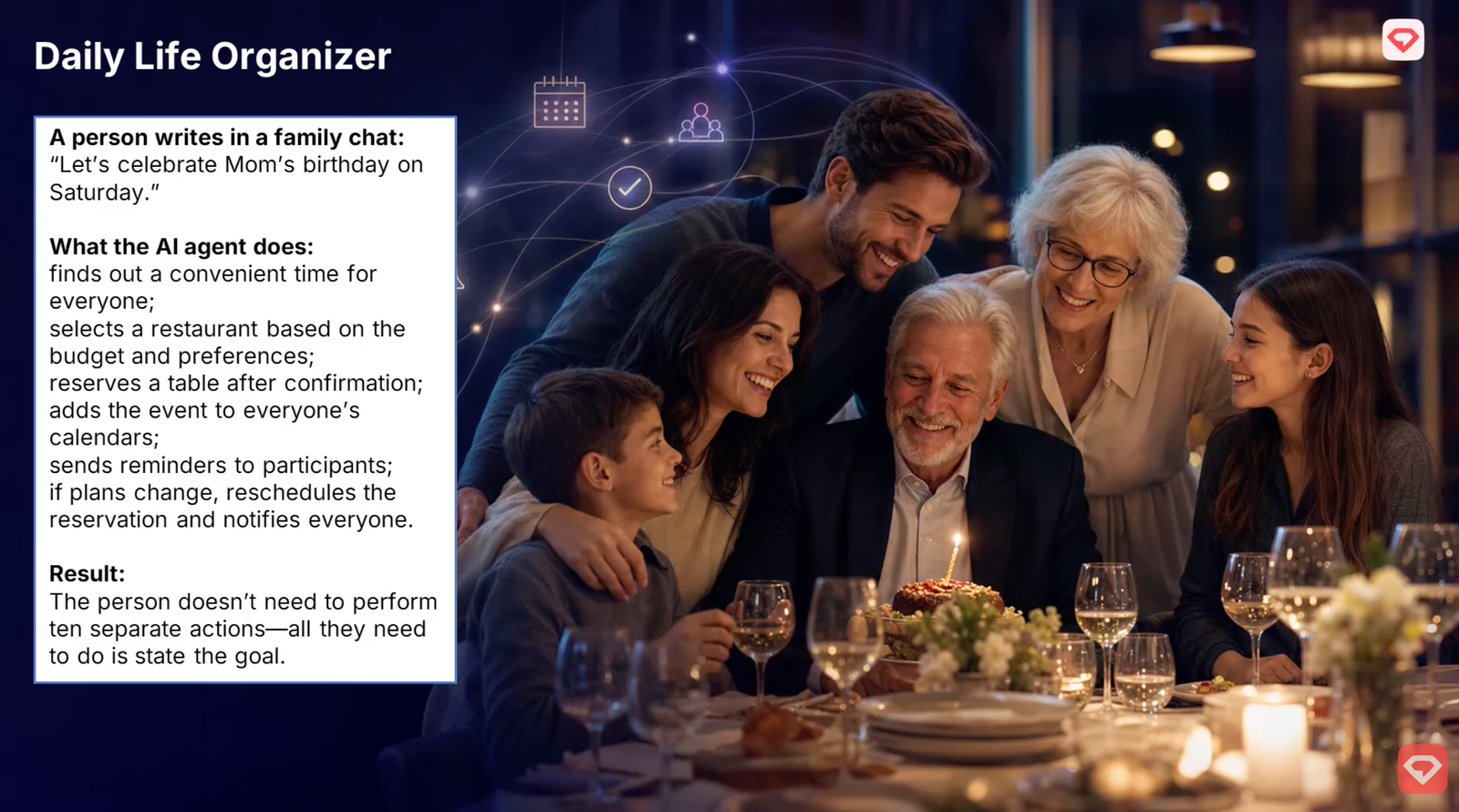
A daily life organizer that, when someone writes in a family chat that a birthday celebration is planned for Saturday, automatically finds a convenient time for everyone, selects a restaurant, books a table, adds the event to the calendar, sends reminders, and reschedules if plans change. Tasks that would otherwise require ten separate actions are handled by the agent.
And perhaps most compelling for the Angels Team community — an AI investor ambassador. The investor provides an instruction: create my digital representative and help me promote Gem Space. The agent creates an avatar using the investor’s own voice and mannerisms. It then conducts project presentations 24/7 in multiple languages, answers questions based on approved Gem Space materials, prepares personalized posts, videos, and social media content, tracks interested contacts, and helps schedule meetings. The investor’s promotion continues even while they sleep.
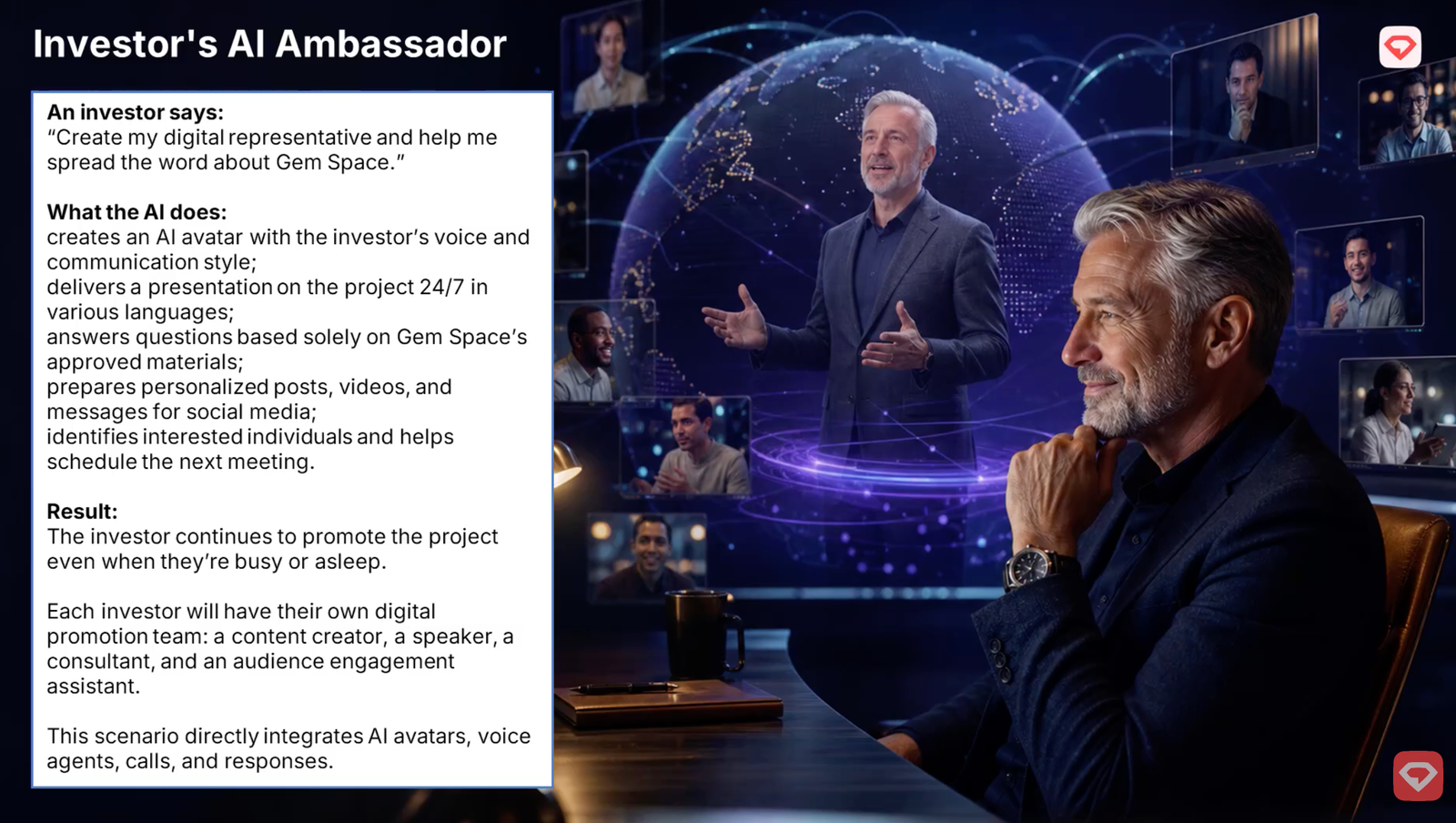
This is the level of AI Gem Space is building toward — not access to chat bots, but specialized agents that solve real problems and deliver real results.
The Strategic Logic: LLM Models as the New Means of Production
The broader economic context was addressed in depth at the conference through the lens of what was described as the phase crisis — the transition between economic formations.
LLM models — large language models — represent a new means of production in the same way that the introduction of electricity, the automobile, and later the smartphone each represented new means of production that reshaped the economy around them. The speed at which this transition is happening is approximately ten times faster than previous transitions. The funnel of change is accelerating.
The key practical insight for Gem Space is this: the companies that built the large language models spent extraordinary amounts of money doing so — on data centers, computing power, energy, and development. Their revenues are growing but their costs are outpacing their profits. They will continue to raise money and develop their models.
Gem Space does not plan to build its own LLM model. Instead, the strategy is to build specialized AI agents on top of the models that already exist — small, focused add-ons that solve specific real-world problems for everyday users. The cost of building these agents is a fraction of what it costs to build an underlying model. The platform already exists. The user base already exists. The LLM models already exist. What is being added now is the layer that connects them and makes them useful, accessible, and monetizable.
This is the competitive advantage: a large operational platform with calls, conferences, video messaging, and chats already in place — with AI agents added on top, connected to the best available models, generating monetization from the combination. The three success factors are the platform, the expertise to build agents, and access to the underlying models.
The Gulf Region: Deferred Demand Continues to Build
Several questions from investors about the Gulf situation were addressed directly.
The Gem Team licensing work in Qatar and Saudi Arabia is continuing without interruption. Servers are being debugged and space freed up for new tests. All middle and upper management in the Gulf countries remain in place and engaged. The contacts built over the past year have not gone cold — clients are returning to discussions of existing agreements and new ones are being signed, in both Qatar and Saudi Arabia, though at a slower pace due to resources being diverted by the conflict.
The first license has been confirmed as extended. The exact payment amount and timing will be confirmed in August, with payment most likely arriving that month. The extension amount is smaller than the initial license, as the initial payment included substantial development and staff training costs that are not recurring.
On the question of whether the Gulf conflict will persist for years: the assessment shared at the conference is that the conflict will enter a calmer phase. It will not end entirely, but it will move away from its current acute stage. When that happens, the deferred demand — the agreements prepared, the relationships built, the trust established — will convert rapidly into closed deals. The team that stayed through the conflict will be the one positioned to capture that moment.
Spaces: A New Beginning
The Spaces redesign represents more than a visual update — it is a restructuring of how Spaces work and what they can do, particularly for businesses and content creators.
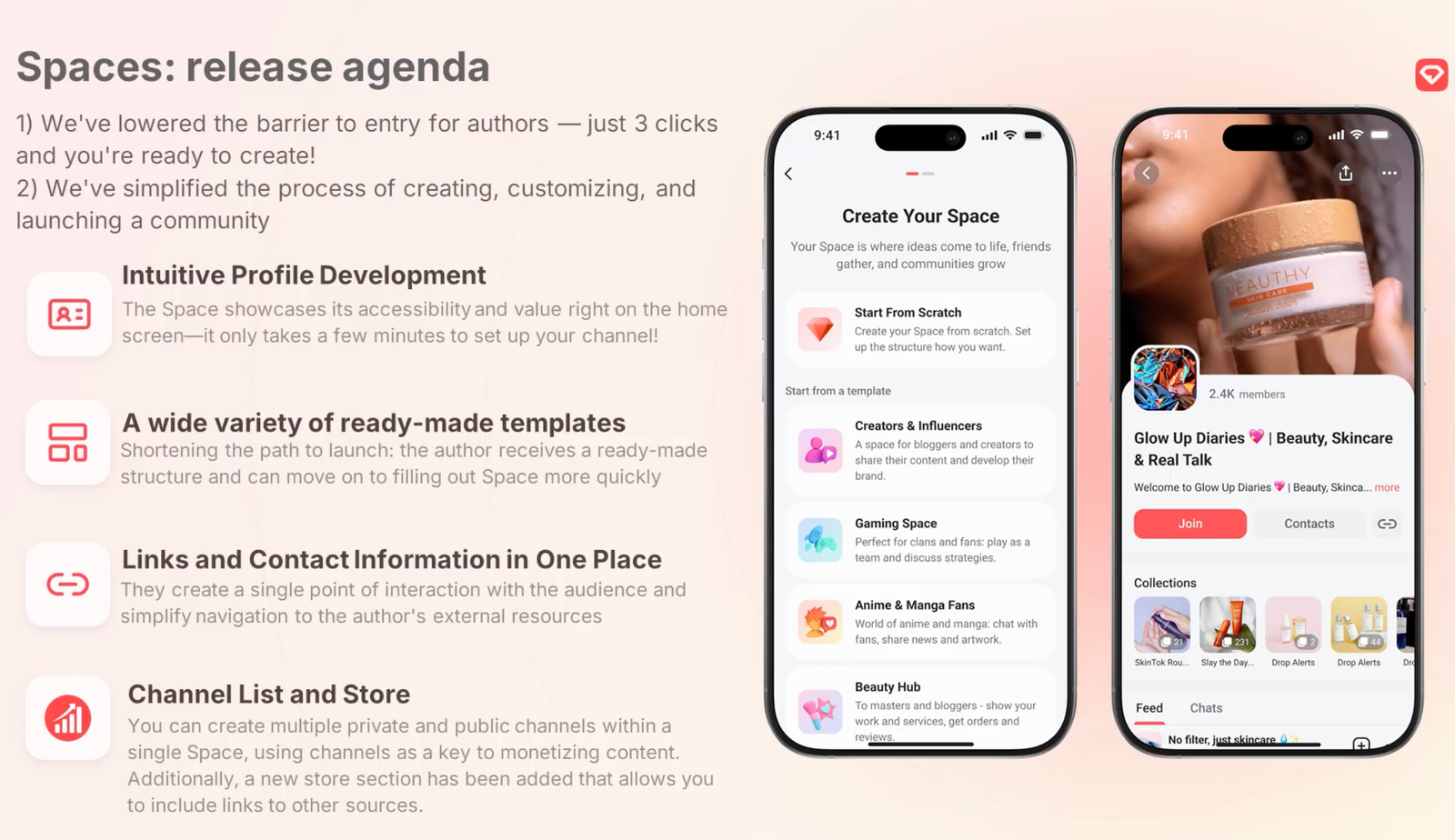
The profile view has been completely redesigned. When entering a Space, users now immediately see what kind of space it is — a header image, avatar, space name, description, and content collections are all visible from the first screen. Templates have been developed covering a range of use case types: family spaces, commercial spaces for selling products or services, sports spaces, and others. Starting a Space is now a three-step funnel with built-in guides and tips. Feed sections and chat sections are automatically suggested. A store section allows direct placement of links to external stores. Links and contacts are all in one place.
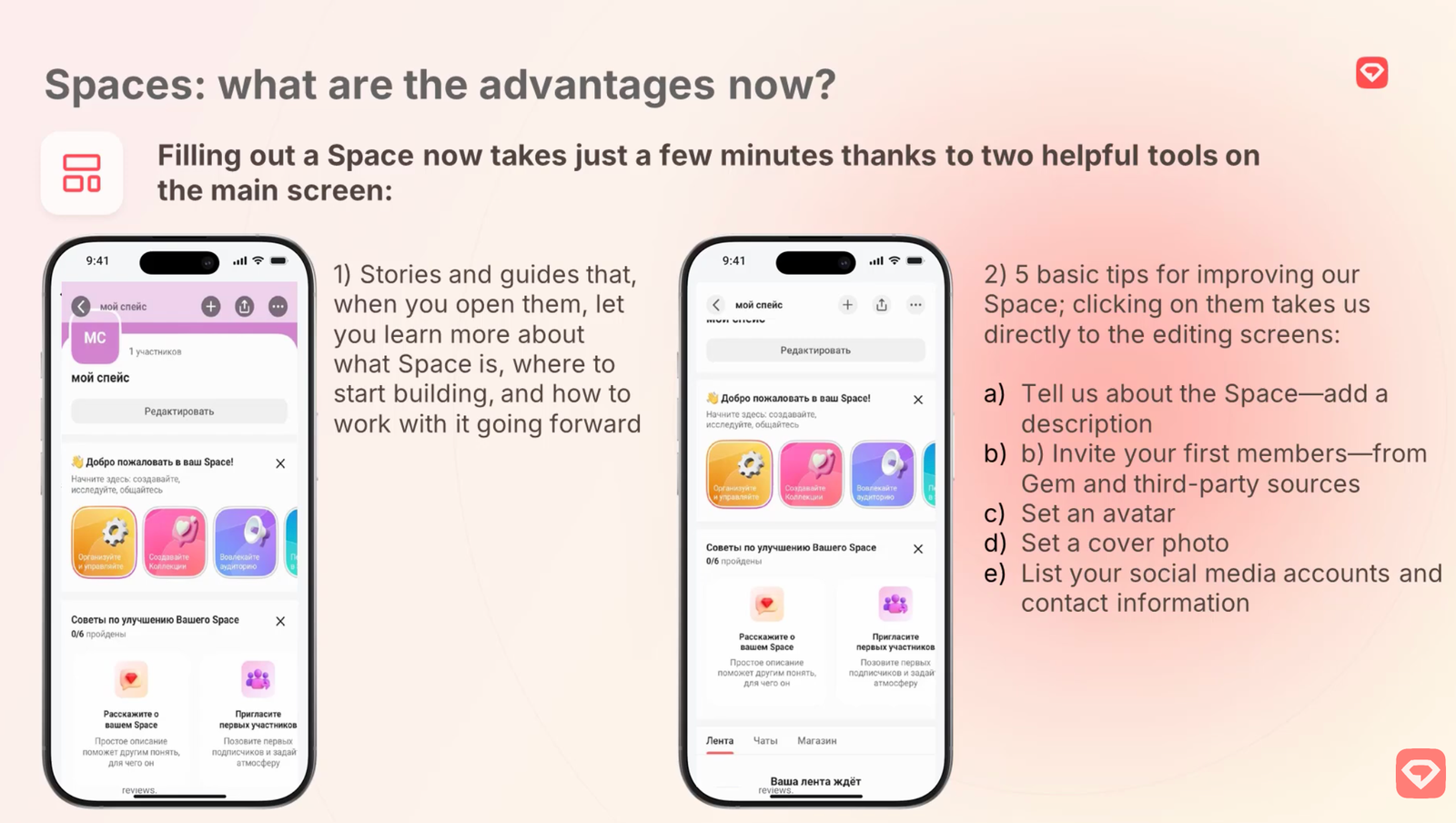
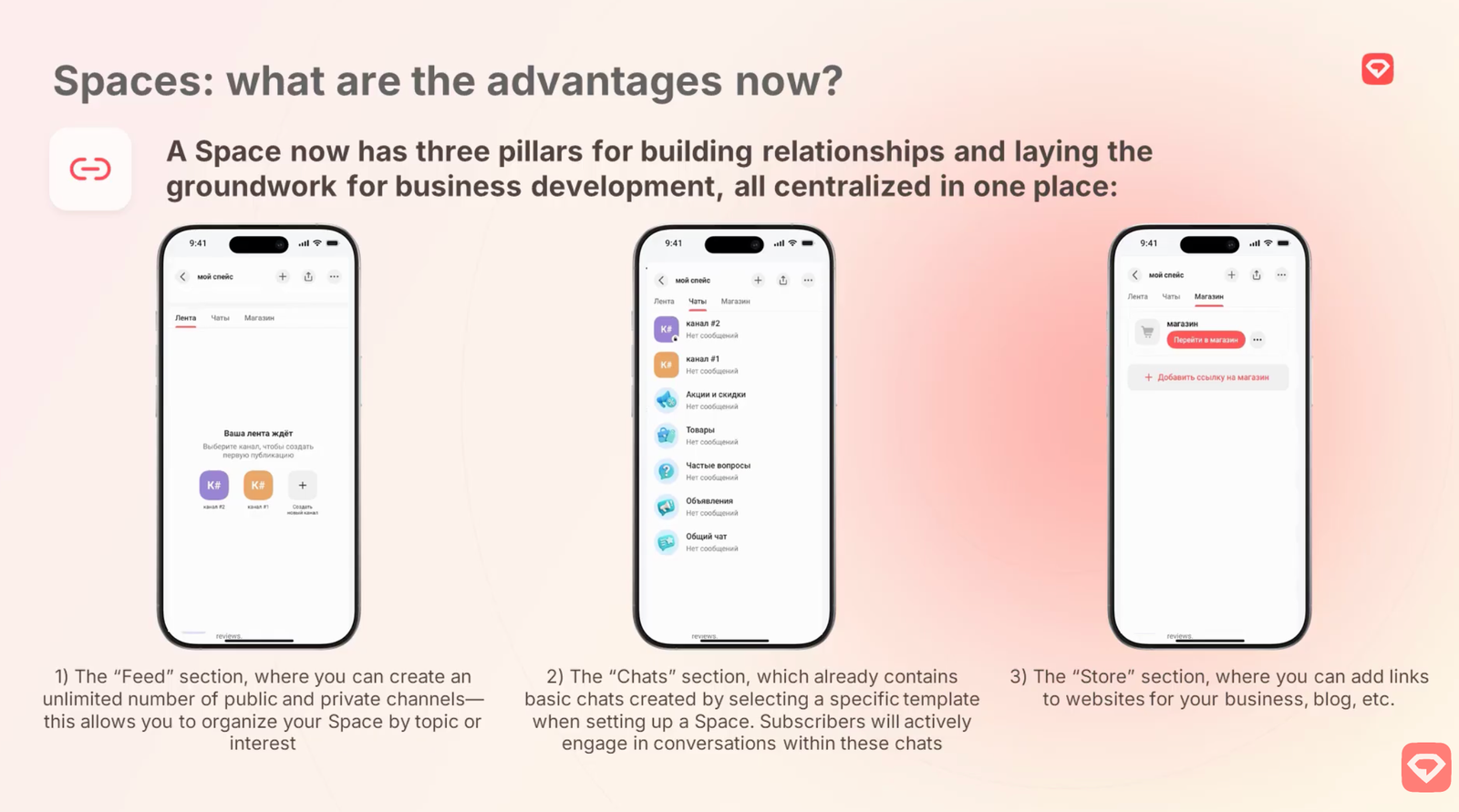
The goal is to make Spaces a genuinely useful environment for content creators and small businesses operating within the Gem Space ecosystem — and to make building one accessible to anyone, not just technically experienced users.
Key Questions Answered
On Bruno Horn’s role: Bruno Horn is a Swiss member of the board of directors responsible for financial logistics — managing the network of companies and accounts across different jurisdictions to ensure proper coordination of the company’s global financial structure. This work is largely behind the scenes and does not require regular conference participation.
On regional sale pricing: pricing for regional sales is tied primarily to the size and economic profile of the country involved. A country with one million people cannot be priced the same as a country with 1.5 billion. The Viber acquisition by Japan is a reference point but not a universal benchmark — Japan is among the world’s ten largest economies, and not every regional sale will involve a comparable buyer.
On the AI technology cycle: the AI cycle began around 2023, placing 2026 in its second or third year. The tools Gem Space is building — particularly around user engagement, location-based services, and financial features — are well-suited to the current stage of the cycle. Being in the second or third year of a technology cycle that typically runs eight to twelve years means the opportunity remains very much open.
On the Class D share mechanism: the choice was straightforward — either raise the resources to implement AI and monetization quickly, for the benefit of all shareholders, or develop slowly over many years with limited funding. The first option was the right one. Class D shares are available not only through direct purchase but also through the referral and promotion system — investors who promote the project and drive sales receive Class D shares from each personal sale.
Upcoming: First License Renewal Payment in August
The confirmed renewal of the first Gem Team license means a dividend payment is approaching. Details on the exact amount and payment date will be announced in August. This will mark the continuation of real financial flows from the Gem Team direction to Class C shareholders.
Stay informed — join our Angels Team channel in Gem Space.
Comments are closed