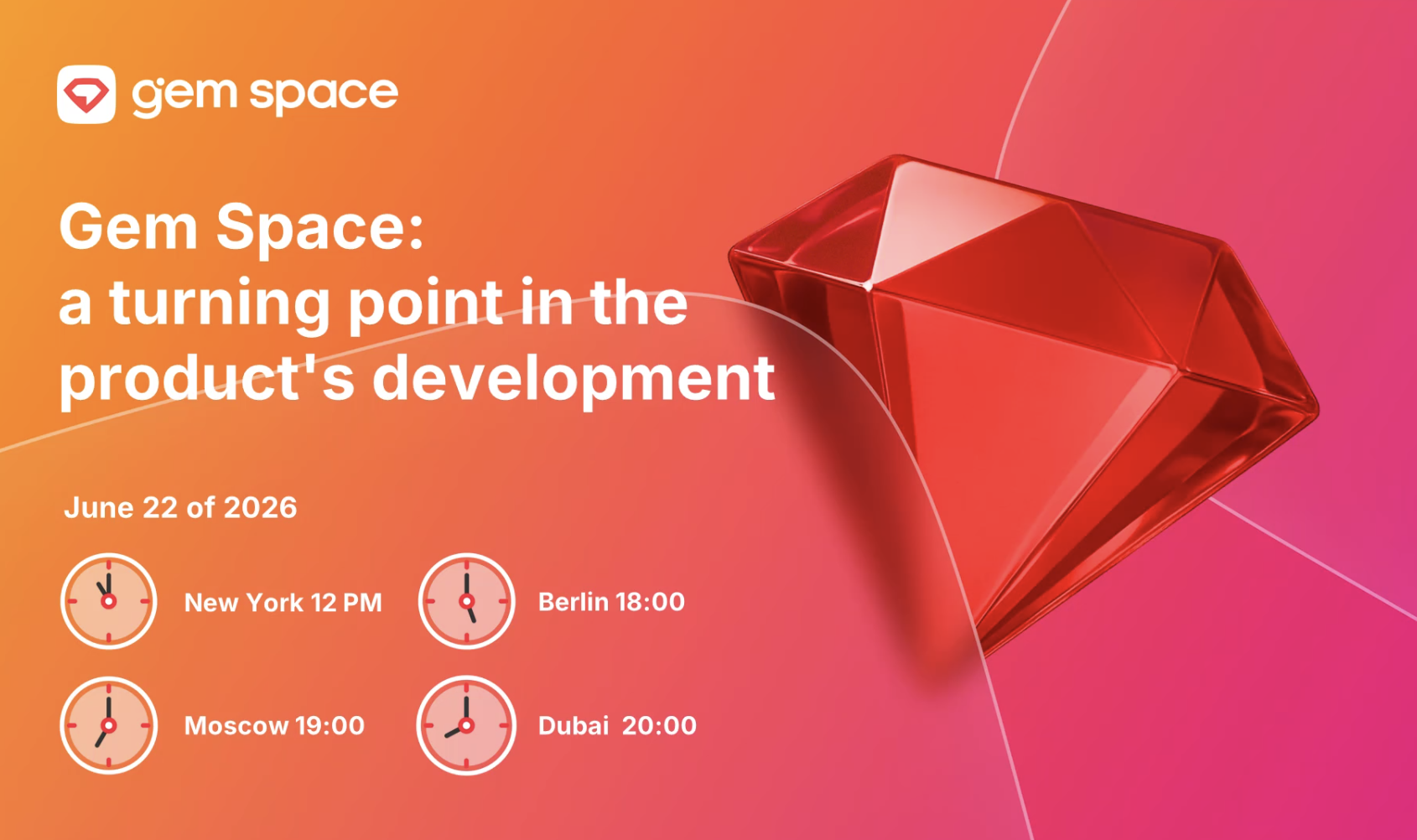
The June 22nd conference opened with a statement that set the tone for everything that followed: the world is at a historic turning point right now.
The transition to a new economic and technological order is underway — and at the center of it is artificial intelligence. This moment has been compared to the dot-com turning point of the early 2000s. It is at exactly these inflection points that leaps in product development and business growth become possible. The key is not to miss it.
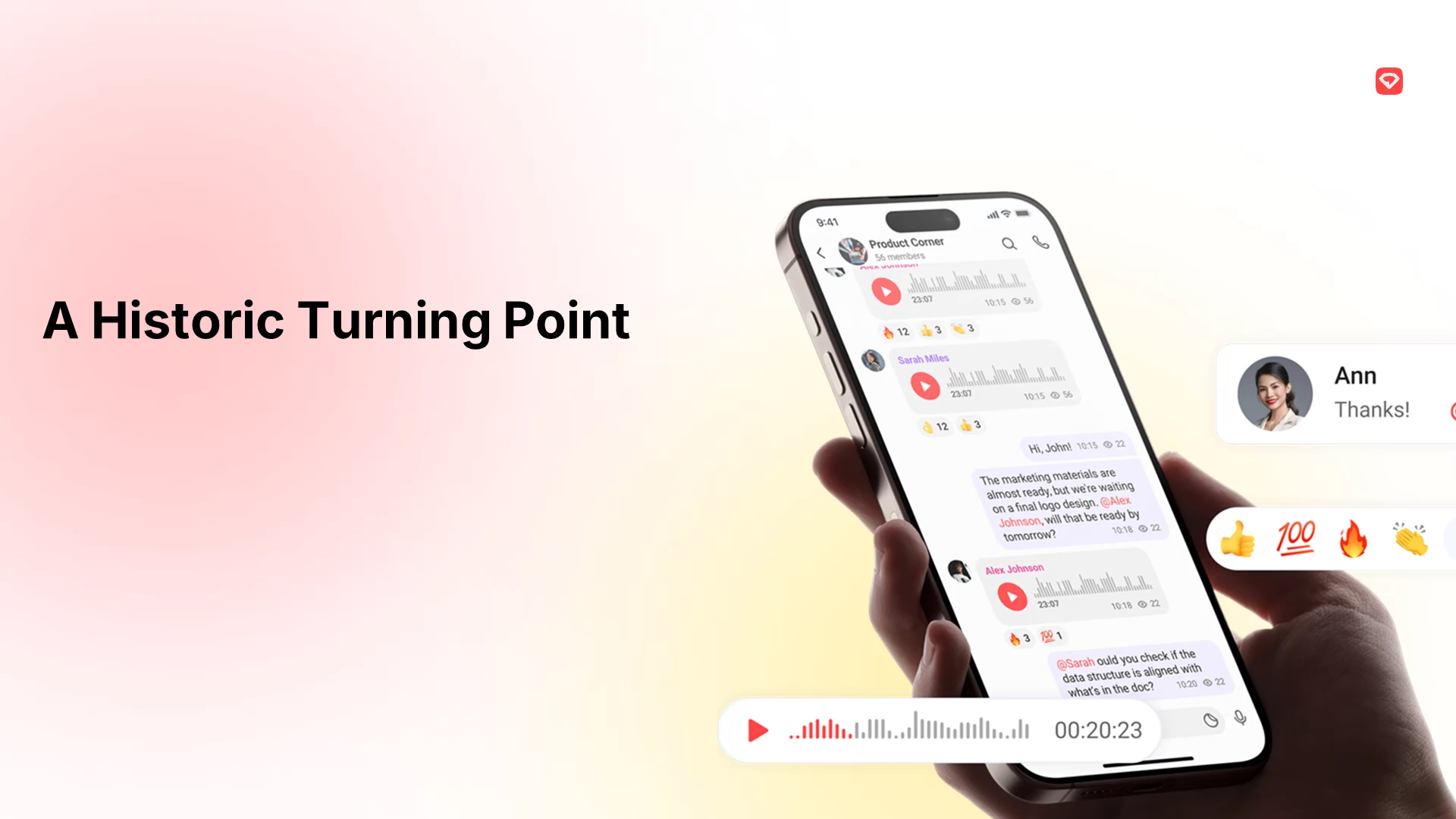
History is full of examples. Microsoft emerged at one such moment and became a global giant. So did Google. Whoever correctly identifies these turning points and acts accordingly wins. Those who do not — those who remain comfortable in the trap of existing conditions, developing at a steady measured pace without seizing the moment — are the ones who fall behind.
Gem Space has grown organically. Its value has been rising steadily. It operates in more than 190 countries. But the Board of Directors is clear: steady is no longer enough. This is a moment for revolutionary, not evolutionary development. And that is exactly what is being executed now.
Gem Team: The Foundation Is Built, the Pipeline Is Active
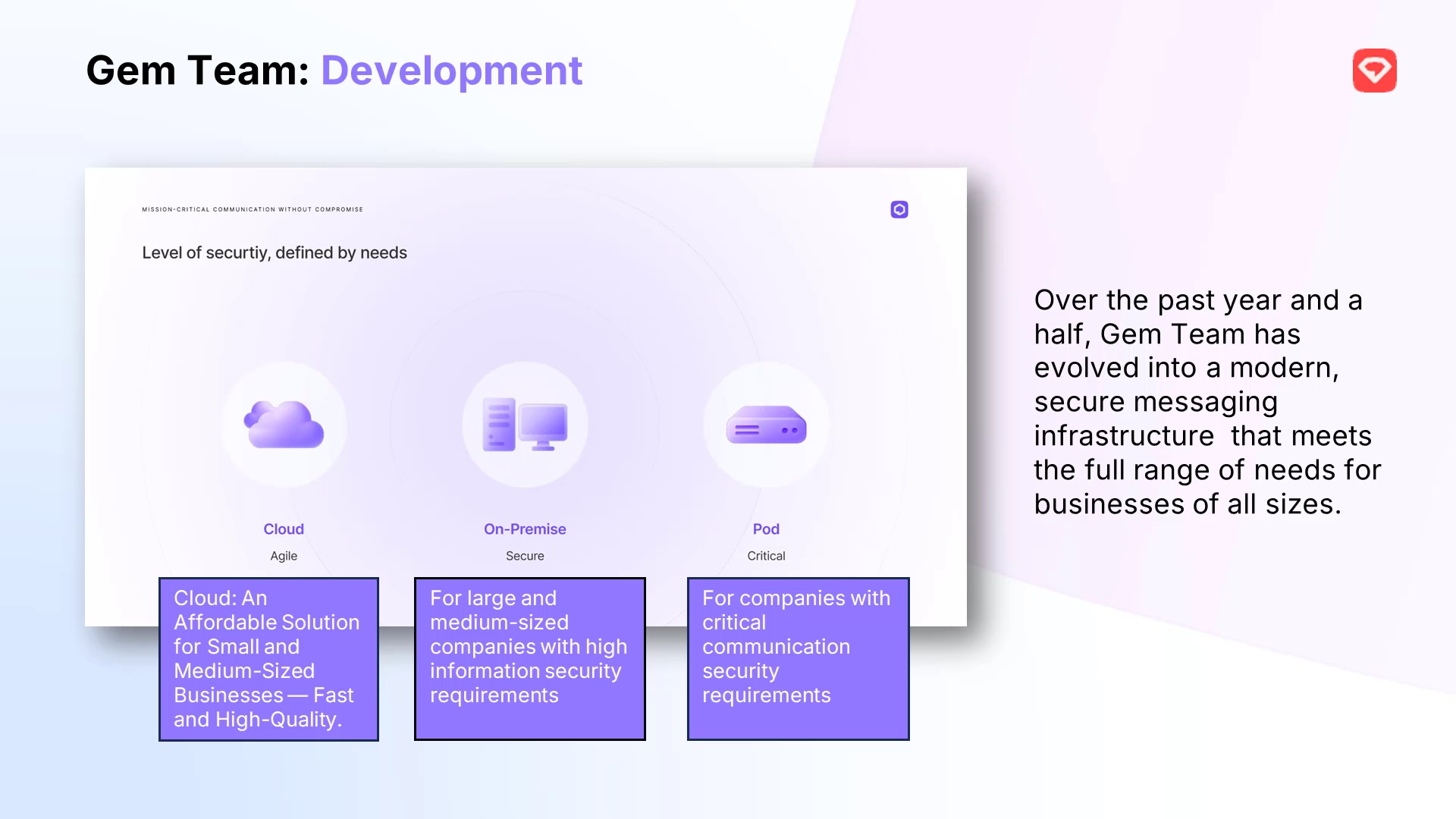
Before addressing the main topic of the conference, a brief update was shared on Gem Team — the secure corporate communication ecosystem launched in the fall of 2024.
In approximately a year and a half, the product has been developed to cover the full spectrum of business needs — from small and medium companies that need simple, accessible secure communication, to large enterprises requiring on-premise deployments, to organizations needing portable server infrastructure for maximum isolation. The product is complete across all three tiers and is actively being promoted.
The primary focus markets are Qatar and Saudi Arabia. A permanent office was opened in Qatar in September 2025, with a simultaneous presence established in Saudi Arabia. These markets were selected deliberately — they combine an abundance of capital with a notable shortage of locally developed IT solutions. They are the priority entry point.
The events in the Gulf that began on February 28th created friction — but the teams remained on the ground and continued working. The first licenses have already been sold and are expected to renew in 2026. The breakthroughs achieved in the region are considered inevitable given the work completed, and once proven there, the model will be replicated across other markets with far less effort.
The Everest Analogy: Camp 4
The journey of Gem Space over the past ten years was described using the analogy of climbing Everest.
The climb from the very beginning — from building the technical foundation, assembling the development team, achieving stability, reaching millions of users — represents the ascent to Camp 4, located at 8,000 meters altitude. Only 848 meters remain to the summit. Climbers depart from Camp 4 for the final push, which takes four to eight hours. It is the hardest, most critical phase — but it is also the shortest.
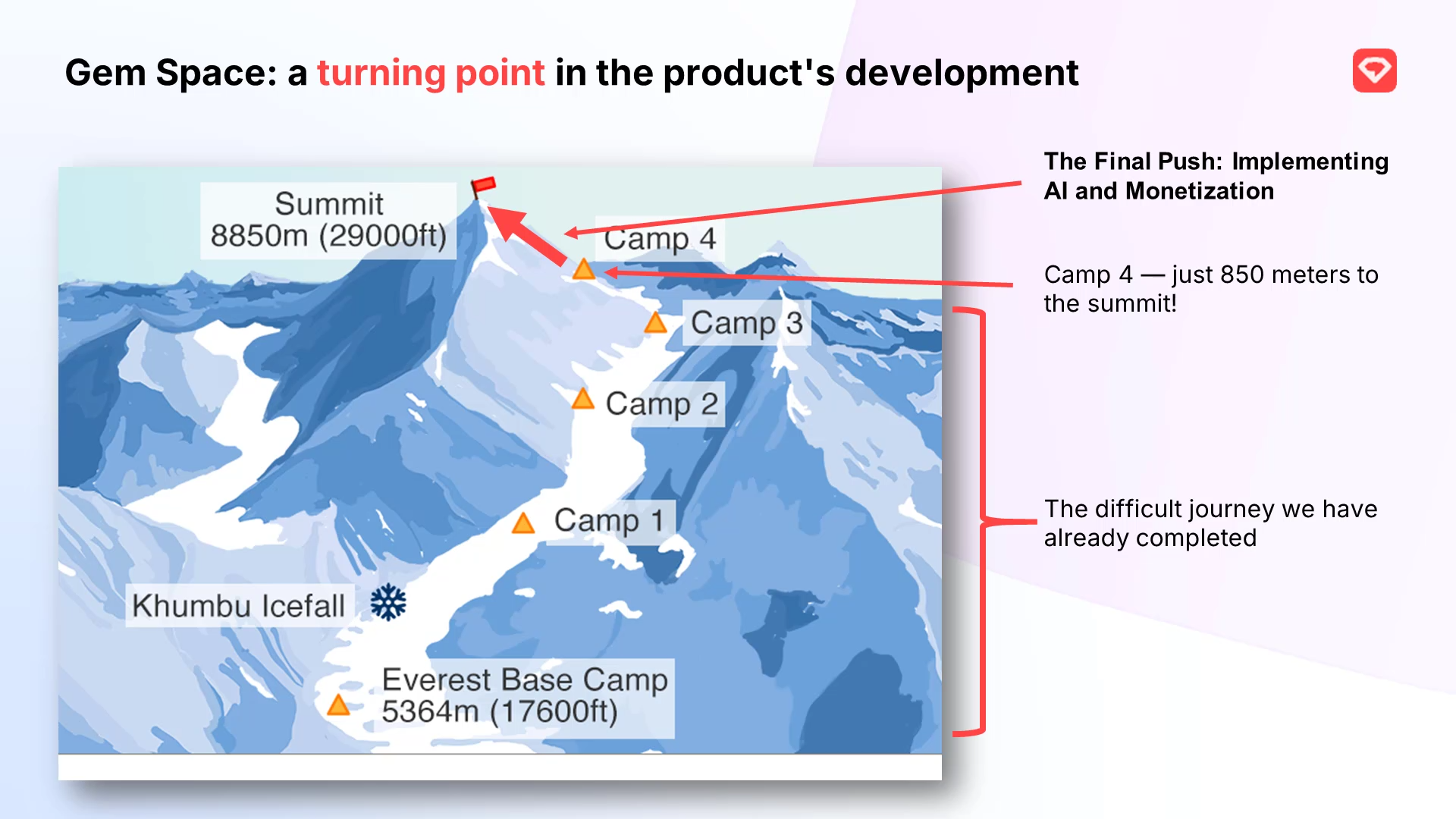
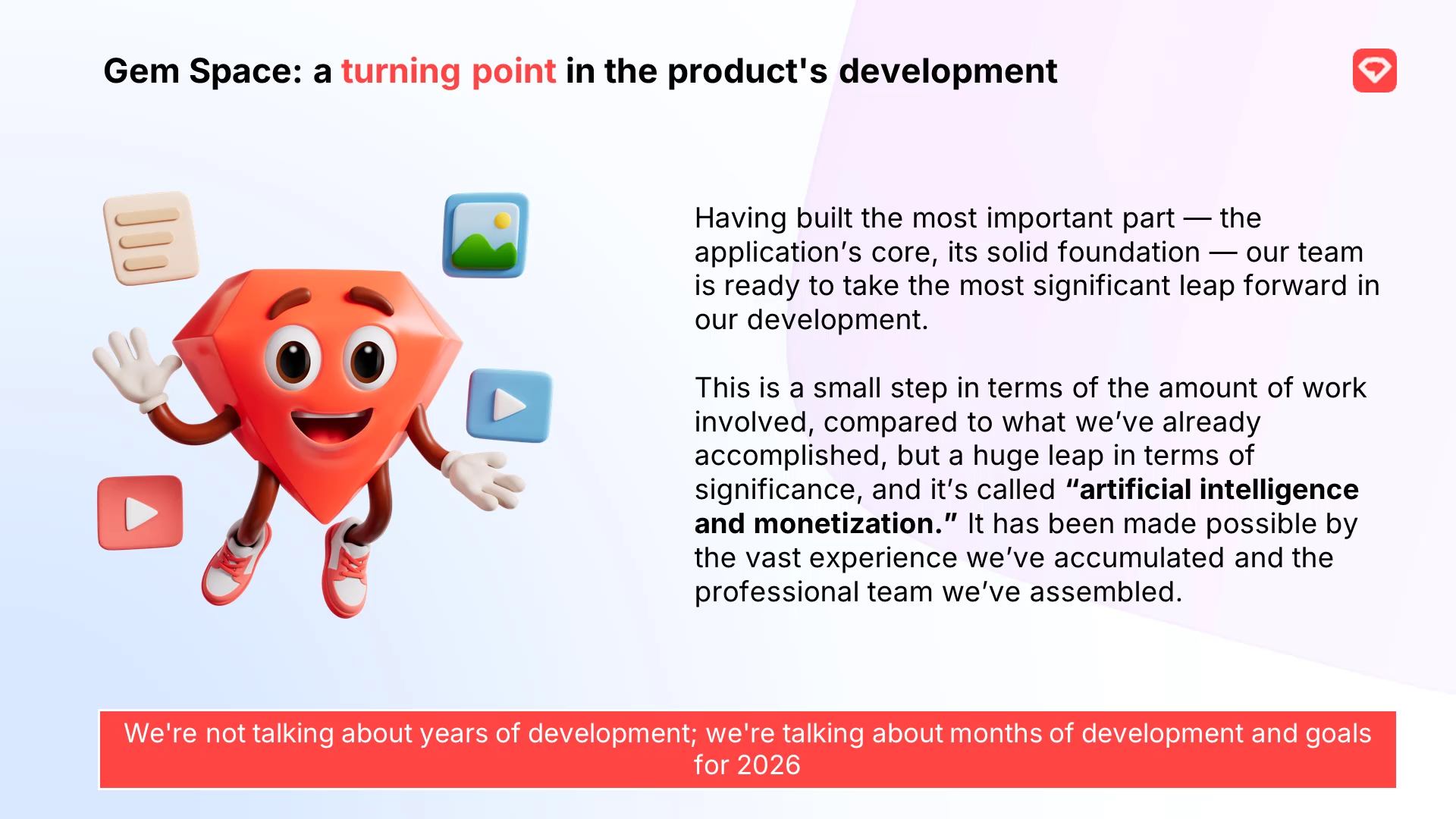
That is where Gem Space stands today. The remaining work is relatively small compared to what has already been accomplished. But it is extraordinarily important, because it is what elevates the platform to an entirely new class.
The two elements being integrated now — artificial intelligence and monetization — are that final push.
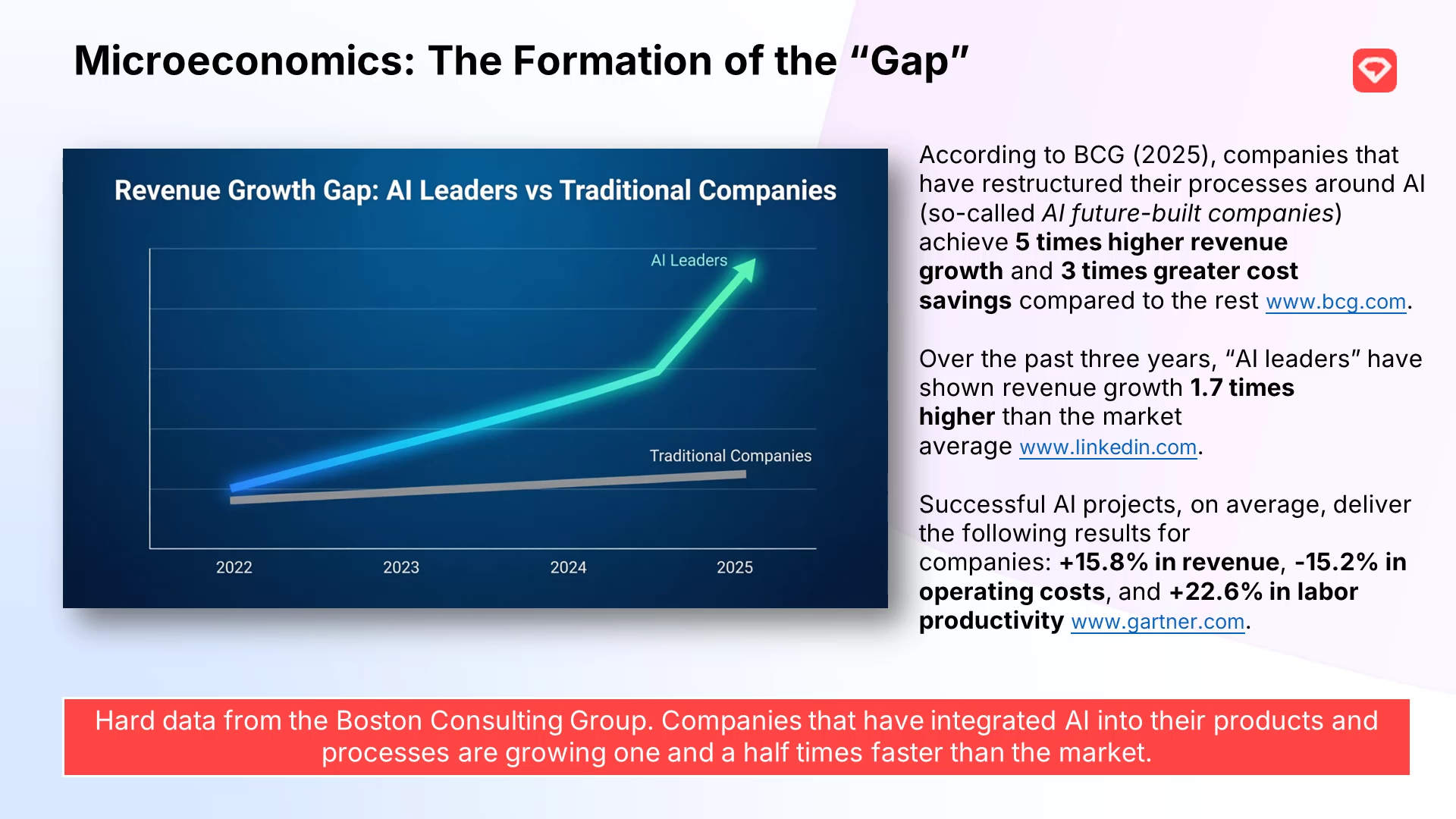
Artificial Intelligence: Three Stages, This Year
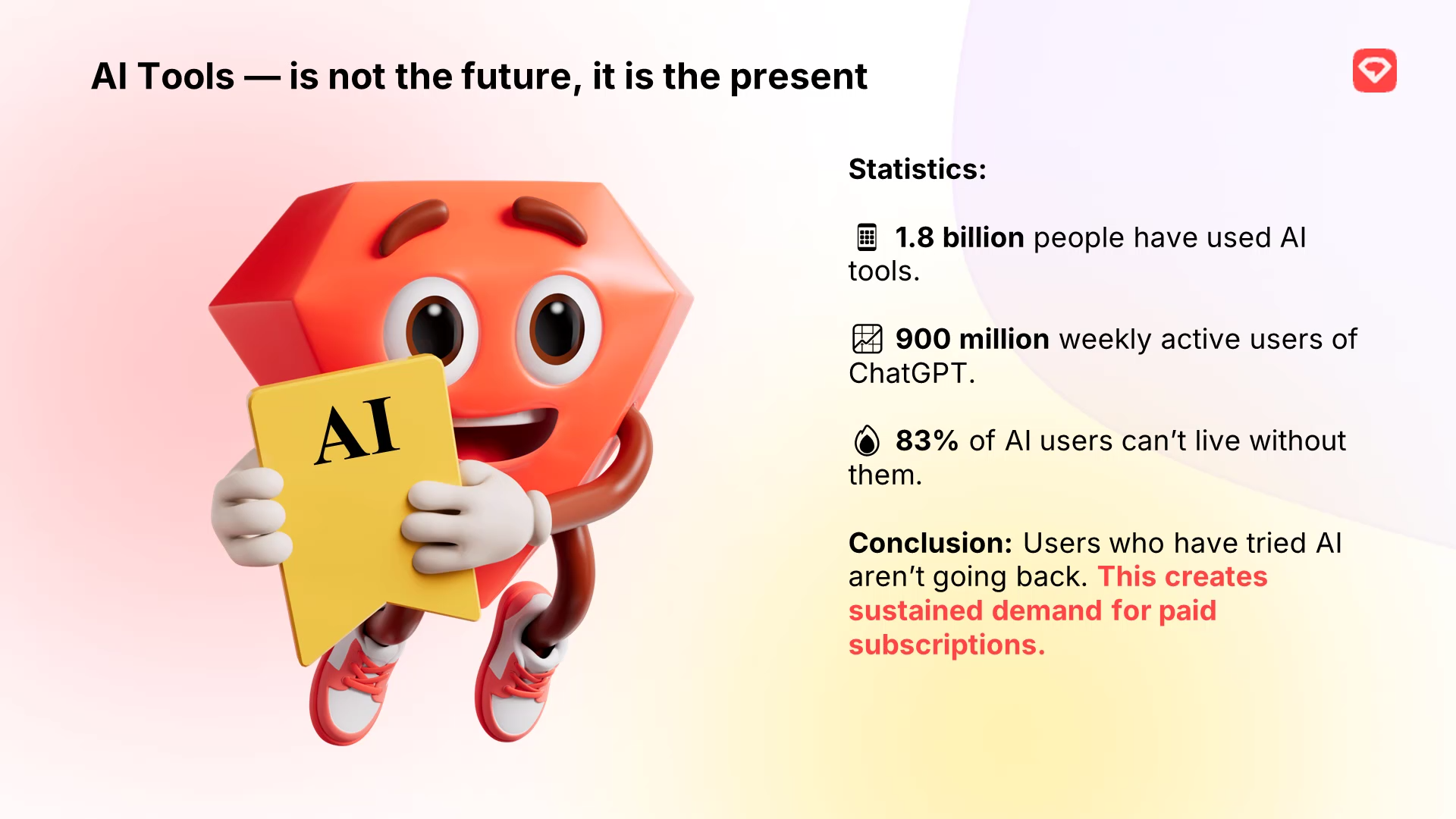
AI has become fundamental infrastructure in the same way smartphones once did. In 2007, when the first iPhone appeared, many people dismissed it as a toy for teenagers. Within a year, the same people were using smartphones. Within ten years, button phones had essentially disappeared. The same transition is now underway with AI. 1.8 billion people out of 8 billion have already used AI tools. 900 million people use ChatGPT weekly, and 83% of AI users report they cannot give it up.
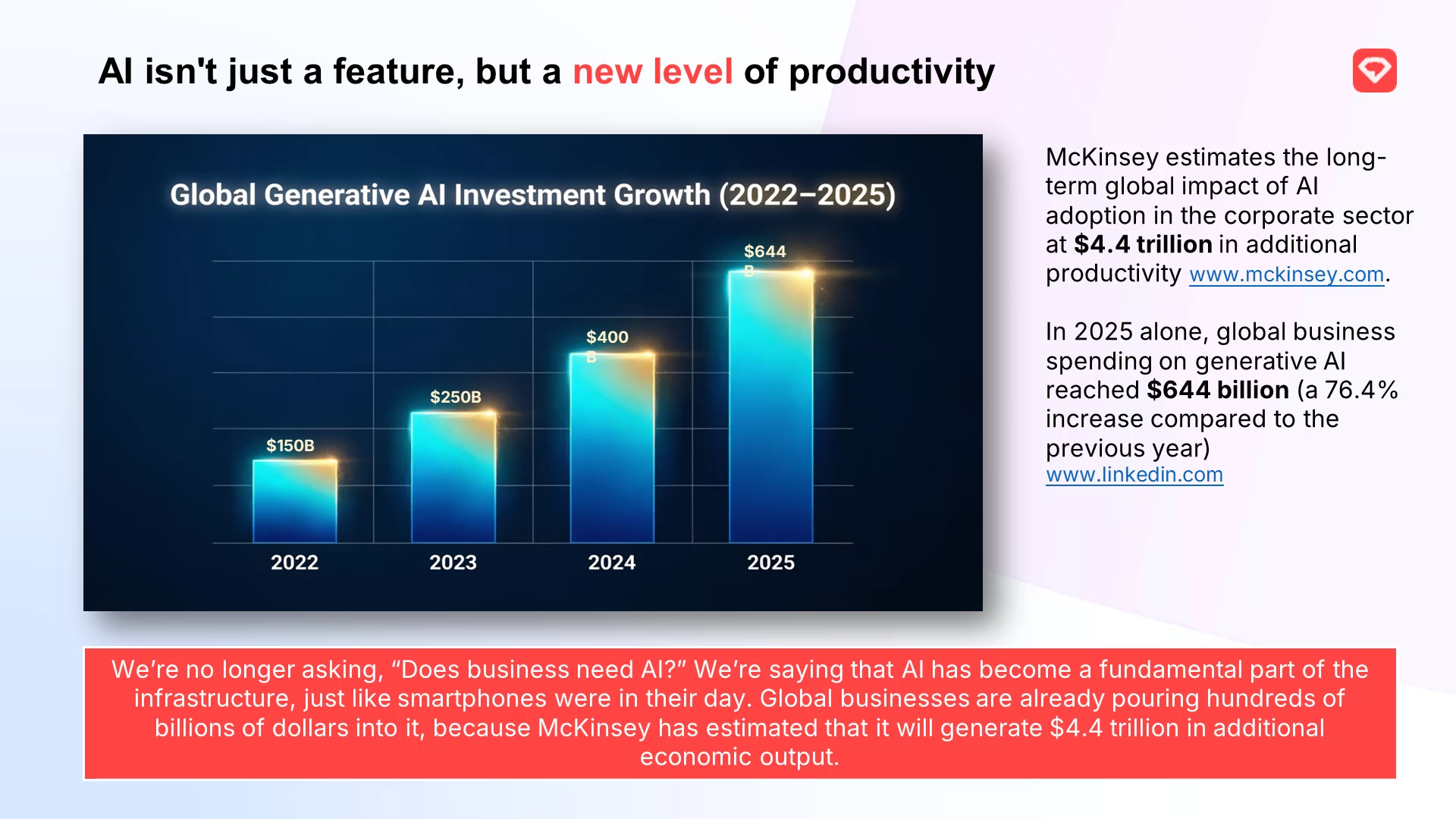
Gem Space is integrating AI in three stages — all targeted for 2026.
Stage One — AI Bots (by September)
The first stage involves activating the best available AI bots as personal assistants within the application. These are not first-generation bots — they are the most advanced models currently available, including ChatGPT and Claude from Anthropic on the American side, and Qwen and DeepSeek on the Chinese side.
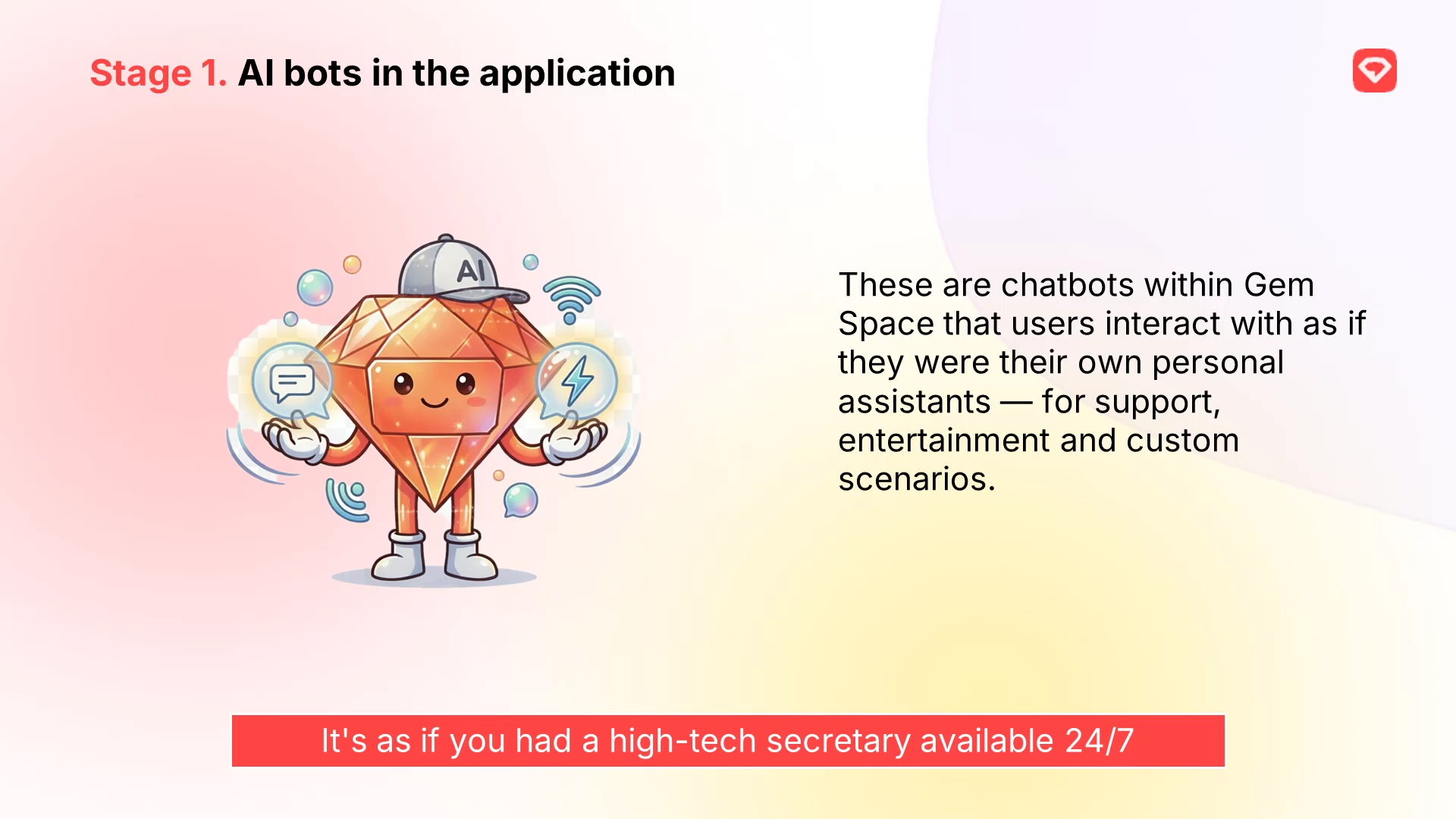
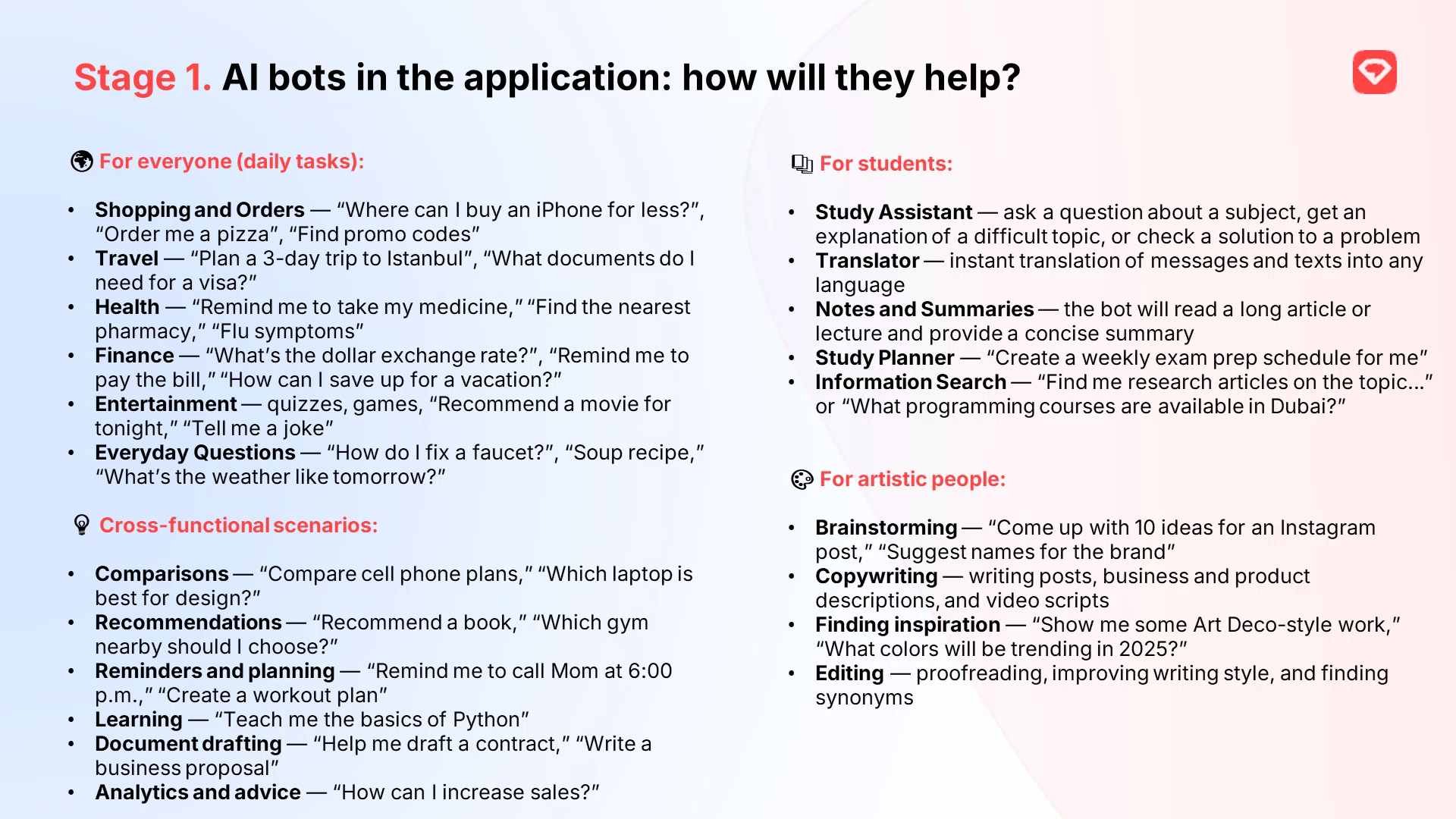
The practical value for everyday users is immediate and tangible. A 24/7 intelligent assistant that can plan trips, remind users to take medication, check exchange rates, recommend films, compare mobile tariffs, help students write and improve text, generate ideas, analyze documents, and communicate in 70 to 90 languages — all without switching between apps or managing separate subscriptions.
This is especially significant for users in regions where access to leading AI models is currently restricted due to payment difficulties or regulatory barriers. Gem Space will provide this access directly through the application.
Stage Two — Digital and Voice Agents (this year)
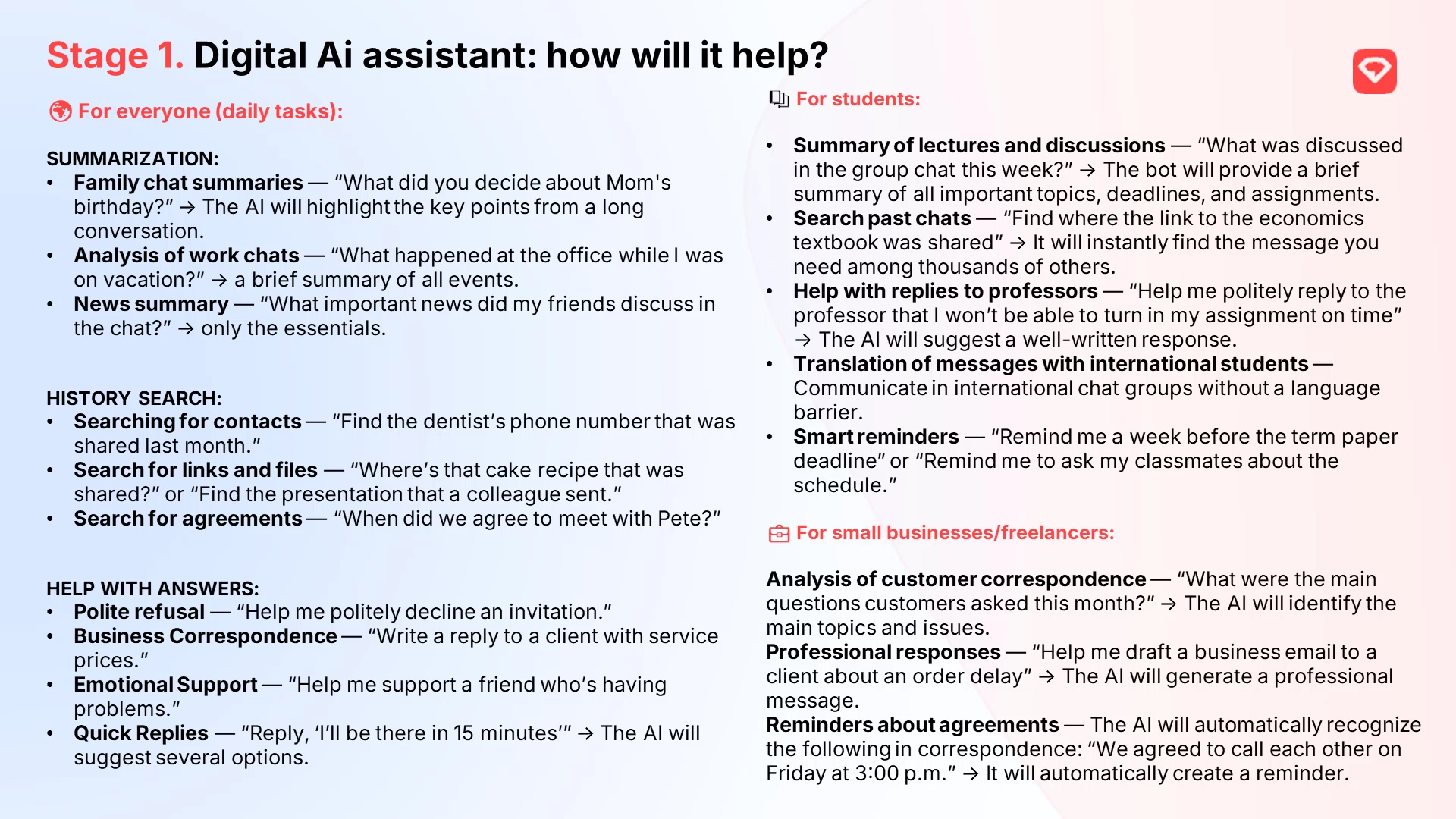
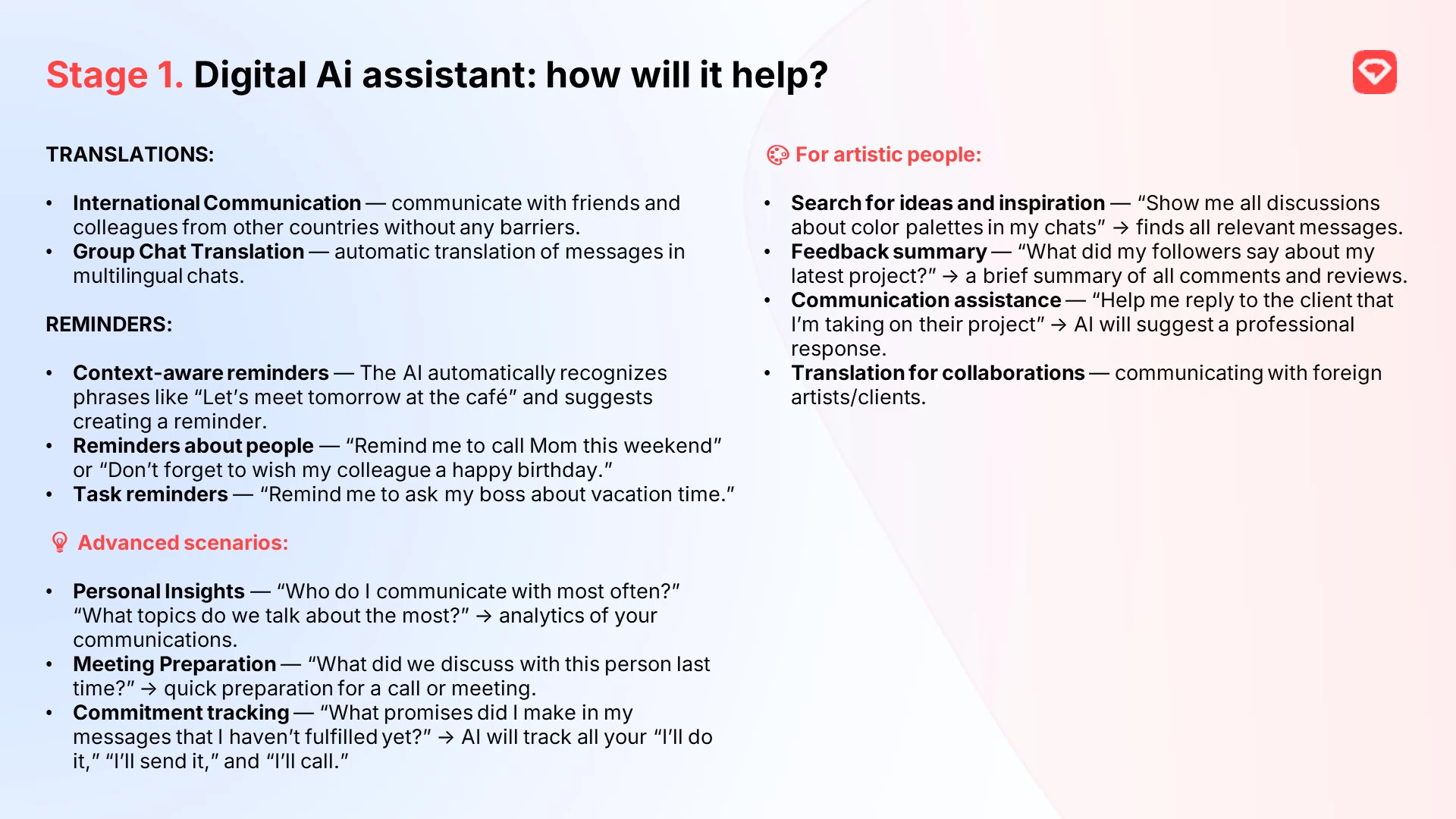
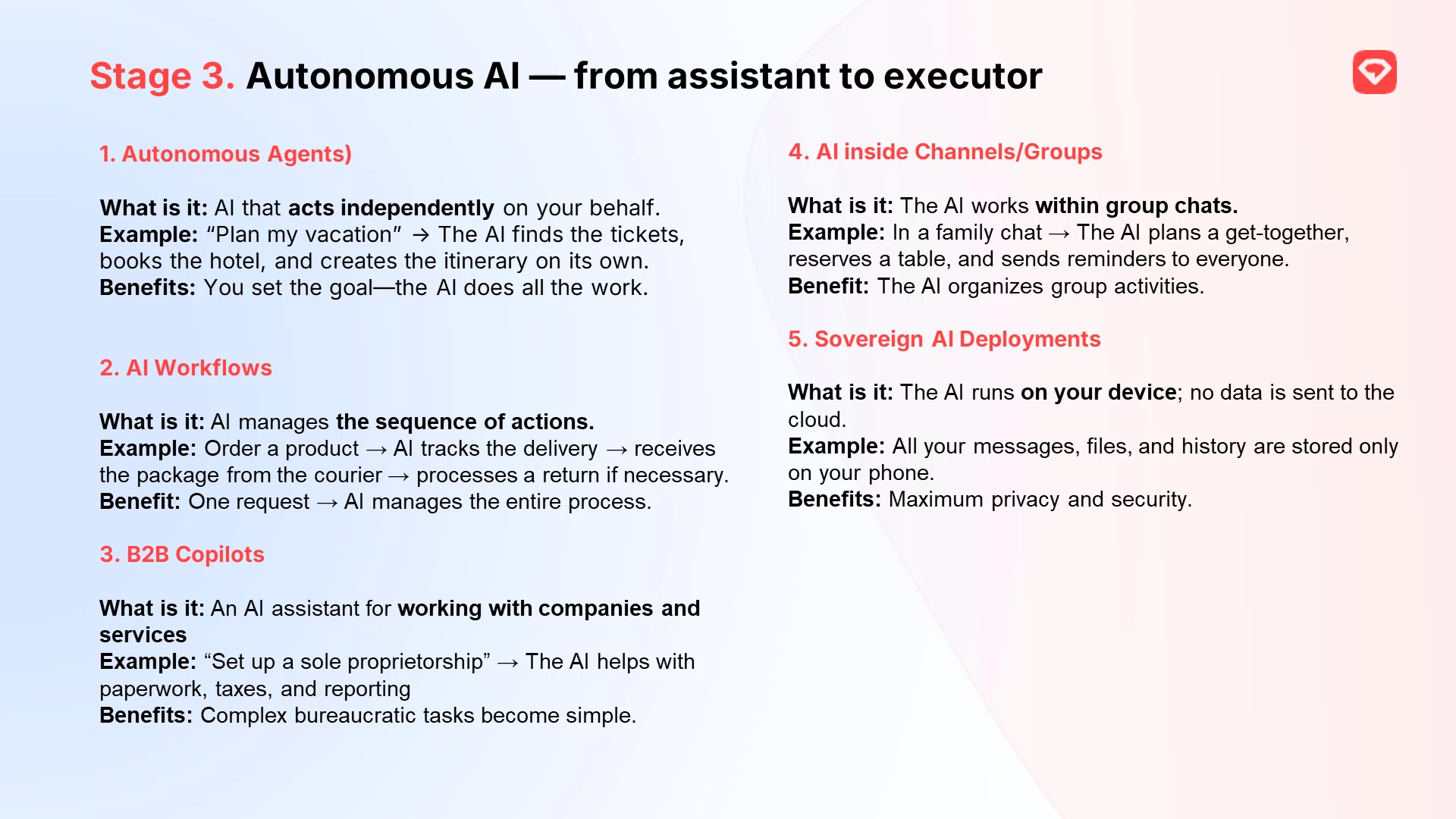
The second stage introduces a digital assistant — a personal AI that has access to the user’s full conversation history within the Gem Space ecosystem. It can answer questions like what was decided in a work chat, where a phone number was saved, what plans exist for next week, or how much was spent on a particular service last month. Everything in the user’s communications becomes searchable and actionable through a single intelligent interface.
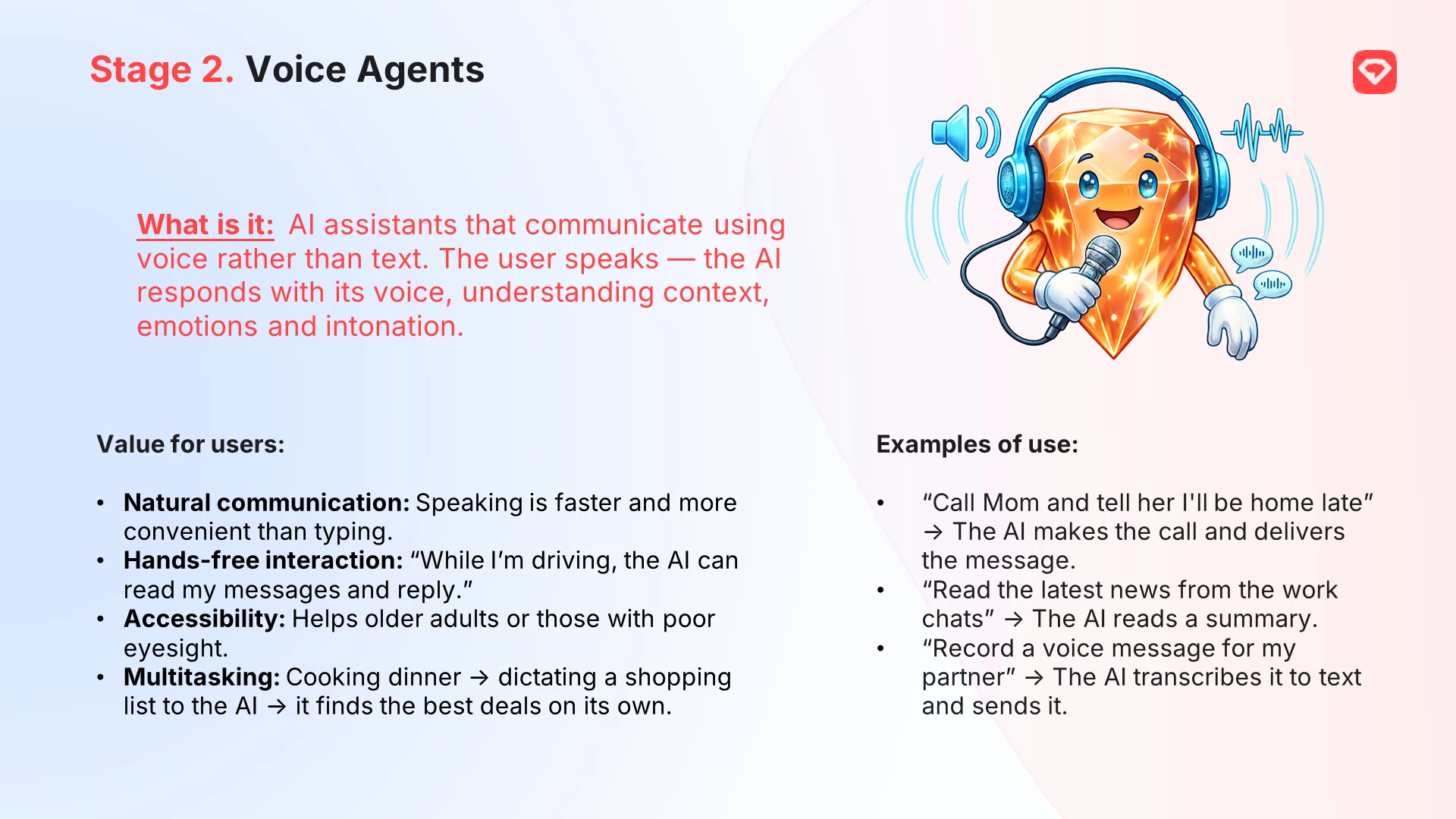
Voice agents follow — AI-powered assistants that interact entirely by voice. The user speaks, and the assistant responds by voice. This is not a novelty feature. For most people, speaking is faster and more convenient than typing. It is also critical for elderly users, those with visual impairment, and those in situations — driving, using headphones on public transport — where typing is impractical.
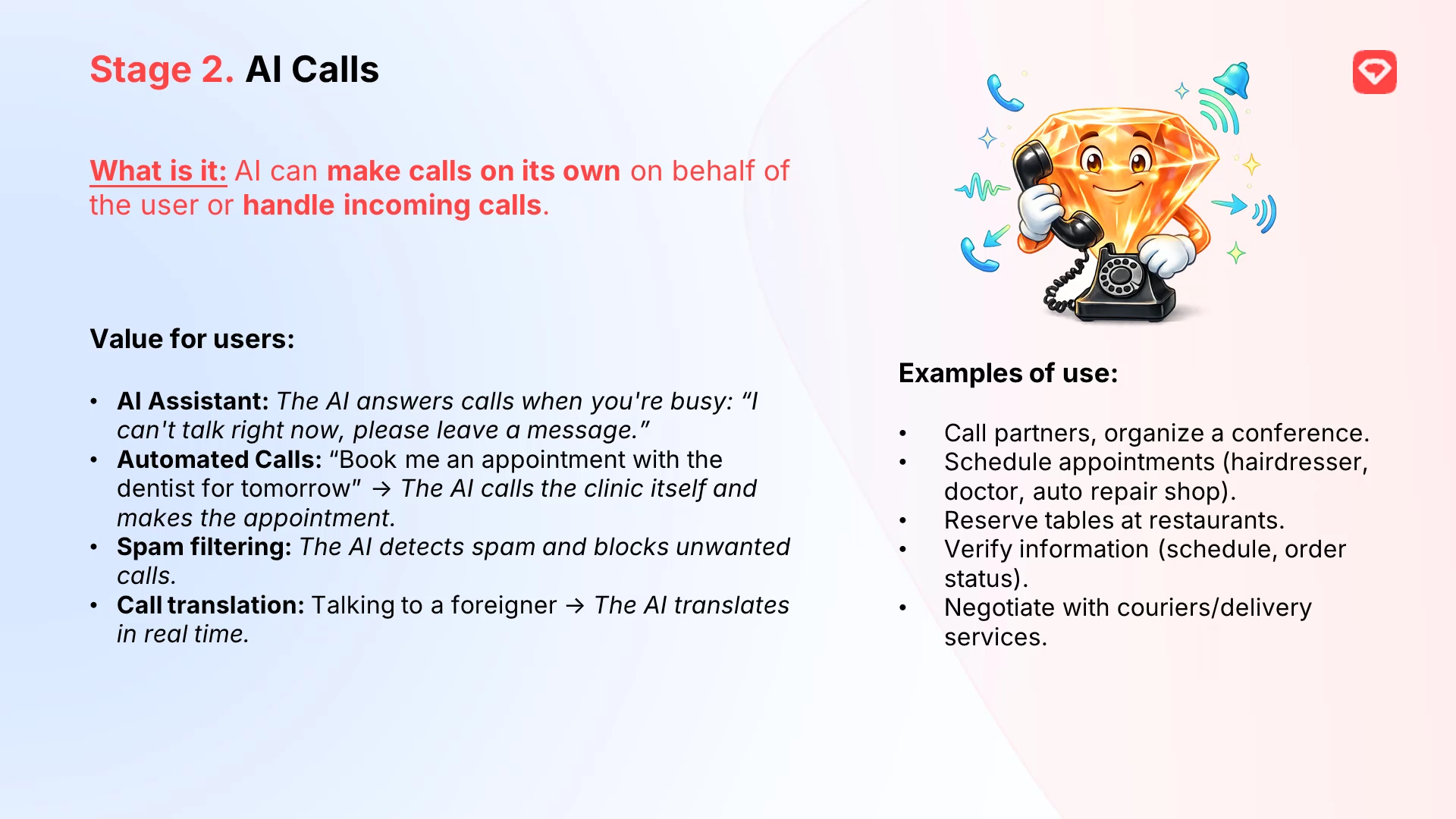
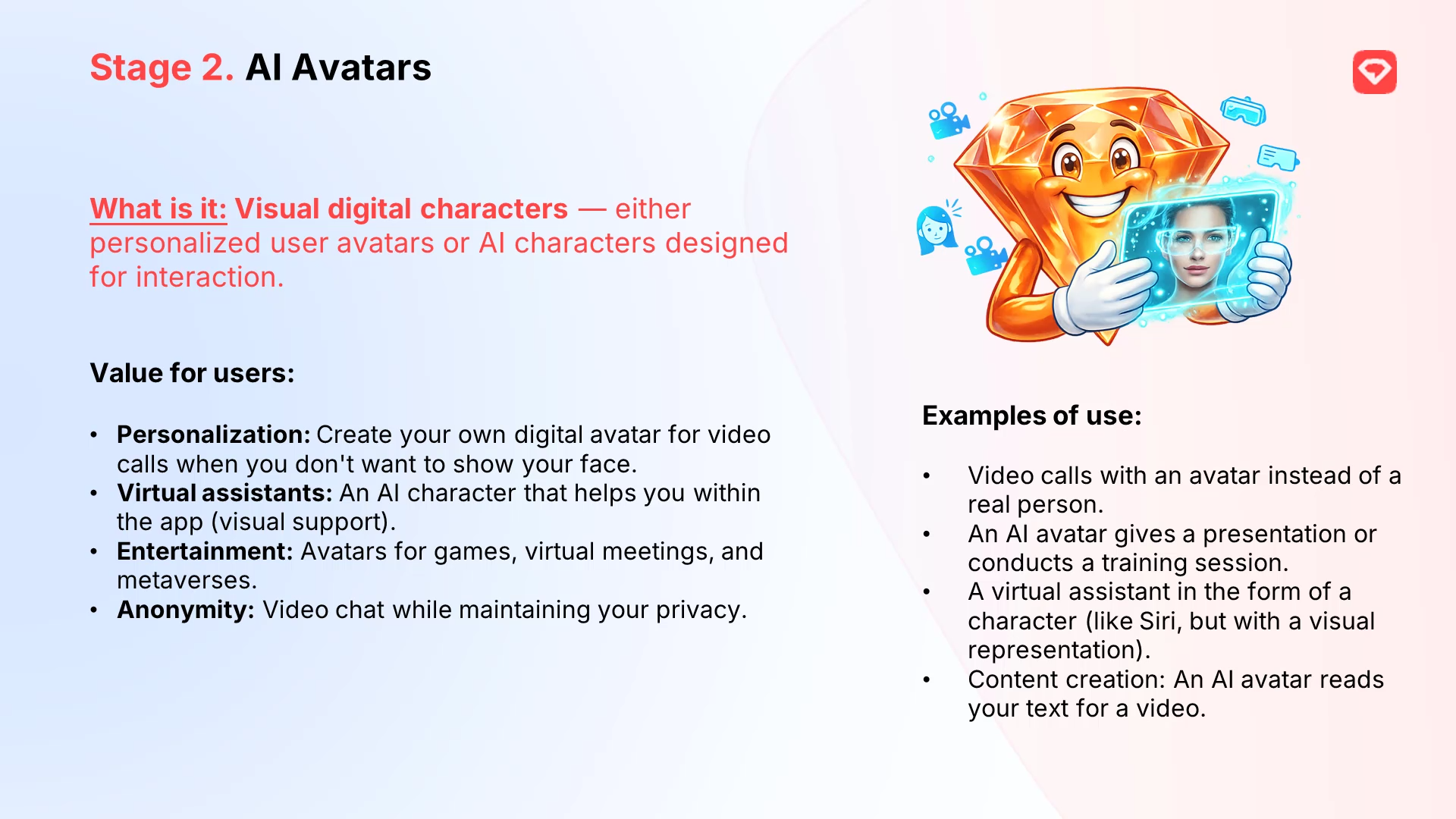
AI-powered calls extend this further. The AI can independently make calls on behalf of the user, handle incoming calls, filter unknown numbers, book appointments, organize conference calls, and even conduct structured negotiations with third parties. Avatar functionality allows users to create a digital version of themselves for presentations, allowing AI-generated video to represent them with their own facial expressions and communication style.
Stage Three — Deep Integration (for advanced users and businesses)
A third stage — generating answers from personal data — involves giving the AI access to information stored on the user’s device or in linked services, enabling highly specific answers based on actual personal or business data. Corporate assistants extend this into business environments, offering deep integration with workflows, communications, and decision-making processes.
Monetization: The Interconnected System
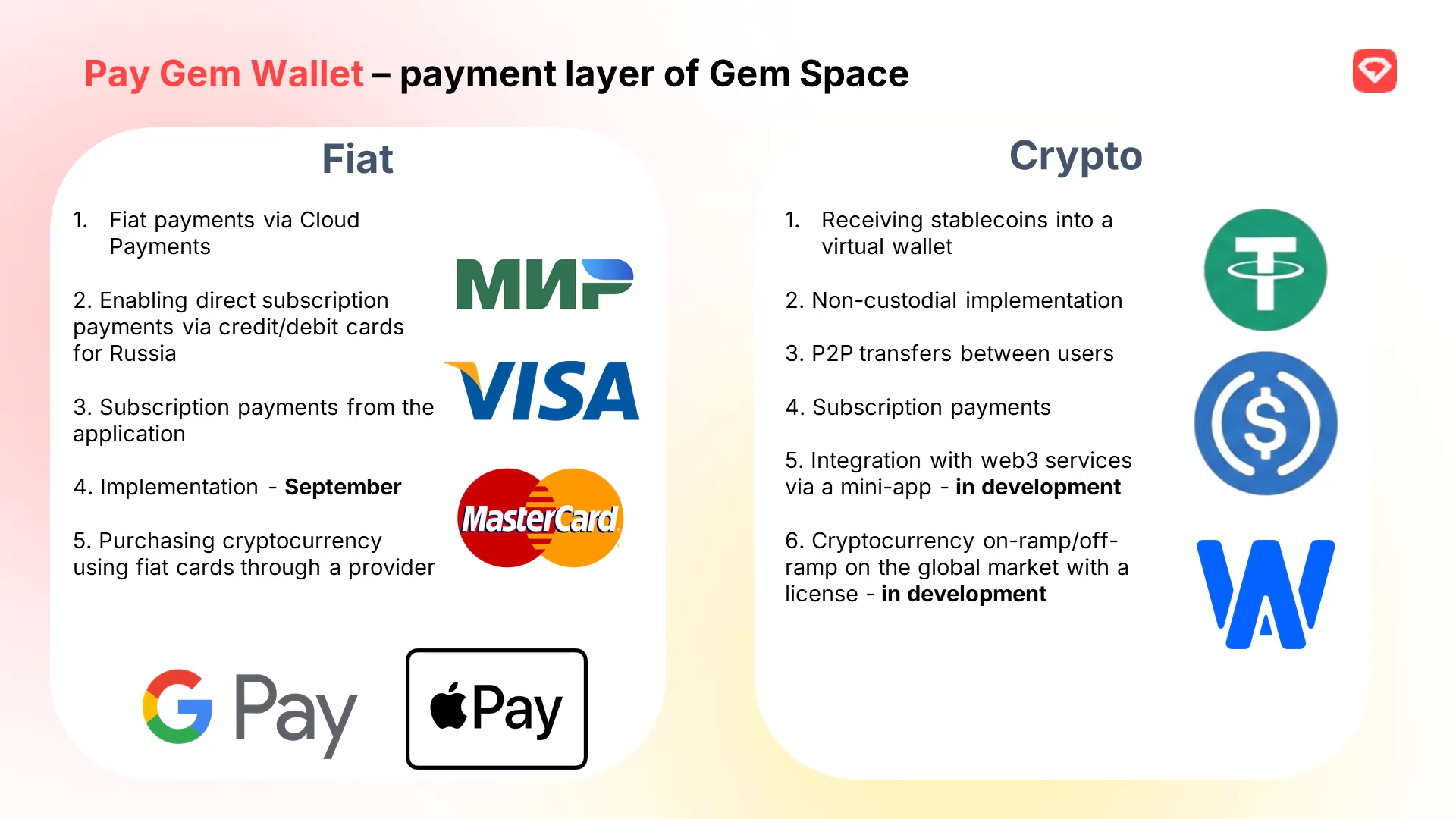
AI integration and monetization are inseparable processes. Revenue from AI requires payment infrastructure. That is why PayGem — the digital wallet — is central to this phase.
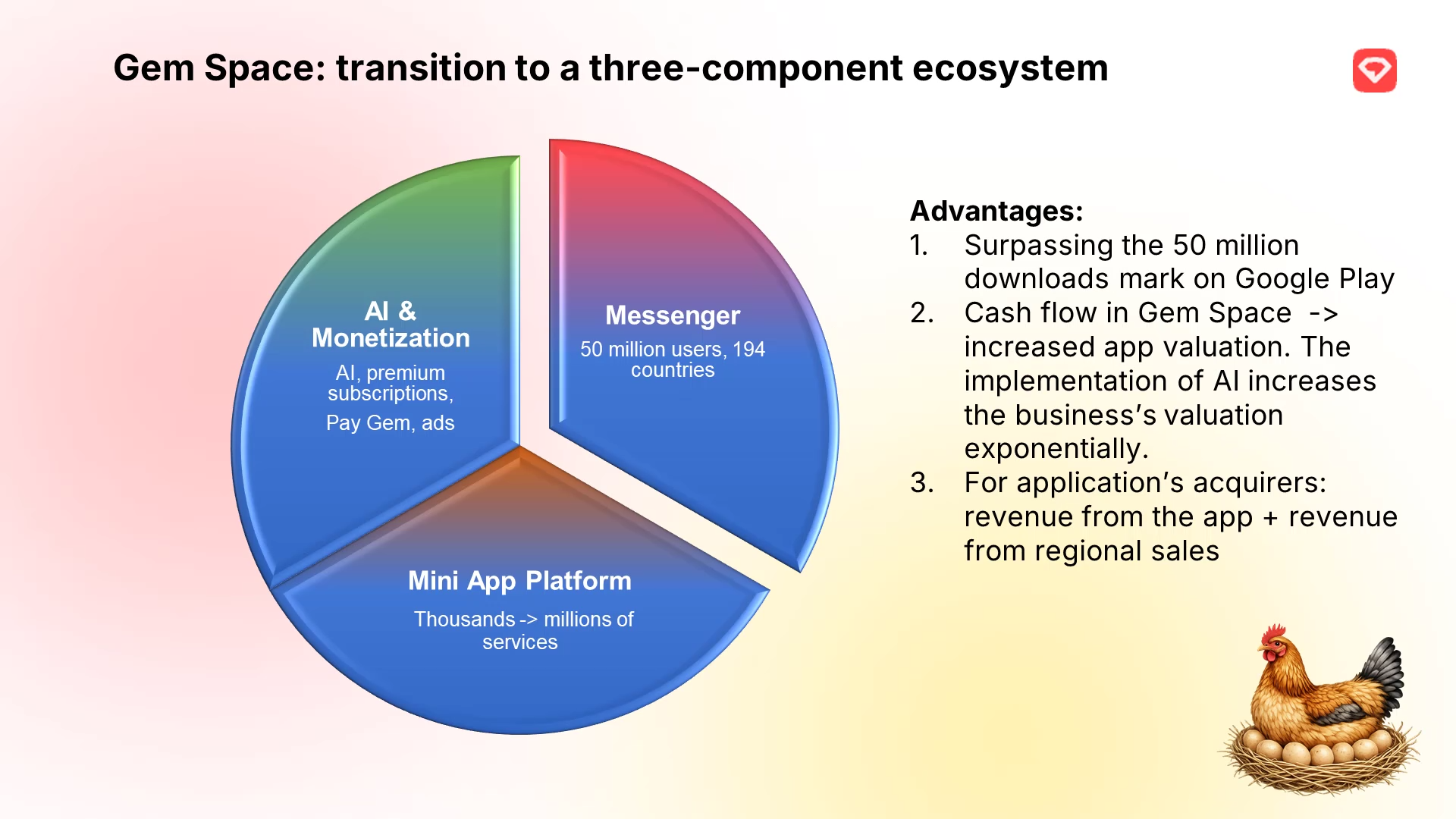
PayGem will support fiat currencies including Visa, Mastercard, Google Pay, and Apple Pay, as well as cryptocurrency. The initial use case is paying for the Gem Premium subscription, which is targeted for launch in September.
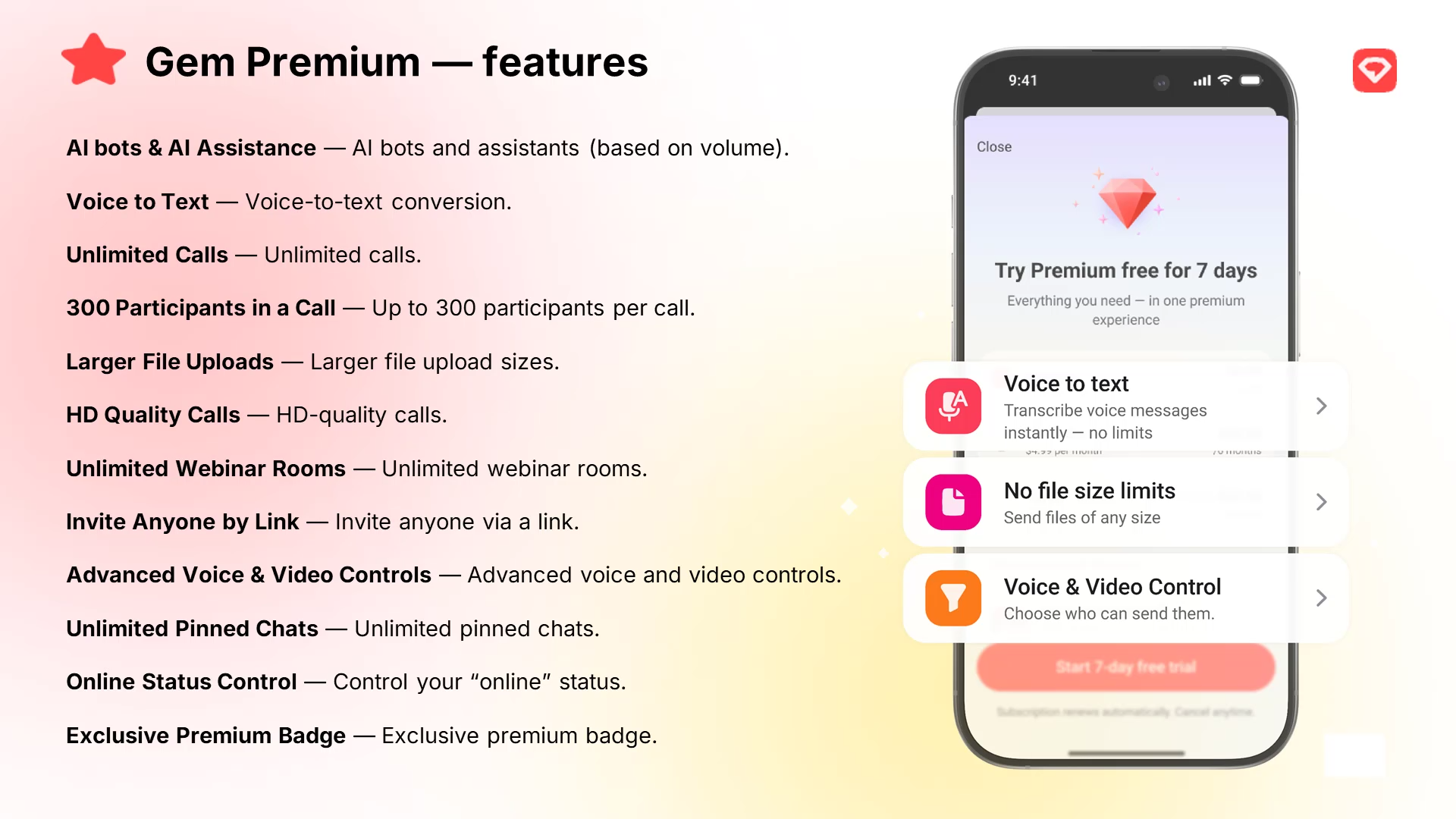
Premium accounts will include advanced features that involve real operational cost — high-quality calls, unlimited webinar rooms — making them natural premium offerings. The pricing will be deliberately accessible, but the advantages will be compelling enough that users actively choose to subscribe. AI tools will be part of the premium tier.
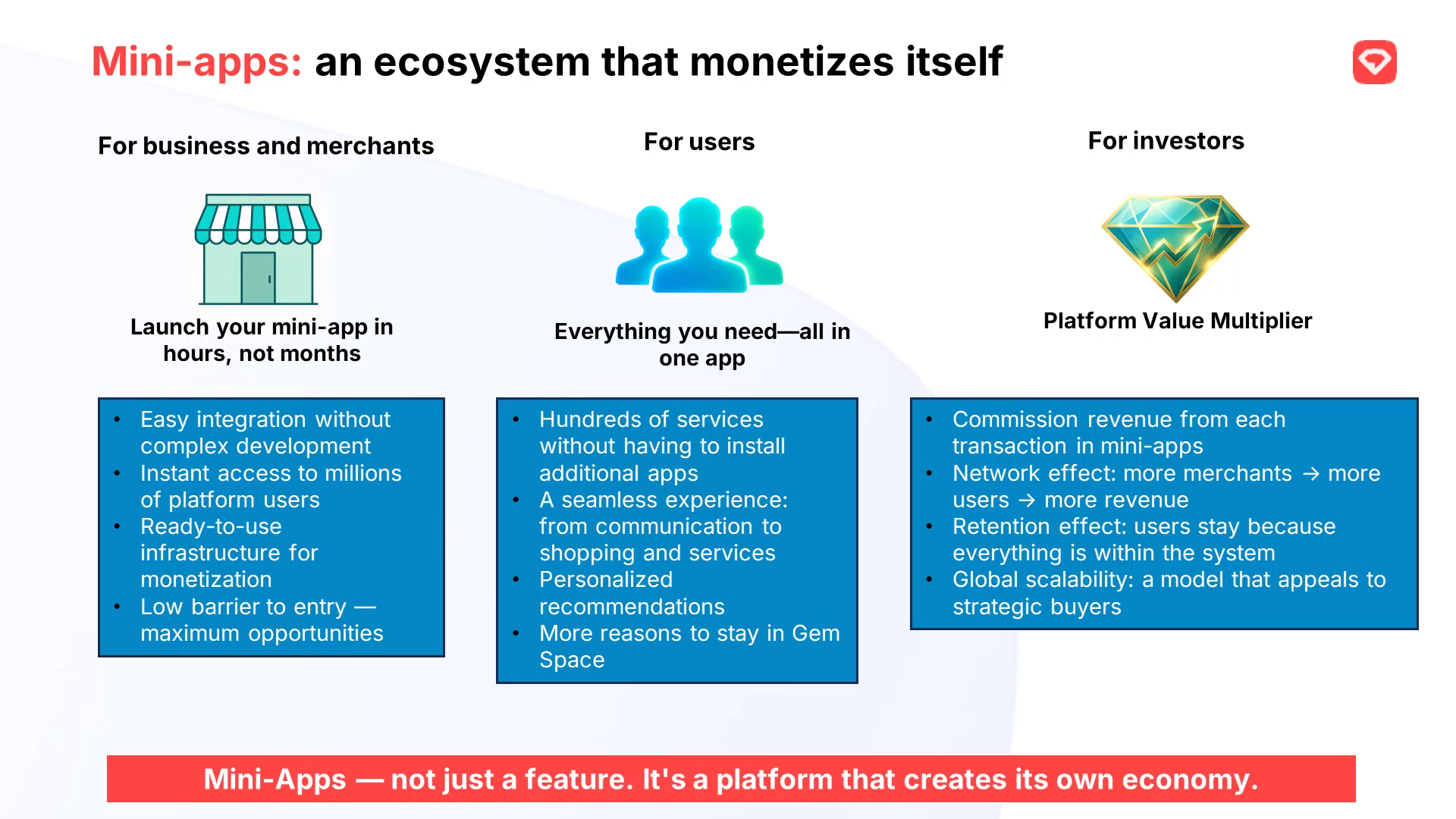
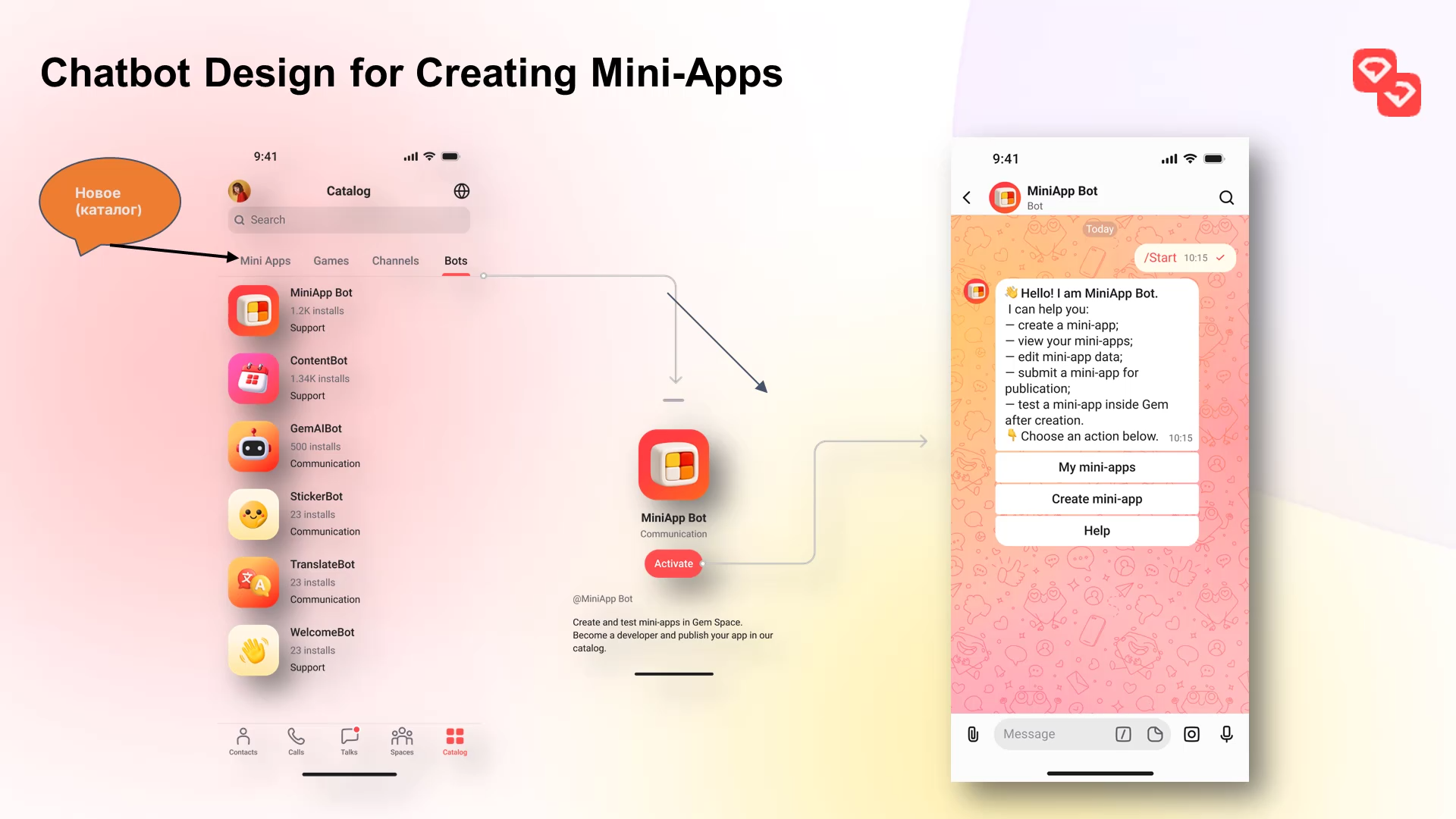
The mini-app platform is launching in June alongside the first test mini-app. For users, mini-apps mean finding a vast range of services and products within a single application. For the platform, every transaction within a mini-app generates revenue. The network effect follows — more merchants attract more users, more users attract more merchants, retention increases, and the ecosystem grows. The reference point used was WeChat, which hosts millions of mini-apps and generates extraordinary revenue from them. Gem Space is building toward the same model, including a chatbot tool that will allow anyone to build their own mini-app simply by answering guided questions.
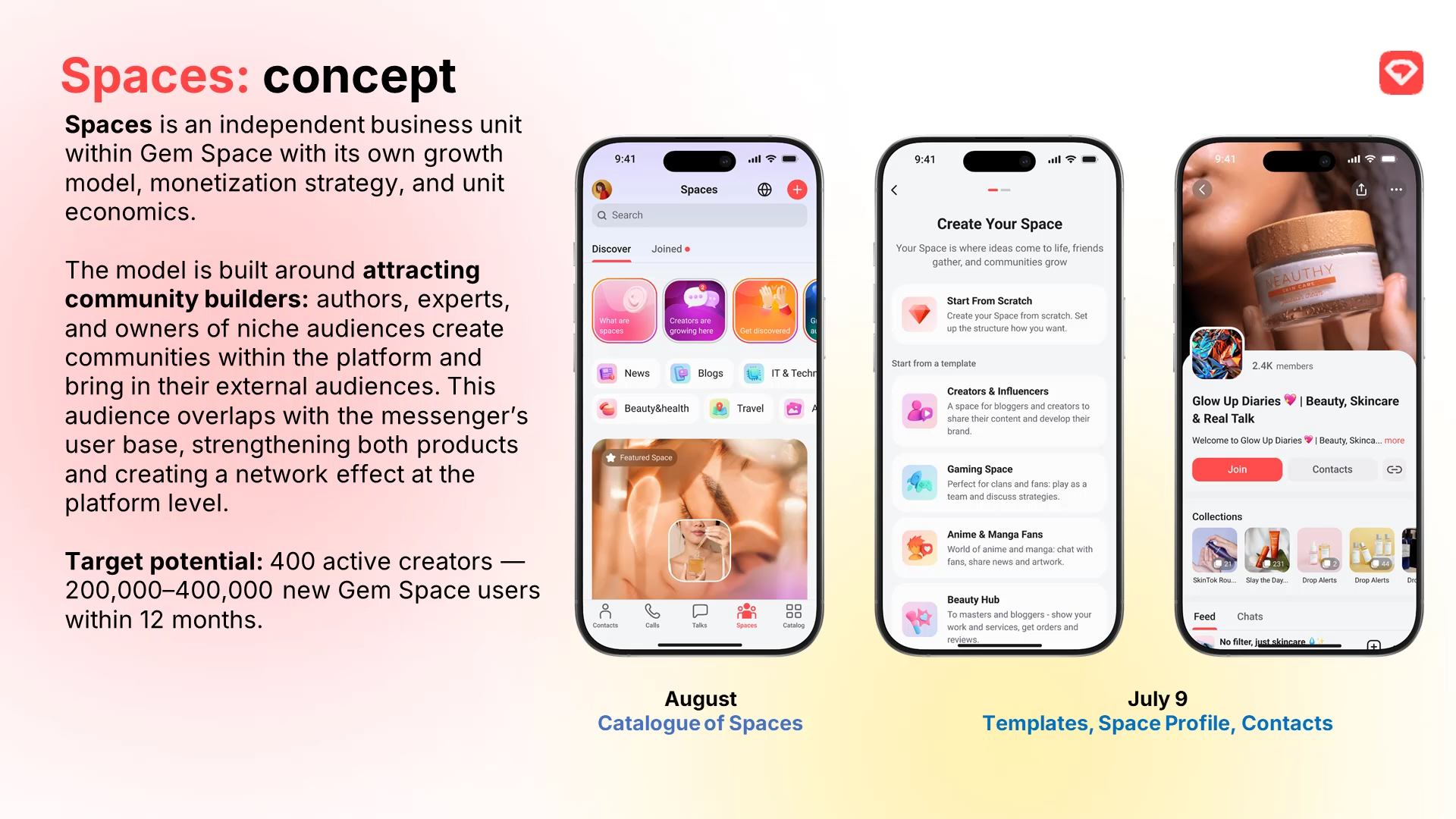
Spaces will also be developed specifically for business monetization — combining paid and free channels, group chats, and commerce capabilities in one environment, with two revenue streams: transaction fees and promotional placement fees for space owners who want higher visibility in catalogs.
The Snapchat Benchmark
To give investors a concrete reference point for what AI monetization in a messenger actually looks like in practice, the conference cited Snapchat.
Snapchat has historically been positioned as a youth-focused messenger primarily in North America. At the end of 2024, it moved aggressively toward AI integration with its Snapchat Plus premium offering. By early 2026, Snapchat Plus had reached 25 million subscribers paying up to $100 each. The result was $1 billion in revenue in 2025 — from exactly the model Gem Space is now implementing.
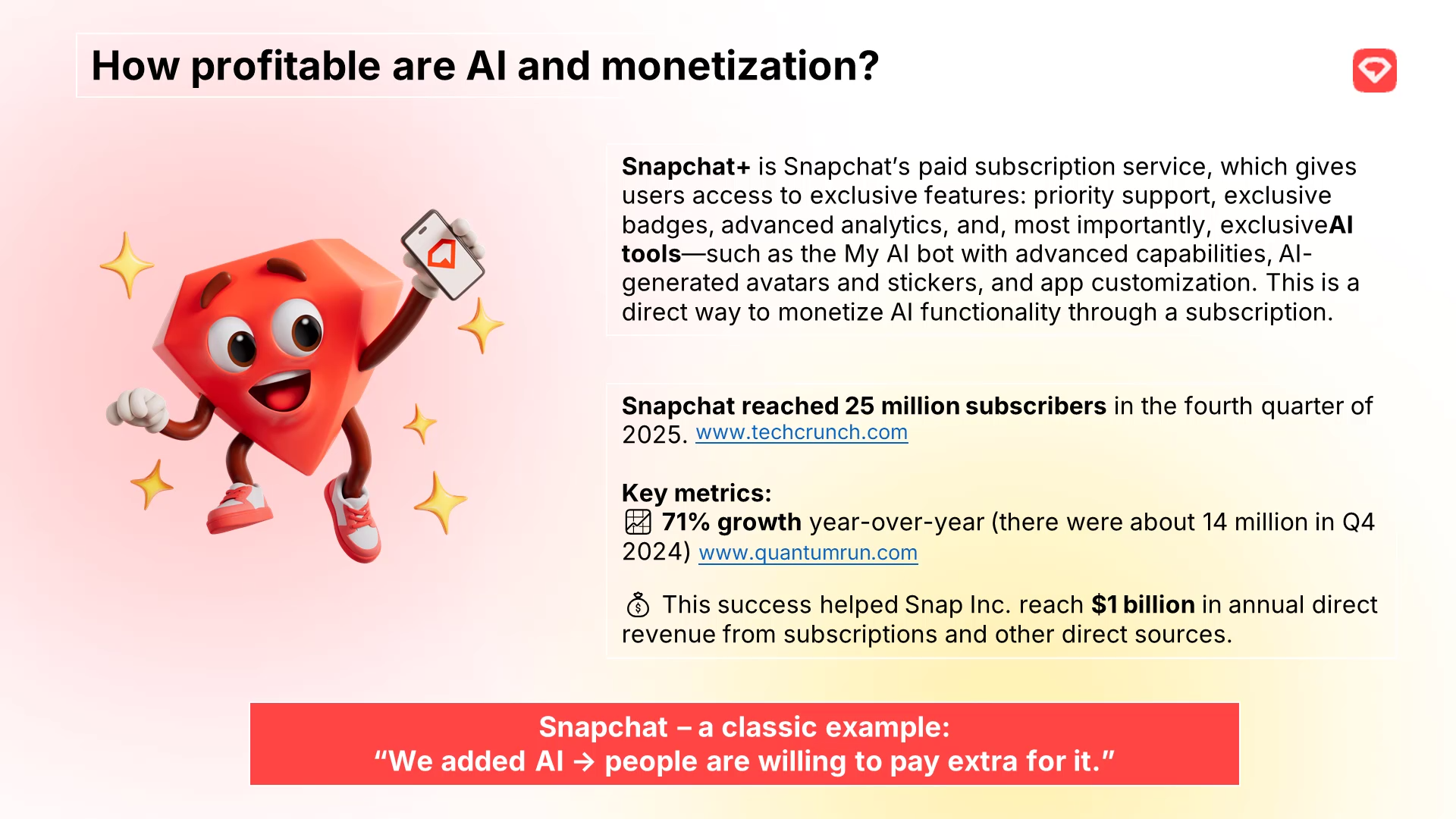
GemSpace has the full potential to reach this level of income — and with a global user base spanning 194 countries, potentially beyond it.
Class D Shares: A Direct Stake in the AI Economy
To finance the development of AI integration and monetization tools, the company is introducing Class D shares — issued in strictly limited quantity.
A total of 500,000 Class D shares will ever exist. Of these, 250,000 are allocated to investors, and 250,000 remain with the administrative team. Of the investor allocation, 150,000 are available to retail investors — the remaining 100,000 have already been reserved.
Class D shareholders will receive dividends from all monetization streams generated by AI and related features — including PayGem, mini-apps, paid subscriptions, and AI tools — paid out once per quarter on a 50/50 distribution principle.
At the point of a strategic sale of the entire Gem Space platform, Class D shares will convert into Class A shares at a ratio of two Class A shares for every one Class D share held. This conversion preserves and doubles the shareholder’s position in the main platform asset at the moment of the most significant liquidity event.
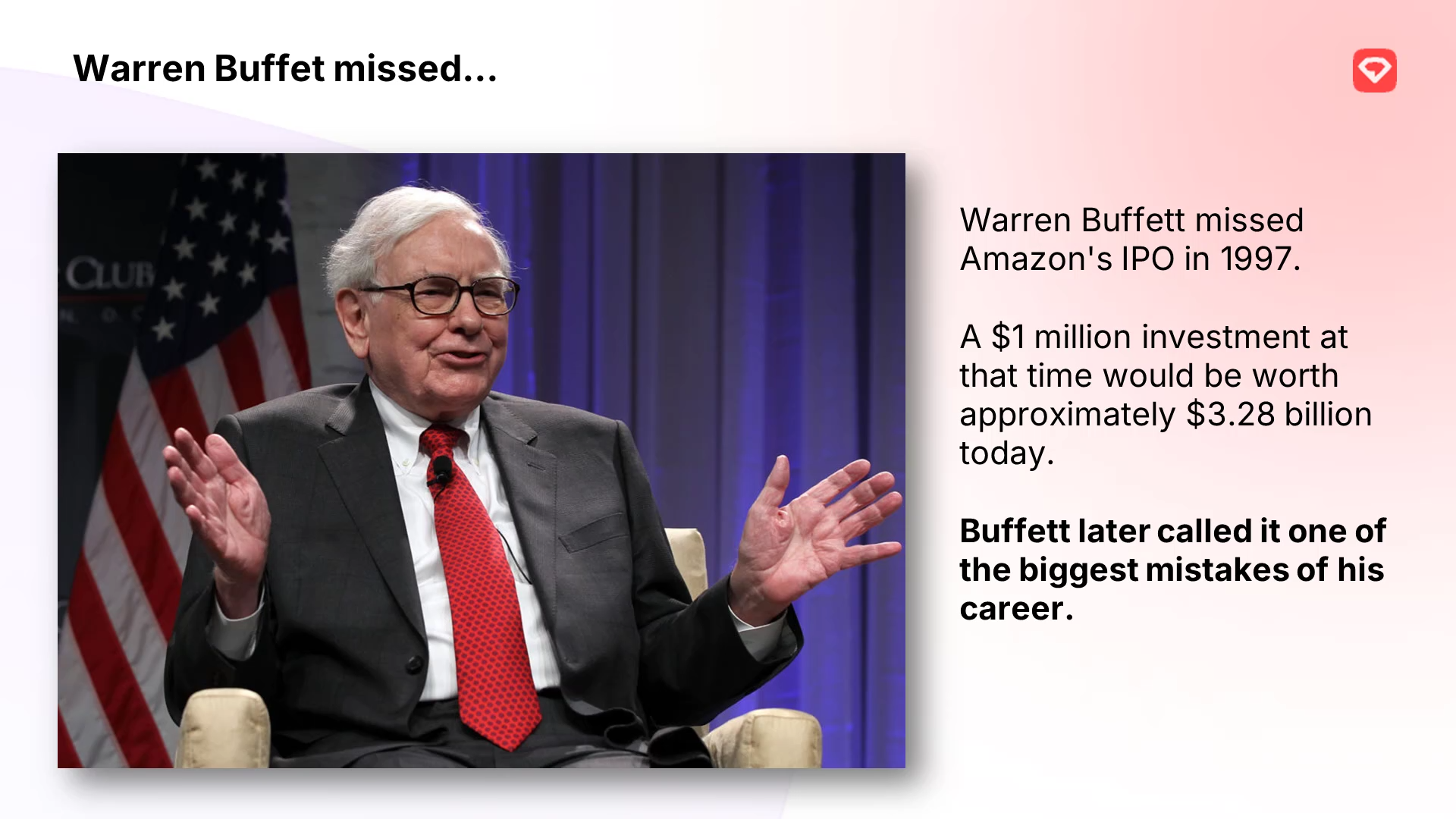
Warren Buffett Missed Amazon
The conference closed with a reminder that even the most sophisticated investors miss pivotal moments.
Warren Buffett — widely considered the greatest investor in history — missed the Amazon IPO in 1997. He did not understand what an online store was at the time. A $1 million investment then would be worth over $3 billion today. He has since called it one of the biggest mistakes of his career.
The lesson is straightforward. We do not launch AI integration every day. We do not often stand at the threshold of monetization and real financial flows simultaneously. This is one of those rare moments — and those who recognize it for what it is are the ones who capture the returns.
Stay informed — join our Angels Team channel in Gem Space.
Comments are closed